bench press form guide
Bench Press Form Guide: How to Press Safely, Lift Better, and Fix Common Mistakes
A practical bench press form guide with setup cues, common mistakes, safer alternatives, and coaching tips to help you press with more control and confidence.
Bench press form guide: build a stronger press with better control
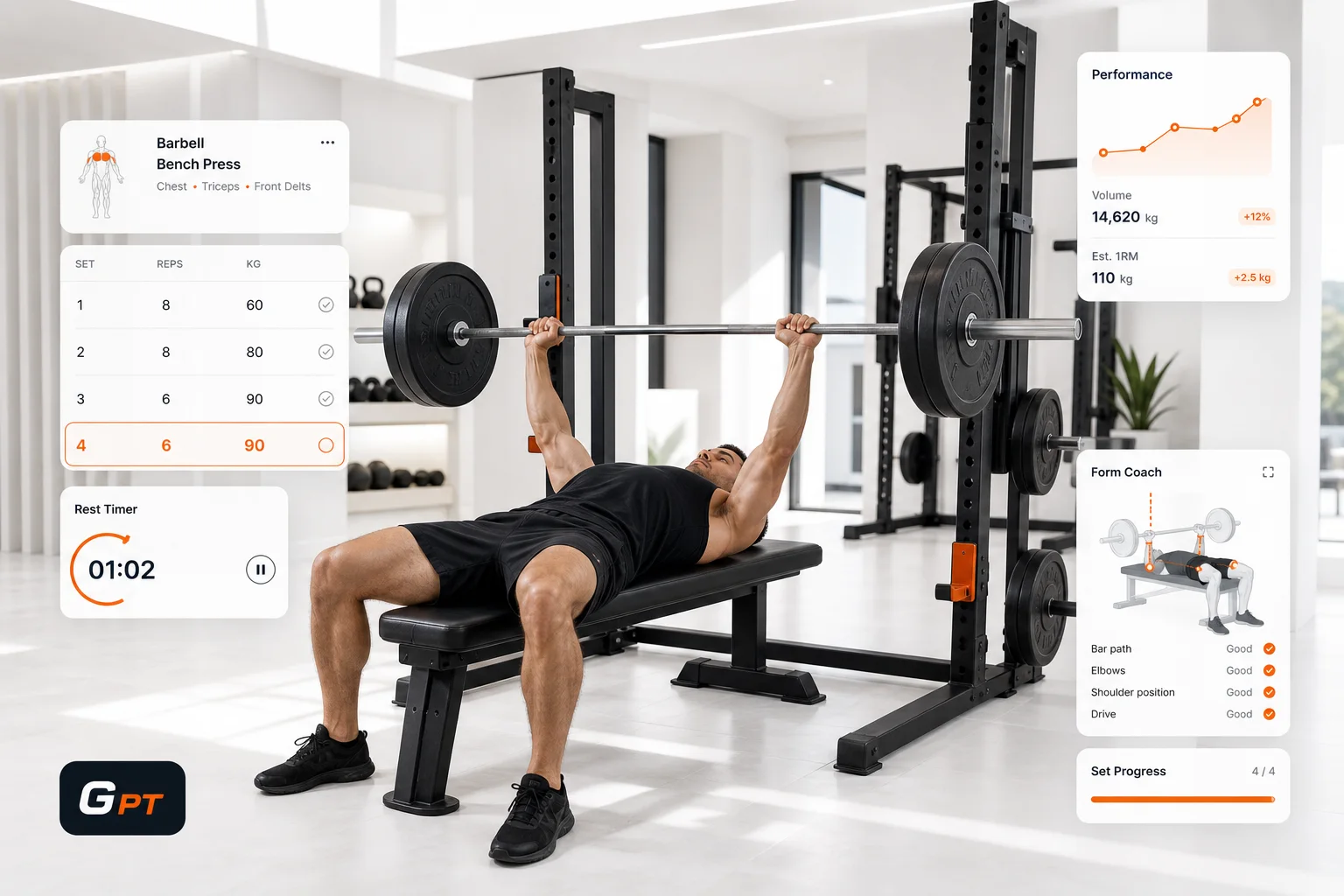
The bench press is one of the most useful upper-body strength exercises, but good results depend on more than just moving the bar. This bench press form guide breaks the lift into simple setup cues, execution steps, common mistakes, and practical alternatives so you can train with more confidence and less guesswork.
Whether you are learning the barbell bench press for the first time or trying to clean up your technique, the goal is the same: create a stable position, press with control, and repeat quality reps. That is also why GymPT works well here — it can help you log your sets, compare rep quality over time, and adjust your plan based on the equipment you actually have.
How to set up the bench press
Before the bar even moves, your setup should make the lift feel stable. A strong setup helps you press more efficiently and reduces the chance of sloppy reps.
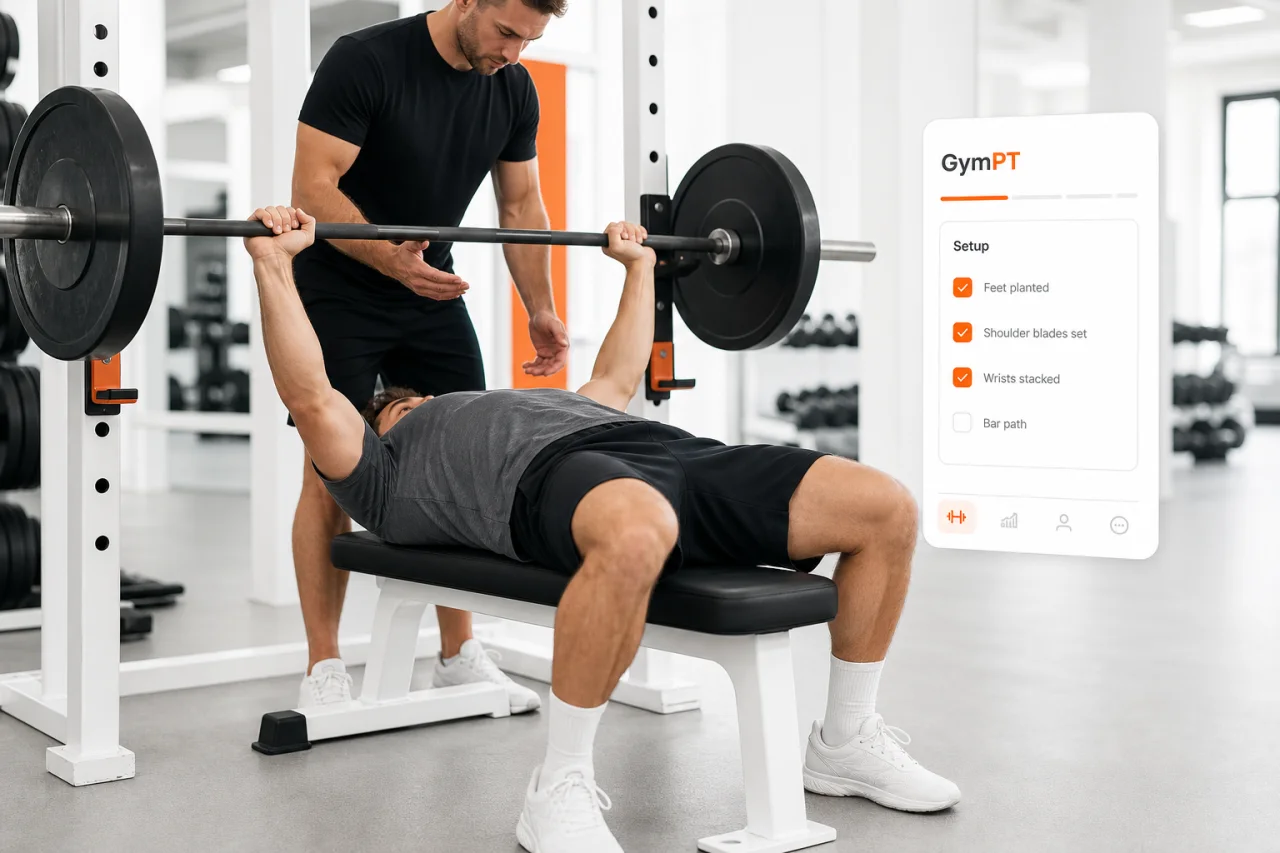
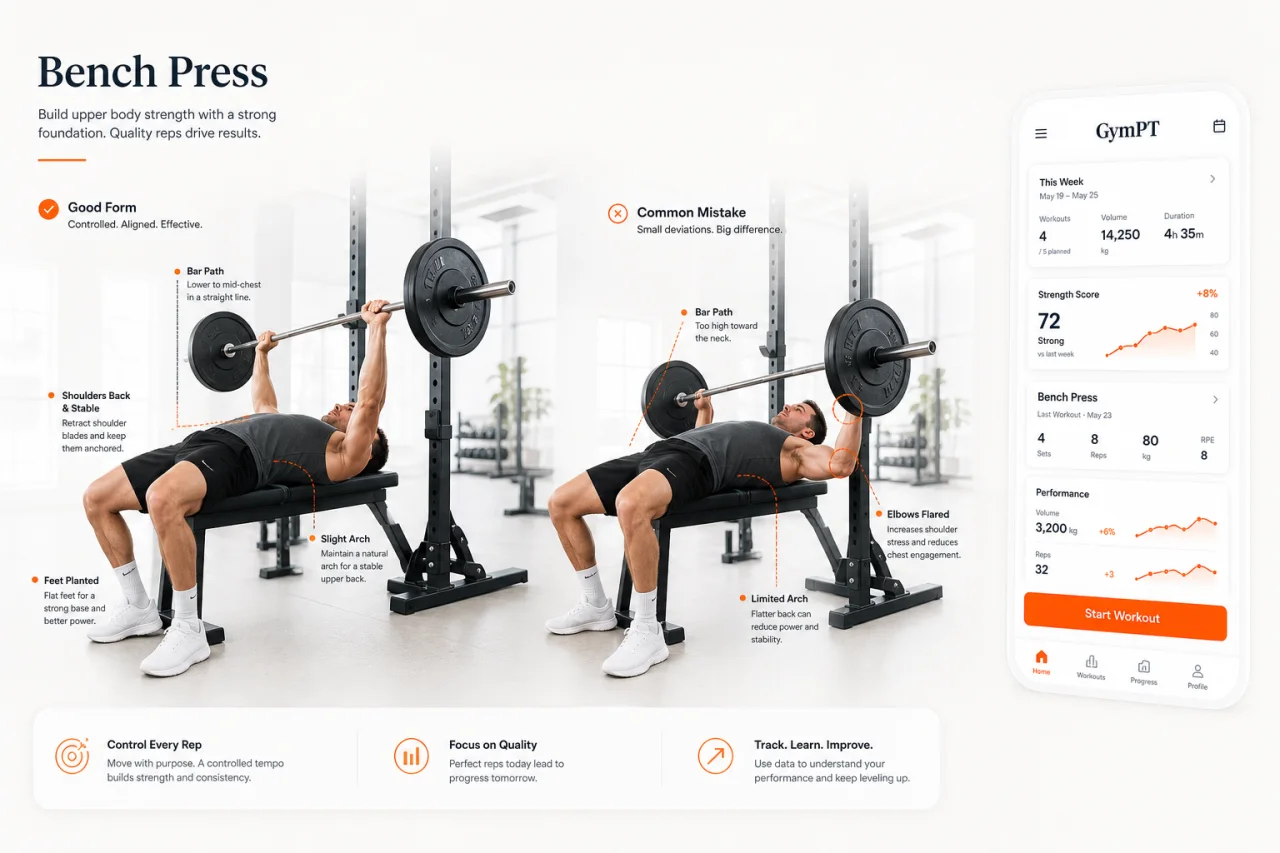
- Plant your feet firmly. Keep both feet flat and stable so your lower body can help you stay tight.
- Set your upper back. Pull your shoulder blades back and down, then keep them pinned to the bench.
- Choose a grip you can control. Your hands should be even, and your wrists should stay stacked over the bar instead of bending back.
- Keep your eyes under the bar. This makes unracking and reracking more consistent.
- Unrack with control. Bring the bar to a steady start position before the first rep.
A good setup should feel repeatable. If you need to shift around every rep, the load may be too heavy or your position may need work.
Bench press technique: the rep itself
Once you are set, think about the rep as a controlled path rather than a fast drop and bounce.
- Lower the bar under control. Bring it down smoothly toward the lower-to-mid chest area.
- Keep your elbows in a natural angle. They should not flare aggressively out to the sides.
- Touch lightly, then press. Avoid bouncing the bar off your chest.
- Press up and slightly back. Finish with the bar over the shoulder line, not drifting forward.
- Keep your whole body tight. Your upper back, feet, and torso should stay braced through the rep.
If you are using GymPT to track workouts, note the load, reps, and how stable each set felt. That makes it easier to spot when technique starts to break down before progress stalls.
Common bench press mistakes to fix
Most bench press problems come from losing position, rushing the descent, or choosing a load that is too heavy for clean reps.
- Elbows flaring too wide: This often makes the press feel unstable and harder to control.
- Wrists bending back: Keep the bar over the forearm so force transfers better.
- Bouncing the bar: A rebound may make the rep easier, but it reduces control.
- Shoulders rolling forward: If your upper back loses tension, the press usually gets weaker.
- Feet moving around: A shifting base makes the whole lift less consistent.
- Using too much weight too soon: If the bar path changes every rep, the load is probably too high for your current form.
One simple rule: if you cannot repeat the same rep shape, reduce the load and rebuild the pattern.
Bench press cues that actually help
Short cues are often more useful than long explanations during a set. Try these bench press cues when you want cleaner reps:
- “Shoulders back and down.”
- “Feet stay planted.”
- “Lower with control.”
- “Press through the bar.”
- “Keep the bar path steady.”
Use only one or two cues at a time. Too many reminders can make the lift feel crowded and harder to repeat.
When to use bench press alternatives
The bench press is not the only way to train your chest, triceps, and pressing strength. In some cases, a variation is the smarter choice.
- Dumbbell bench press: Useful if you want a more natural arm path and easier side-to-side adjustments.
- Machine chest press: Helpful when you want stable pressing practice with less setup complexity.
- Push-ups: A strong bodyweight option for building pressing capacity and control.
- Incline press variations: Good if you want to shift emphasis toward the upper chest and shoulders.
If your goal is to keep training while improving technique, GymPT can match exercises to the equipment you have and help you swap in a better option when the barbell bench press is not the right fit for the day.
How to progress without losing form
Progress should come from better reps, not just heavier reps. A simple progression approach works well:
- Keep the same setup for several sessions.
- Add reps before adding load when possible.
- Increase weight only when your current load looks consistent.
- Track bar speed, control, and stability, not just the number on the bar.
This is where workout tracking matters. If your last two reps always turn into a grind, you may be progressing too fast. A small increase with clean form is usually better than a bigger jump that changes your technique.
Bench press form checklist
Use this quick checklist before each working set:
- Feet planted
- Upper back tight
- Wrists stacked
- Bar lowered with control
- Elbows in a natural path
- Bar touches lightly, not bounces
- Press finishes over the shoulder line
If you can keep these points consistent, your bench press form is probably in a good place for steady progress.
How GymPT can help you improve your bench press
Bench press technique improves faster when you can see patterns over time. GymPT helps you do that by combining workout tracking, AI coach chat, equipment-based training, and progress insights in one place.
You can use it to build a plan around your available equipment, log your bench press sessions, compare performance across weeks, and adjust your training when your form or recovery changes. That makes it easier to stay consistent and make smarter decisions instead of guessing from one workout to the next.
Final takeaway
A solid bench press is built on stability, control, and repeatable reps. Start with a strong setup, lower the bar with purpose, avoid common mistakes, and choose alternatives when they better match your current goal or equipment. If you want help turning those cues into a real training habit, GymPT can guide the plan, track the work, and show your progress clearly.