best chest exercises
Best Chest Exercises: 9 Smart Moves for Strength, Size, and Better Form
A practical guide to the best chest exercises, with form cues, weekly set targets, and easier alternatives so you can train your chest with more confidence.
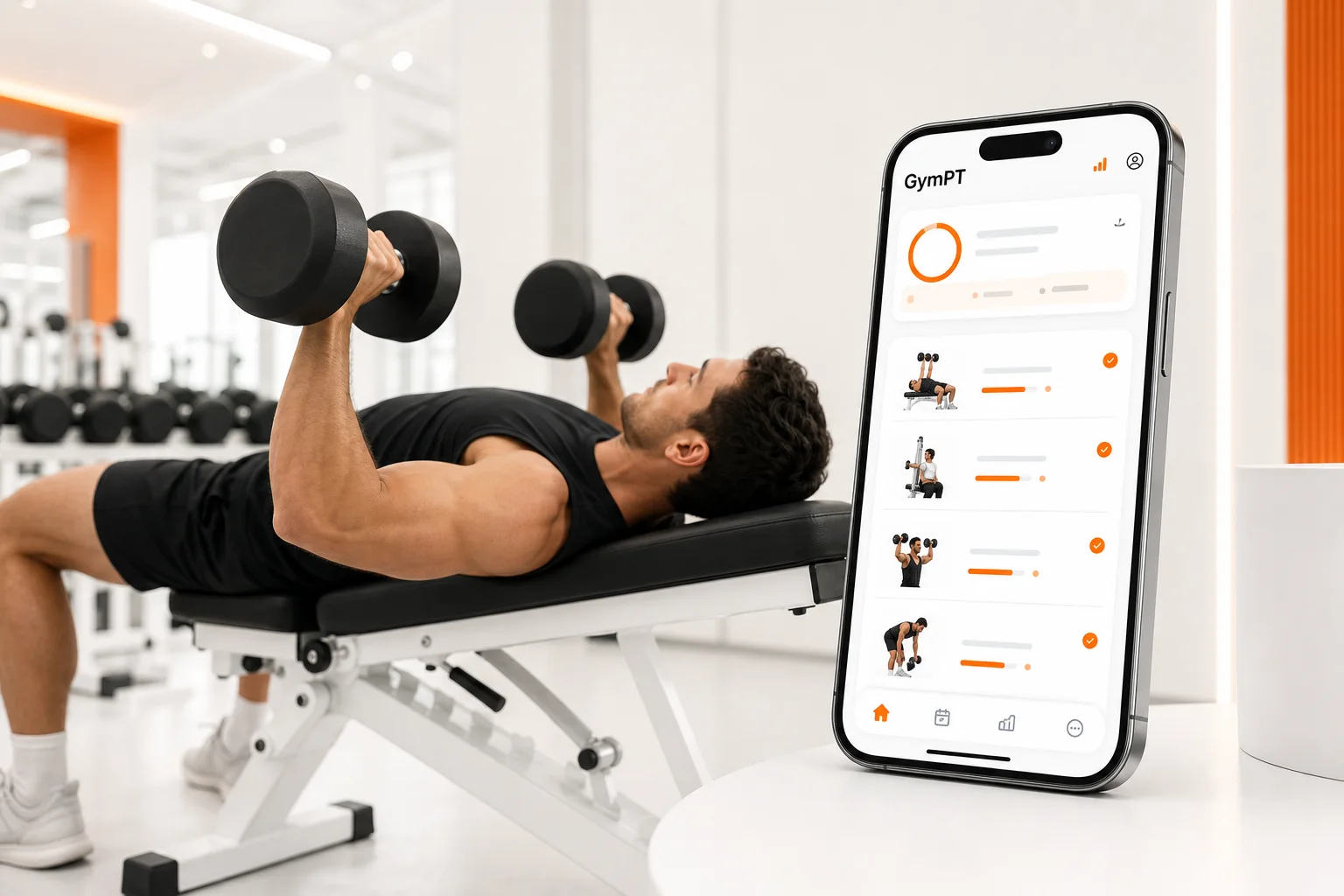
Best chest exercises: what actually deserves a place in your program
If you want the best chest exercises, don’t just chase the heaviest press you can find. The best choices are the ones that let you train the chest through a full, controlled range of motion, match your equipment, and fit your current skill level. For most lifters, that means combining one or two pressing patterns with one fly or squeeze-based movement, then repeating that work consistently across the week.
The chest is mainly the pectoralis major, which helps bring the arms across the body and press them forward. That is why the smartest chest training usually includes horizontal pressing, incline pressing, and adduction-focused work like fly variations. Research on resistance training suggests that weekly volume, training frequency, and proximity to failure all matter for muscle growth, while beginner programs should keep technique clean and volume manageable.
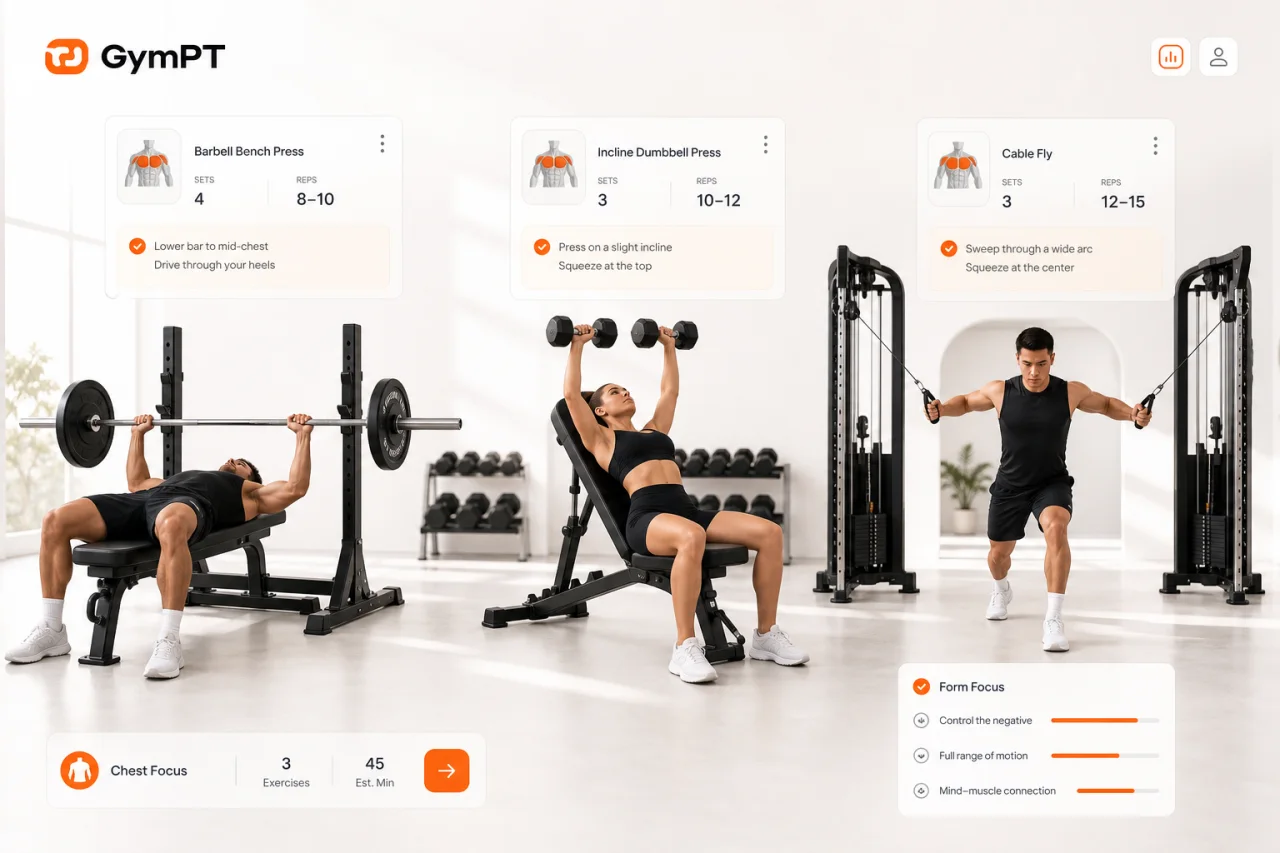
The 9 best chest exercises for most gym users
1. Barbell bench press
The barbell bench press is a classic because it lets you load the chest heavily and progress over time. It is especially useful if your goal is strength plus size.
- Form cue: Set your shoulder blades back and down, keep your feet planted, and lower the bar under control to the mid-chest.
- Best for: Intermediate lifters, strength-focused training, and measurable progression.
- Common mistake: Bouncing the bar off the chest or flaring the elbows too hard.
2. Dumbbell bench press
Dumbbells give you a natural range of motion and can be easier on the shoulders for some lifters. They also help you spot side-to-side strength differences.
- Form cue: Lower until your upper arms are just below parallel, then press up without letting the weights drift too far apart.
- Best for: Home gym users, beginners who need a friendlier press, and lifters who want more control.
3. Incline dumbbell press
This is one of the best chest exercises if you want to emphasize the upper chest while still training the whole pressing pattern. Keep the bench angle moderate; too steep turns it into more of a shoulder exercise.
- Form cue: Use a slight incline and press up and slightly in.
- Best for: Balanced chest development and upper-chest emphasis.
4. Machine chest press
Machine presses are excellent when you want stability, repeatable form, and easy progression. They are also a strong option for beginners who are still learning how to brace and press.
- Form cue: Adjust the seat so the handles line up with mid-chest, then press without shrugging your shoulders.
- Best for: Beginners, higher-rep sets, and safer fatigue management.
5. Push-up
The push-up is a simple but highly effective chest exercise because it teaches body control, trunk stiffness, and pressing mechanics at the same time. If a full push-up is too hard, elevate your hands on a bench or box.
- Form cue: Keep your body in a straight line and lower until your chest is close to the floor or platform.
- Best for: Beginners, warm-ups, and no-equipment training.
6. Incline push-up
This is the easiest push-up variation for many beginners. It lets you practice good pressing mechanics before moving to the floor.
- Form cue: Use a stable bench, rack, or box and keep your elbows at a comfortable angle.
- Best for: New lifters and anyone rebuilding pressing confidence.
7. Cable chest fly
Cable flys are valuable because they keep tension on the chest through a long arc of motion. They are not a replacement for pressing, but they are a strong accessory for chest growth.
- Form cue: Keep a soft bend in the elbows and bring your hands together in front of the chest without turning it into a shrug.
- Best for: Finishing work, controlled hypertrophy sets, and cable-based training.
8. Dumbbell fly
Dumbbell flys can be effective, but they demand more control than presses. Use a lighter load and stop the descent before your shoulders lose position.
- Form cue: Think “wide arc, slow lower, controlled squeeze.”
- Best for: Experienced lifters who can keep the movement smooth.
9. Chest press machine or plate-loaded press
If you want a stable way to add volume after your main press, a machine press is a reliable choice. It is often easier to recover from than another free-weight press.
- Form cue: Keep your ribs down and press through the full range you can control.
- Best for: Extra weekly volume without technical breakdown.
How to choose the right chest exercises for your goal
If your goal is strength
Prioritize one heavy press, usually the barbell bench press or a machine press you can load progressively. Add a second press variation for volume, then finish with one accessory movement.
If your goal is muscle growth
Use a mix of presses and flys, and make sure your weekly chest volume is high enough to create a training stimulus without wrecking recovery. A practical starting point for many lifters is about 10 to 16 hard sets per week for the chest, split across two sessions. Evidence suggests that training a muscle group more than once per week can be beneficial when volume is matched, and that total weekly set volume is a major driver of hypertrophy.
If your goal is beginner-friendly consistency
Choose stable exercises first: machine chest press, incline push-up, dumbbell bench press, and cable flys with light loads. Beginners usually progress faster when technique stays clean and the plan is simple enough to repeat week after week. NSCA guidance for newer trainees emphasizes low-to-moderate volume, manageable loads, and technique that does not break down.
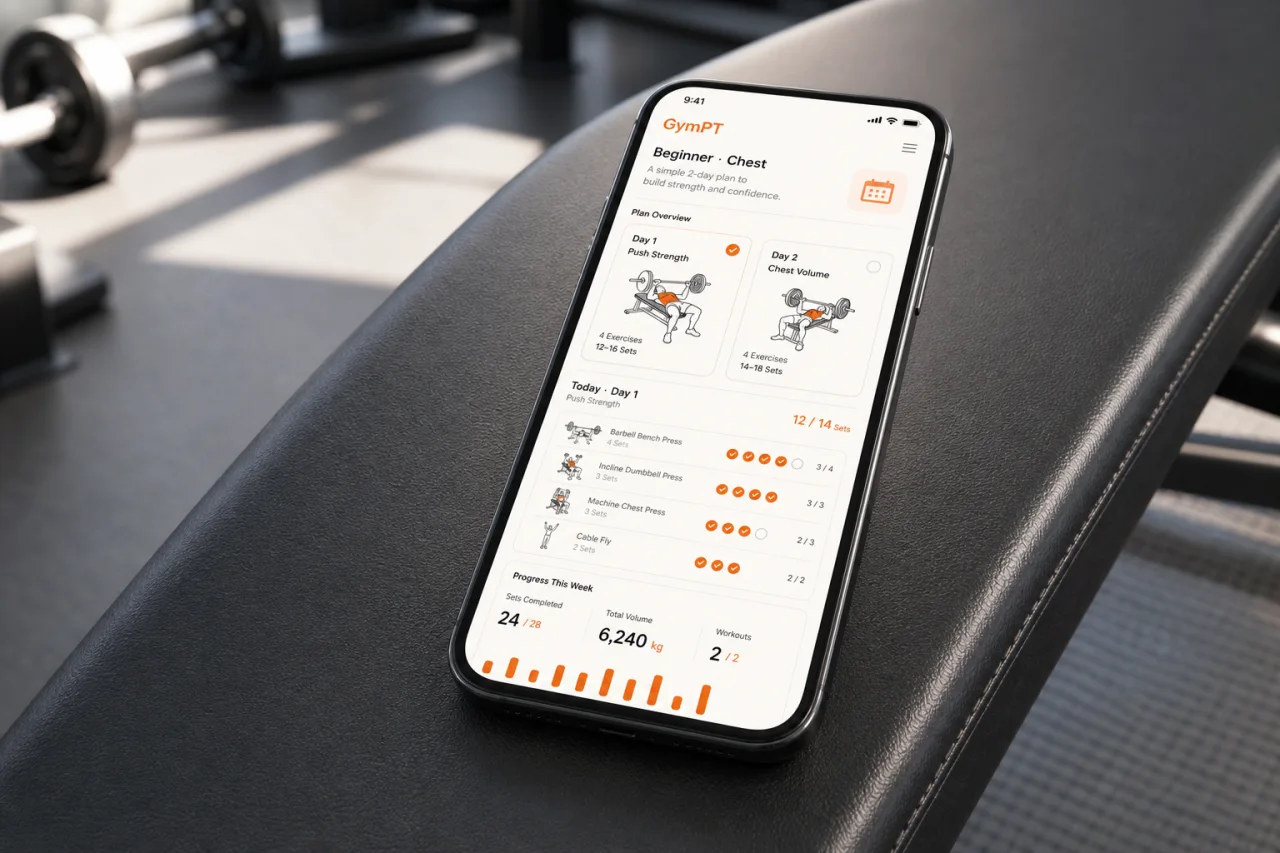
Chest training volume, reps, and frequency that work
You do not need a different chest day every week. You need a repeatable structure that lets you add reps, load, or control over time. A good chest plan usually includes:
- Frequency: 2 times per week for most people
- Sets: 10 to 16 hard sets weekly for growth, fewer if you are new
- Reps: 5 to 8 on main presses, 8 to 15 on accessories
- Effort: Finish most sets with about 1 to 3 reps in reserve
That approach lines up with research showing that frequency can help when volume is distributed well, and that training close to failure may offer a small hypertrophy advantage, though it is not required on every set.
Common chest training mistakes to avoid
- Turning every chest day into a max bench day: Heavy pressing is useful, but too much maximal work can stall progress.
- Using only one exercise: Pressing alone is not always enough for complete chest development.
- Cutting the range of motion short: Controlled depth usually beats ego lifting.
- Letting shoulders take over: If your front delts dominate every set, reduce the load and improve setup.
- Training chest hard only once per week: Splitting volume across two sessions often makes recovery and progression easier.
Beginner-friendly chest workout example
If you want a simple chest workout you can repeat, try this:
- Machine chest press — 3 sets of 8 to 12
- Incline dumbbell press — 3 sets of 8 to 10
- Incline push-up — 2 sets of 8 to 15
- Cable chest fly — 2 sets of 12 to 15
Rest 90 to 150 seconds on presses and 45 to 90 seconds on flys. If your form starts to change, stop the set. Good chest training is not just about effort; it is about repeating high-quality reps.
How GymPT helps you build a better chest plan
GymPT can turn these ideas into a plan that fits your equipment, training level, and weekly schedule. Use the AI coach chat to ask which chest exercises match your gym setup, track your sets and reps, and review progress insights so you can see whether your chest work is actually moving forward. If you are unsure where to start, let GymPT build your chest day around the equipment you have and adjust the volume as you improve.
Bottom line: the best chest exercises are the ones you can perform well, recover from, and progress on consistently. Start with one main press, add one secondary press, finish with a fly or push-up variation, and keep your weekly volume realistic.
Related reading: if you want to build the rest of your upper body with the same approach, check out our guides on bench press form, push-up form, dumbbell exercises for beginners, and full body workout with cable machine.