shoulder press mistakes
Shoulder Press Mistakes: 9 Form Errors That Limit Strength and Stress Your Shoulders
The shoulder press is simple in theory and easy to mess up in practice. Learn the most common shoulder press mistakes, how to fix them, and when to swap in a better variation.

Shoulder Press Mistakes: Why a Simple Lift Goes Wrong
The shoulder press looks straightforward: drive the weight overhead and lock it out. In reality, shoulder press mistakes are common because the lift asks for shoulder mobility, upper-back control, core tension, and clean bar path all at once. When one piece breaks down, the rep usually turns into a low-back lean, flared elbows, or a painful grind.
This guide breaks down the most common errors, the cues that fix them, and the best alternatives when the standard press is not the right fit for your body or equipment setup.
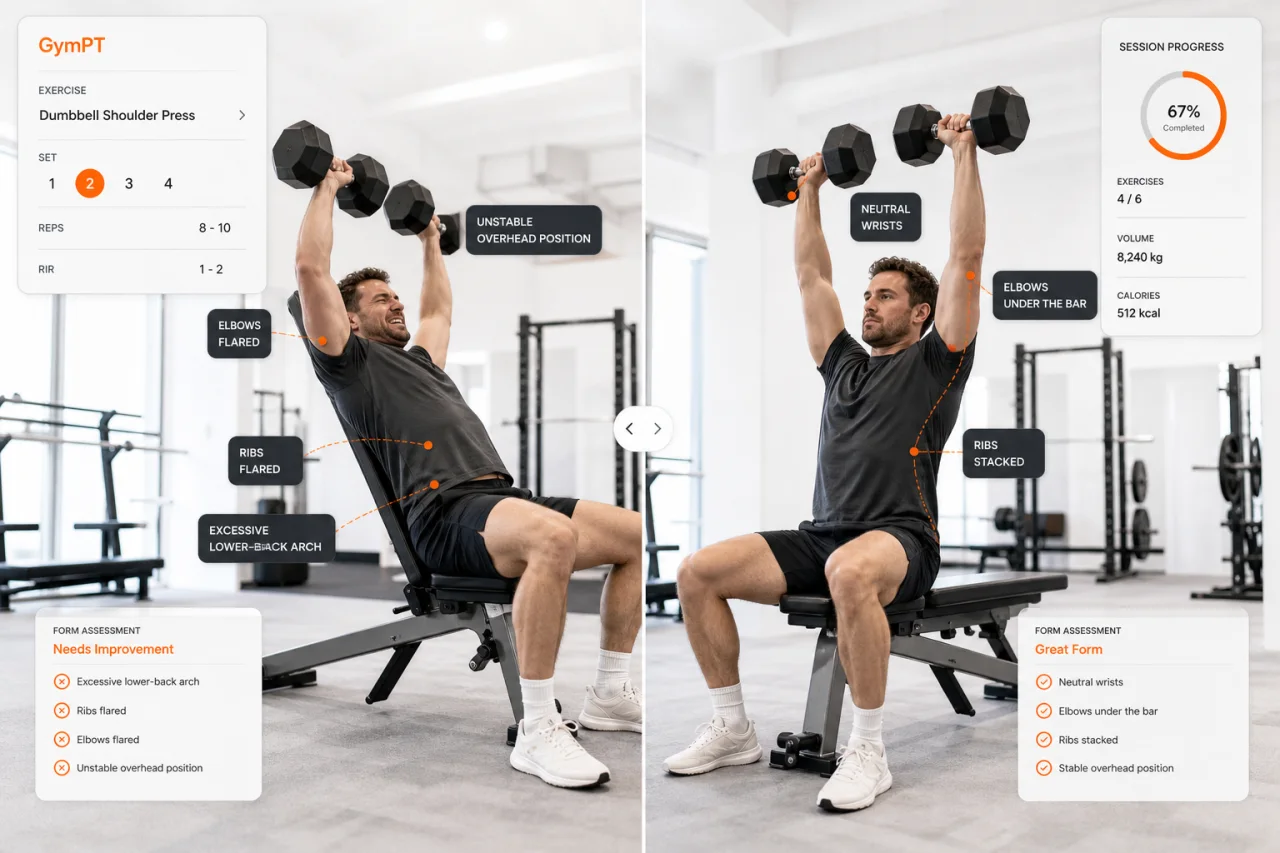
For a broader training plan, GymPT can help you build a personalized program, track your pressing volume, and adjust exercise selection based on your equipment and progress.
What a good shoulder press should look like
A solid overhead press starts with a stable base. Your feet stay planted, ribs stay stacked over your pelvis, and your glutes and abs stay braced so the movement comes from the shoulders and arms instead of a backbend. ACE’s exercise guidance also emphasizes a neutral wrist, a controlled press, and keeping the shoulder blades set rather than shrugging through the lift.
Think of the rep as a straight, efficient path: the weight moves up close to your face, then finishes overhead without turning into a standing incline bench press.
The 9 most common shoulder press mistakes
1. Leaning back to turn the press into a mini-bench press
This is one of the biggest shoulder press mistakes. If your ribs flare and your lower back arches hard, you are borrowing motion from the spine instead of pressing with the shoulders. That usually means the load is too heavy, the core is not braced, or the setup is off.
Fix it: squeeze your glutes, brace your abs before the first rep, and keep your ribs down. If you still have to lean, reduce the load.
2. Starting with the elbows too far out
When elbows drift wide, the press often feels unstable and the shoulder may lose a strong line of force. A slightly forward elbow position is usually easier to control and more joint-friendly for many lifters. ACE describes the elbows in a slightly forward position rather than directly out to the sides.
Fix it: set your elbows a little in front of your torso, not flared straight out.
3. Shrugging the shoulders up before the weight moves
Some lifters start the rep by jamming the shoulders toward the ears. That creates tension in the neck and can make the press feel cramped instead of powerful. A better setup is to keep the shoulder blades controlled and the neck long.
Fix it: think “shoulders down and wide” before you press, then let the arms travel overhead without losing control.
4. Using a bar path that drifts forward
If the bar or dumbbells move too far in front of your face, the rep becomes harder and less stable. You may also compensate by leaning back more, which feeds into the same problem.
Fix it: press up and slightly back so the weight finishes stacked over the midfoot and shoulders.
5. Failing to keep the wrists stacked
Bent-back wrists make the press feel weaker and can waste force. A neutral wrist keeps the load aligned through the forearm and hand.
Fix it: keep your knuckles pointed up and the wrist in line with the forearm.
6. Pressing too heavy too soon
Many shoulder press mistakes come from ego, not mechanics. If the load is too high, the body finds shortcuts: leg drive, back extension, half reps, and ugly lockouts. That may let you move weight, but it does not build better pressing skill.
Fix it: lower the weight until every rep looks the same from start to finish.
7. Cutting the range of motion short
Partial reps can be useful in some advanced programs, but most lifters use them because the full rep is too hard. That usually means the shoulders, upper back, or core are not doing their job yet.
Fix it: use a range you can control. If the bottom position feels rough, try a seated variation or a lighter dumbbell press.
8. Letting the head drift forward
When the head pushes forward under the bar, the neck loses its stacked position and the rep often turns into a compensation pattern. The finish should be tall, not craned.
Fix it: keep your head neutral and let the bar travel around it, not into it.
9. Ignoring shoulder pain and trying to force the rep
Not every shoulder issue is a form issue, but pain is a signal worth respecting. NHS guidance for shoulder pain recommends staying active, avoiding strenuous self-made loading, and seeking help if pain is severe, prolonged, or follows an injury.
Fix it: reduce range, reduce load, or switch to a friendlier variation. If pain is sharp, worsening, or persistent, get assessed by a qualified professional.
Quick form cues that clean up the press fast
- “Ribs down.” Keep the torso stacked instead of arching hard.
- “Press close.” Move the weight in a tight path, not away from your body.
- “Wrists tall.” Stack wrist over forearm.
- “Neck long.” Avoid shrugging into the ears.
- “Finish over midfoot.” Lock out with the weight balanced overhead.
If you only remember one thing, remember this: the best shoulder press is the one you can repeat with the same shape every rep.
Safer alternatives when the standard press does not fit
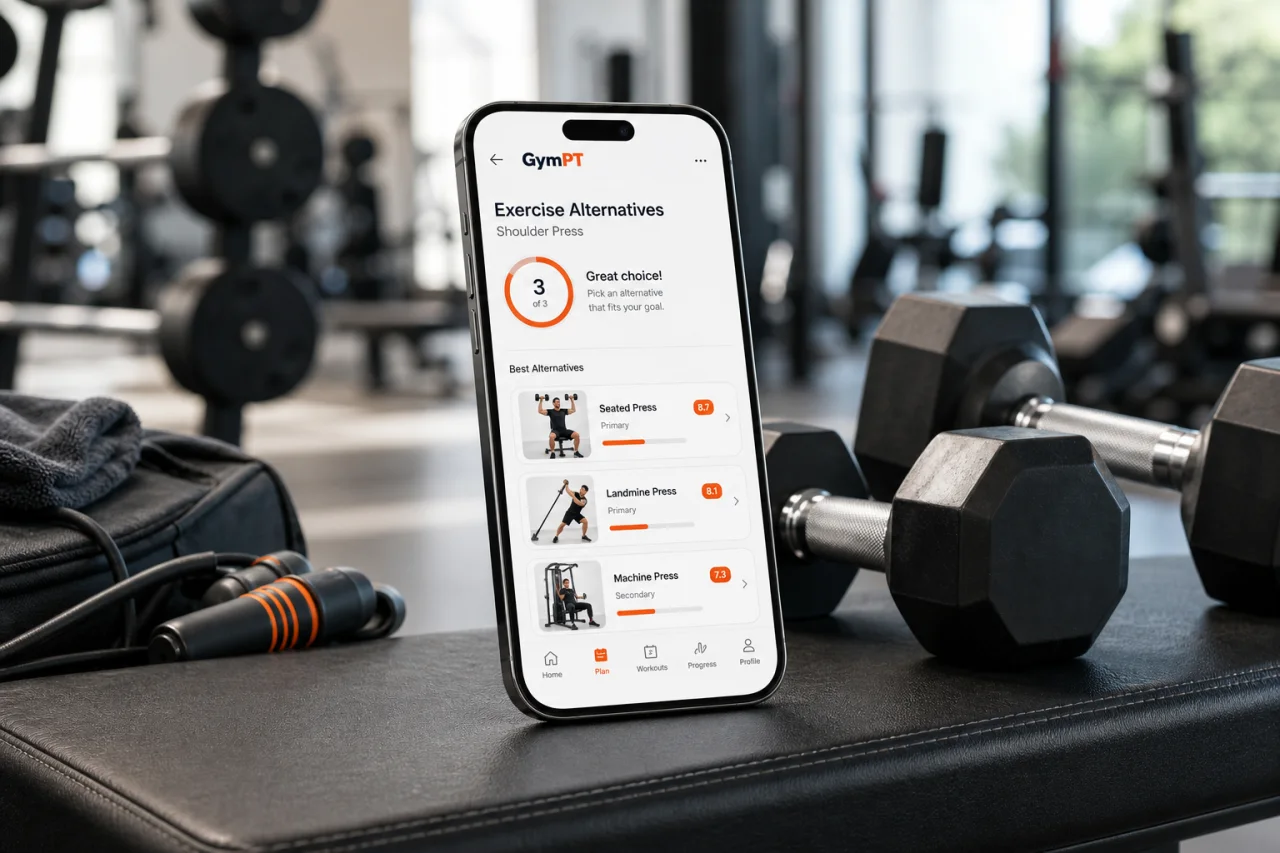
Sometimes the fix is not “try harder.” Sometimes it is choosing a better variation for your current mobility, strength, or equipment.
Seated dumbbell shoulder press
This reduces the temptation to lean back and can make it easier to learn the overhead path. It is a good option when standing presses turn into full-body compensation.
Machine shoulder press
A machine can provide more stability and help you focus on pressing mechanics instead of balancing the load. ACE’s seated shoulder press guidance highlights the value of a supported backrest and stable setup.
Landmine press
This angled press is often easier on lifters who struggle with full overhead range. It still trains pressing strength while reducing the demand of a straight vertical path.
Half-kneeling single-arm press
This variation challenges core control and helps expose side-to-side differences without forcing a heavy bilateral load.
Incline dumbbell press
If overhead work is not comfortable yet, an incline press can still build shoulder and upper-chest strength while you improve mobility and control.
How to practice better shoulder press technique
- Warm up the shoulders and upper back. Use light mobility and a few ramp-up sets.
- Choose a load you can control. The last rep should still look clean.
- Film one set from the side. Check rib flare, bar path, and elbow position.
- Use one cue at a time. Too many corrections at once usually makes the lift worse.
- Progress slowly. Add reps or small load jumps only when form stays consistent.
GymPT can make this easier by logging your sets, spotting patterns in your progress, and adjusting your plan when a movement stalls.
When to stop and switch exercises
Stop the set if you feel sharp pain, lose control of the weight, or have to turn every rep into a backbend. If overhead pressing consistently irritates your shoulder, switch to a variation that lets you train pain-free while you rebuild tolerance and technique. NHS shoulder guidance also notes that pain that does not improve, or movement that becomes very difficult, should be checked by a clinician.
That is not a setback. It is smart training.
Build a better press with better feedback
The shoulder press is a great exercise when it is done well. The goal is not just to move weight overhead once. The goal is to press with repeatable mechanics, enough stability to progress, and a variation that matches your current ability.
If your shoulder press keeps breaking down, start by fixing the setup, then reduce the load, then choose a better variation if needed. Small corrections usually beat big ego lifts.
Want a smarter way to train? GymPT can build your plan around your equipment, coach your form with AI chat, and track your progress so your next press looks better than your last one.
Frequently asked questions about shoulder press mistakes
Why do I lean back during shoulder press?
Usually because the load is too heavy, your core is not braced enough, or your shoulders do not have enough control yet. Reduce the weight and reset your torso position.
Should my elbows be flared out?
Not fully. A slightly forward elbow position is usually easier to control than a wide flare.
Is it normal to feel shoulder press in my neck?
Not ideal. Some upper-trap work is normal, but if the neck is doing most of the work, you may be shrugging or losing shoulder position.
What is the best alternative if overhead pressing hurts?
Try a landmine press, machine press, or incline dumbbell press. Pick the version that lets you train without pain and with good control.