dumbbell vs machine workout
Dumbbell vs Machine Workout: How to Choose the Right Tool for Your Goal
Dumbbells and machines can both build muscle and strength. Learn when each tool makes sense, how to combine them, and how GymPT adapts your plan to the equipment you have.
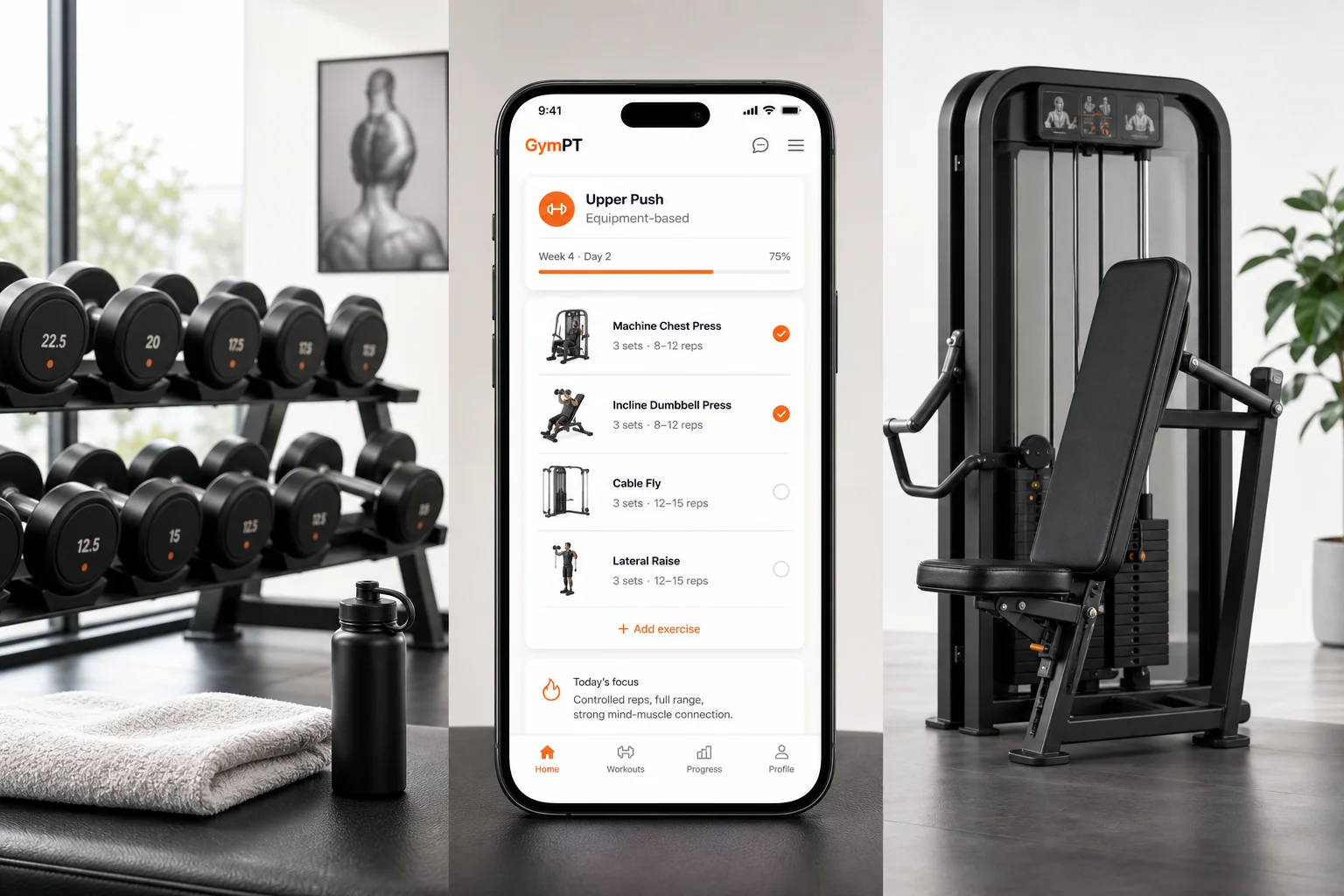
Dumbbell vs machine workout: the short answer
If you are deciding between a dumbbell vs machine workout, the best choice is usually not either-or. Both tools can build muscle and strength when you train with enough effort, enough weekly volume, and consistent progression. Recent reviews and ACSM guidance show that the main driver is the quality of the program, while the equipment choice mainly changes how the exercise feels, how stable it is, and how easy it is to match the movement to your goal.
That means the right answer depends on your training level, your goal, your joints, your schedule, and the equipment you actually have. GymPT helps you make that choice automatically by building a plan around your available tools, then adjusting the exercise selection as your progress changes.
What dumbbells do well
Dumbbells are a strong choice when you want more freedom of movement and more demand on coordination and stability. They are especially useful for unilateral work, home training, and exercises where a natural arm path matters. They also make it easy to train around small asymmetries, because each side has to contribute on its own.
- Good for: home workouts, balanced development, unilateral training, and general strength.
- Best when: you want flexibility in exercise selection and a simple setup.
- Watch for: technique breakdown if the load gets too heavy too fast.
For many lifters, dumbbells are the most practical bridge between beginner-friendly training and more advanced free-weight work.
What machines do well
Machines reduce the balance demand and make it easier to focus on the target muscle. That can be helpful if you want a more stable setup, if you are training close to fatigue, or if you want to keep the movement path more controlled. Machines are also efficient in busy gyms because setup is usually fast and repeatable.
- Good for: beginners, higher-rep work, isolation exercises, and training near fatigue.
- Best when: you want consistency, stability, and simple progression.
- Watch for: fixed paths that may not fit every body perfectly.
For many people, machines make it easier to accumulate quality volume without spending energy on balance or setup.
What the research says about dumbbells vs machines
The current evidence does not support the idea that one tool is universally superior. Systematic reviews and meta-analyses show that both free weights and machines can produce similar gains in muscle size when training volume is matched. Strength gains are often specific to the way you train and test them: if you train with free weights, you tend to get better at free-weight tasks; if you train with machines, you tend to get better at machine-based tasks.
That is why the smartest question is not “Which is better?” but “Which tool best matches my goal right now?” If your goal is overall muscle growth, both can work well. If your goal is a specific performance outcome, the exercise style should look more like the task you want to improve.
How to choose based on your goal
If your goal is muscle growth
Choose the tool that lets you train hard, recover well, and repeat the plan consistently. Machines are often easier for adding volume because they are stable and less technically demanding. Dumbbells are excellent when you want a larger exercise menu or need to train at home.
If your goal is strength
Use the tool that matches the movement you want to get stronger in. Dumbbells can build strong pressing and pulling patterns, while machines can help you overload a muscle with less technique noise. A mixed plan is often the most practical option.
If your goal is beginner confidence
Machines can lower the learning curve because they simplify balance and positioning. Dumbbells are still useful, but starting with a few stable machine patterns can make early sessions feel easier to repeat.
If your goal is convenience
Pick the tool you can access most reliably. The best program is the one you can actually follow week after week.
A smart way to combine both in one plan
You do not need to commit to one camp. In fact, many of the best plans use both tools on purpose. A simple structure is to use machines for the main stable lifts and dumbbells for accessory work or unilateral training.
- Start with one main compound pattern. Example: dumbbell bench press or chest press machine.
- Add one lower-body pattern. Example: goblet squat or leg press.
- Include one pull. Example: one-arm dumbbell row or seated row machine.
- Finish with a targeted accessory. Example: dumbbell lateral raises or machine leg curl.
This approach gives you the best of both worlds: the simplicity of machines and the movement freedom of dumbbells.
When dumbbells are the better choice
- You train at home or in a small gym.
- You want more exercise variety with one piece of equipment.
- You need unilateral work to balance left-right differences.
- You prefer a more natural movement path.
If that sounds like you, a home workout with dumbbell setup may be the most efficient option.
When machines are the better choice
- You are new to resistance training.
- You want to keep form simple and repeatable.
- You are training close to fatigue and want more stability.
- You want to build volume without a lot of setup time.
If you want a more guided lower-body setup, our leg press form guide can help you use one of the most useful machine patterns correctly.
How GymPT adapts your plan to the equipment you have
This is where a smart training app matters. GymPT can build an equipment-based training plan around dumbbells, machines, or a mix of both. If you only have dumbbells, it can prioritize movements that cover the major patterns without wasting time. If you train in a full gym, it can use machines to simplify progression and save energy for the hard sets.
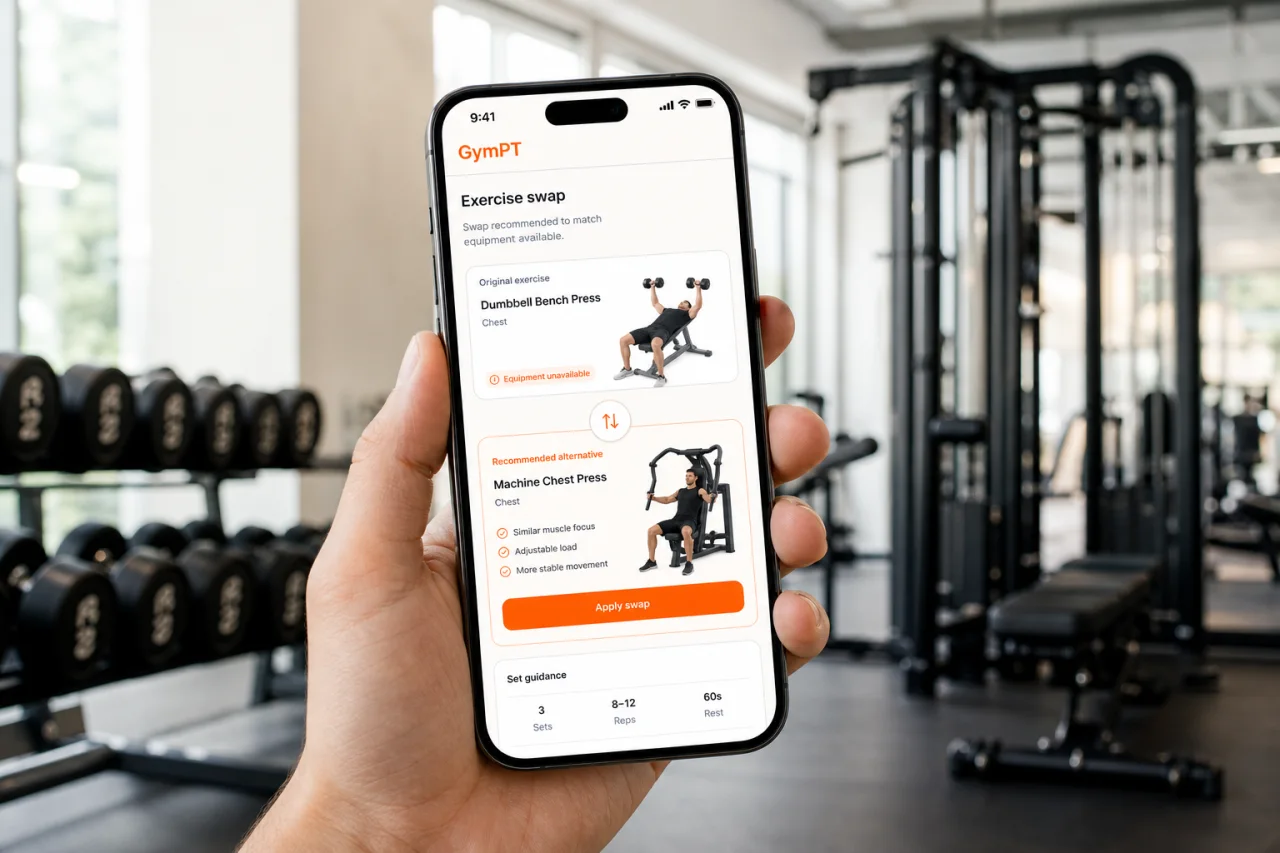
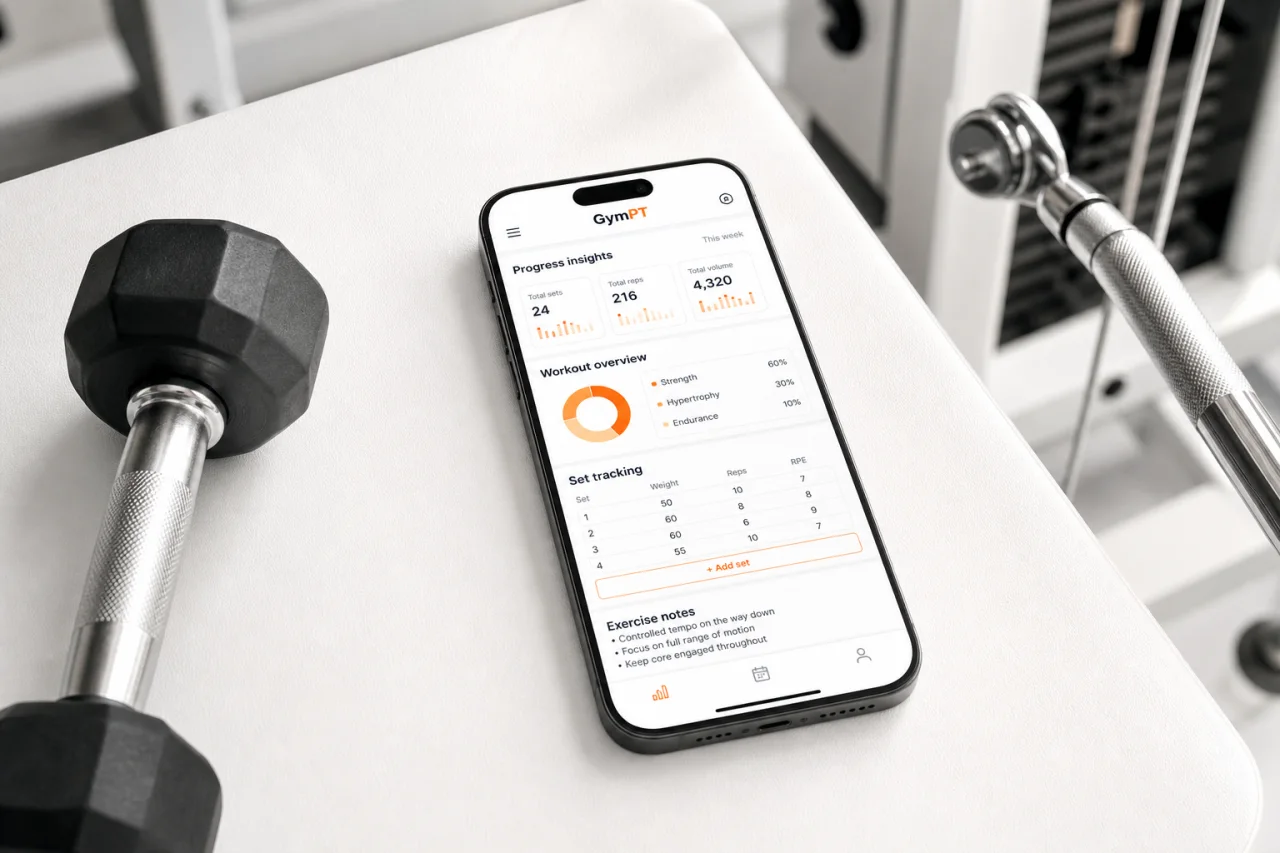
GymPT also helps you adjust when your situation changes. If a machine is busy, you can swap to a dumbbell version. If your joints feel better with a more stable movement, you can shift toward a machine. If you want to track progress, GymPT keeps your workout history and shows whether your loads, reps, and consistency are moving in the right direction.
A simple decision rule you can use today
Choose dumbbells when you want flexibility, unilateral work, and a more free-moving pattern. Choose machines when you want stability, repeatability, and an easier way to accumulate volume. Choose both when you want a practical plan that is easier to stick to and easier to progress.
If you are unsure, start with the tool that makes your next workout easier to complete well. Then let GymPT adjust the plan based on your equipment, your performance, and your progress over time.
Bottom line
The dumbbell vs machine workout debate is less important than most people think. Both can build muscle and strength effectively. The best choice is the one that fits your goal, your experience level, and your available equipment. For most lifters, the smartest plan is a mix of both, organized around consistency and progressive overload.
GymPT makes that choice easier by turning your equipment into a plan instead of a limitation.