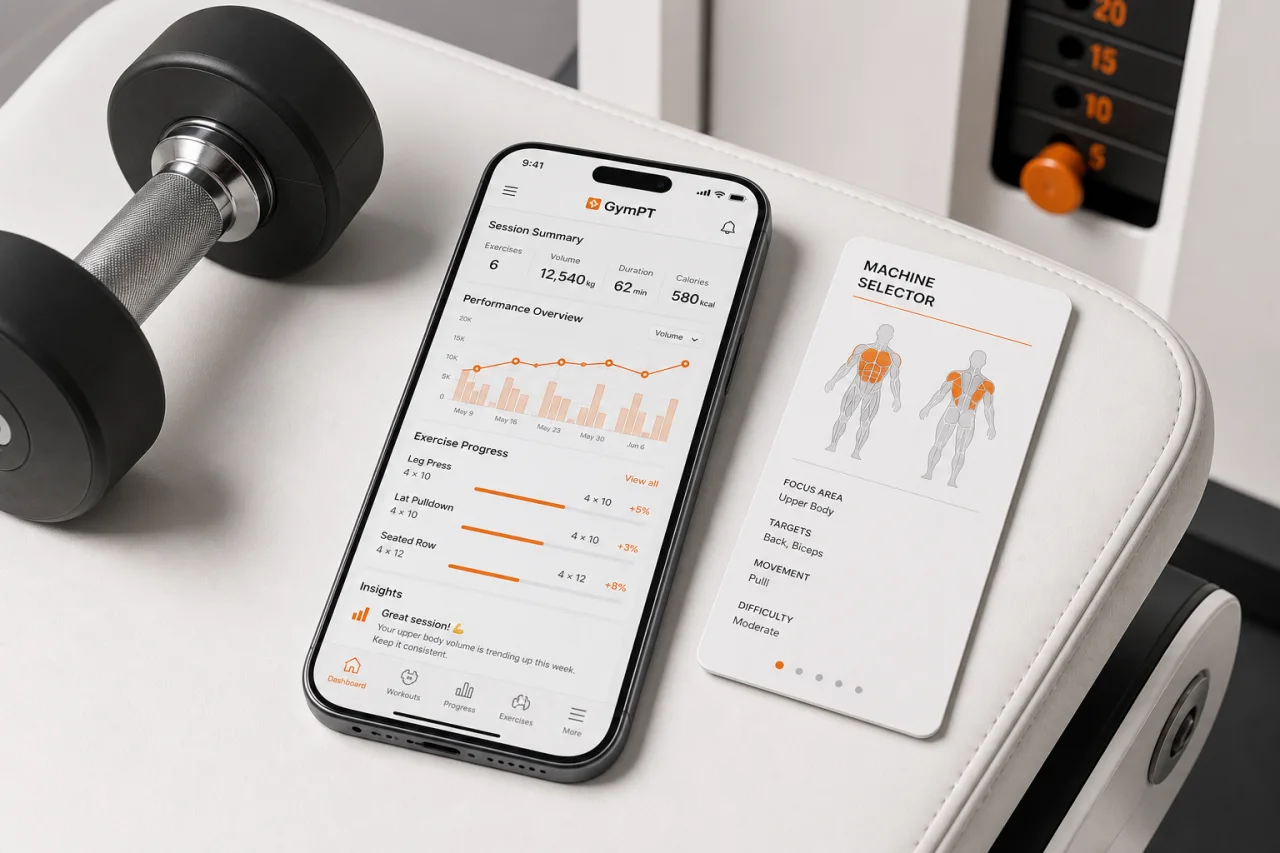
free weights vs machines
Free Weights vs Machines: How to Choose the Right Tool for Your Training Plan
Free weights and machines both build strength and muscle. The best choice depends on your goal, experience, space, and the equipment you actually have.
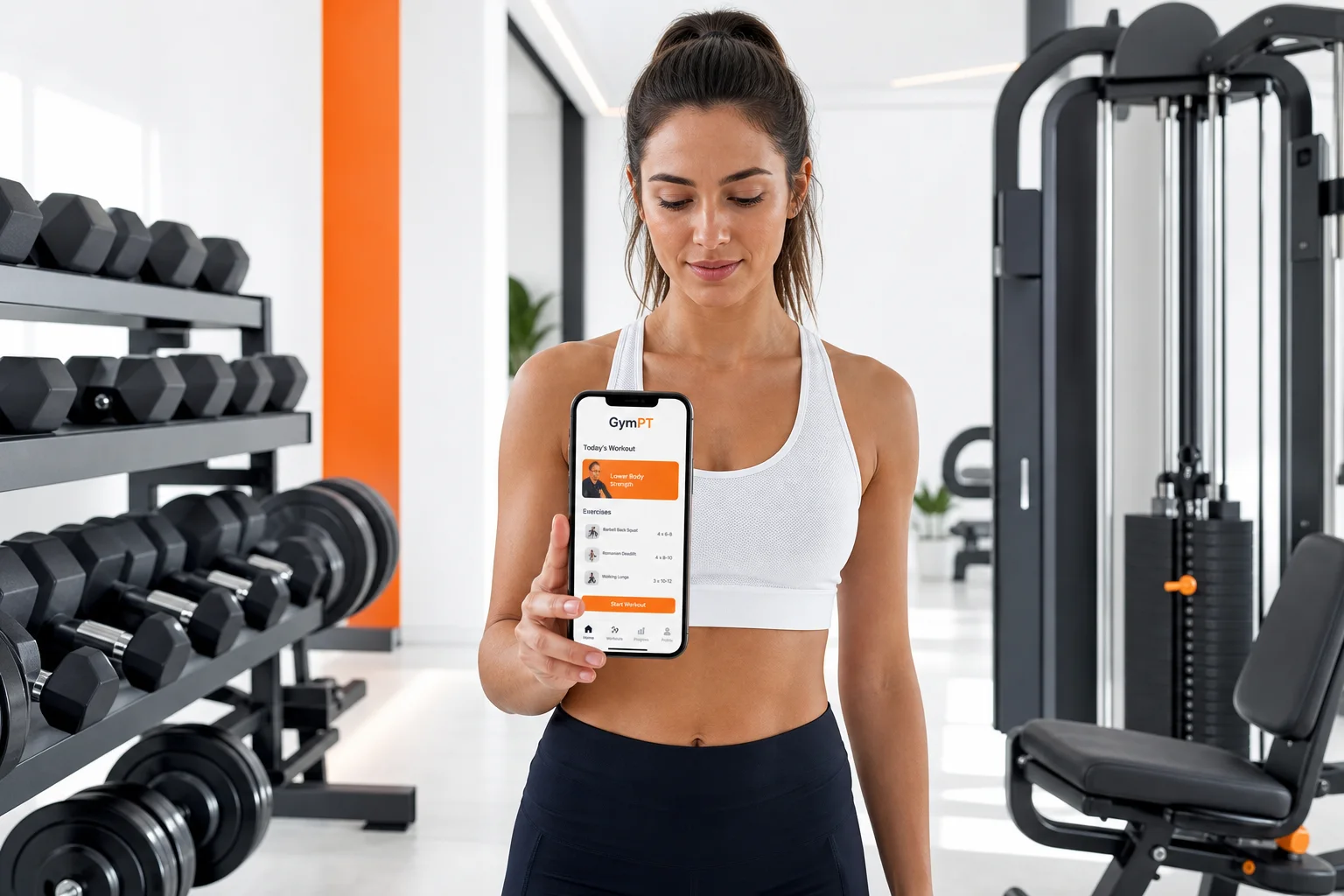
Free weights vs machines: the real question is how to train smarter
When people compare free weights vs machines, they usually want a simple winner. The better answer is more useful: both can build strength and muscle, and the best choice depends on your goal, experience, space, and how consistent you can be. Recent reviews show that when training volume is matched, both tools can produce similar muscle growth, while strength gains tend to be more specific to the type of exercise you practice. In other words, the best tool is the one that fits your plan and lets you progress safely and consistently.
If you use GymPT, this is exactly where the app helps: it can build a workout plan around the equipment you have, adjust exercise selection when your gym is busy, and track whether your progress is actually moving forward.
What free weights do well
Free weights include dumbbells, barbells, kettlebells, and other load you move without a fixed path. They are useful when you want to train coordination, balance, and control alongside strength. They also make it easier to use one movement pattern across different spaces, from a full gym to a small home setup.
- More freedom of movement: you can adjust grip, stance, and range of motion more naturally.
- Strong carryover to real-world lifting: many daily tasks require you to stabilize a load.
- Easy to scale: small jumps in dumbbell or barbell load can support steady progression.
- Space efficient: a few dumbbells can cover a lot of exercises.
Free weights are especially useful if your goal is to get better at compound lifts like squats, presses, rows, and deadlift variations. They also work well when you want a flexible plan that can move from gym to home without changing the whole structure.
What machines do well
Machines guide the movement path and often reduce the amount of balance required. That can make them easier to learn, easier to repeat, and easier to use when you want to focus on the target muscle without worrying as much about stabilization.
- Simple to learn: good for beginners who want a clear setup.
- Stable and controlled: helpful when you want to reduce technique complexity.
- Efficient for isolation work: useful for quads, hamstrings, chest, back, and shoulders.
- Good for high effort sets: you can often push close to failure with less setup stress.
Machines can also be a smart choice when you are training alone, managing fatigue, or working around a crowded gym. For many lifters, machines are not a backup plan; they are a practical way to get quality volume without turning every set into a technical challenge.
What the research says
The current evidence is more balanced than the old gym debate suggests. Reviews comparing free-weight and machine-based training generally find no major difference in muscle growth when training is matched. Strength gains, however, are more specific: if you train a movement with free weights, you tend to get better at free-weight tests; if you train on machines, you tend to improve more on machine-based tests. That means the tool you choose should match the outcome you care about most.
For most healthy adults, the practical takeaway is simple: equipment choice matters less than doing enough quality work, progressing over time, and staying consistent. The ACSM also notes that the specific equipment used is not the main driver of results for the average adult; load, volume, and progression matter more.
How to choose between free weights and machines
Use this decision rule:
- Choose free weights if you want maximum flexibility, more movement skill practice, and easy transfer between home and gym.
- Choose machines if you want stability, simple setup, and a cleaner way to target a muscle with less technique demand.
- Use both if you want the best of each: free weights for big compound lifts and machines for extra volume or isolation work.
If your goal is general fitness, you do not need to pick a side. A mixed plan is often the most sustainable option because it gives you options when equipment, time, or energy changes.
Pick based on your training goal
- Muscle gain: both work well; choose the one that lets you accumulate enough weekly sets with good form.
- Strength: practice the exact lift or movement style you want to improve.
- Beginner training: machines can reduce friction, but free weights are great if you want to learn foundational patterns early.
- Home training: free weights usually win on versatility, especially if space is limited.
Best way to combine them in one plan
A smart program does not ask whether free weights or machines are better in general. It asks which tool is better for each exercise. That is where most people get better results.
- Start with a free-weight compound lift when you want to practice skill and use more total muscle mass.
- Use a machine after that to add stable volume without overloading technique.
- Finish with isolation work on machines or cables when you want to target a muscle more directly.
Example: a lower-body day might use a dumbbell squat or barbell squat first, then a leg press or leg curl machine, then calf raises or a leg extension machine. That mix gives you skill practice, stable volume, and a clear way to progress.
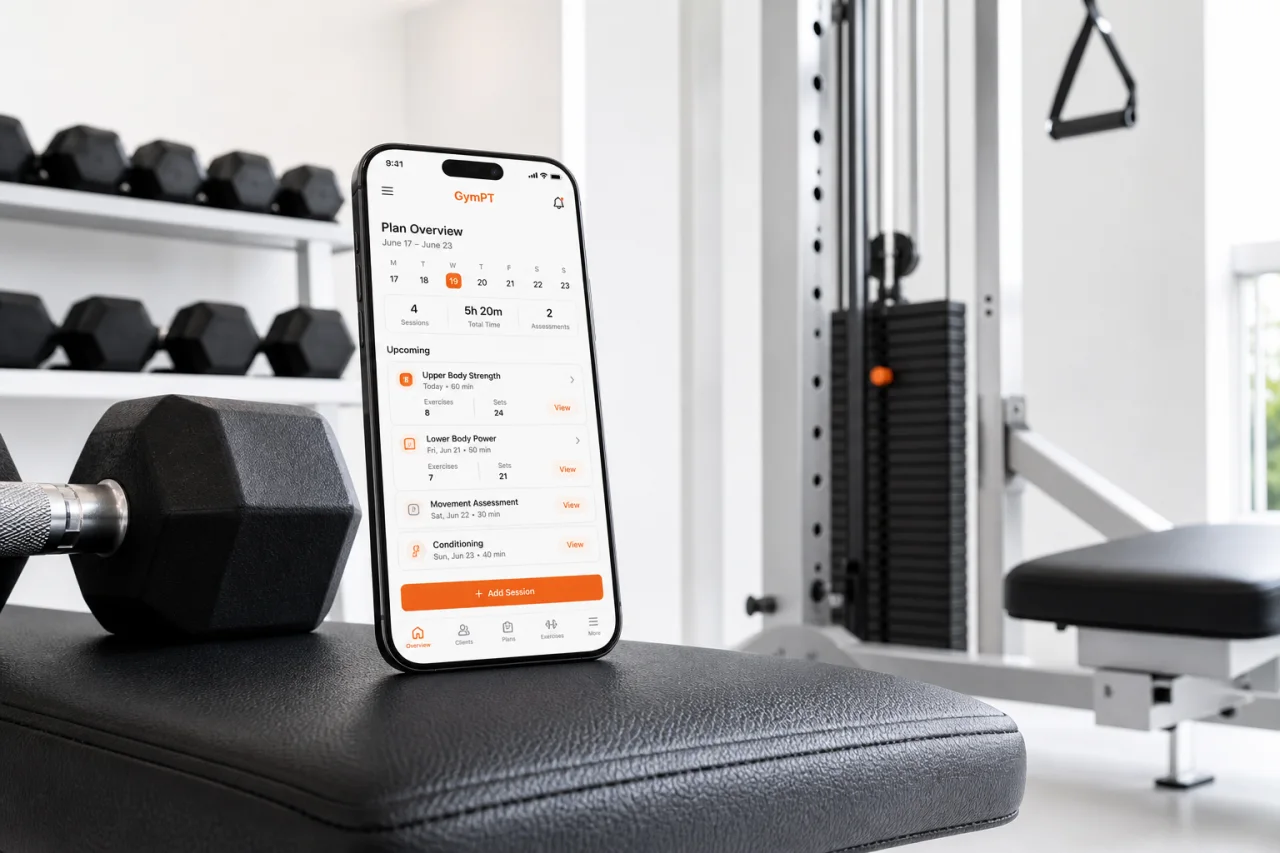
How GymPT adapts your plan to the equipment you have
GymPT is built for exactly this problem. If your gym has only dumbbells today, the app can swap in a dumbbell-based version of your session. If you are at a full gym, it can add machine options for extra volume. If you train at home, it can keep the plan effective without forcing you to chase equipment you do not own.
- Equipment-based training: build around what is available now.
- AI coach chat: ask what to swap when a machine is taken or a lift feels awkward.
- Workout tracking: log sets, reps, and load so progression stays visible.
- Progress insights: see whether your plan is actually moving in the right direction.
That flexibility matters because the best workout plan is the one you can repeat next week. A perfect exercise list is useless if it depends on equipment you cannot access consistently.
Common mistakes to avoid
- Thinking one tool is universally better: the best choice depends on the exercise and goal.
- Changing tools too often: progress is easier to measure when you keep key lifts stable for a while.
- Ignoring weekly volume: muscle growth depends on enough hard sets, not just the type of equipment.
- Using machines only because they feel easier: easier is fine, but make sure the plan still challenges you.
- Using free weights only because they feel more “serious”: machines are not inferior; they are a useful training tool.
A simple rule you can use today
If you want the shortest possible answer to free weights vs machines, use this:
Use free weights for skill, flexibility, and compound lifts. Use machines for stability, convenience, and extra volume. Use both when you want the most practical plan.
That approach is simple, evidence-aware, and easy to apply in real life. And with GymPT, you can turn that rule into a workout plan that matches your equipment, your schedule, and your progress.
Conclusion
Free weights and machines are not rivals. They are tools with different strengths. If you choose based on your goal, your environment, and your ability to progress, either one can help you build muscle and strength. The smartest plan is usually not “free weights only” or “machines only.” It is the plan you can follow consistently and adapt when life changes.
If you want help building that plan, GymPT can do the heavy lifting for you.