warm up before workout
Warm Up Before Workout: A Practical Guide for Better Training Sessions
A smart warm-up does more than raise your heart rate. It helps you move better, train with more control, and start your session with less guesswork.

Warm up before workout: what it should actually do
If you want a better training session, the goal is not to “get tired before you start.” The goal is to warm up before workout time in a way that prepares your body for the exact movements you are about to do. A good warm-up raises body temperature, increases blood flow, rehearses the patterns you will use, and helps you feel more coordinated when the first working set begins.
That is why a warm-up should be specific, short, and purposeful. For most people, it is better to do a few minutes of movement that matches the workout than to spend a long time on random stretches. Health organizations and sports medicine sources consistently recommend gradual movement, with dynamic mobility before exercise and stretching saved for after the warm-up or cool-down phase.
What a good warm-up changes
A useful warm-up should make the first working set feel smoother, not harder. In practice, it can help you:
- increase muscle temperature and blood flow
- prepare joints for a fuller range of motion
- practice the movement pattern you are about to train
- reduce the shock of going from rest to hard effort
- improve focus and exercise readiness
That does not mean a warm-up guarantees injury prevention. The evidence is more nuanced than that. But it does support the idea that gradual, movement-based preparation is a sensible way to begin training, especially before more vigorous exercise.
How long should you warm up?
There is no single perfect number for every workout. A simple rule is:
- 5 to 10 minutes for easy or moderate sessions
- 10 to 15 minutes for harder lifting, running, or sport-specific work
- Longer if you feel stiff, cold, or are returning after time off
If you are training in a cold room, early in the morning, or after sitting for a long time, you may need a little more time. If you are already active and moving well, a shorter warm-up may be enough.
A simple warm-up routine you can use today
Use this structure before most gym sessions. It works well for beginners because it is easy to repeat and easy to adjust.
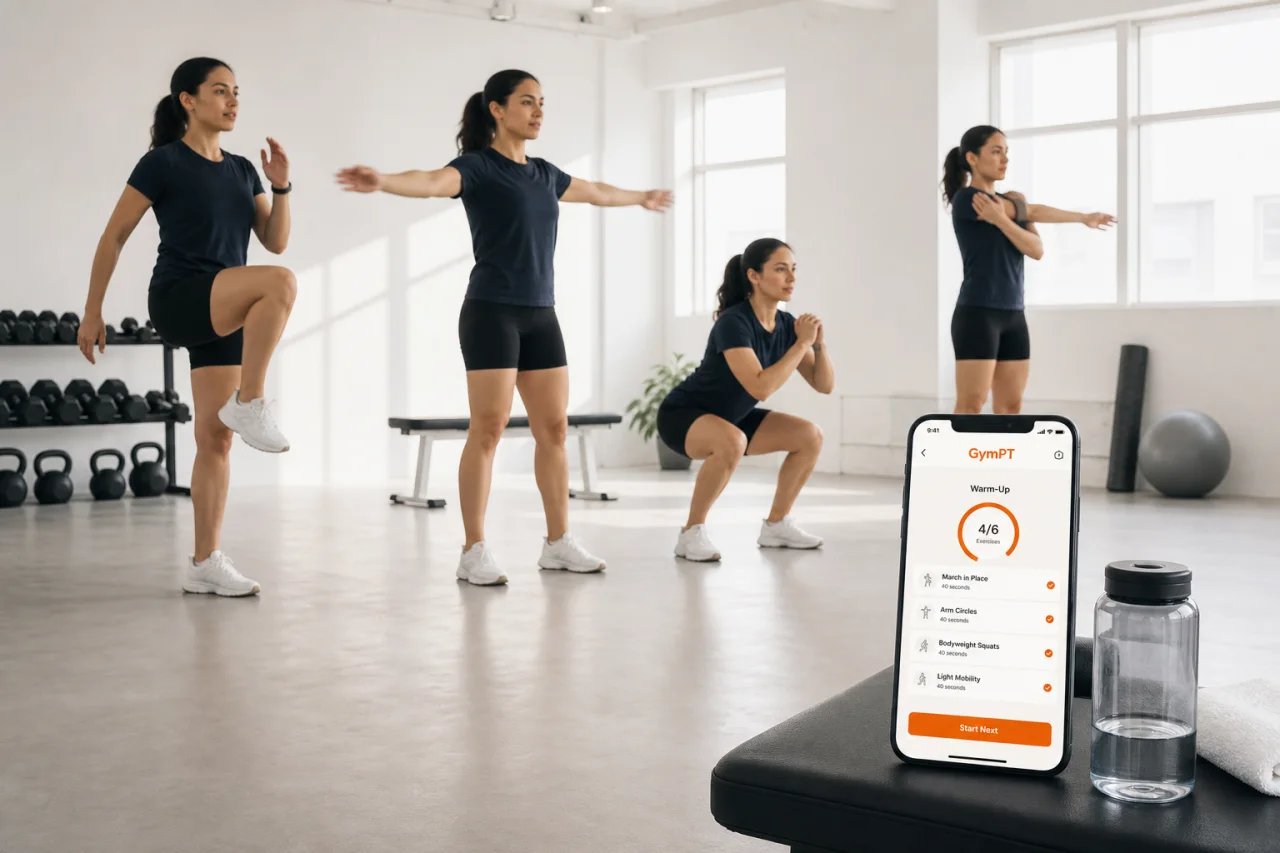
- Raise your heart rate for 2 to 4 minutes with brisk walking, cycling, rowing, marching in place, or light cardio.
- Move through the joints you will use with controlled mobility work such as arm circles, hip circles, ankle rocks, or bodyweight squats.
- Rehearse the main pattern with lighter versions of the workout, such as empty-bar reps, incline push-ups, or bodyweight hinges.
- Ramp up gradually with 1 to 3 lighter sets before your first hard set.
That last step matters. A warm-up is not complete just because you are sweating. Your body should feel ready to produce force, control position, and move with confidence.
Dynamic warm-up vs stretching: what to do first
For most workouts, a dynamic warm-up is the better first step. Dynamic work means moving through the range you need instead of holding a long static stretch. Examples include walking lunges, leg swings, marching, shoulder rolls, and controlled squats.
Static stretching is not “bad,” but it usually fits better after training or during a separate flexibility session. If you stretch before lifting or running, keep it brief and follow it with active movement so your body does not go from relaxed to explosive without preparation.
A practical way to think about it: move first, stretch later.
Warm-up examples by workout type
Before strength training
Start with 3 to 5 minutes of light cardio, then do mobility for the joints involved. If you are squatting, use bodyweight squats, hip hinges, and ankle mobility. If you are pressing, use shoulder circles, band pull-aparts, and light pressing sets. Then build up with lighter loads before your working sets.
Before cardio or running
Begin with easy walking or light cycling, then add drills that match the session. For a run, that may mean brisk walking, leg swings, and a few short build-up strides. For intervals, spend a little longer gradually increasing pace so the first hard rep does not feel like a shock.
Before home workouts
If you train at home, keep the warm-up simple and repeatable. March in place, do arm circles, perform bodyweight squats, and practice the first exercise in the session at an easier level. A short, reliable routine is better than skipping it because the setup feels complicated.
When a warm-up should be longer
Some sessions need more preparation than others. Give yourself extra time if:
- you are lifting heavy
- you are training a new movement
- you feel stiff from sitting all day
- you are coming back after a break
- the workout is fast, explosive, or high impact
In those cases, the warm-up should gradually bridge the gap between rest and performance. The more demanding the workout, the more important that bridge becomes.
Do you need a cool down after workout?
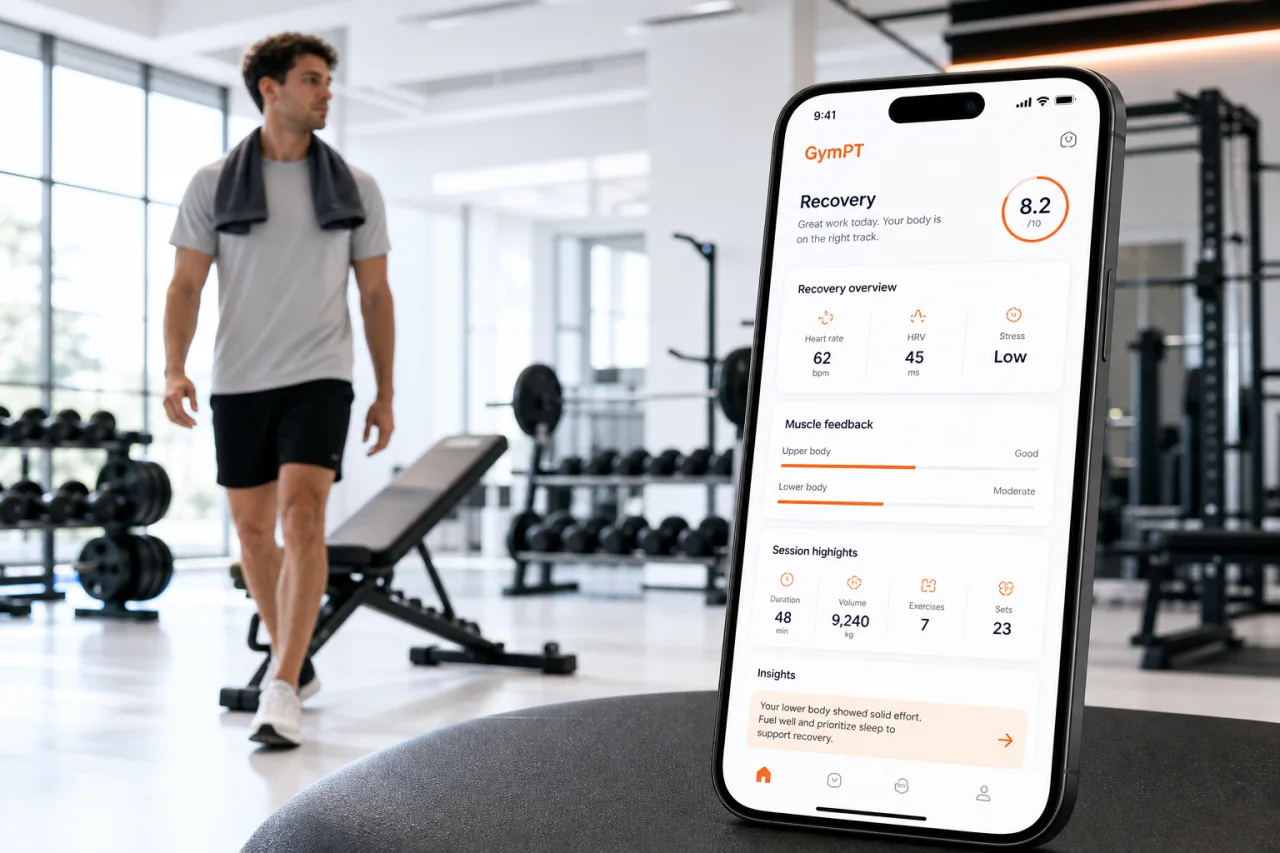
Yes, in many cases a short cool down after workout is a smart habit. It helps your body shift from hard effort back to rest. That can be as simple as 3 to 5 minutes of easy walking, slow cycling, or light movement after training.
Cool-downs are especially useful after intense cardio or long sessions. They are also a good time for gentle stretching if you want to work on flexibility. The main point is not to force recovery, but to finish the session in a calmer state than you started it.
Common warm-up mistakes
Many people make the warm-up harder than it needs to be. Avoid these mistakes:
- Doing too much too soon and arriving at the workout already fatigued
- Only stretching without any active movement
- Using a generic routine that does not match the workout
- Skipping ramp-up sets before heavy lifts
- Rushing through it without paying attention to how your body feels
The best warm-up is not the most complicated one. It is the one you can repeat consistently and adapt to the session in front of you.
How GymPT can help you warm up smarter
If you use GymPT, your warm-up can be built into the same logic as the rest of your plan. That means your session can reflect the equipment you have, the muscles you are training, and the level you are ready for that day. Instead of guessing, you can use a warm-up that fits the workout.
GymPT can also help you track how your body responds over time. If a certain session feels stiff every week, that is useful feedback. If your first sets feel better after a longer mobility block, that is useful too. Over time, your warm-up becomes part of your training system, not an afterthought.
Bottom line
To warm up before workout sessions, keep it simple: raise your heart rate, move the joints you will use, rehearse the pattern, and ramp up gradually. Use dynamic movement first, save longer stretching for later, and adjust the length to the demands of the session. A good warm-up should leave you ready, not drained.
If you want a more personalized approach, GymPT can help you build a warm-up that matches your workout, your equipment, and your current training level.