shoulder press form guide
Shoulder Press Form Guide: Press Overhead With Better Control
A clear shoulder press form guide with setup cues, rep-by-rep execution, common mistakes, and safer alternatives for different equipment and goals.
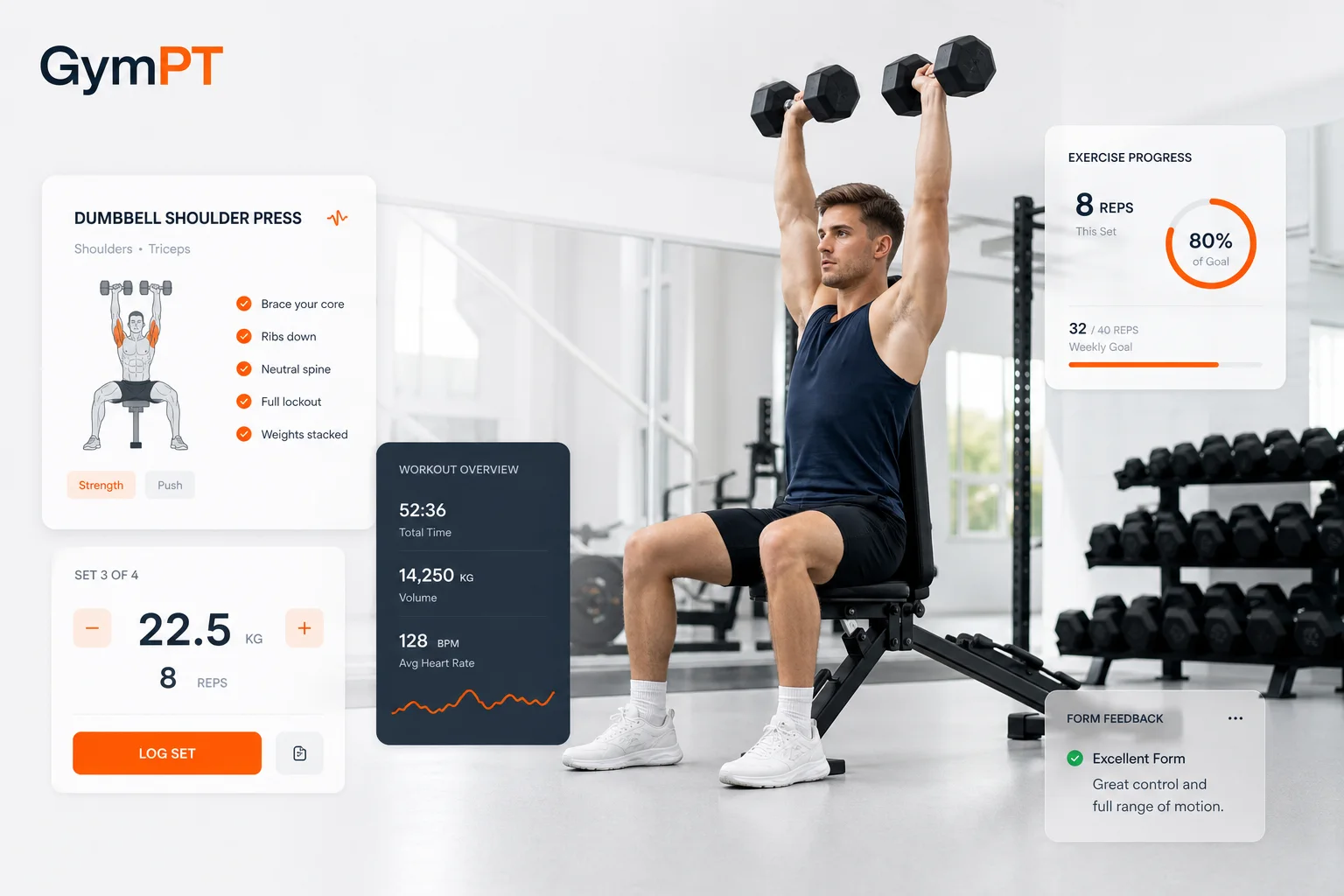
Shoulder Press Form Guide: Press Overhead With Better Control
If you want a stronger overhead press, the fastest way forward is usually not more load. It is better positions, cleaner reps, and a setup you can repeat. This shoulder press form guide breaks down the lift step by step so you can press with more control, keep your shoulders organized, and choose the right variation for your body and equipment.
GymPT uses the same coaching logic in its workout plans and AI coach chat: match the exercise to your current strength, then progress only when your form is stable. That matters because overhead pressing asks the shoulder complex to move and stabilize at the same time, with the scapula and rotator cuff working together to keep the arm moving smoothly overhead.
What a good shoulder press should look like
A solid overhead press is controlled, stacked, and repeatable. The weight should travel in a smooth line from shoulder level to overhead without turning into a standing incline bench, a backbend, or a shrug-fest. In a healthy press, the shoulder and scapular muscles coordinate to support the arm as it reaches overhead.
- Feet: planted and balanced.
- Ribs: down, not flared.
- Glutes and abs: lightly braced.
- Wrists: stacked over elbows.
- Bar or dumbbells: finish over the midfoot, not in front of you.
How to do the shoulder press with good form
1. Set your base
Stand tall with your feet about hip-width apart. Squeeze your glutes lightly and brace your core as if you are preparing for a clean rep, not a max effort grind. Keep your chest proud without over-arching your lower back.
2. Start with the weight in the right position
For a barbell press, the bar should begin around upper-chest or shoulder height, with forearms close to vertical. For dumbbells, start with the bells near shoulder level and your palms facing forward or slightly inward, depending on comfort and shoulder mobility.
3. Press up and slightly back
Drive the weight overhead in a controlled path. As the load passes your forehead, move your head slightly back to let it travel straight up, then bring your head through so the weight finishes stacked over your shoulders and midfoot. This helps keep the press efficient instead of drifting forward.
4. Finish with control
At the top, your arms should be extended without shrugging aggressively. Think “reach tall” rather than “jam the shoulders up.” Lower the weight under control to the starting position and repeat.
Key shoulder press cues that actually help
Good cues make the lift easier to repeat. Use one or two at a time, not all of them at once.
- “Ribs down.” Keeps the torso from overextending.
- “Brace before you press.” Helps transfer force from the floor to the bar.
- “Press in a straight line.” Reduces wasted motion.
- “Head through at the top.” Helps you finish stacked.
- “Reach, don’t shrug.” Encourages control instead of tension.
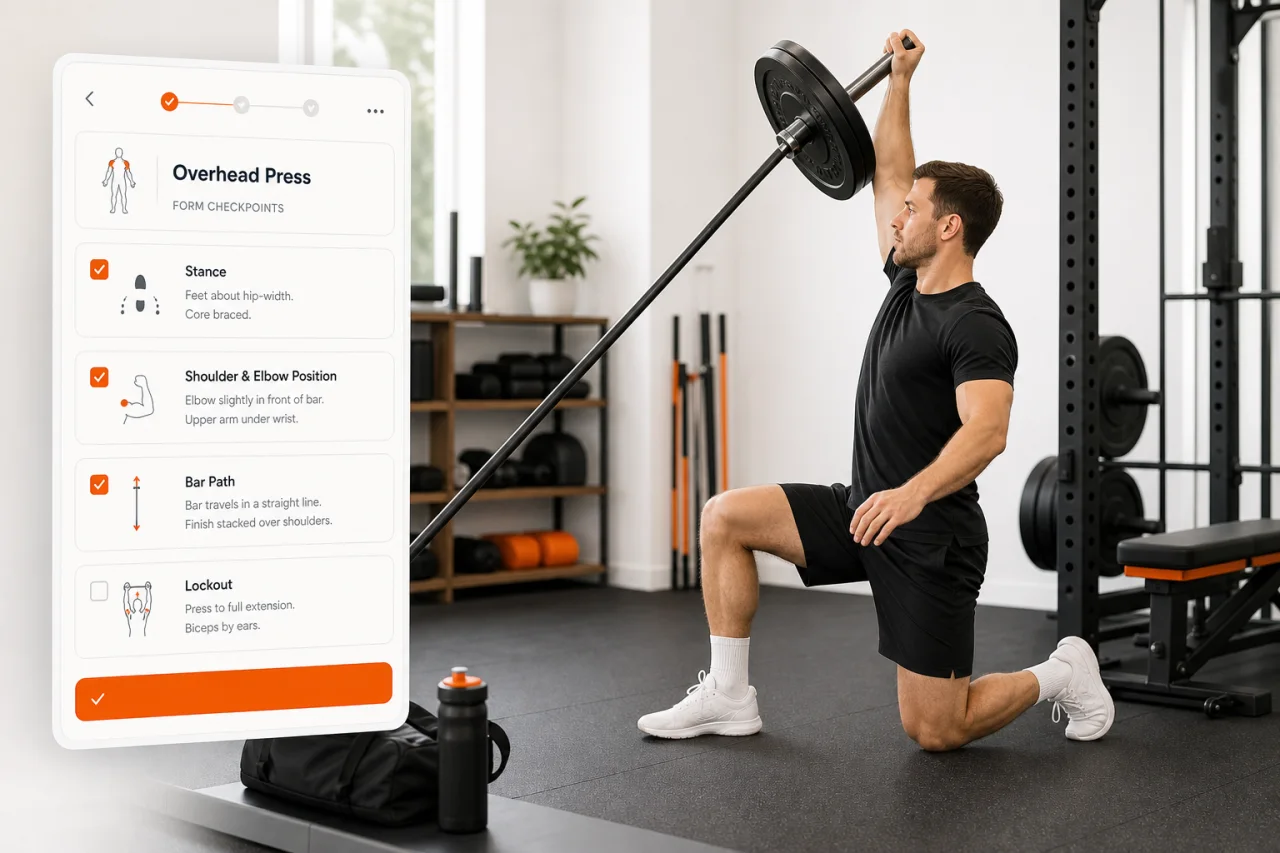
Common shoulder press mistakes
Most bad reps come from a few predictable errors. Fix these first before you add more weight.
1. Overarching the lower back
If your ribs flare and your lower back turns the press into a standing incline bench, the load is probably too heavy or your brace is too loose. Reduce the weight and reset your torso position.
2. Pressing in front of the body
When the weight drifts forward, the shoulders work harder than they need to and the rep becomes less efficient. Keep the load close and finish stacked over the midfoot.
3. Flaring the elbows too wide
Elbows that shoot out aggressively can make the press feel unstable. A slightly forward elbow path is usually easier to control, especially with dumbbells.
4. Shrugging every rep
Some upward rotation is normal, but turning every rep into a neck-dominant shrug usually means you are losing shoulder control. Keep the motion smooth and finish tall, not jammed.
5. Using momentum to save the rep
If you need a leg drive, lean-back, or bounce to finish every set, the load is too heavy for strict pressing. Lower the weight and own the range first.
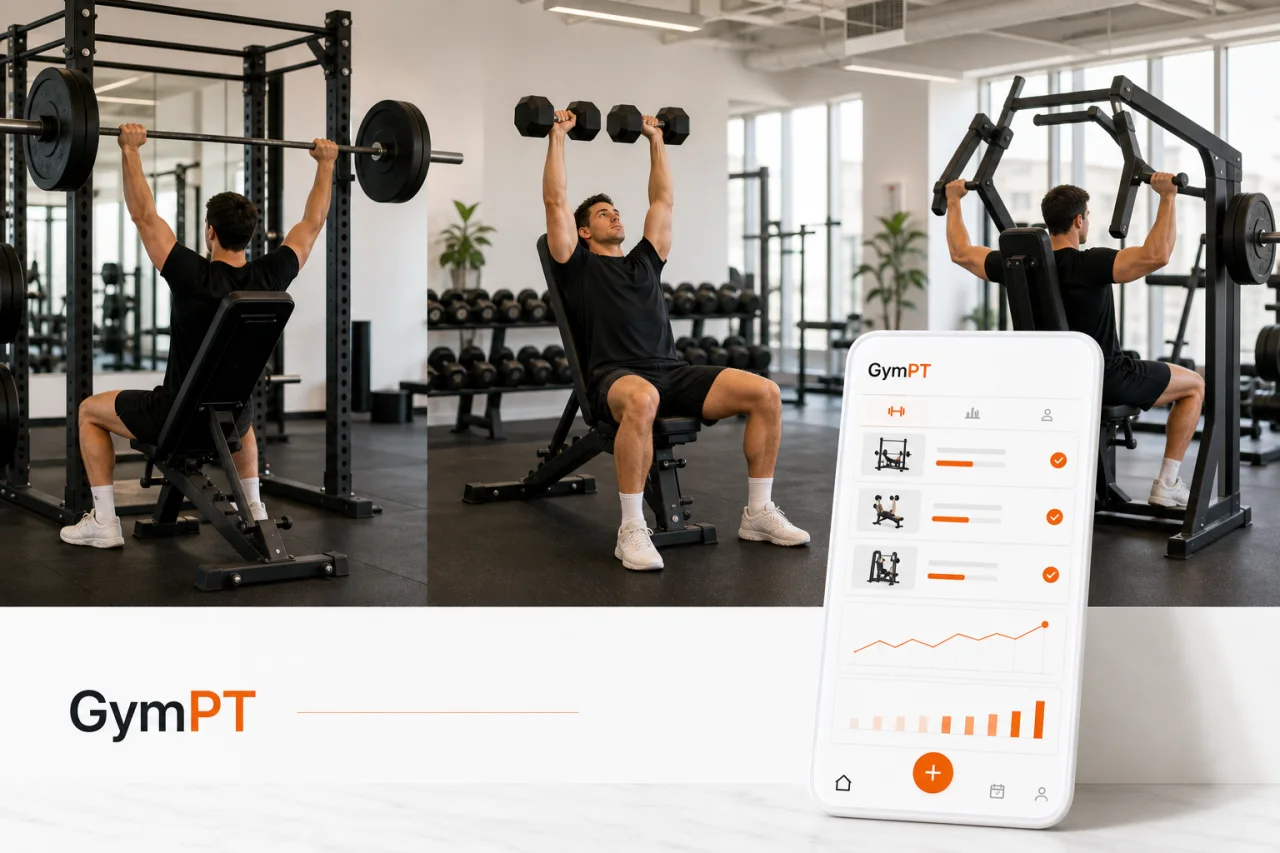
Shoulder press form guide for dumbbells, barbells, and machines
Not every press should look identical. The best version is the one you can perform with the cleanest mechanics and the least compensation.
- Barbell shoulder press: best for loading and consistency, but it demands good torso control.
- Dumbbell shoulder press: often easier on the joints and helpful for side-to-side balance.
- Machine shoulder press: a useful option when you want more stability and less setup complexity.
NSCA guidance notes that more stable pressing options can reduce the stabilization demand compared with free-weight overhead pressing, which is why machines can be a smart starting point for some lifters.
When to choose a shoulder press alternative
You do not need to force a strict overhead press every time. If your shoulders feel cranky, your mobility is limited, or your torso keeps compensating, a different press can still build strength while you improve the pattern.
- Landmine press: a great option if full overhead work feels awkward.
- Machine press: useful when you want more stability and less balance demand.
- Half-kneeling single-arm press: helps you control rib position and reduce lower-back cheating.
- Incline dumbbell press: a practical bridge if overhead range is not ready yet.
Overhead training resources from NSCA also emphasize progressions and modifications when shoulder stability or tolerance is limited.
How to progress your shoulder press safely
Progress the lift in small steps. That usually means improving one variable at a time: range of motion, control, reps, or load.
- Start with a variation you can own for 8 to 12 clean reps.
- Keep the same form for multiple sessions.
- Add a small amount of weight only when every rep looks the same.
- If form breaks, reduce the load before you chase more volume.
That is also where GymPT can help: you can log your sets, track progress, and let the AI coach adjust your plan based on the equipment you have and how your reps are actually moving.
Best shoulder press setup for different goals
If your goal is strength
Use a barbell or machine press, keep reps lower, and prioritize repeatable technique.
If your goal is muscle growth
Dumbbells often work well because they let you press through a natural path and accumulate quality volume.
If your goal is shoulder-friendly training
Choose a machine, landmine press, or half-kneeling variation and build control before chasing heavy overhead loading.
Quick shoulder press checklist
- Feet planted
- Core braced
- Ribs controlled
- Wrists stacked
- Weight travels close to the body
- Head moves through at the top
- No painful grinding or forced range
Final takeaway
The best shoulder press is not the one that looks hardest. It is the one you can repeat with control, stack well overhead, and progress over time. Use this shoulder press form guide to clean up your setup, fix the common mistakes, and choose the right variation for your current level. If you want a plan that adapts to your equipment, training history, and progress, GymPT can help you build it.