deadlift form guide
Deadlift Form Guide: How to Hinge Better, Lift Safer, and Get Stronger
A practical deadlift form guide with setup cues, common mistakes, and safer alternatives so you can build strength without guessing.
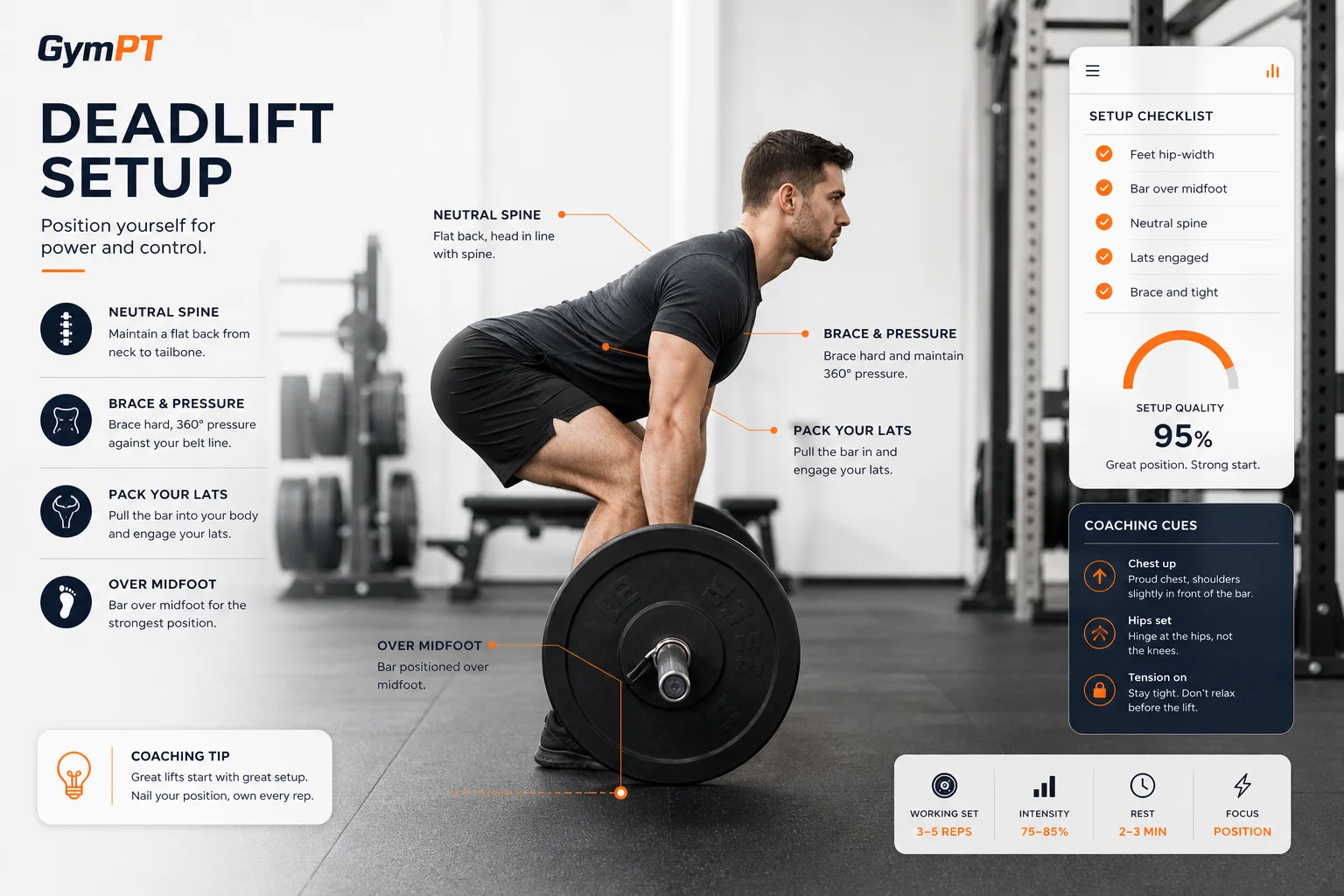
Deadlift form guide: build a stronger hinge from the floor up
If you want a lift that builds your posterior chain, teaches bracing, and carries over to real-world strength, the deadlift is hard to beat. This deadlift form guide breaks the lift into simple steps so you can set up well, pull with control, and avoid the most common mistakes. The goal is not to make the lift look perfect. The goal is to make it repeatable, strong, and safe enough to progress.
The deadlift is a hip hinge, not a squat. That means the hips do most of the work, the spine stays braced, and the bar moves close to the body. Coaching guidance from strength organizations consistently emphasizes a tight setup, lat engagement, and a controlled pull from the floor. Research also shows that deadlift mechanics vary with body proportions and lift style, which is why good form cues matter more than copying one exact posture.
How to set up for a clean deadlift
- Stand with the bar over the middle of your foot. The bar should start close enough that you do not need to reach forward.
- Hinge down and grip the bar. Push your hips back, bend your knees enough to reach the bar, and keep your arms straight.
- Brace before you pull. Take a breath into your torso, tighten your midsection, and create full-body tension.
- Set your back and lats. Keep your chest proud, spine neutral, and shoulders packed so the bar stays close.
- Drive the floor away. Push through the floor, keep the bar on a vertical path, and stand tall at the top without overextending.
A useful cue is to think: feet grounded, ribs stacked, bar close. That simple sequence helps most lifters stay organized under load.
What good deadlift form should feel like
Good deadlift form usually feels like tension before motion. You should feel your feet planted, your core braced, and your back locked in before the plates leave the floor. As the bar rises, the load should feel balanced, not yanked. If the bar drifts away from your legs or your lower back takes over early, the setup likely needs work.
For many lifters, the best cue is not “pull harder.” It is “wedge yourself into position, then push.” That mindset keeps the lift efficient and reduces wasted motion.
Common deadlift mistakes to fix first
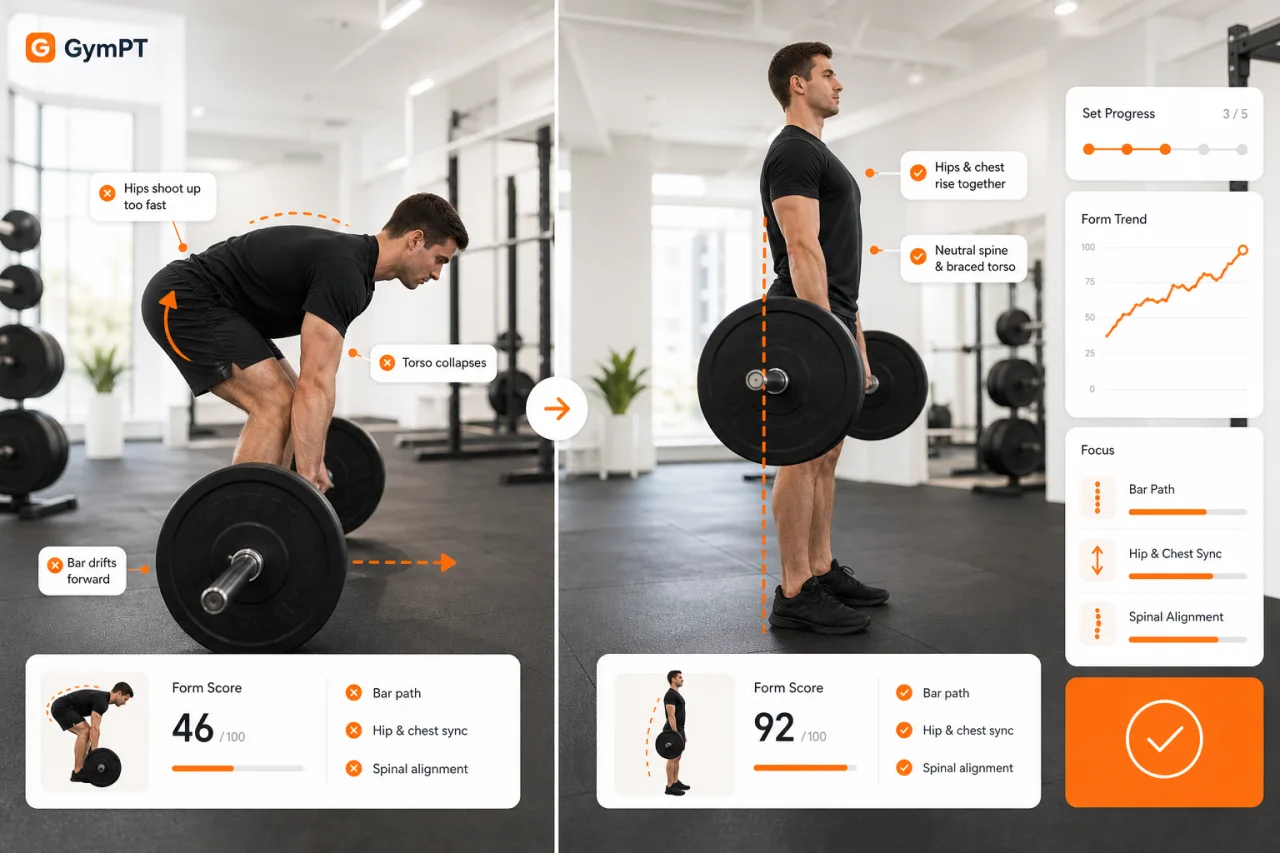
- Rounding the lower back. Some upper-back rounding can happen in certain lifters, but losing control through the lumbar spine is a problem. Rebuild the setup and reduce load if needed.
- Starting with the bar too far away. If the bar begins in front of the midfoot, the lift becomes longer and harder to control.
- Hips shooting up too fast. This usually means the lifter is not braced well or is trying to turn the deadlift into a stiff-leg pull.
- Yanking the bar off the floor. A rushed start often breaks position before the bar even moves.
- Locking out by leaning back. Finish by standing tall, not by cranking the lower back into extension.
- Letting the bar drift forward. Keep it close to the shins and thighs so the lift stays efficient.
If one mistake keeps showing up, lower the load and fix the setup before adding more weight. Technique that only works when the bar is light is not ready for progression.
Deadlift cues that actually help
Not every cue works for every lifter, but these are reliable starting points:
- “Push the floor away.” Helps you drive with the legs instead of jerking the bar.
- “Squeeze the bar and pack the lats.” Helps keep the bar close and the upper body stable.
- “Chest proud, ribs down.” Encourages a strong torso without over-arching.
- “Wedge, then lift.” Reminds you to create tension before the plates leave the floor.
- “Stand tall.” Keeps the finish clean and avoids leaning back at lockout.
Use one or two cues at a time. Too many instructions can make the lift feel worse, not better.
How to choose the right deadlift variation
The best deadlift variation is the one that matches your body, equipment, and current skill level. If the floor pull feels too demanding, a simpler variation can help you build the pattern first.
Good alternatives when the standard deadlift is not the best fit
- Romanian deadlift. Great for learning the hinge and loading the hamstrings with less floor complexity.
- Trap bar deadlift. Often easier to learn because the load sits closer to your center of mass.
- Block pull or rack pull. Useful when you need a shorter range of motion to practice position.
- Dumbbell deadlift. A practical option for home training or lighter technique work.
- Kettlebell deadlift. Helpful for beginners who need a more upright, easy-to-grip setup.
These alternatives are not “less serious.” They are tools. The right tool depends on what you need to improve.
When to stop and regress the lift
Back off the load or switch variations if you notice repeated loss of position, pain during the lift, or a setup you cannot repeat from set to set. A good rule is simple: if you cannot keep the same start position for multiple reps, the weight is probably too heavy for technique work.
For newer lifters, it often helps to start with a hinge pattern, then move to a light deadlift variation, and only then progress to heavier barbell work. That approach builds confidence and makes the full lift easier to own.
How GymPT can help you improve deadlift form
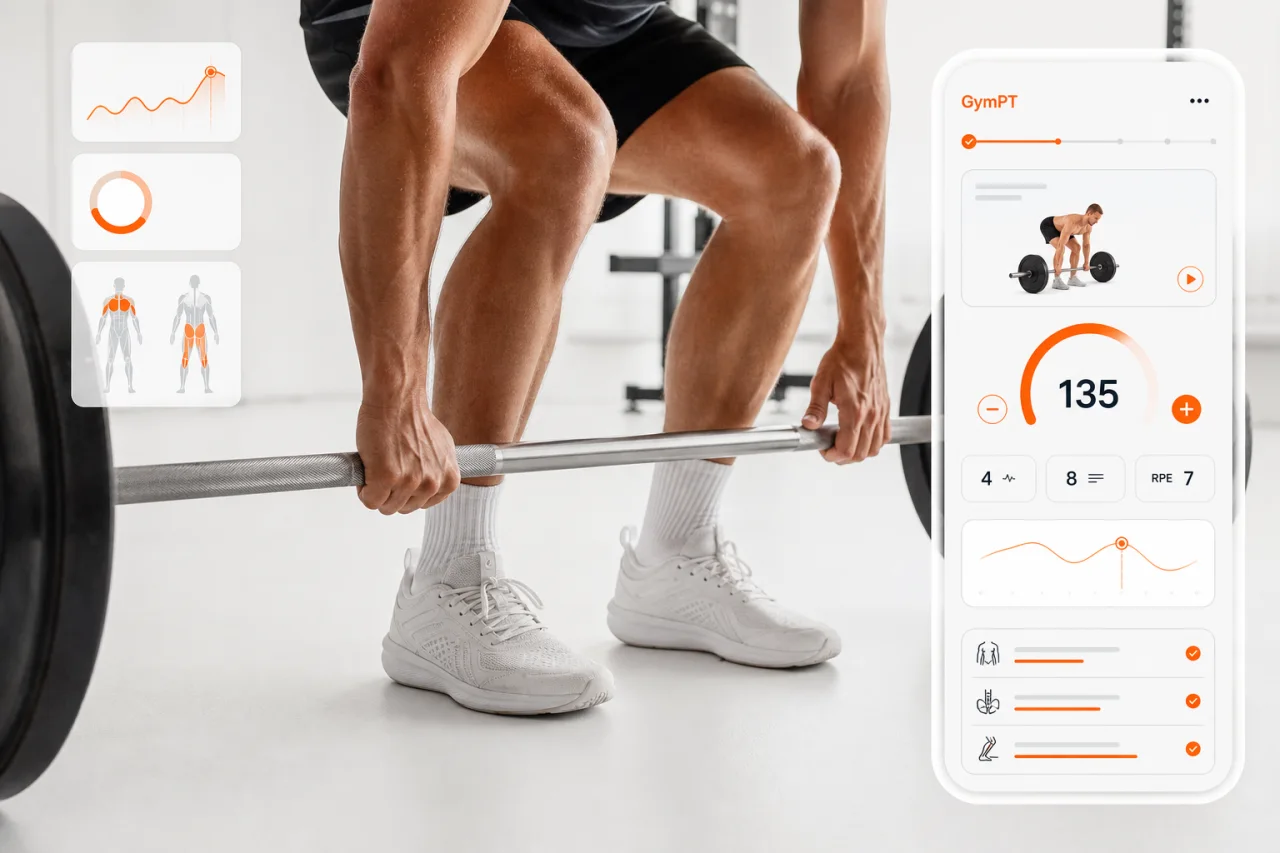
Deadlift progress is easier when your plan matches your equipment, experience, and recovery. GymPT can help you build a personalized deadlift plan, track your working sets, and adjust your training based on progress insights. If you are unsure whether to use a barbell, trap bar, dumbbells, or a simpler hinge variation, the AI coach chat can help you choose the right option for your current level.
That matters because better deadlift form is not just about one perfect rep. It is about building a pattern you can repeat week after week.
Quick deadlift checklist before every set
- Bar over midfoot
- Brace before the pull
- Back set and lats engaged
- Bar stays close
- Drive the floor away
- Finish tall, not leaned back
If you want the simplest summary possible, use this: set up tight, keep the bar close, and let the legs and hips do the work. That is the foundation of a better deadlift.
Deadlift form guide: the setup in one glance
This visual should show a lifter in a clean side-view deadlift setup with the bar over midfoot, neutral spine, braced torso, and GymPT orange coaching callouts highlighting the key positions.
Deadlift form guide: common mistakes and fixes
This visual should compare two GymPT-only panels: one showing a common mistake such as bar drifting forward or hips rising too fast, and one showing the corrected position with simple orange arrows and short coaching labels.
Internal tip: If you are building a full lower-body plan, pair this lift with a squat pattern and a hinge accessory so your week covers both force production and posterior-chain control.