home workout with barbell
Home Workout With Barbell: A Smarter Plan for Small Spaces and Steady Progress
A barbell can turn a small home setup into a serious training space. Learn how to build a practical home workout with barbell, progress safely, and track results.
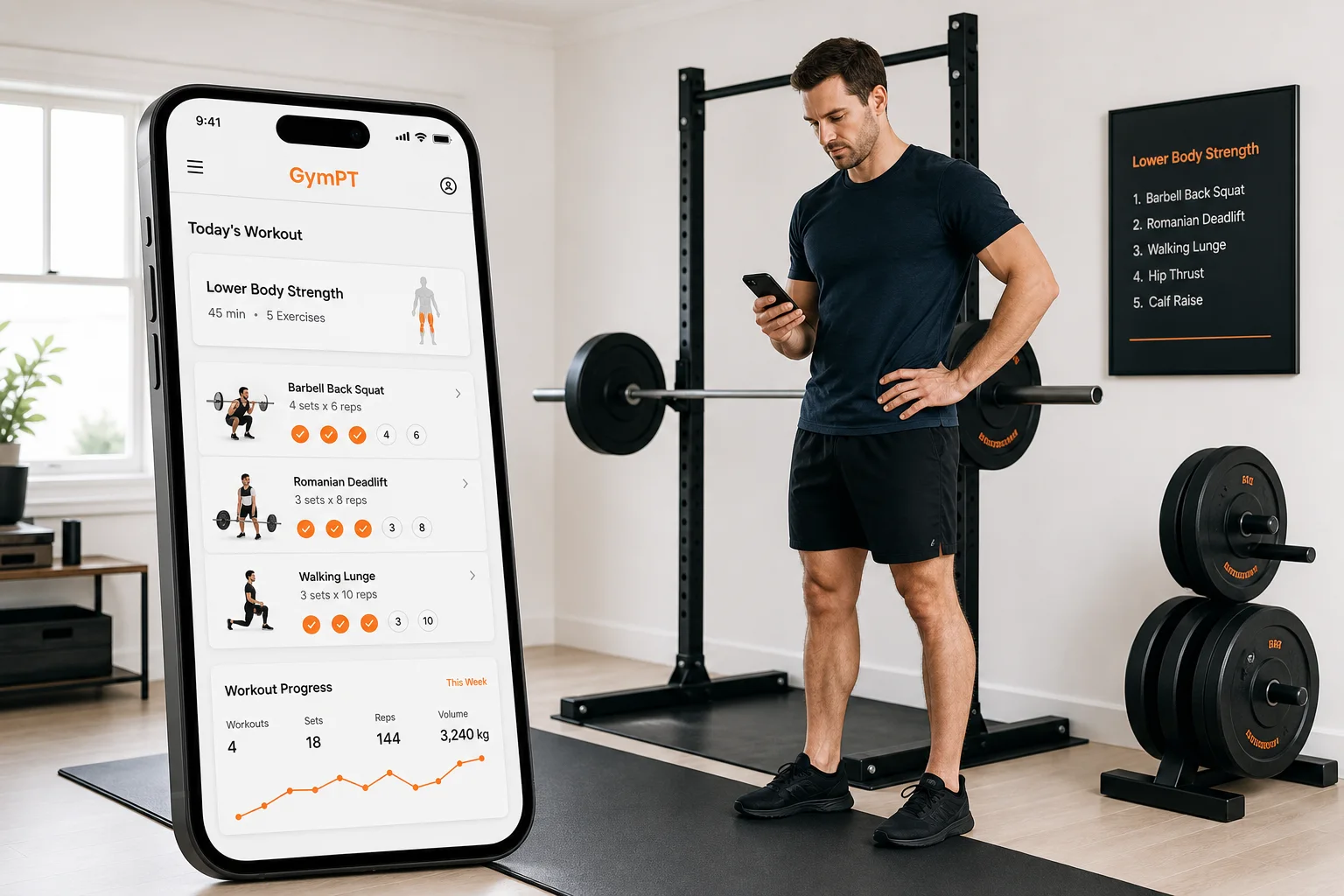
Home Workout With Barbell: How to Train Well in a Small Space
A home workout with barbell can be one of the most efficient ways to build strength at home. You do not need a full garage gym or a long list of machines. With one barbell, a few plates, and enough floor space to move safely, you can train your whole body with simple, repeatable lifts.
The key is not doing everything. The key is choosing a few big movements, progressing them slowly, and keeping your setup easy to use week after week. That is where a barbell shines: it gives you a clear way to add load, measure progress, and keep your training focused.
For adults, public health guidance recommends muscle-strengthening activity on at least 2 days per week, and regular physical activity overall. A barbell home routine fits that goal well because it makes strength work practical and measurable. 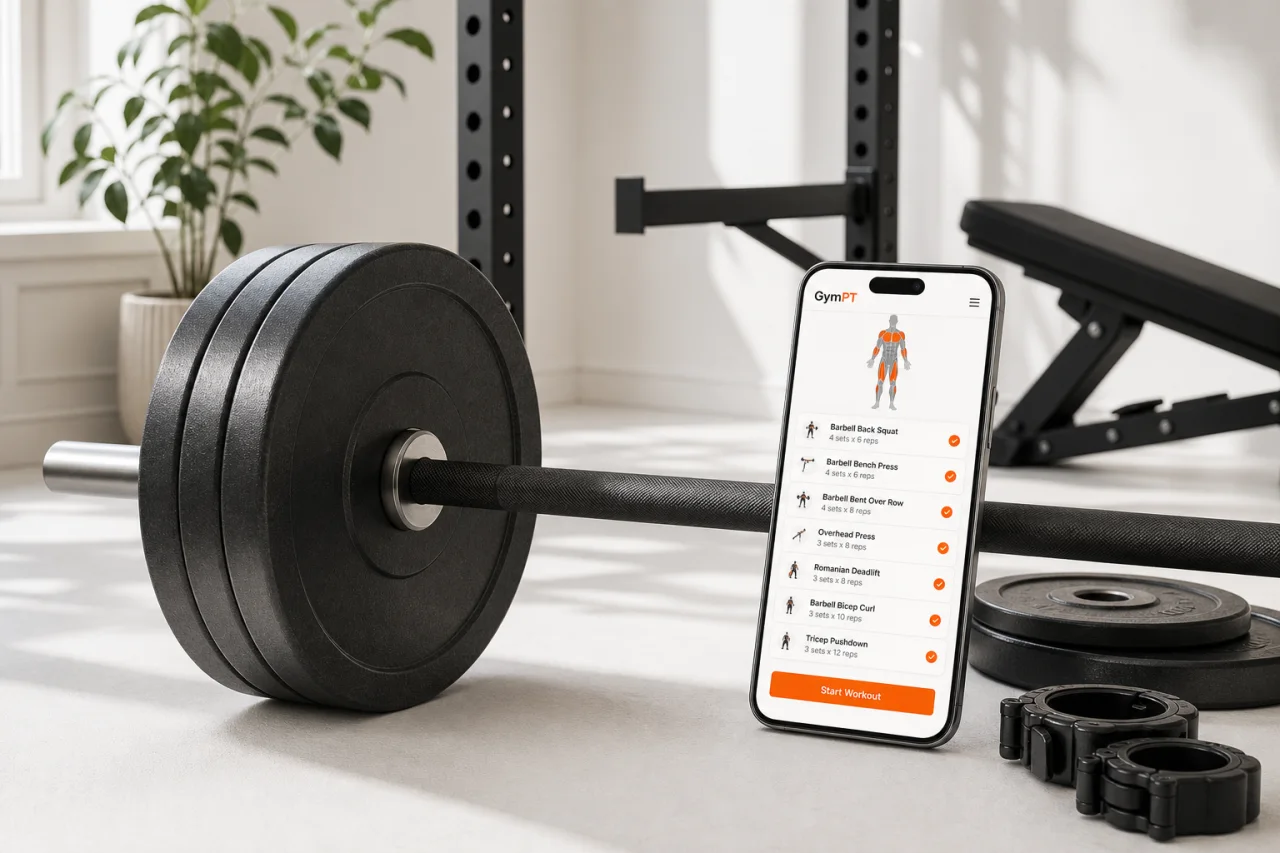
What makes a barbell home workout effective?
A barbell is useful because it supports progressive overload in a very direct way. When a set feels manageable, you can add a small amount of weight next time. That simple rule helps you avoid random workouts and build a plan that actually moves forward.
A good barbell setup at home also keeps exercise selection simple. Instead of chasing novelty, focus on movement patterns:
- Squat for legs and trunk strength
- Hinge for glutes, hamstrings, and back
- Press for chest, shoulders, and triceps
- Pull for upper back and lats
- Carry or core work for stability and control
If your space is limited, that is actually an advantage. Fewer exercise options can make your training more consistent.
How to set up a safe barbell space at home
You do not need a huge room, but you do need a clear one. Before you start, make sure you have enough room to load the bar, step back, and move through each rep without hitting furniture or walls.
Simple home setup checklist
- A stable floor surface
- Enough ceiling height for pressing if needed
- Space to walk around the bar safely
- Collars or another secure way to keep plates in place
- A plan for storing plates and the bar when not in use
Start with the most basic version of your workout. If you do not have a rack, you can still train with deadlifts, floor presses, rows, and other floor-based variations. If you do have a rack, you can add squats and overhead pressing more easily.
Safety matters more than variety. If a lift feels awkward in your space, choose a simpler variation instead of forcing it. 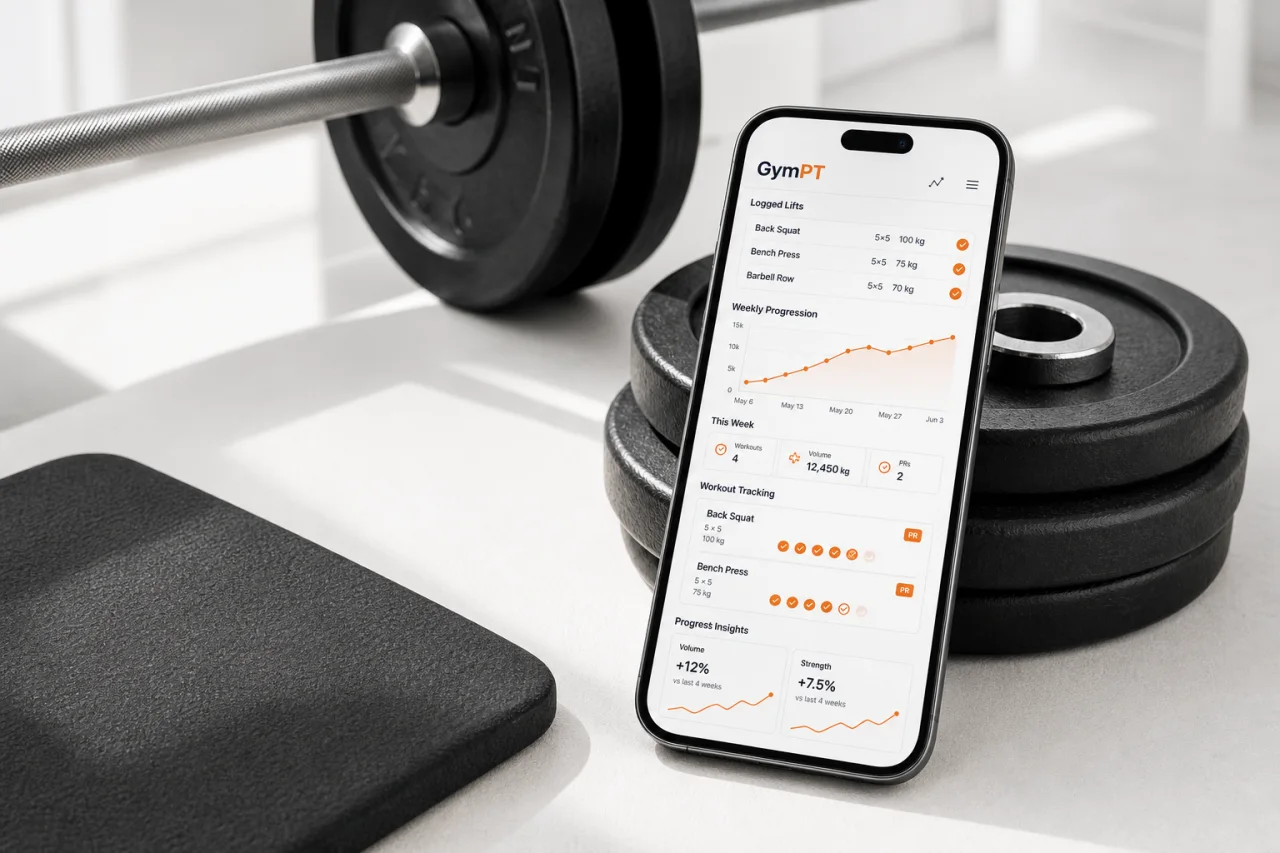
A simple home workout with barbell for beginners
This plan is built for limited space and steady progress. It uses a few compound lifts and keeps the volume manageable so you can recover and repeat it consistently.
Workout A
- Barbell deadlift — 3 sets of 5 reps
- Barbell floor press — 3 sets of 6 to 8 reps
- Barbell bent-over row — 3 sets of 8 reps
- Barbell Romanian deadlift — 2 sets of 8 reps
- Front plank — 2 sets of 30 to 45 seconds
Workout B
- Barbell squat variation — 3 sets of 5 reps
- Standing barbell press — 3 sets of 5 to 6 reps
- Barbell row — 3 sets of 8 reps
- Hip thrust or glute bridge with barbell — 2 sets of 8 to 10 reps
- Dead bug — 2 sets of 8 reps per side
Train 2 to 4 days per week. If you are new to barbell training, start with 2 full-body sessions per week. That is enough to learn technique, recover well, and build momentum.
How to progress without overcomplicating it
The best progression plan is the one you can follow. Use a simple rule: when you complete all sets with good form and still have a little room left, add a small amount of weight next time.
Here is a practical progression method:
- Pick a rep range, such as 5 reps or 6 to 8 reps.
- Keep the same weight until you hit the top of the range with solid form.
- Add the smallest plate jump you have available.
- If form breaks down, keep the weight the same or reduce it slightly.
That approach works well for a barbell workout at home because it is easy to track. You do not need complicated programming to get stronger. You need consistency, enough recovery, and a clear record of what you lifted last time.
How to choose the right exercises for your space
Not every home setup can support every lift. That is fine. The goal is to cover the main movement patterns, not to copy a commercial gym routine.
If you have no rack
- Deadlift
- Romanian deadlift
- Floor press
- Bent-over row
- Hip thrust
If you have a rack
- Back squat or front squat
- Overhead press
- Bench press if you have a bench
- Rows and deadlifts
If you only have a barbell and plates, you can still build a strong plan. The best program is the one that matches your equipment, your space, and your current skill level.
Common mistakes to avoid
Many home lifters stall because they try to do too much too soon. Avoid these common problems:
- Adding too many exercises and losing focus
- Training too hard every session and not recovering
- Skipping warm-ups and jumping straight into heavy sets
- Using jumps in weight that are too large
- Ignoring form just to chase numbers
A better approach is to keep your sessions short, repeatable, and easy to log. That makes it much more likely you will stay consistent for months instead of weeks.
How GymPT can help you stay consistent
GymPT can make a home strength training plan easier to follow by turning your equipment into a personalized routine. If you train with a barbell at home, GymPT can help you choose exercises, adjust volume, and keep track of your progress over time.
It is especially useful when you want a plan that fits your exact setup. Instead of guessing, you can build around the equipment you actually have, then use workout tracking and progress insights to see what is working.
If you are unsure how to structure your week, GymPT can also help you balance training frequency, recovery, and progression so your plan stays realistic.
Sample weekly structure for a barbell home plan
Here is a simple way to organize your week:
- Monday: Workout A
- Wednesday: Workout B
- Friday: Workout A
- Next week: Start with Workout B
This alternating structure keeps the plan simple and gives you enough recovery between sessions. If you only have two training days, alternate A and B each week. If you have four days, you can repeat the two workouts with slightly lower volume per session.
Final thoughts
A home workout with barbell does not need to be complicated to be effective. A few compound lifts, a clear progression rule, and a consistent weekly schedule are enough to build real strength at home. Keep the setup simple, track your lifts, and let small improvements add up over time.
If you want help turning your equipment into a personalized plan, GymPT can build the structure for you and keep the progression moving.