home workout with smith machine
Home Workout With Smith Machine: A Smarter Plan for Small Spaces and Steady Progress
A Smith machine can turn a small home setup into a structured strength plan. Learn the best exercises, how to progress safely, and how GymPT helps you train with purpose.
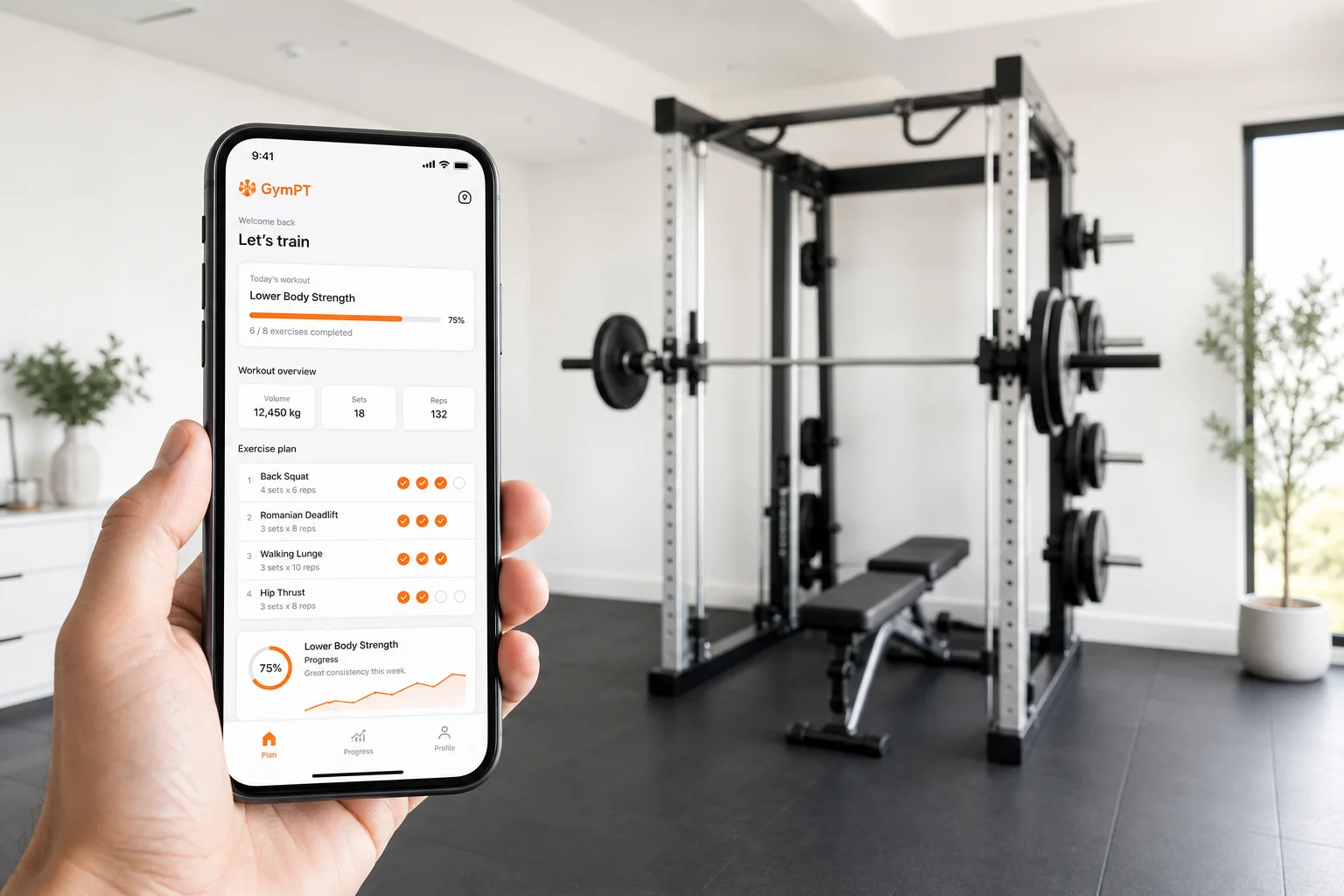
Home Workout With Smith Machine: Why It Works
A home workout with smith machine is one of the simplest ways to build a serious strength routine in limited space. A Smith machine gives you a fixed bar path, built-in safety catches, and enough exercise variety to train your legs, chest, back, shoulders, and arms without needing a full commercial gym setup.
That matters because effective training does not require complicated equipment. Public health guidance recommends regular muscle-strengthening work for all major muscle groups at least twice per week, alongside aerobic activity. A Smith machine can help you do that consistently at home with a clear structure and easy progression.
If you want a setup that feels organized, repeatable, and easier to track, this is a strong option. GymPT can turn that setup into a personalized plan based on your space, experience level, and available equipment.
What Makes a Smith Machine Useful at Home?
The biggest advantage is control. The guided bar path can make it easier to learn basic squat, press, and split squat patterns, especially if you train alone. The safety stops also make solo training more practical.
It is also efficient. With one station, you can cover most major movement patterns:
- Knee-dominant lower body: squats, split squats, lunges
- Hip-dominant lower body: Romanian deadlifts, hip thrusts
- Horizontal push: bench press, incline press
- Vertical push: overhead press
- Upper back and arms: rows, shrugs, curls, triceps work
That makes it a practical choice for a small home gym where every square foot has to earn its place.
The Best Smith Machine Exercises for Home Training
Use the machine to build around movement patterns, not random exercises. That keeps your plan balanced and easier to progress.
1. Smith Machine Squat
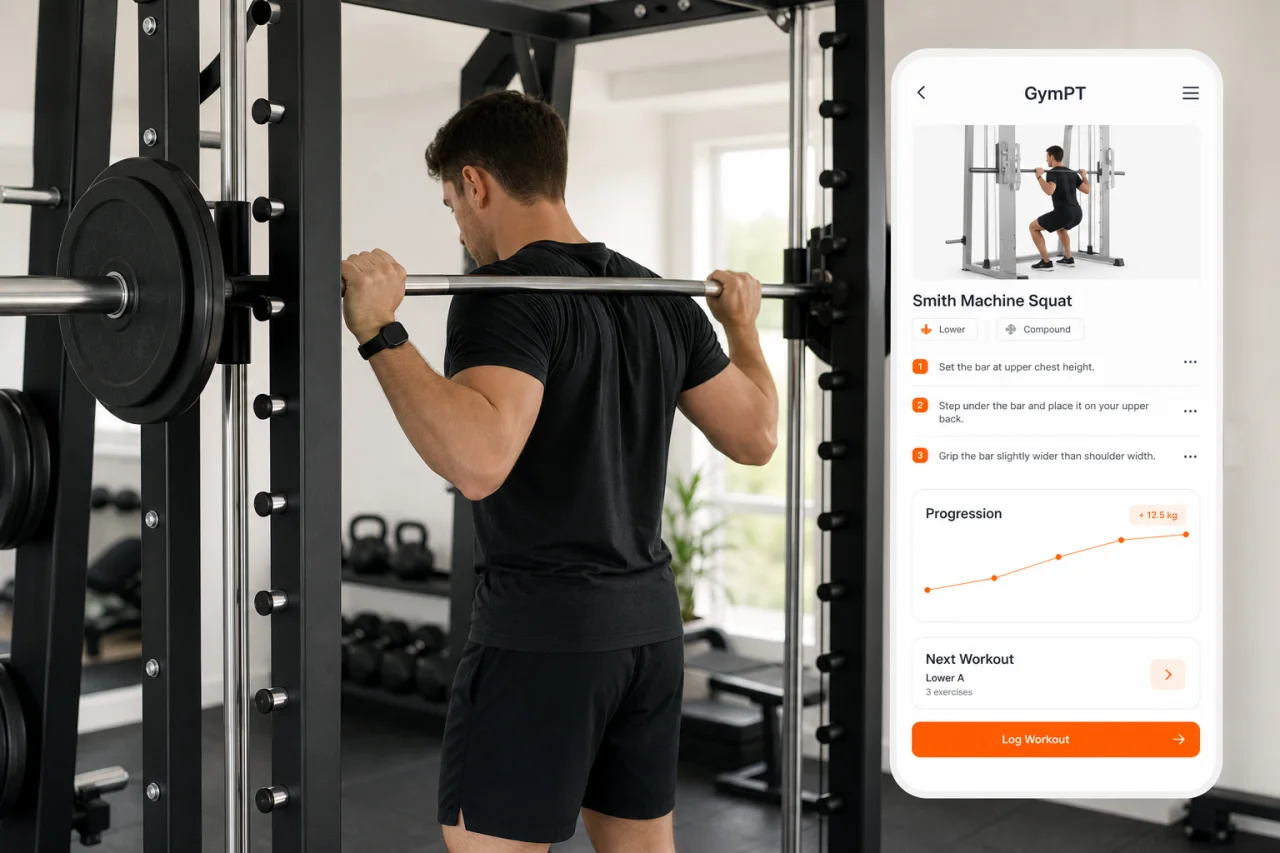
A strong choice for quads and glutes. Keep your feet positioned so you can sit between your hips instead of forcing your knees too far forward or your torso too upright.
2. Smith Machine Split Squat
Great for single-leg strength, balance, and leg development. This is often easier to load progressively than jumping straight to heavy bilateral squats.
3. Smith Machine Romanian Deadlift
Useful for hamstrings and glutes. Focus on a controlled hip hinge and a long spine rather than trying to lower the bar as far as possible.
4. Smith Machine Bench Press
A simple pressing option for chest, shoulders, and triceps. Use a setup that lets your shoulders stay stable and your elbows track comfortably.
5. Smith Machine Overhead Press
Good for shoulder strength and upper-body pressing volume. Keep your ribs down and avoid turning the movement into a backbend.
6. Smith Machine Row
If your setup allows it, rows help balance all the pressing work and support better upper-back development.
A Simple Full-Body Smith Machine Workout
This template works well for a home workout with smith machine when you want a straightforward routine you can repeat and improve.
- Smith machine squat — 3 sets of 6 to 10 reps
- Smith machine bench press — 3 sets of 6 to 10 reps
- Smith machine Romanian deadlift — 3 sets of 8 to 12 reps
- Smith machine row — 3 sets of 8 to 12 reps
- Smith machine split squat — 2 sets of 8 to 10 reps per leg
- Optional arm finisher: curls or triceps extensions — 2 sets of 10 to 15 reps
Rest 60 to 120 seconds between sets, depending on how hard the set feels. If you are newer to lifting, start with the lower end of the rep ranges and leave a couple of reps in reserve.
How to Progress Without Running Out of Room
Progression is what turns a home setup into a real training plan. You do not need endless exercise variety. You need a repeatable way to make the work slightly harder over time.
Use a simple progression rule
Pick a rep range, such as 6 to 10 reps. When you can hit the top end of the range for all sets with good form, add a small amount of weight next time.
Increase one variable at a time
If the machine is already heavy enough, progress by adding reps, slowing the lowering phase, pausing at the bottom, or adding a set. That keeps the plan practical when weight jumps are limited.
Track the basics
Write down the exercise, load, reps, and how hard the set felt. That is enough to spot progress and avoid guessing from week to week.
GymPT makes this easier by tracking workouts, showing progress insights, and adjusting your plan when your numbers improve.
How to Set Up Your Weekly Plan
For most people, two to four strength sessions per week is a realistic home routine. If you want a simple structure, start with two full-body sessions and repeat the same core lifts for 4 to 6 weeks.
A practical weekly split could look like this:
- Day 1: Squat, bench press, row, split squat
- Day 2: Romanian deadlift, overhead press, row, split squat
- Optional Day 3: Repeat your weaker lifts or add lighter accessory work
This approach keeps your training focused and makes it easier to compare performance across sessions.
Common Mistakes to Avoid
- Using the Smith machine for everything: keep some balance by training both push and pull patterns.
- Changing exercises too often: progress comes from repeating key lifts long enough to improve them.
- Loading too fast: small, steady jumps usually work better than chasing big increases.
- Ignoring range of motion: use a depth and setup you can control consistently.
- Skipping tracking: if you do not record your work, it is hard to know whether you are actually progressing.
Who Gets the Most From a Smith Machine Home Workout?
This setup is especially useful if you want:
- a compact home gym solution
- more structure than bodyweight-only training
- safer solo lifting with built-in stops
- a simple way to train the whole body without a lot of equipment
- clear progress from week to week
If your goal is to stay consistent, build strength, and avoid overcomplicating your routine, a Smith machine can be a very effective home training tool.
Build Your Plan With GymPT
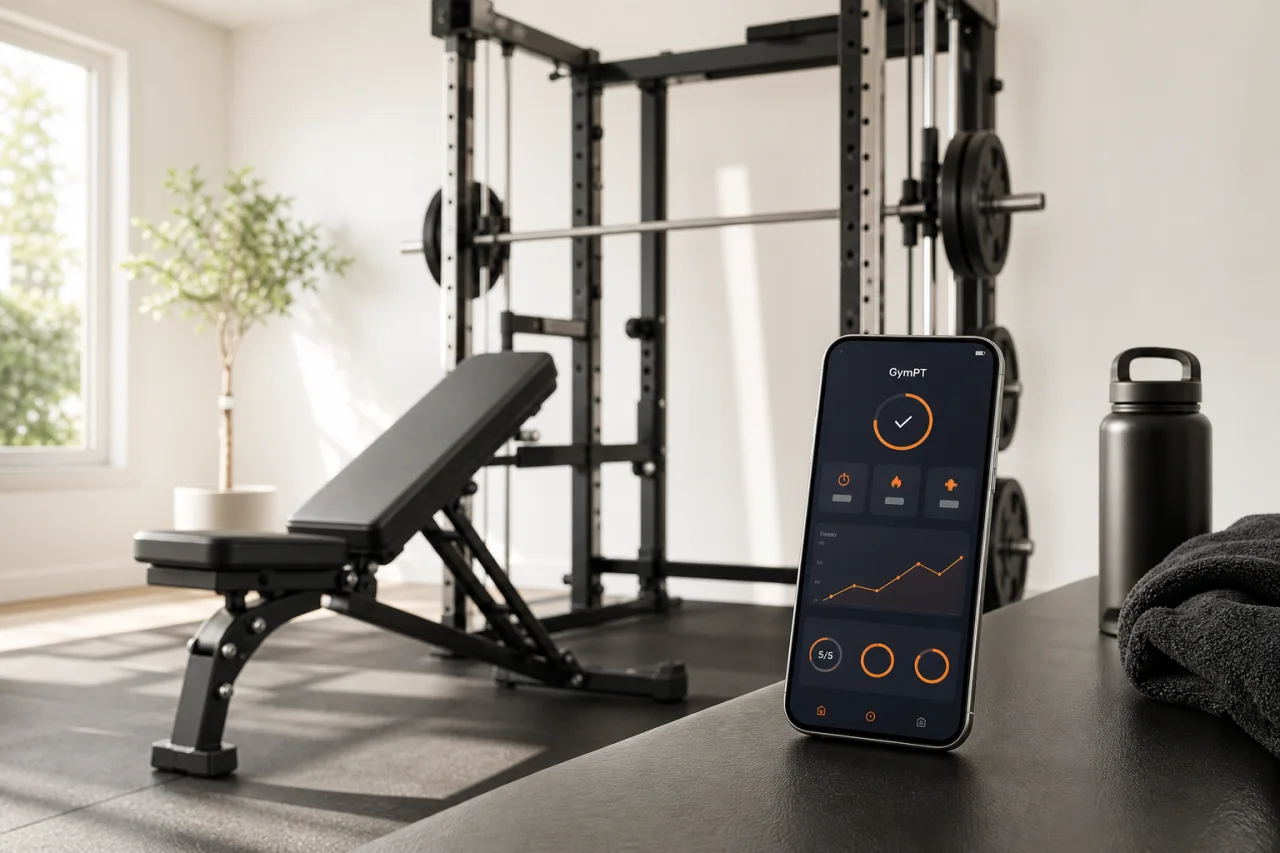
The best home workout is the one you can repeat, recover from, and improve. GymPT helps you turn your Smith machine into a personalized plan with AI coach chat, workout tracking, body analysis, equipment-based training, and progress insights.
Instead of guessing what to do next, you can train with a plan that matches your space and your goals.
Start with the equipment you have. Progress with the plan you can follow.
Frequently Asked Questions
Is a Smith machine good for home workouts?
Yes. It is a practical option for home training because it supports a wide range of exercises, helps with solo lifting, and makes progression easier to manage in a small space.
Can beginners use a Smith machine?
Yes. Beginners often benefit from the guided bar path and safety stops, especially when learning squat and press patterns. Start light and focus on control.
How many days per week should I train with a Smith machine?
Two to four days per week is a solid range for most people. A full-body plan done twice weekly is a simple and effective place to start.
Do I still need cardio if I use a Smith machine?
Yes, if your goal is general health. Strength training is important, but adults also benefit from regular aerobic activity each week.