home workout with kettlebell
Home Workout With Kettlebell: A Smarter Plan for Small Spaces and Steady Progress
A kettlebell can cover strength, conditioning, and core work in a small space. Here’s how to build a practical home workout with kettlebell and progress it safely.
Home Workout With Kettlebell: Why One Tool Can Do a Lot
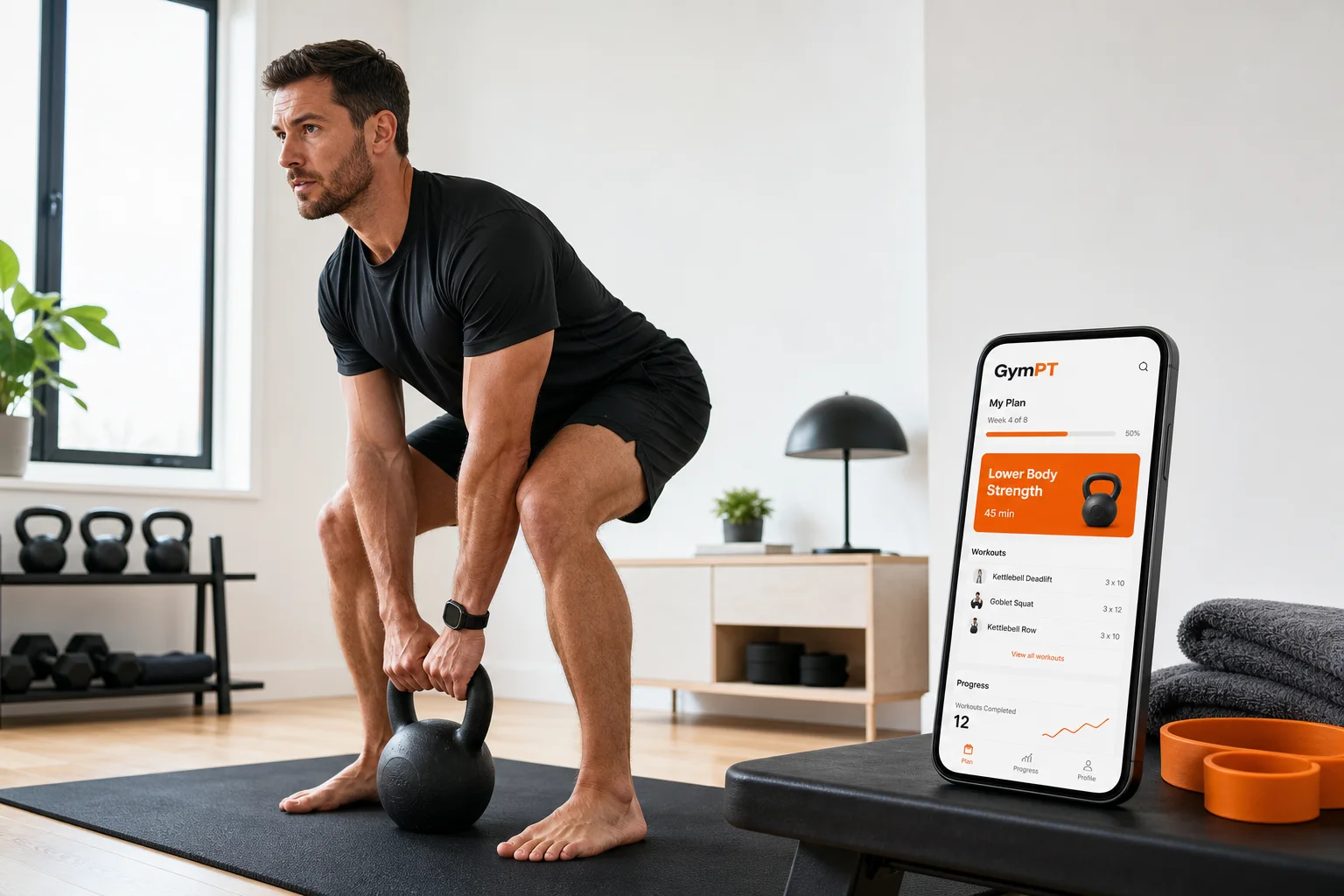
A home workout with kettlebell is one of the simplest ways to train well in a small space. You can hinge, squat, press, carry, and condition without needing a full rack of equipment. That matters because the best plan is usually the one you can repeat consistently, and current guidance supports regular resistance training for all major muscle groups at least two days per week.
The goal is not to do random kettlebell moves until you are tired. The goal is to build a repeatable routine with a few high-value patterns, then progress them over time. That is how you turn one kettlebell into a real training plan instead of just a sweaty circuit.
What Makes Kettlebell Training Work at Home
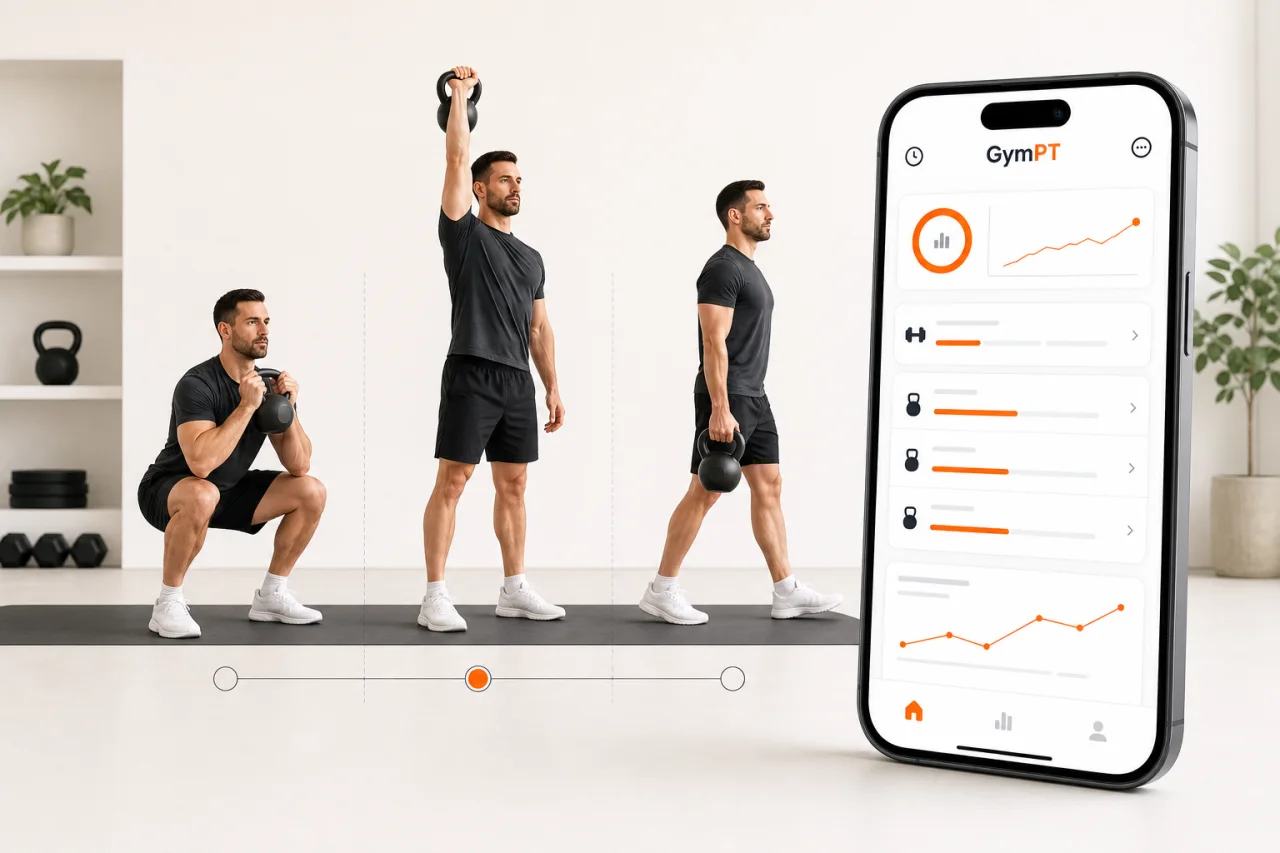
Kettlebells are useful because they let you train the main movement patterns that matter most for general strength and fitness:
- Hinge for glutes, hamstrings, and back power
- Squat for legs and trunk control
- Press for shoulders and upper body strength
- Pull or carry for grip, posture, and core stability
- Conditioning for heart rate and work capacity
For most people, the biggest win is simplicity. You do not need a complicated setup to get a meaningful training effect. A single kettlebell can support strength, muscle, and conditioning if you use it with enough intent and progression.
How to Choose the Right Kettlebell for Home Training
If you only own one kettlebell, choose a load that lets you train with good form for several reps while still feeling challenging near the end of a set. If you are new, start lighter than you think and earn the right to go heavier.
A practical rule: the weight should allow you to complete your main exercises with clean technique, controlled breathing, and no loss of position. If your back rounds, your shoulders shrug, or your reps turn into a swingy mess, the load is too heavy for that exercise right now.
If you have more than one kettlebell, use the lighter one for presses and Turkish get-up variations, and the heavier one for deadlifts, goblet squats, and swings.
A Simple Home Workout With Kettlebell
This session is built for limited space and steady progress. It works well as a full-body workout two or three times per week.
Warm-Up
- Hip hinges with bodyweight: 8 reps
- Glute bridges: 10 reps
- Arm circles and shoulder reaches: 20 to 30 seconds
- Bodyweight squats: 8 reps
- Dead bug or plank: 20 to 30 seconds
Main Workout
- Kettlebell deadlift — 3 sets of 8 to 10 reps
- Goblet squat — 3 sets of 6 to 10 reps
- One-arm kettlebell press — 3 sets of 5 to 8 reps per side
- One-arm row — 3 sets of 8 to 12 reps per side
- Kettlebell swing — 4 sets of 10 to 15 reps
- Suitcase carry — 3 rounds of 20 to 40 seconds per side
Rest 60 to 90 seconds between sets if you want a strength focus. Rest a little less if you want a more conditioning-style session, but keep form sharp.
How to Progress Without More Space or More Equipment
Progression is what makes a home workout with kettlebell effective over time. You do not need to change everything at once. Pick one variable and improve it gradually.
- Add reps within a target range before increasing load
- Add a set to one or two exercises
- Slow the lowering phase on squats or presses
- Reduce rest slightly while keeping technique clean
- Use unilateral work like one-arm presses and carries
A good progression rule is to stay in a rep range until you can hit the top end with solid form for all sets. Then increase the load or make the exercise harder.
Technique Cues That Matter Most
Good kettlebell training is mostly about position and timing. A few simple cues go a long way.
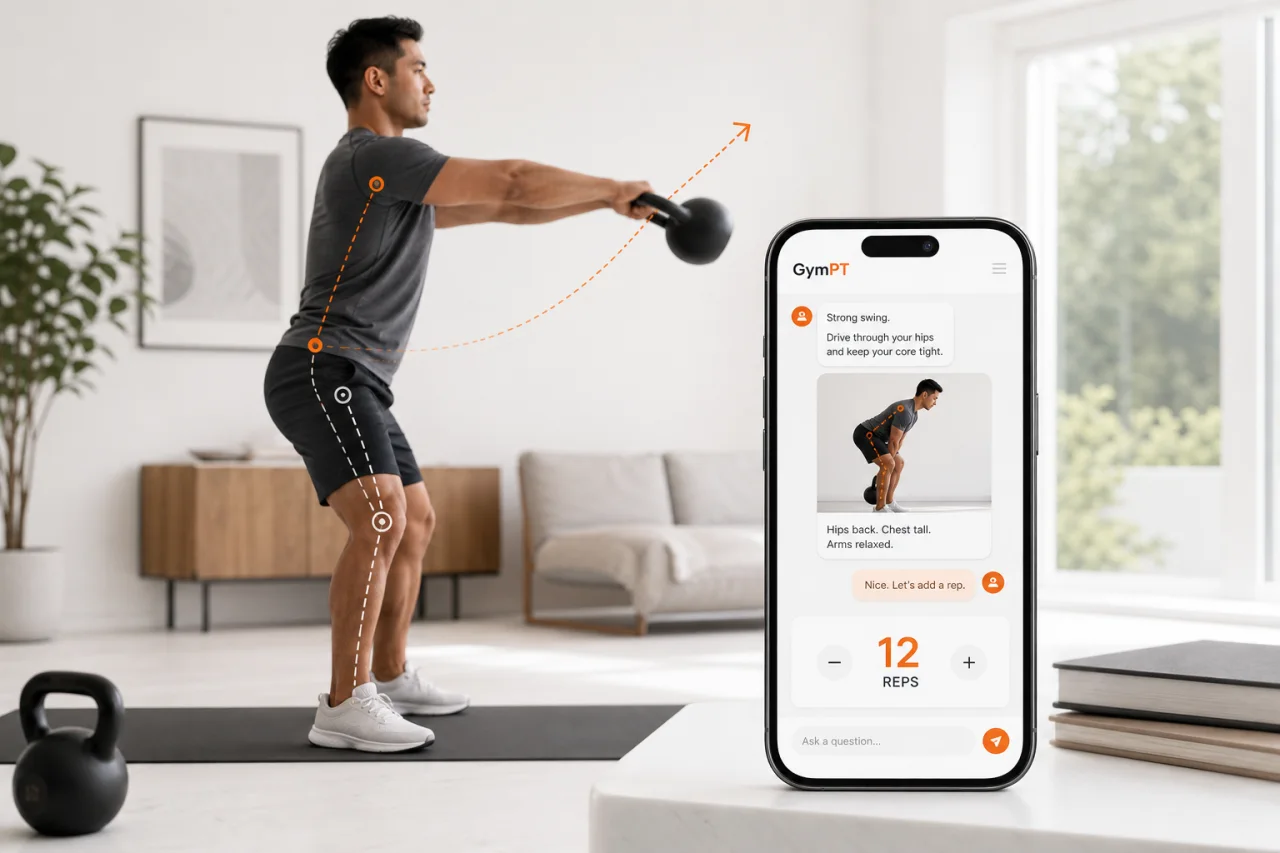
For the hinge and swing
- Push the hips back, not the knees forward
- Keep the spine long and the ribs stacked
- Let the bell float from hip drive, not arm lift
- Stop the set when speed or posture drops
For the goblet squat
- Hold the bell close to the chest
- Keep the feet grounded
- Descend under control
- Stand up by driving through the whole foot
For the press
- Squeeze the glutes and brace the trunk
- Keep the wrist stacked over the elbow
- Press in a smooth line overhead
- Do not lean back to finish the rep
These cues help you train harder without turning every rep into a compensation pattern.
Two Smart Ways to Structure Your Week
If you want a simple schedule, use one of these options.
Option 1: Two full-body days
- Day 1: deadlift, press, row, carry
- Day 2: goblet squat, swing, press, core
Option 2: Three shorter sessions
- Day 1: strength emphasis
- Day 2: conditioning emphasis
- Day 3: mixed full-body work
Both options can work. The better choice is the one that fits your schedule and recovery. Consistency matters more than making the plan look advanced.
How GymPT Can Make Kettlebell Training Easier
If you are building a kettlebell workout plan at home, GymPT can help you turn one tool into a structured routine. You can create a personalized plan based on your goal, available equipment, and training frequency, then track workouts and see progress over time.
That is especially useful when you want your kettlebell home workout to evolve instead of staying the same forever. GymPT can help you adjust exercise selection, volume, and progression based on how you are actually performing.
Common Mistakes to Avoid
- Using too many exercises and not enough progression
- Choosing a kettlebell that is too heavy for presses or squats
- Turning swings into arm raises instead of hip-driven reps
- Training only conditioning and skipping strength work
- Changing the workout every session before you can measure progress
If your goal is better strength and fitness at home, boring consistency usually beats random variety.
Sample 4-Week Progression
Here is a simple way to build momentum with a home workout with kettlebell:
- Week 1: Learn the movements and keep reps conservative.
- Week 2: Add 1 to 2 reps per set where form stays strong.
- Week 3: Add one set to your main lift or carry.
- Week 4: Increase load slightly or shorten rest while keeping quality high.
After four weeks, review what improved: reps, load, control, or recovery. Then adjust the next block based on that data.
Final Takeaway
A kettlebell is enough to build a strong, effective home routine if you train the right movement patterns and progress them on purpose. Start with a few basics, keep the space requirements low, and make each week slightly better than the last. That is the real formula behind a smart home workout with kettlebell.