lat pulldown mistakes
Lat Pulldown Mistakes: 10 Form Errors That Limit Back Growth and Control
The lat pulldown is simple in theory, but small form errors can turn it into a biceps exercise, shorten your range of motion, or make your shoulders do more work than they should. Here’s how to fix the most common lat pulldown mistakes and train your back with better control.
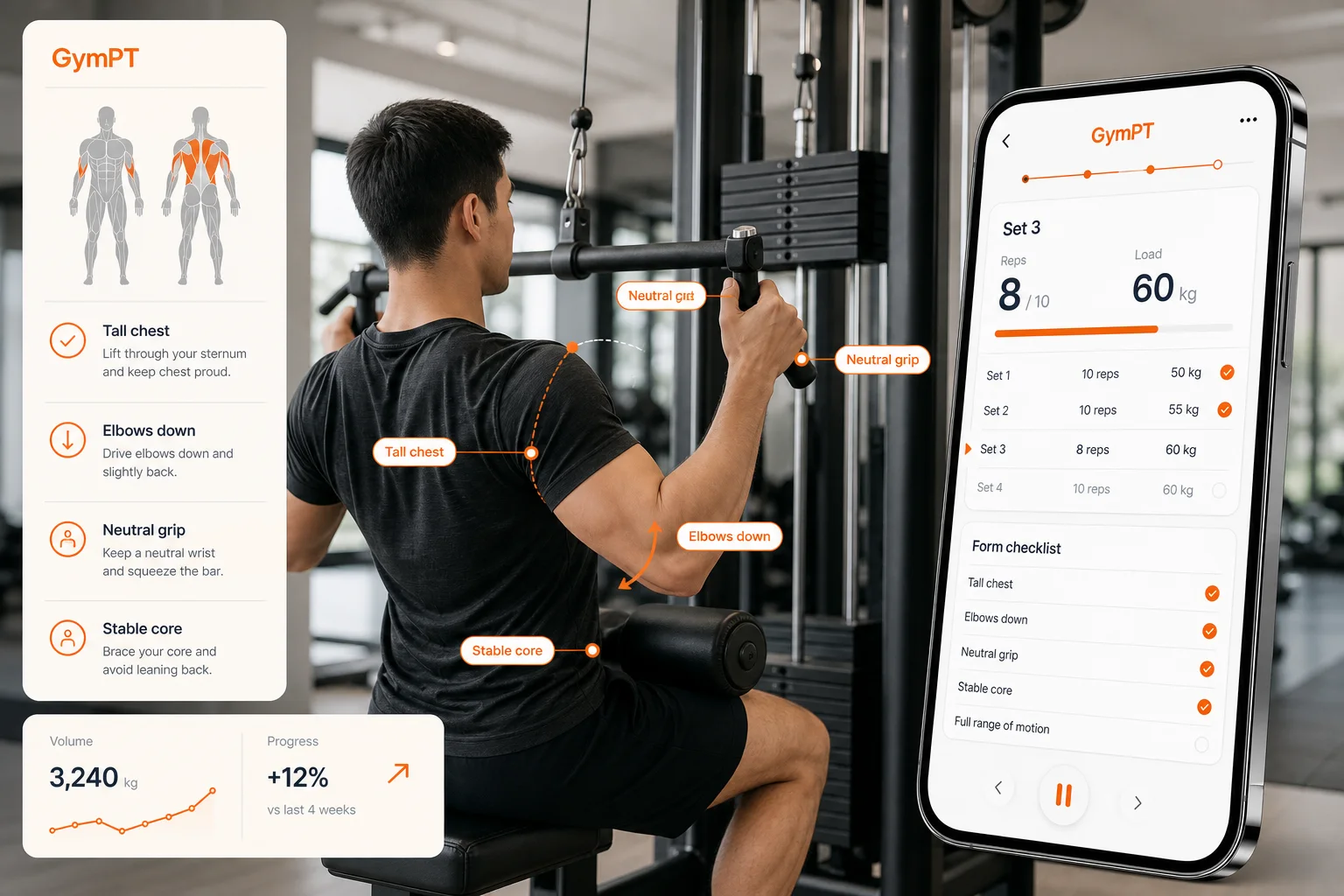
Lat pulldown mistakes that quietly hold back your progress
The lat pulldown looks straightforward: sit down, grab the bar, pull it to your upper chest, and repeat. In practice, lat pulldown mistakes are common because the exercise asks you to control your torso, shoulder blades, elbows, grip, and range of motion at the same time. When one piece breaks down, the movement often shifts away from the lats and toward momentum, the arms, or the shoulders.
This guide breaks down the most common errors, the cues that fix them, and a few practical alternatives if the standard pulldown does not fit your body or equipment setup. The goal is not to make the exercise look perfect. The goal is to make it repeatable, controlled, and useful for back training.
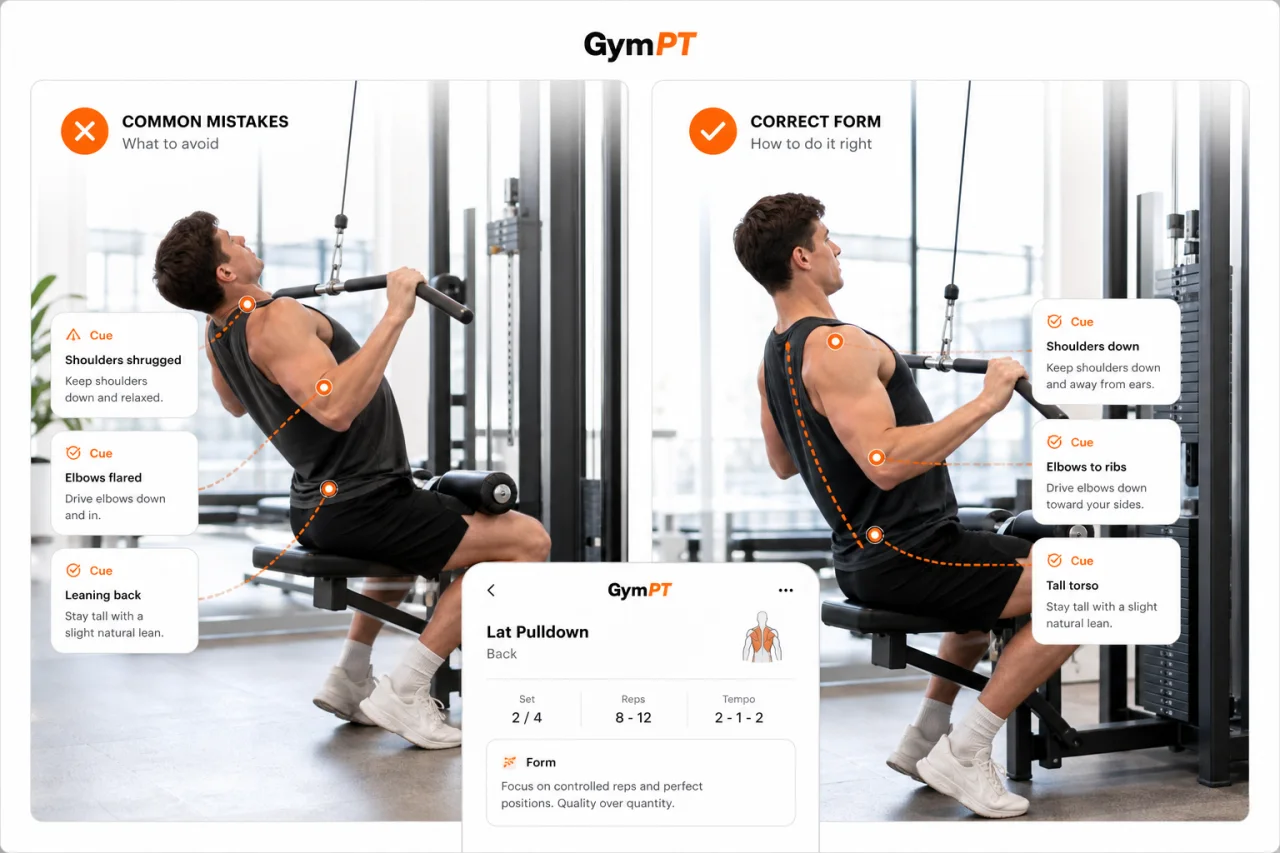
What a good lat pulldown should feel like
A solid pulldown starts with a stable seat, a controlled torso, and a pull that comes from the elbows rather than a hard yank with the hands. You should feel the back muscles doing most of the work, with the arms acting like hooks. The rep should look smooth from top to bottom, not rushed or bouncy.
Useful cues include “chest tall,” “ribs down,” “pull elbows to your sides,” and “lower with control.” Those cues help you keep the movement organized without overthinking every joint.
The 10 most common lat pulldown mistakes
1. Pulling with the hands instead of the elbows
If you think about squeezing the bar as hard as possible, the biceps often take over. That can make the set feel harder without making it better for the lats.
Fix: Imagine driving your elbows down and slightly in toward your ribs. Your hands should stay connected to the bar, but they should not be the main driver.
2. Leaning back too far
A small torso angle is normal, but turning the pulldown into a big recline changes the exercise. Too much lean often turns the rep into a row-like motion and makes it easier to use momentum.
Fix: Keep your torso mostly upright with only a slight lean if needed. Set your chest tall before each rep and keep that position consistent.
3. Using momentum to start the rep
If you swing your body or jerk the weight down, the stack may move, but the muscles do less controlled work. Momentum usually shows up when the load is too heavy or the setup is rushed.
Fix: Pause briefly at the top, brace your midsection, and begin each rep from a still position. If you cannot control the start, reduce the load.
4. Pulling the bar too low
Many lifters chase a bigger-looking rep by pulling the bar far below the upper chest. That often shortens control at the bottom and can encourage shoulder shrugging or torso movement.
Fix: Aim for the upper chest or collarbone area, depending on your machine and arm length. Stop where you can keep the shoulders organized and the torso steady.
5. Shrugging the shoulders up
When the shoulders ride toward the ears, the upper traps tend to dominate and the lats lose some of their role. This is one of the most common lat pulldown mistakes for people who are trying to “pull harder.”
Fix: Start by letting the shoulders settle down, then pull. Think about keeping the neck long and the shoulders away from the ears throughout the rep.
6. Starting with the shoulder blades forced all the way back
Some people over-cue “squeeze the shoulder blades together” before the pull even begins. That can make the movement stiff and reduce the natural shoulder motion needed for a clean pulldown.
Fix: Let the shoulder blades move naturally as you pull. A controlled downward motion matters more than forcing a hard pinch before the elbows move.
7. Cutting the range of motion short
Partial reps are not always wrong, but many lifters stop early because the weight is too heavy or the top position feels uncomfortable. That usually reduces the training effect and makes progress harder to track.
Fix: Use a range you can control from a full stretch to a strong finish. If the full range breaks down, lower the load and rebuild it.
8. Letting the weight yank you upward on the way back
The lowering phase matters. If the stack pulls your arms up quickly, you lose tension and turn the rep into a drop instead of a controlled eccentric.
Fix: Lower the bar slowly and keep tension through the lats and upper back. A controlled return usually improves both technique and training quality.
9. Gripping too wide
A very wide grip can reduce range of motion and make the shoulders feel awkward. It may also make it harder to keep the elbows on a useful path.
Fix: Use a grip that lets you pull smoothly with control. For many people, a moderate overhand grip works better than an extreme wide grip.
10. Choosing a load that is too heavy
Heavy weight is not the problem. Uncontrolled heavy weight is. If the stack forces you to lean back, shrug, bounce, or shorten the rep, the load is probably too high for the goal of the set.
Fix: Pick a weight that lets you repeat the same clean rep several times in a row. If the last two reps look very different from the first two, the load is likely too ambitious.
Simple setup checklist before every set
- Plant your feet and sit tall.
- Set your thighs under the pads so you feel secure.
- Grip the bar without over-squeezing.
- Lift your chest slightly and keep your ribs controlled.
- Start the pull by driving the elbows down.
- Lower the bar with control and repeat.
This checklist takes only a few seconds, but it can clean up a lot of sloppy reps.

Better lat pulldown cues for cleaner reps
- “Elbows to ribs.” Helps shift attention away from the hands.
- “Chest tall, ribs controlled.” Keeps the torso from over-leaning.
- “Shoulders down, neck long.” Reduces shrugging.
- “Pull smooth, lower slower.” Improves control through the whole rep.
- “Stop before the stack slams.” Encourages tension instead of bouncing.
If you train with GymPT, these cues are easy to turn into a repeatable plan. The app can also help you track whether your form improves as your load increases, instead of guessing from one workout to the next.
Lat pulldown alternatives if the standard version does not fit you
Sometimes the issue is not your effort. It is the exercise variation. If the standard pulldown feels awkward, try one of these options:
- Neutral-grip pulldown: Often feels easier on the shoulders and lets the elbows travel naturally.
- Single-arm cable pulldown: Useful for learning the elbow path and reducing compensation.
- Assisted pull-up machine: A good progression if you want a more bodyweight-based vertical pull.
- Chest-supported row: Helpful if you need a back exercise with less torso movement.
These alternatives can keep your back training productive while you build the control needed for a better pulldown later.
When to reduce weight instead of forcing better form
Reduce the load if you notice any of these patterns:
- You have to swing to start the rep.
- Your shoulders shrug on every pull.
- You cannot control the lowering phase.
- Your range of motion changes from rep to rep.
- You feel the movement mostly in your arms.
Dropping the weight is not a step backward. It is often the fastest way to make the exercise useful again.
How GymPT can help you fix lat pulldown mistakes faster
Good form gets easier when your plan matches your equipment, experience, and recovery. GymPT can help you choose the right pulldown variation, track your sets and reps, and adjust your training when progress stalls. If your body analysis or workout history shows that your pulling volume is rising too fast, GymPT can help you dial it back before technique falls apart.
That matters because better back training is not just about doing more work. It is about doing the same movement well enough to repeat it, progress it, and recover from it.
Final takeaway
The best way to fix lat pulldown mistakes is to make the rep simpler: stable setup, controlled torso, elbows driving the motion, and a smooth lowering phase. If your form breaks down, lower the weight and clean up the movement before chasing more load. That is how the lat pulldown becomes a real back builder instead of just another machine exercise.