pull up mistakes
Pull Up Mistakes: 10 Form Errors That Make Reps Harder Than They Need to Be
Pull-ups get easier when your setup gets better. Learn the most common pull up mistakes, the cues that fix them, and smart regressions that build real strength.

Pull up mistakes that make a great exercise feel impossible
Pull-ups look simple from the outside: grab the bar, pull, lower, repeat. In practice, small errors can turn a strong movement into a sloppy one. The good news is that most pull up mistakes are easy to spot once you know what to look for. Better setup, better body position, and better control usually make the exercise feel more efficient right away.
This guide breaks down the most common pull up mistakes, explains why they matter, and gives you practical fixes you can use on your next set. If you want a smarter way to build toward cleaner reps, GymPT can help you choose the right variation, track progress, and adjust your plan as you get stronger.
What a good pull-up should look like
A solid pull-up starts from a controlled hang, with the ribs stacked, core braced, and shoulder blades set before you pull. The movement should be driven by the back and arms together, not by swinging or yanking. Coaching guidance from ACE emphasizes packing the shoulders and keeping the scapulae set before the pull, while NSCA materials also highlight scapular control and a controlled path through the rep.
Think of the rep as three parts: set, pull, and lower. If any one of those breaks down, the whole rep gets less effective.
The 10 most common pull up mistakes
1. Starting with loose shoulders
If you hang passively without setting the shoulder blades, the first part of the rep becomes unstable. That often makes the movement feel harder and can shift stress away from the muscles you want to train. A better cue is to pull the shoulders down and slightly back before bending the elbows. ACE describes this as packing the shoulders or placing the scapulae in a strong position before the pull.
2. Using too much swing
Kipping, kicking, or rocking the legs may help you move faster, but it also reduces control. If your goal is strength or cleaner technique, keep the body quiet and let the pull come from the upper back and arms. ACE notes that cheating and momentum are common pull-up problems, especially when people jump to the bar and only lower partway down.
3. Pulling with the arms only
Pull-ups are not just a biceps exercise. The lats, rhomboids, rear delts, and trunk all contribute to a strong rep. If you try to curl yourself up without engaging the back, the movement usually stalls early. A helpful cue is to drive the elbows down and back while keeping the chest tall.
4. Shrugging toward the ears
When the shoulders creep up, the rep usually gets less efficient and the neck takes over. Keep the neck long and the shoulders away from the ears. This is one of the easiest pull up mistakes to fix once you notice it.
5. Cutting the range of motion short
Partial reps can be useful in specific training phases, but many people stop too early without realizing it. A cleaner pull-up usually means starting from a controlled hang and lowering until the arms are fully extended again, as described in exercise technique references from ExRx and NSCA.
6. Craning the neck to reach the bar
Some lifters jut the chin forward instead of lifting the chest with control. That can make the rep look higher without actually improving the pull. Aim to bring the upper chest toward the bar while keeping the neck neutral.
7. Rushing the lowering phase
The descent matters. If you drop too fast, you lose tension and miss a big part of the strength-building benefit. Lower yourself with control for a full rep, even if that means doing fewer total reps.
8. Gripping the bar too wide
A grip that is excessively wide can reduce range of motion and make the movement less efficient. ExRx notes that a too-wide grip can decrease range of motion in assisted pull-up variations as well. A shoulder-width or slightly wider grip is usually a better starting point.
9. Skipping the full-body brace
If your ribs flare and your lower body swings freely, the pull becomes harder to control. Brace your core, squeeze your glutes lightly, and keep your legs still. That stable base helps the upper body do the work.
10. Chasing reps before earning them
Many people try to force full pull-ups before they have the strength to own the pattern. That usually leads to ugly reps and slow progress. ACE recommends building the movement with assistance, straight-arm pulldowns, and eccentric pull-ups when needed.
How to fix pull up mistakes fast
Use this simple checklist before every set:
- Grip the bar firmly.
- Set the shoulders down and back.
- Brace the core.
- Pull the elbows toward your sides.
- Lower under control.
If your form breaks on rep one, reduce the difficulty immediately. Better reps beat messy reps.
Best regressions when pull-ups are not ready yet
If you are still working through pull up mistakes, these regressions can build the right strength and pattern without forcing full reps too early:
- Assisted pull-ups: Use a band or assisted machine to keep the movement controlled while you practice the full pattern.
- Eccentric pull-ups: Start at the top and lower slowly to build control through the hardest part of the rep.
- Straight-arm pulldowns: Train lat engagement and trunk stability without the full bodyweight demand.
- TRX or suspension rows: Build pulling strength with an easier angle before moving back to the bar.
These options are especially useful if you can do a few reps but lose form quickly. They let you keep training the pattern while you build capacity.
When to use chin-ups instead
If pull-ups feel too demanding right now, chin-ups can be a useful stepping stone because the underhand grip often makes the movement more approachable. That does not make chin-ups “easier” in every case, but it can help you practice vertical pulling with better control while you build toward strict pull-ups.
A simple pull-up practice plan
Try this two- to three-day weekly structure:
- Day 1: Assisted pull-ups for 3 sets of 5 to 8 reps.
- Day 2: Eccentric pull-ups for 3 sets of 3 to 5 slow lowers.
- Day 3: Straight-arm pulldowns or rows for 3 sets of 8 to 12 reps.
Keep the reps clean, stop before form breaks, and add difficulty only when the current version feels controlled.
How GymPT helps you improve pull-up form
GymPT can turn a vague goal like “get better at pull-ups” into a clear plan. Use it to build a personalized progression, log assisted reps, track total pulling volume, and get coaching feedback when your form starts to drift. If you train with limited equipment, GymPT can also suggest the best pull-up alternatives for your setup.
That matters because progress is easier to trust when you can see it. Instead of guessing whether you are improving, you can track the exact variation, reps, and assistance level that moved you forward.
Bottom line
Most pull up mistakes come down to the same few issues: loose shoulders, too much swing, short range of motion, and trying to do too much too soon. Fix those first, and the exercise usually becomes more productive right away. Build the pattern with assistance if needed, keep the reps strict, and let strength catch up to ambition.
If you want a smarter way to progress, GymPT can help you plan the next step, not just the next rep.
Related internal guides: push up mistakes, deadlift mistakes, shoulder press form guide, muscle load tracking
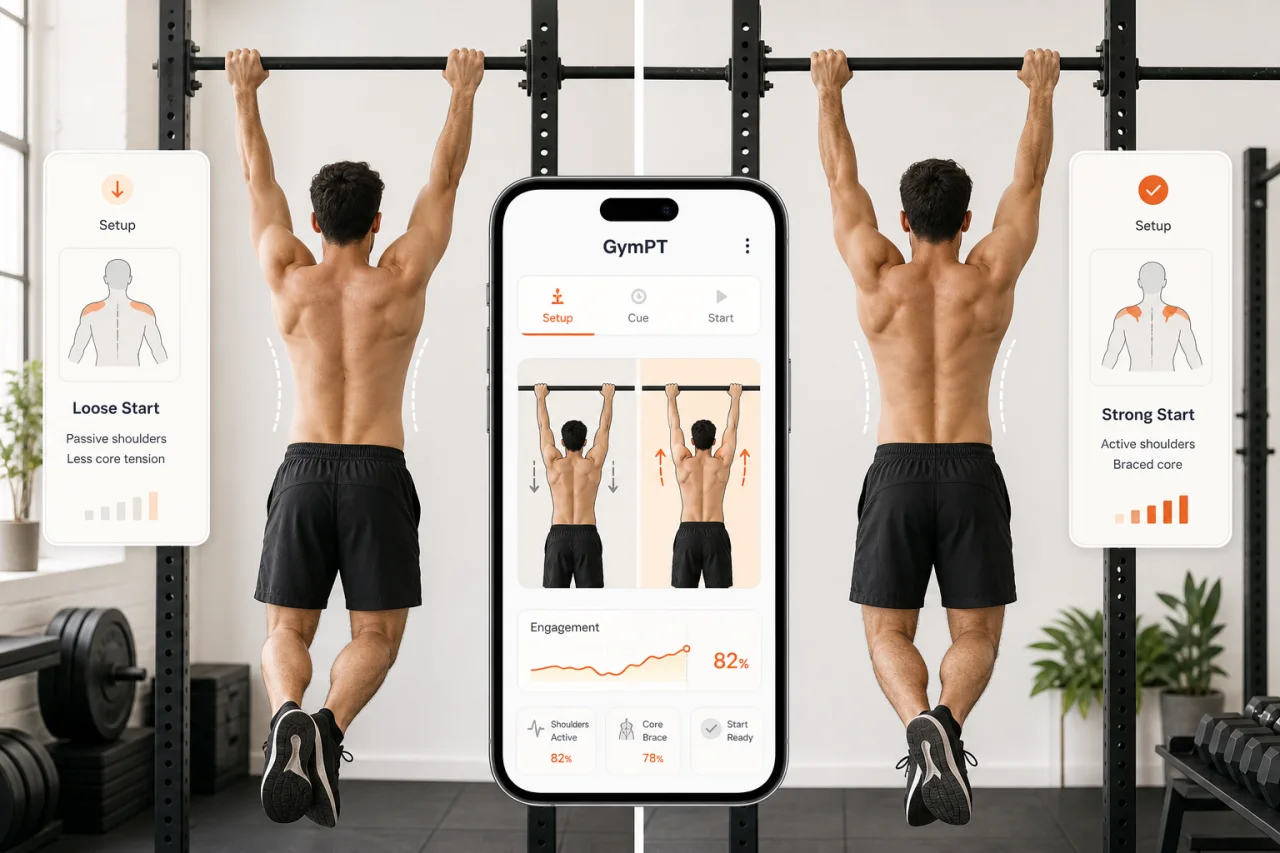
Quick visual cue: the pull-up setup
Use this image to show the difference between a loose hang and a strong, braced start position.
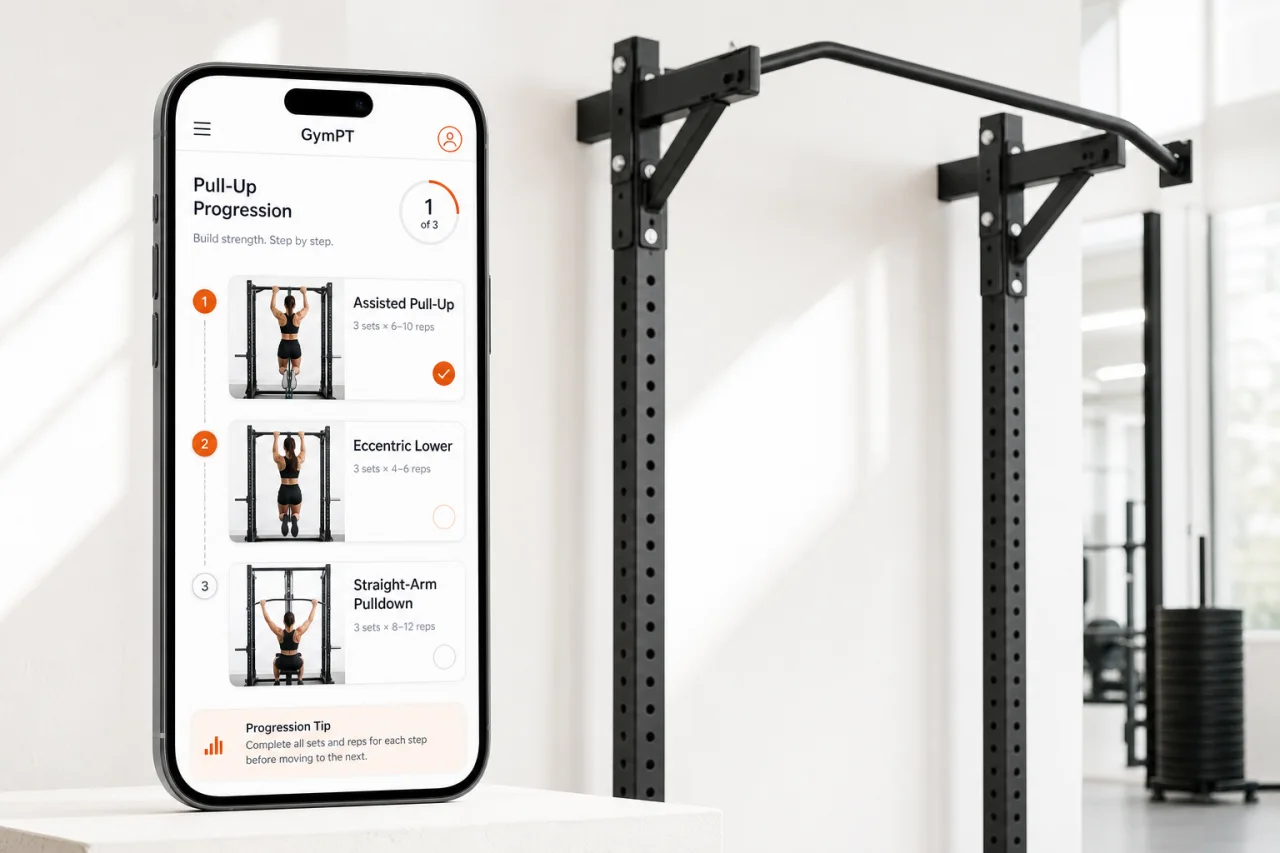
Common mistakes at a glance
Use this image to compare the most common pull up mistakes with the corrected version side by side.