deadlift mistakes
Deadlift Mistakes: 10 Form Errors That Slow Progress and Stress Your Back
Deadlift mistakes usually come from setup, bracing, or bar path—not just heavy weight. Learn the most common errors, how to fix them, and which regressions help you build a cleaner hinge.
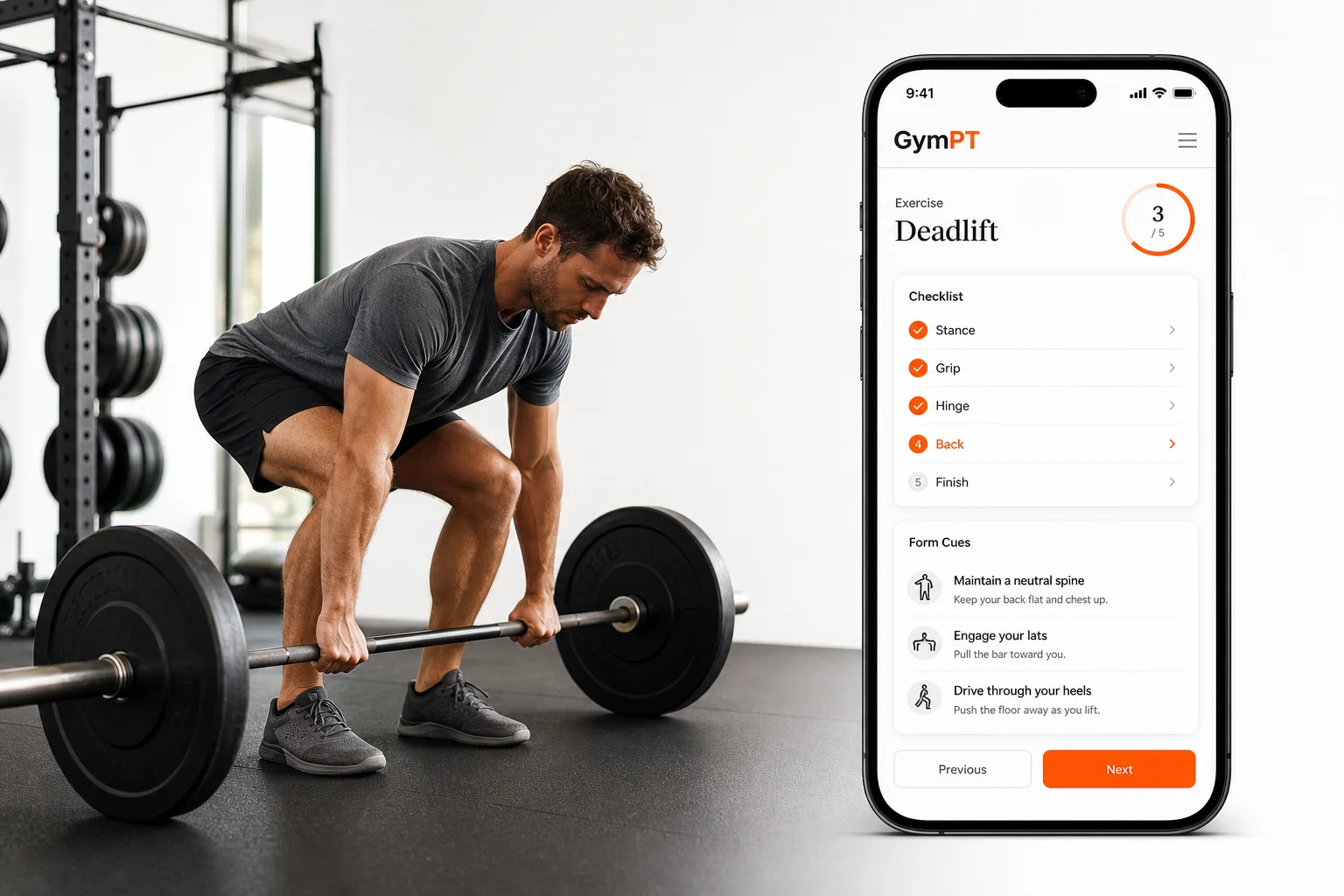
Deadlift mistakes: what usually goes wrong first
The deadlift is one of the best strength exercises you can learn, but it is also easy to turn into a back-dominant lift if the setup is rushed. Most deadlift mistakes happen before the bar even leaves the floor: the feet are off, the brace is loose, the bar starts too far away, or the lifter loses position as soon as the plates move. The good news is that these errors are usually fixable with better cues, simpler regressions, and a more consistent setup.
If you want a cleaner pull, think in this order: set the feet, brace the trunk, wedge into the bar, then drive the floor away. That sequence keeps the lift organized and makes it easier to spot where your technique breaks down.
The 10 most common deadlift mistakes
- Starting with the bar too far from the shins. If the bar drifts forward, the lift becomes harder and the lower back has to work overtime. The bar should start close enough that it can travel almost straight up.
- Skipping the brace. A soft midsection makes it harder to keep the torso stable. Before you pull, take a breath into your belly and sides, then tighten as if you are preparing for a punch.
- Rounding the lower back at setup. Some upper-back rounding can happen in advanced lifting styles, but beginners usually lose position because the hips are too low or the bar is too far away. Keep the spine long and the chest proud without overextending.
- Pulling with the arms. Your arms should act like straps. If you try to curl the bar up, you usually lose tension and break the bar path.
- Letting the hips shoot up too fast. When the hips rise before the bar leaves the floor, the lift turns into a stiff-leg pull and the back takes more load than necessary.
- Jerking the bar off the floor. A violent start often breaks position. Build tension first, then push smoothly.
- Letting the bar drift away from the body. The farther the bar moves from you, the harder the lift becomes. Keep it close to the legs on the way up and down.
- Locking out by leaning back. Finishing with an aggressive lean is not a stronger lockout. Stand tall, squeeze the glutes, and finish stacked over the hips.
- Looking too far up or down. Your neck should stay neutral. Cranking the head up can change torso position; dropping the chin can collapse the upper back.
- Rushing the descent. Lowering the bar carelessly makes it harder to repeat a good rep. Control the way down so your next rep starts from the same position.
Simple cues that fix most deadlift mistakes
Use fewer cues, not more. Too many instructions can make the lift feel chaotic. These are the most useful deadlift cues for most lifters:
- “Bar over midfoot.” Helps you start in the right place.
- “Brace, then pull.” Reminds you to create tension before the bar moves.
- “Push the floor away.” Encourages leg drive instead of yanking with the back.
- “Keep the bar close.” Helps maintain a cleaner bar path.
- “Stand tall, don’t lean back.” Keeps the lockout efficient.
One useful coaching idea is to think about the deadlift as a hip hinge, not a squat. Your hips move back, your torso inclines, and your legs help drive the floor away. If that pattern feels unclear, simplify the movement before loading it heavily.
How to tell whether your deadlift setup is the problem
Many lifters blame strength when the real issue is setup. Ask yourself these questions:
- Do I feel balanced over the midfoot before I pull?
- Can I keep my lats tight and the bar close to my legs?
- Do my hips rise immediately when the bar breaks the floor?
- Does my lower back feel like the main limiter every time?
If you answered yes to more than one, your deadlift mistakes are probably coming from position, not effort. That is a good sign, because position is trainable.
Best deadlift alternatives when your form breaks down
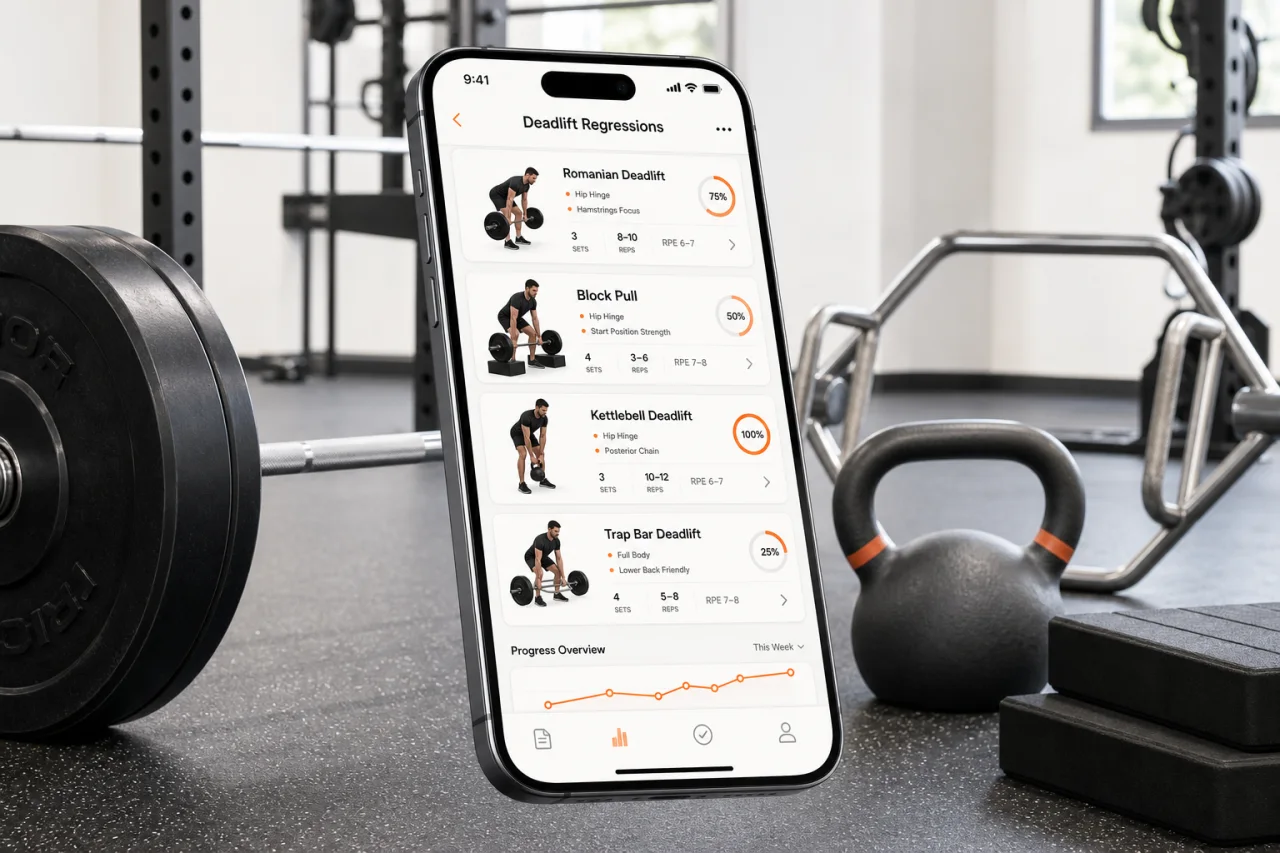
If the full deadlift is too technical right now, use a regression that teaches the same pattern with less complexity. These deadlift alternatives are especially useful when you want to improve your hinge without guessing.
- Romanian deadlift. Great for learning hip hinge control and keeping tension in the hamstrings.
- Block pull. Raises the starting position so you can practice a cleaner pull from a more manageable range.
- Kettlebell deadlift. A simple option for learning how to brace and push the floor away.
- Trap bar deadlift. Often feels more upright and can be easier to control for some lifters.
- Glute bridge or hip thrust. Useful for teaching hip extension without the complexity of pulling from the floor.
Choose the version that lets you keep your position for every rep. A lighter, cleaner lift is usually more productive than a heavier rep with sloppy mechanics.
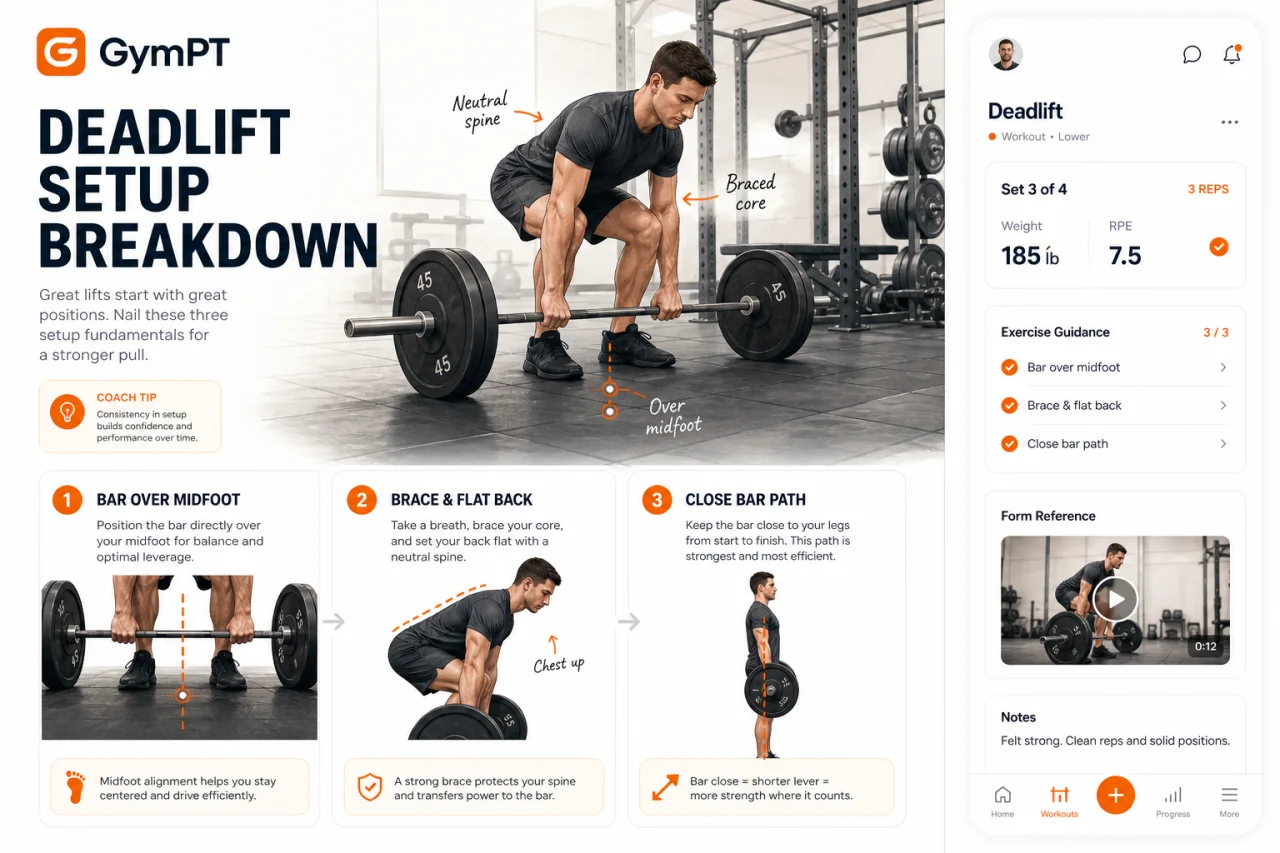
How to practice better deadlift form in your next session
Use this simple checklist before your working sets:
- Place the bar over the middle of your foot.
- Grip the bar and pull your chest long.
- Take a breath and brace your trunk.
- Wedge your hips into position without losing a neutral spine.
- Push the floor away and keep the bar close.
- Finish tall, then lower the bar with control.
If a rep looks or feels off, do not keep grinding. Drop the load, reset, and repeat the rep with better positions. That is how technique improves.
When to reduce load instead of forcing another rep
Reduce the weight if your back position changes on every rep, the bar drifts forward, or you cannot keep the brace through the pull. Strength training works best when the movement stays repeatable. If the pattern is breaking down, the set has already stopped being a good technique set.
For many lifters, the fastest way to improve is to pair a main deadlift day with a lighter hinge variation and track the result over time. That gives you practice without turning every session into a max-effort test.
How GymPT can help you clean up deadlift mistakes
GymPT can help you build a deadlift plan that matches your equipment, training level, and recovery. Use the AI coach chat to review cues, track your working sets, and choose the right regression when your form starts to slip. If your deadlift keeps breaking down, a smarter plan is usually better than more random volume.
Bottom line: deadlift mistakes are usually fixable with better setup, a stronger brace, and a cleaner bar path. Start with the simplest correction, practice it consistently, and let the load rise only after the movement stays solid.
Frequently asked questions about deadlift mistakes
Why do I feel deadlifts mostly in my lower back?
That usually means the hinge is breaking down, the bar is drifting away, or the brace is not strong enough. A cleaner setup and a lighter load often fix it.
Should I deadlift if my form is not perfect?
Yes, if you can keep the movement controlled and pain-free. But if your position falls apart, switch to a regression and rebuild the pattern first.
What is the easiest deadlift alternative for beginners?
A kettlebell deadlift or Romanian deadlift is often the easiest place to start because both teach the hinge with less setup complexity.