smart fitness coach app
What to Look for in a Smart Fitness Coach App: 9 Features That Actually Help You Train Better
A smart fitness coach app should do more than count reps. Here’s what to look for in a training app that actually helps you plan, adapt, and progress.
If you are comparing training apps, the phrase smart fitness coach app can mean a lot of different things. Some apps only store workouts. Others give generic plans that never change. The best ones behave more like a real coach: they help you choose the right workout, adjust when life gets busy, and show whether your training is actually moving forward.
That matters because effective training is not just about doing more. Public health guidance consistently recommends a mix of aerobic work and muscle-strengthening activity each week, with adults aiming for at least 150 minutes of moderate activity and strength training on 2 or more days weekly. A good app should help you organize that work in a way you can follow consistently.
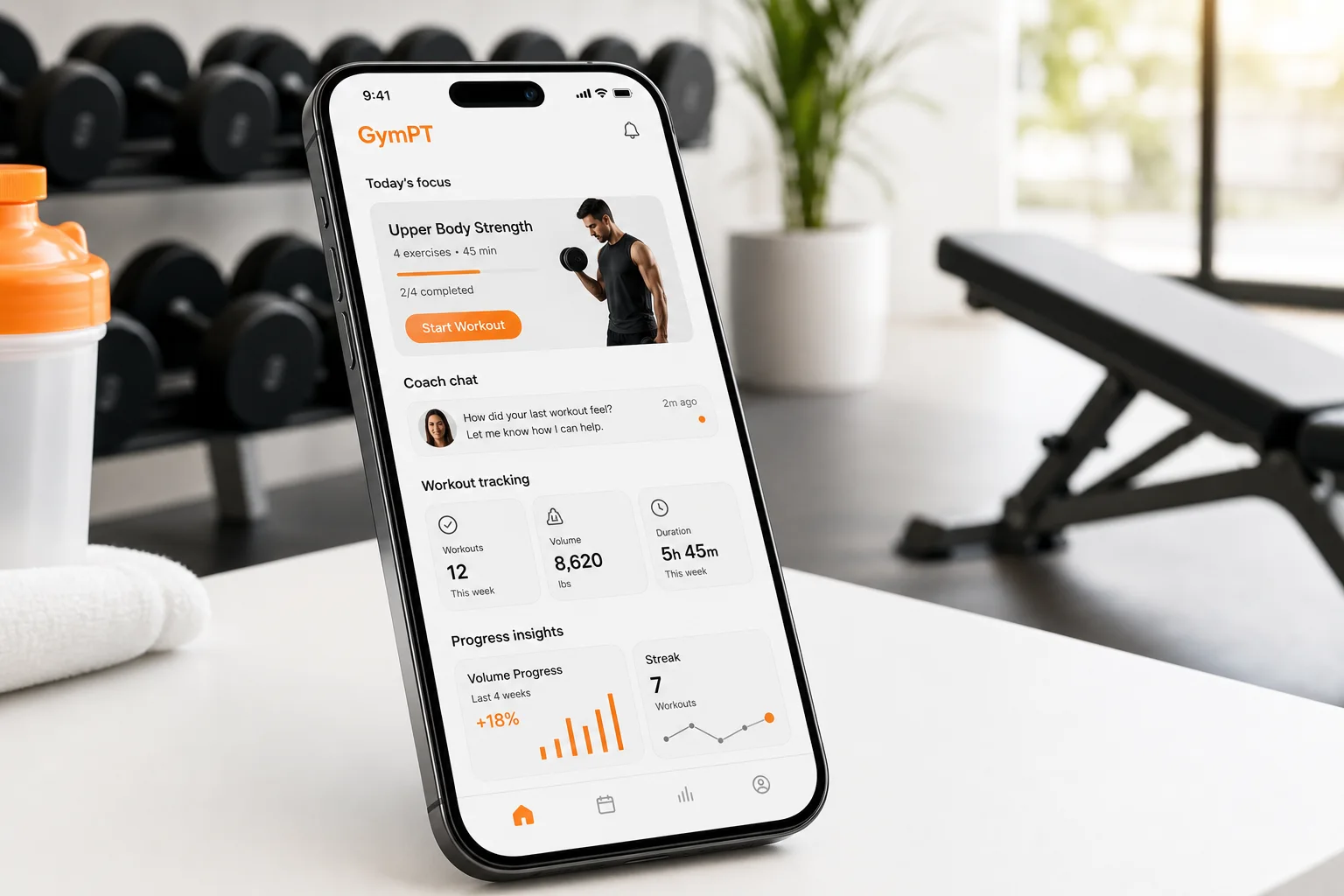
GymPT is built around that idea. It is an AI personal trainer app that creates personalized workout plans, supports coach chat, adapts to equipment, tracks workouts, and turns progress into clear insights. But whether you use GymPT or compare other options, the same buying criteria apply.
What a smart fitness coach app should actually do
A smart fitness coach app should reduce guesswork. It should help you answer practical questions like:
- What should I train today?
- How hard should I push?
- What if I only have dumbbells, cables, or no equipment at all?
- How do I know if I am progressing?
If an app cannot answer those questions in a way that fits your schedule and equipment, it is probably just a workout library with a nicer interface.
1. It builds a plan around your goal, not a generic template
The first thing to look for is personalization. A useful app should build a plan around your goal, training frequency, experience level, and available equipment. That could mean a fat-loss phase, a muscle-building block, a home plan, or a gym plan that changes based on what you can actually do this week.
GymPT is designed to generate personalized workout plans instead of forcing everyone into the same split. That is important because the best plan is the one you can repeat long enough to make progress.
2. It adapts to your equipment
Many people do not train in a perfect setup. Some have a full gym. Others have dumbbells, a bench, resistance bands, or just bodyweight. A smart fitness coach app should adapt to that reality.
Equipment-based training matters because exercise quality depends on what you can do consistently. If your app knows what you have access to, it can choose exercises that fit your environment instead of asking you to improvise every session.
GymPT supports equipment-based training, which makes it easier to keep your plan realistic whether you are at home or in the gym.
3. It gives coaching feedback, not just a list of exercises
Good coaching is not only about what to do. It is also about how to do it and how to adjust it. A strong app should explain exercise choices, help you make decisions when you are tired or short on time, and answer questions in plain language.
That is where AI coach chat can be useful. Instead of searching through random advice, you can ask the app things like:
- Should I reduce volume this week?
- What can I do if my shoulders feel beat up?
- How do I swap this exercise for a cable version?
GymPT’s AI coach chat is useful here because it turns the app from a static plan into a training partner you can actually consult.
4. It tracks workouts in a way that supports progression
Workout tracking should do more than record that you trained. It should help you see patterns: load, reps, sets, consistency, and whether your performance is trending up over time.
That matters because progress is easier to manage when it is visible. If you cannot tell whether last month was better than this month, it is hard to know when to push, hold, or deload. A smart fitness coach app should make that information easy to review.
GymPT includes workout tracking and progress insights, which helps you move from “I think I am improving” to “I can see exactly how my training is changing.”
5. It helps you recover, not just grind
A smart app should respect recovery. Training hard every day is not the same as training well. The best apps help you balance effort with rest so you can keep showing up.
That is especially important because public guidance recommends regular strength work alongside aerobic activity, not endless high-intensity sessions. A practical app should help you build a week that is sustainable, not just impressive on paper.
When an app can adjust volume, frequency, or exercise selection based on your schedule and fatigue, it becomes much more useful than a rigid template.
6. It makes the plan easy to follow on busy weeks
The best app is not the one with the most features. It is the one you can keep using when work, travel, or family life gets in the way. Look for an app that makes it easy to continue training even when your week changes.
That means simple session structure, clear exercise instructions, and the ability to swap movements without breaking the whole plan. If you can stay consistent with less friction, you are more likely to keep progressing.
7. It shows progress in plain language
Progress insights should be understandable at a glance. You should not need to decode a dashboard to know whether your training is working. A smart fitness coach app should show trends such as:
- workout consistency
- strength progression
- training volume changes
- completed sessions versus planned sessions
GymPT’s progress insights are valuable because they help you connect the dots between what you did and what improved. That makes it easier to stay motivated and make smarter training decisions.
8. It supports both beginners and experienced lifters
A good app should not assume everyone trains the same way. Beginners need structure, clear exercise selection, and manageable progression. More experienced users often want better control over split design, exercise swaps, and weekly volume.
If an app can serve both groups without becoming confusing, that is a strong sign it was built with real training use in mind.
9. It feels like a coach, not a content feed
There is a big difference between an app that gives you content and an app that helps you train. Content can be helpful, but coaching is more valuable when you need decisions, not just ideas.
Ask yourself whether the app helps you answer the next training question. If it does, it is probably a better long-term fit than a library of random workouts.
How GymPT fits the smart fitness coach app checklist
GymPT is a practical example of what to look for in a smart fitness coach app because it combines the core pieces most people actually need:
- Personalized workout plans that match your goal and schedule
- AI coach chat for quick training questions and adjustments
- Body analysis to support better awareness of your starting point
- Equipment-based training for home, gym, or mixed setups
- Workout tracking to log what you did
- Progress insights to help you see trends over time
That combination is useful because it covers the full training loop: plan, perform, track, review, and adjust.
What to avoid when choosing a fitness app
Not every app that looks smart is actually useful. Be cautious if an app:
- gives the same plan to everyone
- does not adapt to equipment
- tracks workouts but offers no insight
- pushes you toward unrealistic promises
- makes it hard to change the plan when life changes
In other words, avoid apps that look impressive but do not help you make better training decisions.
How to choose the right app for your training style
If you want a simple way to decide, use this checklist:
- Can it personalize a plan for my goal?
- Does it work with my equipment?
- Can I ask questions when I need help?
- Does it track my workouts clearly?
- Can I see whether I am improving?
- Will I still use it on a busy week?
If the answer is yes to most of those questions, you are probably looking at a real coaching tool, not just another fitness app.
Final take
The best smart fitness coach app is the one that helps you train with less guessing and more consistency. It should personalize your plan, adapt to your equipment, support coaching questions, and show progress in a way you can actually use.
That is the value GymPT aims to deliver: a practical AI personal trainer app that helps you plan better, track better, and progress with more confidence.
If you want to keep learning, these related guides can help:
- How to Choose the Best AI Workout Plan App: 7 Features That Actually Matter
- What an AI Workout Assistant Can Actually Do: Smarter Planning, Better Feedback, Safer Training
- AI Fitness Plan Generator: How to Use AI Coaching Without Guessing Your Way Through Training
- Muscle Load Tracking: How to Measure Progress Without Guessing