AI fitness plan generator
AI Fitness Plan Generator: How to Use AI Coaching Without Guessing Your Way Through Training
An AI fitness plan generator can save time, but the best results come from realistic inputs, safe progression, and ongoing adjustments. Here’s how to use AI coaching well—and how GymPT supports personalized planning, tracking, and smarter decisions.
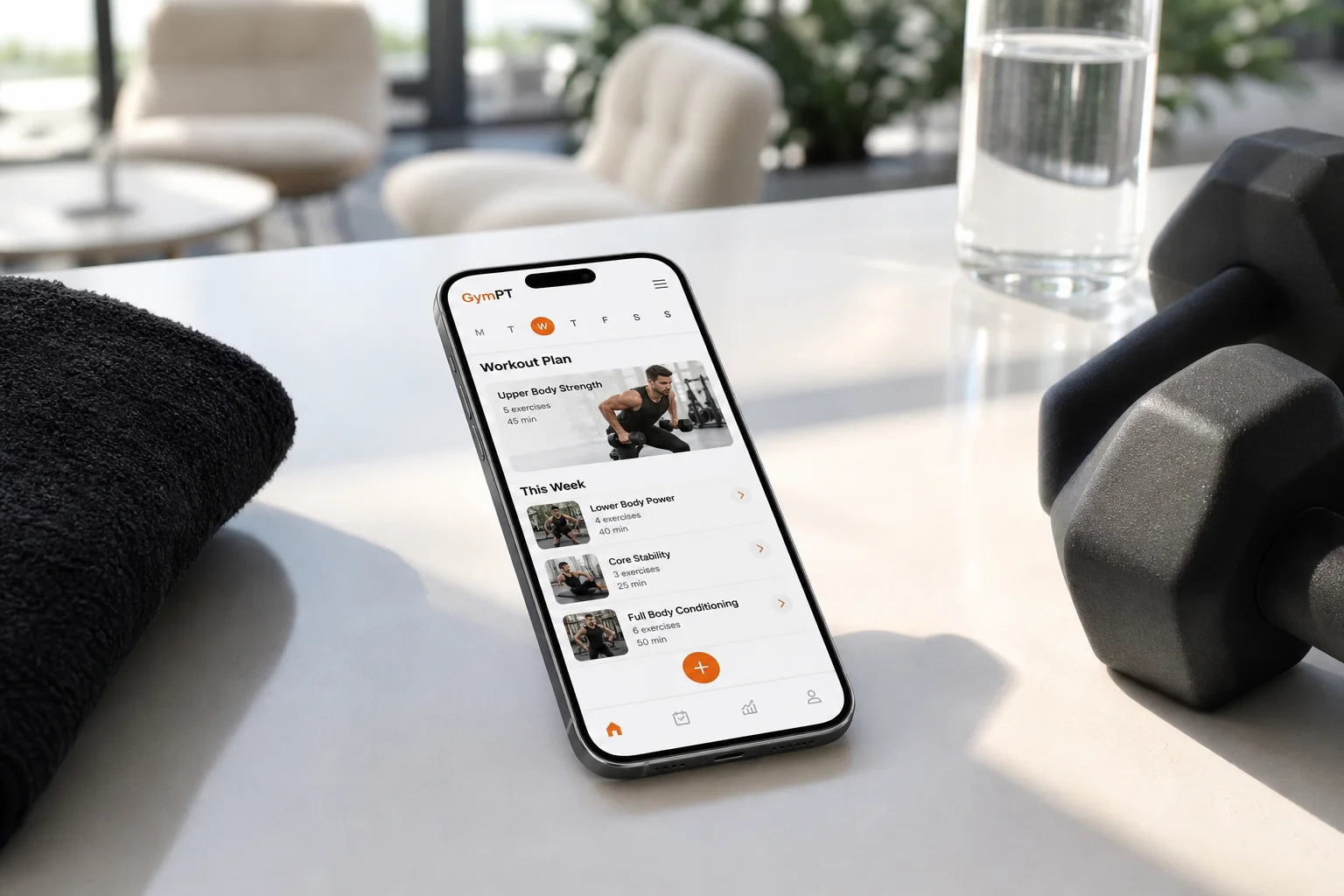
If you’ve ever opened a blank notes app and tried to build your own training split from scratch, you already know why an AI fitness plan generator sounds appealing. It can turn a vague goal like “get stronger” or “lose fat” into a structured plan faster than most people can do it manually.
But the best AI coaching is not magic. It works best when it follows real training principles: enough weekly volume, sensible exercise selection, gradual progression, and recovery that matches your current fitness level. That is where a good app matters. GymPT is built to help you create personalized workout plans, adjust them around your equipment, track what you actually did, and review progress without guessing.
In this guide, we’ll look at what AI can realistically do for your training, where it still needs human judgment, and how to use it in a way that supports safer planning.
What an AI fitness plan generator actually does
An AI fitness plan generator takes information about your goal, schedule, training experience, available equipment, and sometimes body metrics or movement preferences, then turns that into a workout structure. In practice, that usually means:
- choosing a training split that fits your week,
- suggesting exercises that match your equipment,
- setting sets, reps, and rest times,
- organizing progression over time, and
- helping you update the plan as your training changes.
That sounds simple, but it solves a real problem: most people do not need more random exercises. They need a plan they can follow consistently. Public health guidance from the World Health Organization recommends regular physical activity and muscle-strengthening work on at least two days per week for adults, which gives a useful baseline for any plan generator to respect. ()
Why AI coaching can be useful for real training
The biggest advantage of AI coaching is speed with structure. Instead of spending an hour comparing routines online, you can get a starting point that is already organized around your goal. That matters because consistency is usually the limiting factor, not access to information.
AI can also reduce friction in three practical ways:
- It narrows choices. You do not need 20 chest exercises. You need a few that fit your goal and equipment.
- It adapts to constraints. A home gym, a cable station, or a full commercial gym all call for different exercise options.
- It keeps the plan visible. When your workouts, loads, and completed sets are tracked in one place, it becomes easier to see whether you are progressing.
That is why GymPT combines planning, AI coach chat, workout tracking, and progress insights. The app is not trying to replace training judgment; it is trying to make better decisions easier to repeat.
Where AI still needs a coach’s logic
AI can generate a plan quickly, but it does not automatically know whether that plan is appropriate for your current recovery, technique, or training history. A realistic AI fitness plan generator should be treated like a smart assistant, not an authority that overrides common sense.
Here are the main places where human judgment still matters:
1. Exercise selection
Some exercises are great on paper but poor fits for your body, setup, or skill level. A good plan should match the movement to the person, not force the person to match the movement.
2. Volume and intensity
More is not always better. If your plan is too aggressive, you may struggle to recover, especially if you are new to training or returning after time off. A better generator starts conservatively and builds up.
3. Progression speed
Training should usually progress gradually. If load, reps, or total work jumps too fast, form often breaks down before strength improves.
4. Recovery and schedule fit
A plan that looks impressive but does not fit your real week is not a good plan. The best plan is the one you can actually complete.
WHO guidance also emphasizes that physical activity benefits come from regular movement over time, not from occasional all-out sessions. That is a strong reminder that sustainable structure beats random intensity. ()
How to use an AI fitness plan generator safely
If you want AI coaching to help rather than confuse you, give it better inputs and check the output like a coach would. Use this simple process:
- Start with your real goal. Pick one primary goal first: strength, muscle gain, fat loss support, general fitness, or consistency.
- Be honest about your level. Beginner, intermediate, and advanced lifters should not get the same plan.
- List your equipment. Dumbbells, cables, machines, barbells, kettlebells, or bodyweight only all change the plan.
- Set your weekly time. A 3-day plan and a 6-day plan should not look the same.
- Review the exercise mix. Make sure the plan covers major movement patterns: squat, hinge, push, pull, core, and carry or stability work where appropriate.
- Track what happens. If you are missing sessions or failing reps early, the plan needs adjustment.
GymPT is especially useful here because it can build around your equipment, then help you track whether the plan is actually working in practice. That feedback loop is what turns a static workout template into a living training system.
What a good AI-generated workout plan should include
Not every generated plan is equally useful. A strong plan usually includes the following:
- Clear weekly structure so you know what to do on each day.
- Specific exercises instead of vague “upper body” labels.
- Sets and reps that match the goal.
- Rest guidance so you are not guessing between sets.
- Progression rules so the plan evolves over time.
- Alternatives or substitutions when equipment is unavailable.
If a plan is missing these pieces, it may be more of a suggestion list than a true training program.
How GymPT supports smarter planning
GymPT is designed for people who want AI coaching to feel practical, not abstract. Instead of giving you a generic routine, it helps you build a plan around your actual training context.
That includes:
- Personalized workout plans based on your goals and setup,
- AI coach chat for quick training questions and adjustments,
- Body analysis to help you understand your starting point,
- Equipment-based training so your plan fits the gym or home setup you have,
- Workout tracking so you can log sessions consistently, and
- Progress insights so you can see trends instead of relying on memory.
That combination matters because training success is rarely about one perfect workout. It is about making the next workout easier to start, easier to follow, and easier to improve.
Common mistakes people make with AI coaching
AI can be helpful, but it is easy to misuse. Watch out for these mistakes:
- Changing the plan every week. Progress needs repetition.
- Chasing novelty. New exercises are not automatically better exercises.
- Ignoring recovery. A plan that leaves you exhausted every session is usually too much.
- Skipping tracking. If you do not log your work, you cannot tell whether the plan is effective.
- Assuming all output is equally good. The quality of the plan depends on the quality of the inputs.
In other words, AI should reduce decision fatigue, not create more of it.
When to update your plan
A good AI fitness plan generator should not lock you into a routine forever. Update your plan when:
- your schedule changes,
- your equipment changes,
- your goal changes,
- your recovery is consistently poor, or
- your progress stalls for several weeks.
That is where progress insights become valuable. If your logs show that a movement is stalling or a session is too hard to repeat, the next version of the plan should reflect that.
The bottom line
An AI fitness plan generator is most useful when it behaves like a thoughtful coach: it gives structure, respects constraints, and adapts based on feedback. It is not there to replace training fundamentals. It is there to make them easier to apply consistently.
If you want a smarter way to plan workouts, GymPT can help you build a routine around your goal, your equipment, and your current level—then track the work so you can improve it over time.
Ready to train with more structure? Explore GymPT’s workout planner, browse the exercise library, or read how to choose the best AI workout plan app for your needs. You can also start from the GymPT home experience and build from there.