legs workout with dumbbells
Legs Workout With Dumbbells: A Smarter Plan for Quads, Glutes, and Hamstrings
Learn how to build an effective legs workout with dumbbells using simple movement patterns, smart weekly volume, and beginner-friendly swaps.
Legs Workout With Dumbbells: What to Train and Why
A good legs workout with dumbbells does not need fancy machines. It needs the right movement patterns, enough weekly volume, and clean form. For most people, the smartest lower-body plan includes a squat pattern, a hinge pattern, a single-leg exercise, and one or two accessory moves for calves or glutes. That combination covers the major muscles of the thighs and hips while keeping the workout simple enough to repeat consistently.
If your goal is strength, muscle growth, or better everyday movement, dumbbells are a practical tool because they let you train at home or in the gym and adjust load gradually. The key is to choose exercises you can perform with control, then progress them over time instead of chasing random variety.
The Best Dumbbell Leg Exercises to Build Around
Use these movements as the core of your dumbbell leg day. They cover the main lower-body patterns without overcomplicating the session.
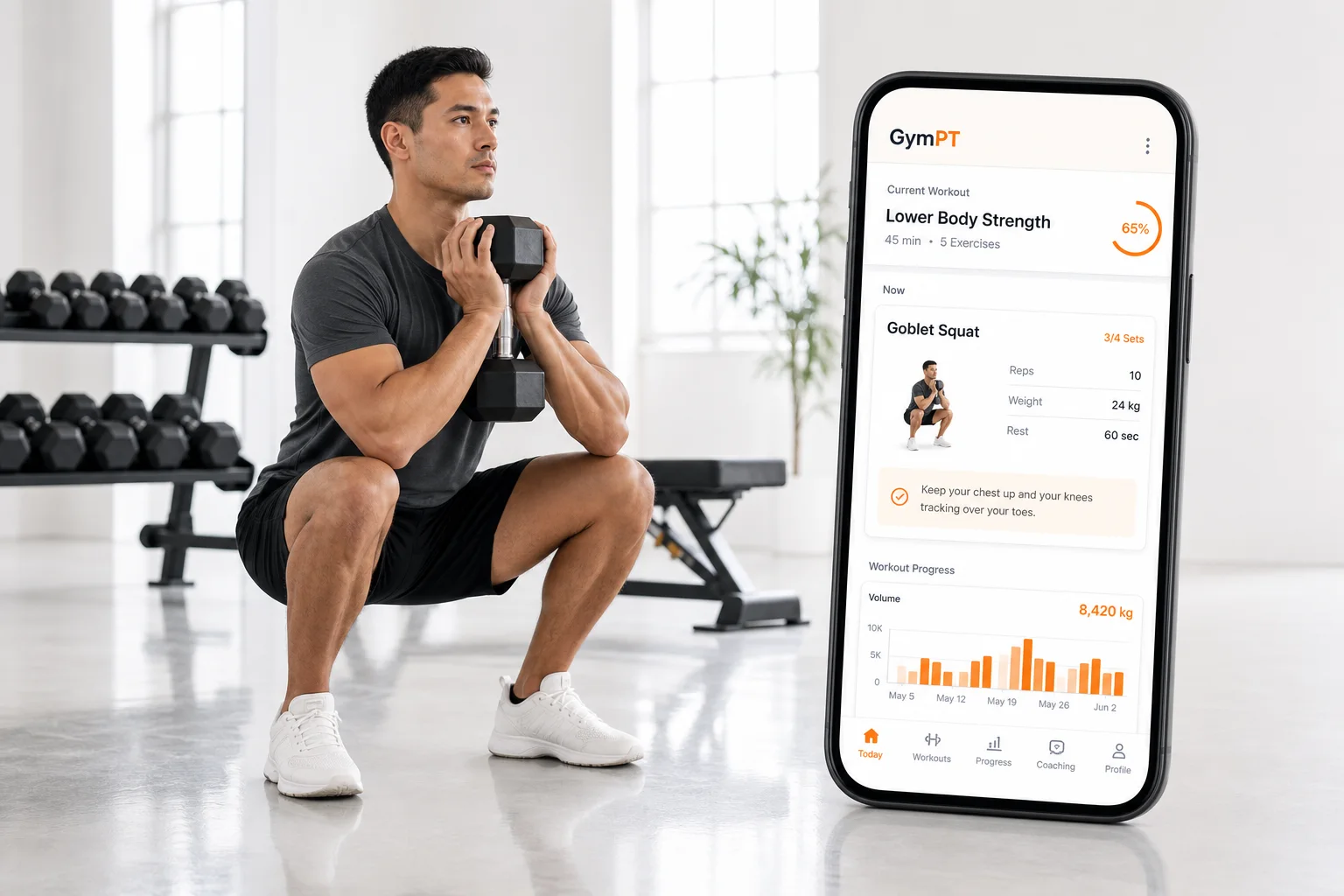
1. Dumbbell Goblet Squat
Hold one dumbbell at chest height, stand with feet about shoulder-width apart, and sit down between your hips. Keep your chest tall and your heels grounded. Drive up through the midfoot and stand fully at the top.
- Best for: quads, glutes, core bracing
- Form cue: let your knees track in line with your toes
- Beginner swap: bodyweight squat to a box or bench
2. Dumbbell Romanian Deadlift
Stand tall with dumbbells in front of your thighs. Push your hips back, keep a soft bend in the knees, and lower the weights along your legs until you feel a stretch in the hamstrings. Stand by driving the hips forward, not by leaning back.
- Best for: hamstrings, glutes, hip hinge strength
- Form cue: keep the spine long and the dumbbells close to your legs
- Beginner swap: shorter range of motion with lighter dumbbells
3. Dumbbell Reverse Lunge
Step one leg back, lower under control, and keep most of your weight on the front leg. Push through the front foot to return to standing. Reverse lunges are often easier to control than forward lunges and are a strong choice for beginners.
- Best for: quads, glutes, balance
- Form cue: keep your front knee stable and your torso slightly forward
- Beginner swap: split squat with a short stance and no step
4. Dumbbell Step-Up
Use a stable box or bench. Place one foot fully on the surface, lean slightly forward, and stand up by driving through the working leg. Lower slowly to build control.
- Best for: quads, glutes, single-leg strength
- Form cue: avoid pushing off hard with the trailing leg
- Beginner swap: lower step height or use bodyweight only
5. Dumbbell Hip Thrust or Glute Bridge
Place a dumbbell across the hips, brace your core, and lift the hips until your torso forms a straight line from shoulders to knees. Pause briefly at the top and lower with control.
- Best for: glutes, hip extension strength
- Form cue: keep ribs down and do not overarch the lower back
- Beginner swap: bodyweight glute bridge
6. Dumbbell Calf Raise
Hold dumbbells at your sides, rise onto the balls of your feet, pause at the top, and lower slowly. Calves respond well to controlled reps and a full range of motion.
- Best for: calves, ankle strength
- Form cue: use a slow lowering phase
- Beginner swap: bodyweight calf raises holding a wall for balance
How Many Sets and Reps Should You Do?
For general fitness and muscle growth, a practical starting point is 2 to 3 sets per exercise and 8 to 12 reps on most movements. ACSM guidance supports 2 to 3 sets of 8 to 12 repetitions for resistance training, and recent reviews suggest that around 10 or more sets per muscle group per week is a useful target for hypertrophy in many trained adults. That does not mean every leg workout must be huge. It means your weekly total matters more than one perfect session.
For beginners, start lower: 2 sets per exercise, 6 to 10 reps, and stop with a few reps left in the tank. If your form stays solid and recovery is good, add a set or increase load gradually. If you are sore for days or your technique breaks down, reduce volume before adding more.
A Simple Dumbbell Leg Day Template
Here is a balanced session you can use as a starting point.
- Goblet squat — 3 sets of 8 to 10 reps
- Dumbbell Romanian deadlift — 3 sets of 8 to 10 reps
- Reverse lunge — 2 to 3 sets of 8 to 10 reps per leg
- Step-up — 2 sets of 8 reps per leg
- Glute bridge or hip thrust — 2 to 3 sets of 10 to 12 reps
- Calf raise — 2 to 3 sets of 12 to 15 reps
If you only have 20 to 30 minutes, keep the first three exercises and rotate the accessories across the week. That is often enough to make steady progress without turning leg day into a marathon.
Form Cues That Make Dumbbell Leg Training Better
Small technique details can make a big difference in how effective and comfortable your workout feels.
- Brace before each rep: take a breath, tighten your midsection, then move.
- Control the lowering phase: a steady descent improves position and makes the set more productive.
- Keep knees tracking naturally: do not force them inward or outward.
- Use a full but comfortable range: go as deep as you can while keeping your spine and balance under control.
- Stop one rep before form breaks: especially on lunges and hinges.
These cues matter because lower-body exercises are most useful when you can repeat them well. Good reps build confidence, and confidence makes consistency easier.
How to Progress Without Guessing
Progression does not have to be complicated. Pick one method at a time:
- Add reps: move from 8 to 10, then 12 before increasing weight.
- Add load: use a slightly heavier dumbbell once you own the current weight.
- Add a set: useful if you recover well and want more weekly volume.
- Slow the tempo: especially on squats, lunges, and Romanian deadlifts.
- Improve range of motion: only if you can keep control and alignment.
A simple rule: if you can complete the top end of your rep range with clean form for all sets, it is time to progress.
Beginner-Friendly Alternatives If the Full Workout Feels Too Hard
Not every legs workout with dumbbells should start at full intensity. If you are new to training, reduce the challenge before you reduce consistency.
- Use bodyweight first: squat, split squat, and glute bridge are enough to start.
- Hold one dumbbell instead of two: easier to control and less tiring on grip.
- Shorten the range: use a box squat or smaller lunge step.
- Support balance: hold a rack, wall, or bench during split squats and step-ups.
- Lower the total sets: 1 to 2 sets per exercise is a valid starting point.
That approach is especially useful if your goal is to build a habit first and increase difficulty later.
How to Fit This Into a Weekly Plan
Most people do well with lower-body training 2 times per week. You can repeat the same dumbbell leg workout twice, or split it into a quad-focused day and a hinge-focused day. If you also train upper body, keep at least one rest day between harder leg sessions when possible.
A simple weekly structure might look like this:
- Day 1: squat, lunge, calf work
- Day 2: Romanian deadlift, step-up, glute bridge
This gives your legs enough stimulus without making recovery the bottleneck.
How GymPT Helps You Train Legs Smarter
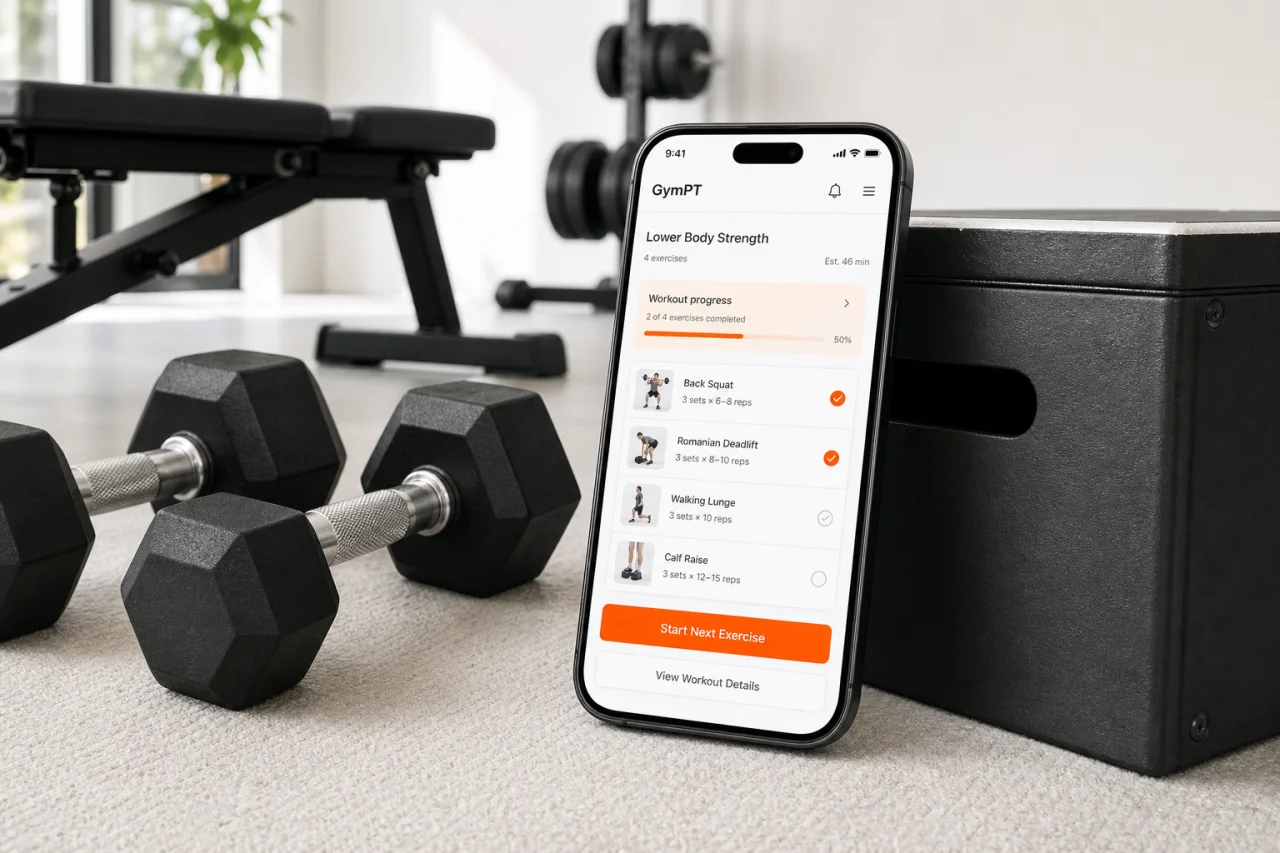
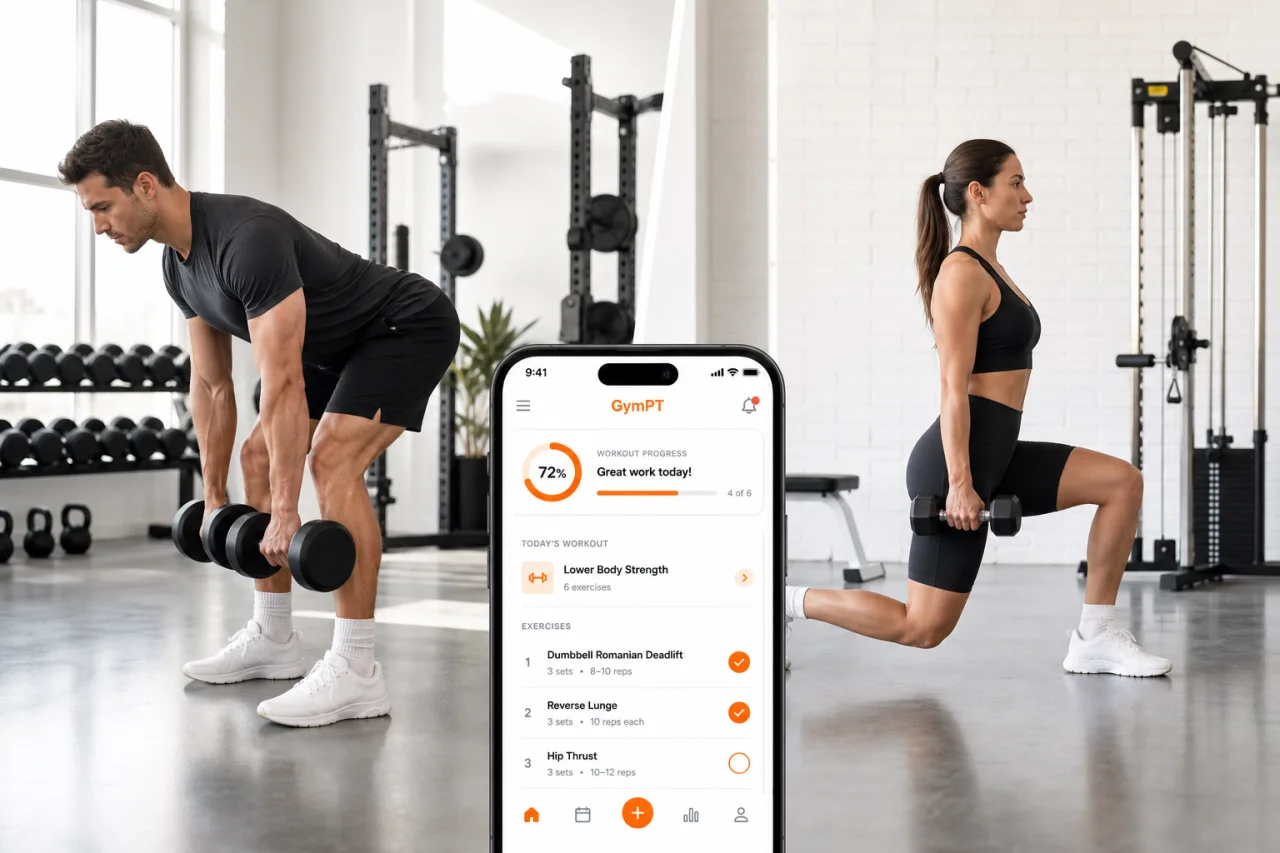
GymPT can turn a basic dumbbell leg routine into a personalized plan that matches your equipment, schedule, and experience level. Use it to build workouts around the dumbbells you actually have, track sets and reps, and see progress over time. If your form needs a simpler version, the AI coach can suggest beginner-friendly alternatives and help you adjust volume before you stall.
That is the real advantage of a smart training app: less guessing, more consistency, and a plan that changes when you do.
If you want a stronger lower body, start with a few reliable movements, train them with control, and progress them week by week. A legs workout with dumbbells works best when it is simple enough to repeat and structured enough to improve.