glutes workout with dumbbells
Glutes Workout With Dumbbells: A Smarter Plan for Shape, Strength, and Better Form
A practical glutes workout with dumbbells should do more than burn. Learn which moves matter, how to cue them well, and how to progress without guessing.
Glutes Workout With Dumbbells: What Actually Works
If you want a glutes workout with dumbbells that builds real strength, you do not need a dozen fancy exercises. You need a small set of movements that train hip extension, single-leg stability, and progressive overload with good form. Research on glute training consistently supports loaded hip thrusts, split squats, lunges, deadlift variations, and step-up patterns as effective options for the gluteus maximus. ACSM’s updated resistance training guidance also supports using multiple sets per exercise and a weekly volume approach for hypertrophy.
This guide keeps things practical: the best dumbbell exercises, how to cue them, how much to do, and how to scale the plan if you are a beginner or training at home.
Why dumbbells are enough for glute growth
Dumbbells are a strong tool for glute training because they let you load the hips, train one side at a time, and progress gradually without needing a full gym. They are especially useful for home training, where space and equipment are limited. For glute development, the goal is not just to “feel the burn.” The goal is to challenge the glutes through a full range of motion, close enough to fatigue, with enough weekly work to adapt.
In practice, that means combining:
- Hip-dominant work like dumbbell hip thrusts and Romanian deadlifts
- Single-leg work like split squats and reverse lunges
- Step-up or squat patterns for extra volume and balance
The best dumbbell glute exercises
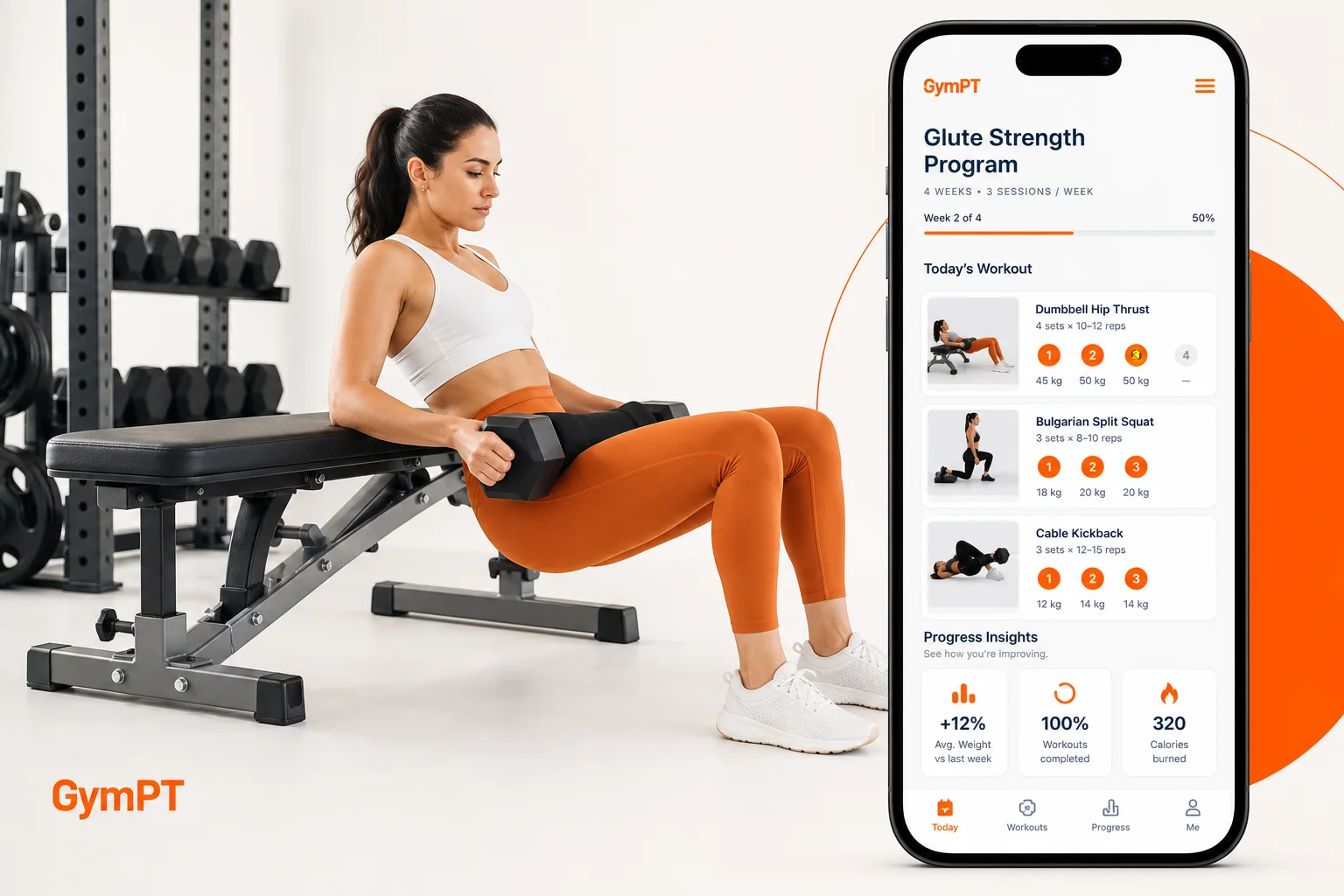
1) Dumbbell hip thrust
This is one of the most direct dumbbell glute exercises because it loads hip extension hard and keeps tension on the glutes near lockout. Studies comparing hip thrusts with squats and split squats often show high gluteus maximus activation, and training studies suggest hip thrust-focused work can be especially glute-specific.
How to do it: Sit with your upper back on a bench or sturdy surface, place a dumbbell across your hips, and drive through your heels until your torso is parallel to the floor. Pause briefly at the top.
Form cues:
- Ribs down, chin slightly tucked
- Shins close to vertical at the top
- Do not over-arch your lower back
- Squeeze the glutes hard at lockout
2) Dumbbell Romanian deadlift
The Romanian deadlift trains the glutes through a loaded hip hinge and is a great choice if you want more posterior-chain strength. Keep the movement controlled and let the hips travel back while the spine stays neutral.
Form cues:
- Soft knees, then push the hips back
- Keep dumbbells close to your legs
- Stop when you feel a strong hamstring and glute stretch
- Stand by driving the floor away, not by leaning back
3) Bulgarian split squat
This is one of the best unilateral glute builders because it challenges balance, hip stability, and leg strength at the same time. Loaded split squat variations are also highlighted in glute-focused research as strong options for gluteus maximus force production.
Form cues:
- Take a long enough stance to keep the front heel down
- Allow a slight forward torso lean
- Lower under control
- Push through the front foot to stand
4) Reverse lunge
Reverse lunges are usually easier to control than forward lunges and are a smart beginner-friendly option. They still train the glutes well, especially when you keep the front foot planted and use a long step back.
5) Dumbbell step-up
Step-ups are useful when you want glute work plus coordination. They can be very effective if the box or bench is high enough to challenge the working leg without forcing you to jump or twist.
How many sets and reps should you do?
For muscle growth, current resistance training guidance supports multiple sets per exercise and enough weekly volume to create a meaningful stimulus. A practical target for glute training is often around 10 to 20 hard sets per week across all glute-focused exercises, adjusted to your recovery and experience.
A simple rep guide:
- Hip thrusts and RDLs: 6–12 reps
- Split squats and lunges: 8–12 reps per leg
- Step-ups: 8–15 reps per leg
Most sets should finish with about 1–3 reps in reserve. That is hard enough to matter, but not so hard that your form falls apart.
A beginner-friendly dumbbell glute workout
If you are new to glute training, start with this 2-day rotation. It is simple, effective, and easy to track.
Workout A
- Dumbbell hip thrust — 3 sets of 8–12
- Dumbbell Romanian deadlift — 3 sets of 8–10
- Reverse lunge — 2 sets of 8–10 per leg
- Glute bridge hold with dumbbell — 2 sets of 20–30 seconds
Workout B
- Bulgarian split squat — 3 sets of 8–10 per leg
- Dumbbell step-up — 3 sets of 10–12 per leg
- Dumbbell hip thrust — 2 sets of 10–15
- Bodyweight frog pumps — 2 sets of 15–25
Train this plan 2 times per week, or 3 times per week if you recover well and keep the total volume sensible.
How to make the workout harder without changing exercises
You do not need a new exercise every week. You need better progression. Use one of these methods:
- Add reps until you reach the top of the range, then increase dumbbell load
- Add a set if recovery is good and progress has stalled
- Slow the lowering phase for more control
- Pause at the hardest point of the movement
- Use unilateral work when dumbbells are too light
If your dumbbells are limited, single-leg variations are often the easiest way to keep the workout challenging.
Common form mistakes that reduce glute work
- Turning every rep into a lower-back exercise by overextending at the top
- Using a stance that is too short in split squats and lunges
- Rushing the lowering phase and losing tension
- Letting the knees cave in during single-leg work
- Choosing weights that are too light to create a real training stimulus
A good rule: if you cannot control the descent, keep the same weight until you can.
Beginner alternatives if the full workout feels too hard
If you are just starting out, simplify the pattern before you chase load.
- Hip thrust: floor glute bridge with a dumbbell
- Romanian deadlift: shorter range of motion and lighter weight
- Bulgarian split squat: regular split squat with the back foot on the floor
- Step-up: lower box height and bodyweight first
These regressions still train the glutes well and help you build confidence before moving to heavier dumbbells.
How GymPT can help you progress faster
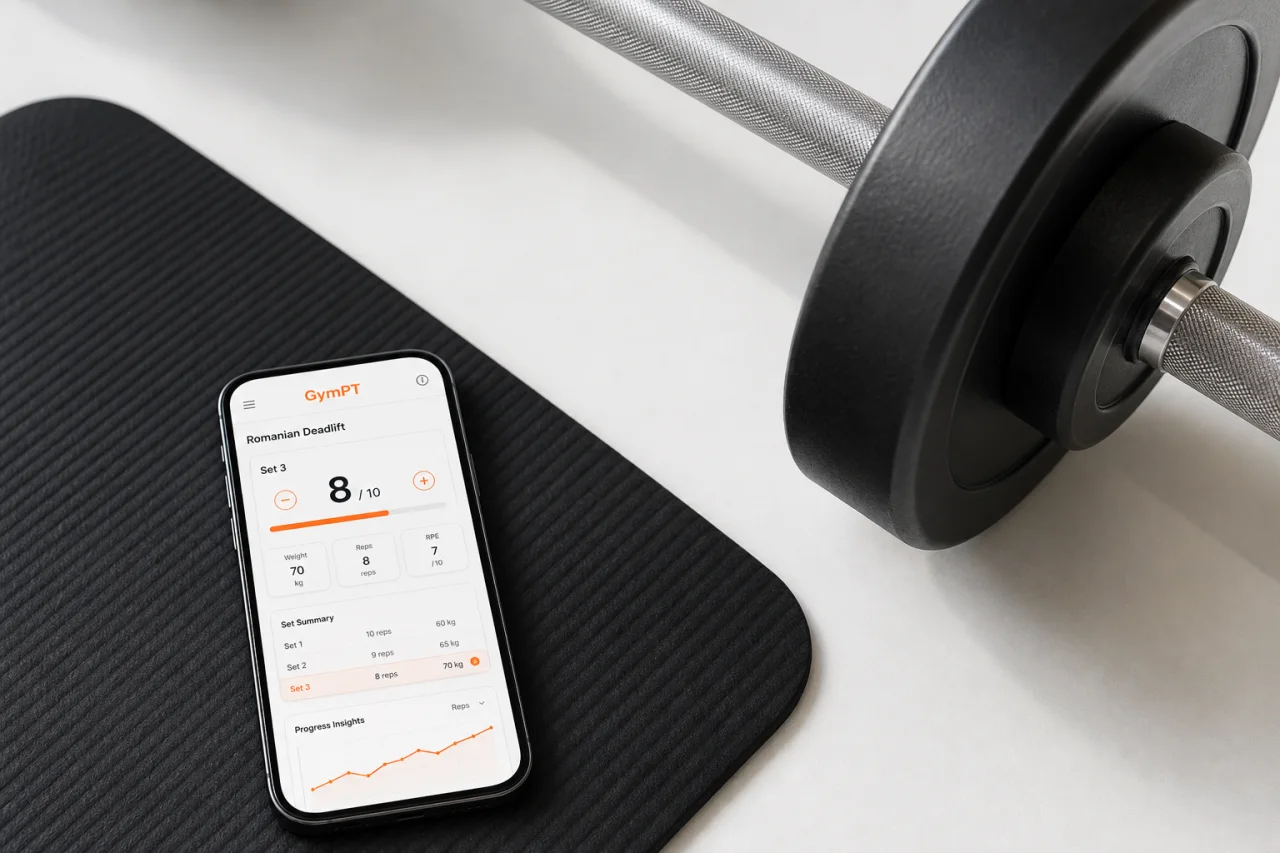
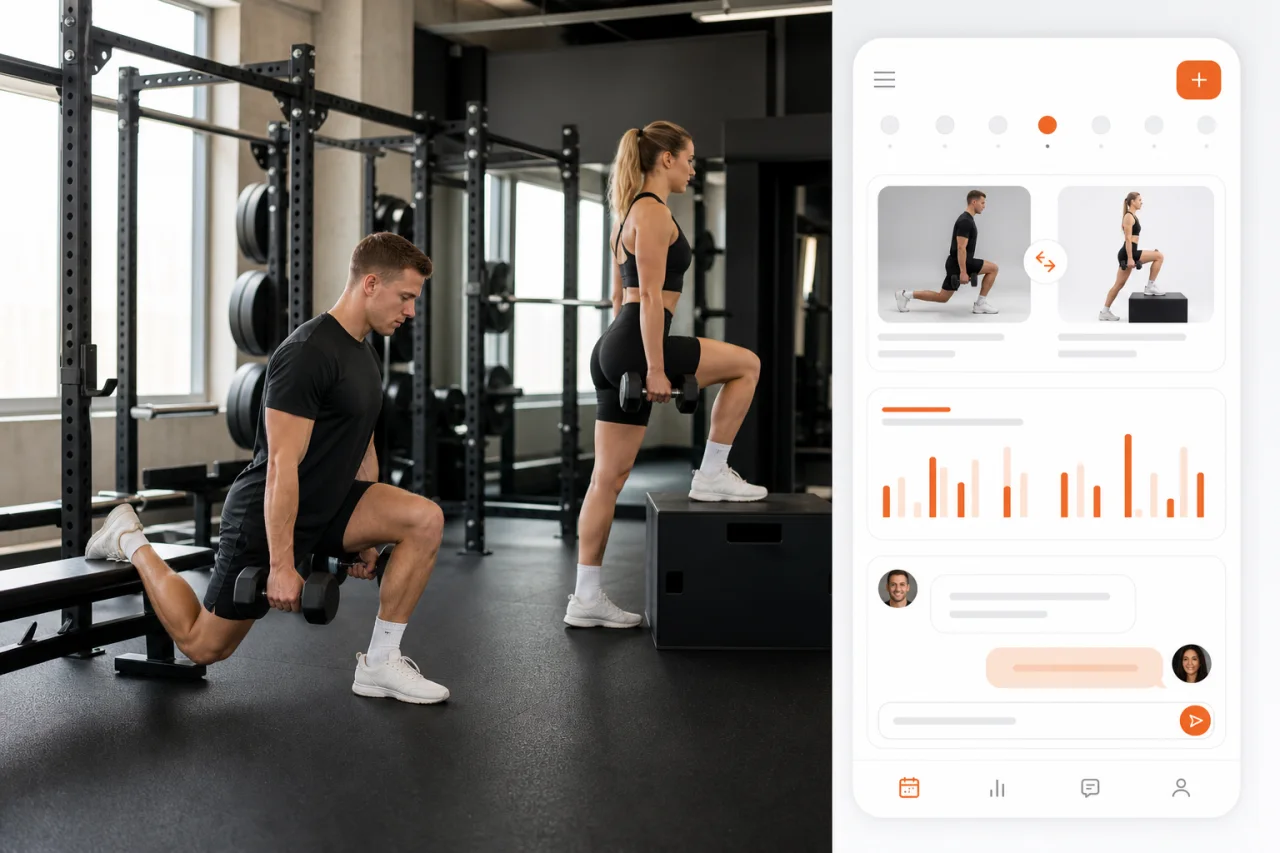
GymPT makes glute training easier to manage because it can build a personalized plan around your equipment, track your workouts, and show progress over time. If you are not sure whether to add reps, load, or a new exercise, the AI coach chat can help you make the next decision instead of guessing.
That is especially useful for glute training, where small changes in stance, range of motion, and weekly volume can make a big difference.
Use GymPT to:
- Build a dumbbell-only glute plan
- Track sets, reps, and load
- See whether your weekly volume is enough
- Adjust the plan when recovery or equipment changes
Final take
A strong glutes workout with dumbbells does not need to be complicated. Focus on a few proven patterns, use enough weekly volume, and keep your form honest. If you can hip thrust, hinge, split squat, and lunge with control, you already have the foundation for better glute strength and shape.
Start simple, track your numbers, and progress one small step at a time.