full body workout with dumbbell
Full Body Workout With Dumbbell: How to Build a Smarter Plan Around One Tool
A dumbbell-only setup can still train your whole body well. Learn how to choose the right exercises, balance movement patterns, and adapt the plan with GymPT.
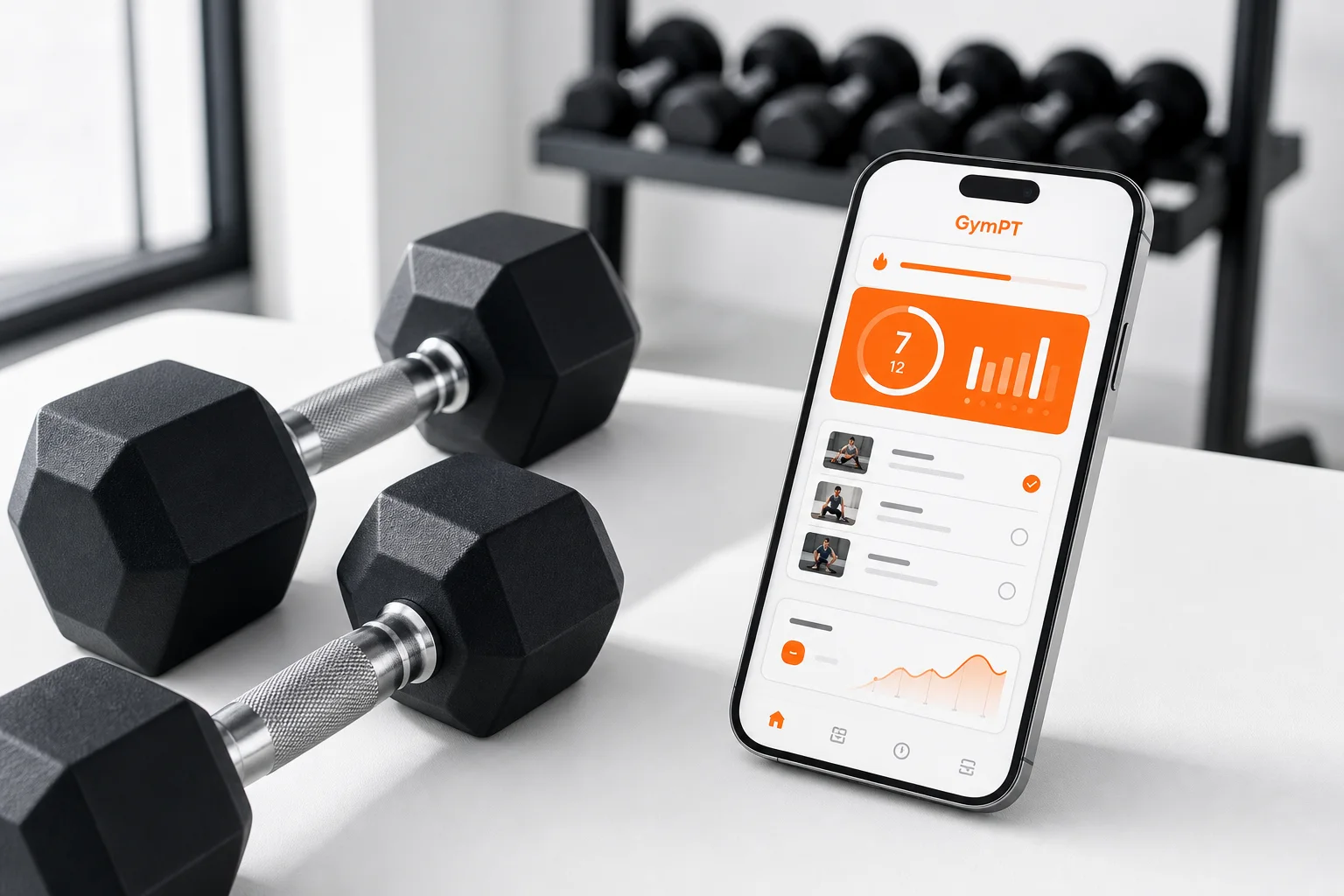
Full body workout with dumbbell: the simple way to train everything
A full body workout with dumbbell can be one of the most efficient ways to train. With just one pair of dumbbells, you can cover the major movement patterns your body needs: squat, hinge, push, pull, carry, and core work. That makes it a strong option for home training, busy schedules, and gym sessions where you want a simple plan that still feels complete.
The goal is not to do every exercise you know. The goal is to choose a few smart movements that cover the whole body, then progress them over time. That is exactly where GymPT helps: it can build a plan around the dumbbells you actually have, adjust volume to your level, and keep your workouts organized as you get stronger.
Why dumbbells work so well for full body training
Dumbbells are versatile because they let you train both sides of the body, one side at a time or together. They also make it easier to scale exercises up or down by changing load, tempo, range of motion, or reps. Public health guidance recommends regular muscle-strengthening work for all major muscle groups at least two days per week, and dumbbells make that easy to program into a simple routine.
For most people, a good dumbbell plan is easier to stick to than a complicated split. You can repeat the same structure two or three times per week, track progress, and improve the basics without needing a lot of equipment. That consistency matters because regular physical activity supports strength, function, and long-term health.
How to build a dumbbell full body workout
Think in movement patterns, not random exercises. A balanced session should include:
- One squat pattern for quads and glutes
- One hinge pattern for hamstrings and glutes
- One push for chest, shoulders, and triceps
- One pull for back and biceps
- One core exercise for trunk control
- Optional carry or finisher for grip and conditioning
If you only have light dumbbells, use unilateral work, slower reps, pauses, and higher repetitions to make the session challenging. If you have heavier dumbbells, keep the same structure and reduce reps while maintaining clean form.
Best exercise choices for each pattern
- Squat: goblet squat, dumbbell front squat, split squat
- Hinge: dumbbell Romanian deadlift, single-leg Romanian deadlift, dumbbell hip thrust
- Push: dumbbell floor press, dumbbell bench press, standing overhead press
- Pull: one-arm dumbbell row, chest-supported row, bent-over row
- Core: dead bug with dumbbell reach, suitcase carry, weighted plank drag
Choose one exercise from each category and keep the list short. A better workout is usually the one you can repeat, track, and improve.
A practical full body dumbbell routine
Here is a simple structure you can use for most training levels:
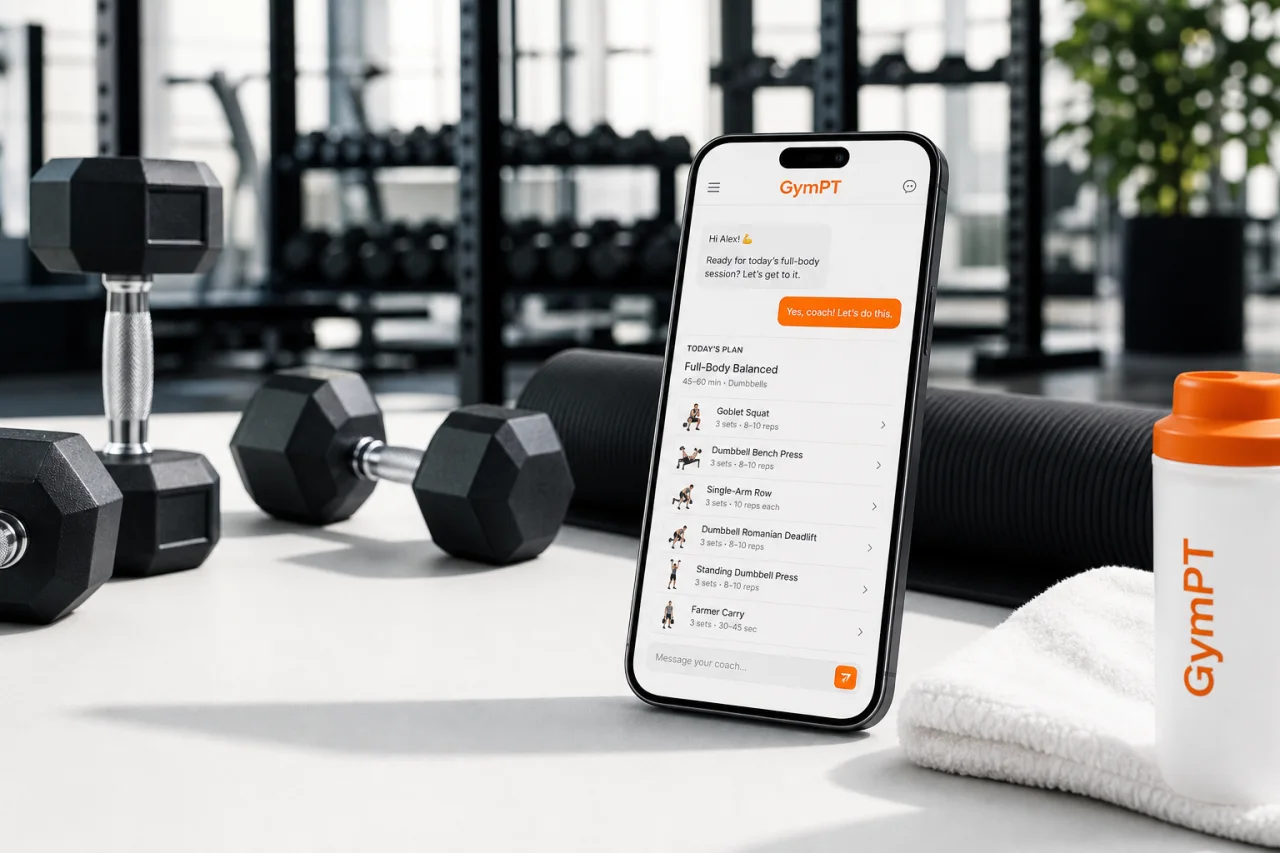
- Goblet squat — 3 sets of 8 to 12 reps
- Dumbbell Romanian deadlift — 3 sets of 8 to 12 reps
- Dumbbell floor press — 3 sets of 8 to 12 reps
- One-arm dumbbell row — 3 sets of 10 to 12 reps per side
- Standing dumbbell overhead press — 2 to 3 sets of 8 to 10 reps
- Suitcase carry — 2 to 3 rounds of 20 to 40 seconds per side
Rest for about 60 to 90 seconds between sets if your goal is general strength and muscle building. If the weights are heavy for you, take a little longer so your next set stays crisp. The right load is the one that lets you finish the set with good form and a few reps left in reserve.
How to make the workout fit your equipment
Not every dumbbell setup is the same. Some people have one light pair. Others have adjustable dumbbells or a full rack. GymPT can adapt the plan to what you have, which is useful because the best workout is the one matched to your actual equipment.
- Only light dumbbells: use split squats, single-leg hinges, pauses, and slower lowering phases.
- Moderate dumbbells: use standard bilateral lifts and keep rep ranges moderate.
- Heavy dumbbells: focus on lower reps for presses and squats, then use rows, carries, and unilateral work to balance the session.
- Limited space: choose floor press, rows, split squats, and carries that do not require a bench or a lot of room.
This is where an AI coach can save time. Instead of guessing, you can tell GymPT what equipment you have, how long you want to train, and how hard you want the session to feel. Then it can build a plan that fits.
How often should you do a dumbbell full body workout?
For most people, two to four full body sessions per week works well. The CDC recommends muscle-strengthening activity on at least two days each week, and a full body dumbbell plan makes that easy to follow.
If you are training three days per week, a full body format is especially efficient because each muscle group gets repeated practice. If you train four days per week, you can keep the same movement patterns and slightly reduce the number of sets per session.
How to progress without overcomplicating the plan
Progress does not have to mean adding weight every session. You can also progress by:
- adding one rep per set
- adding a set to one exercise
- slowing the lowering phase
- using a deeper range of motion
- reducing rest time slightly
- switching from bilateral to unilateral work
That kind of progression is useful when your dumbbells are limited. It also helps you stay consistent because you can keep improving even before you buy heavier weights.
Common mistakes to avoid
- Doing too many arm exercises and skipping legs, back, or core
- Using the same rep range forever without any progression
- Choosing exercises that are too advanced for your current control
- Training hard but not tracking anything
- Ignoring recovery and repeating the same session with poor energy
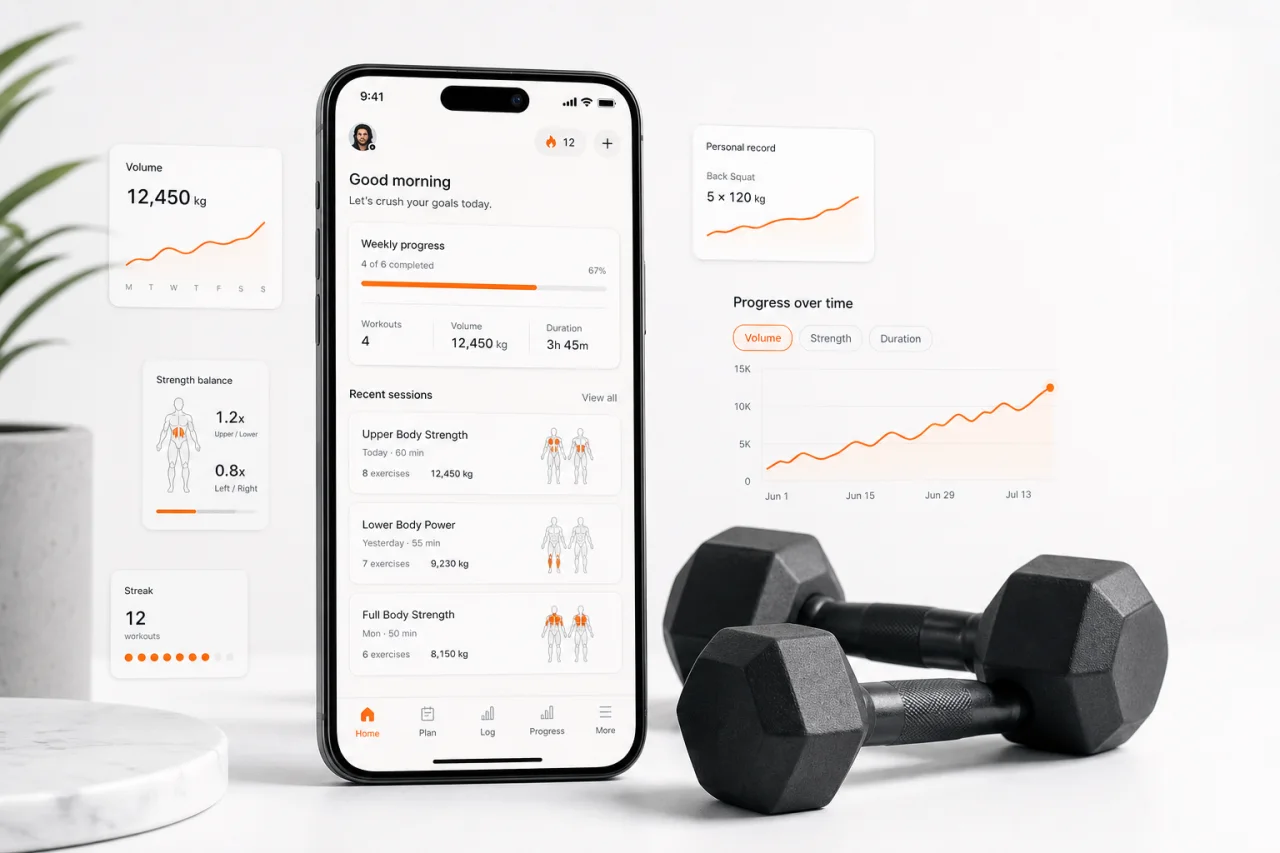
A simple log solves a lot of these problems. If you record the exercise, weight, reps, and how hard the set felt, you can make better decisions next time. GymPT’s workout tracking and progress insights are built for exactly that.
How GymPT helps you turn dumbbells into a real plan
GymPT is useful when you want more than a generic list of exercises. It can create a personalized dumbbell workout plan, adjust it to your available equipment, and keep the structure balanced across the week. If you want a full body dumbbell routine that matches your schedule, training level, and goals, that is a much smarter starting point than copying a random workout from the internet.
Use the app to:
- build a dumbbell full body workout around your equipment
- chat with the AI coach when you want exercise swaps or form guidance
- track each session so you can see progress over time
- review insights and adjust the plan as your strength improves
That way, your dumbbells become a system, not just a tool.
Final takeaway
A full body workout with dumbbell works because it is simple, flexible, and easy to progress. Focus on the main movement patterns, keep the exercise list short, and repeat the plan consistently. If you want help turning that into a personalized routine, GymPT can build the workout around your equipment and keep it moving forward.