lat pulldown form guide
Lat Pulldown Form Guide: How to Pull Better, Not Harder
A practical lat pulldown form guide with setup cues, common mistakes, and simple alternatives so you can train your back with better control and less guesswork.

Lat Pulldown Form Guide: the basics that matter
If you want a stronger back, the lat pulldown is one of the most useful machine exercises you can learn. This lat pulldown form guide focuses on the details that actually change the exercise: setup, body position, pulling path, and control on the way up. Done well, the movement trains the lats and upper back while keeping the spine and shoulders in a more stable position. Strength guidelines also support training major muscle groups like the back at least twice per week, which makes good technique worth learning early.
How to set up the lat pulldown
Before you pull, make the machine work for you. A solid setup makes the rep cleaner and usually makes the weight feel more manageable.
- Adjust the thigh pad so your legs stay anchored without lifting.
- Grip the bar a little wider than shoulder width, unless your machine or goal calls for a different handle.
- Brace your core so your ribs do not flare and your lower back does not arch excessively.
- Sit tall with a slight lean back, not a full recline.
- Start with the shoulders set down and back instead of shrugging up toward your ears.
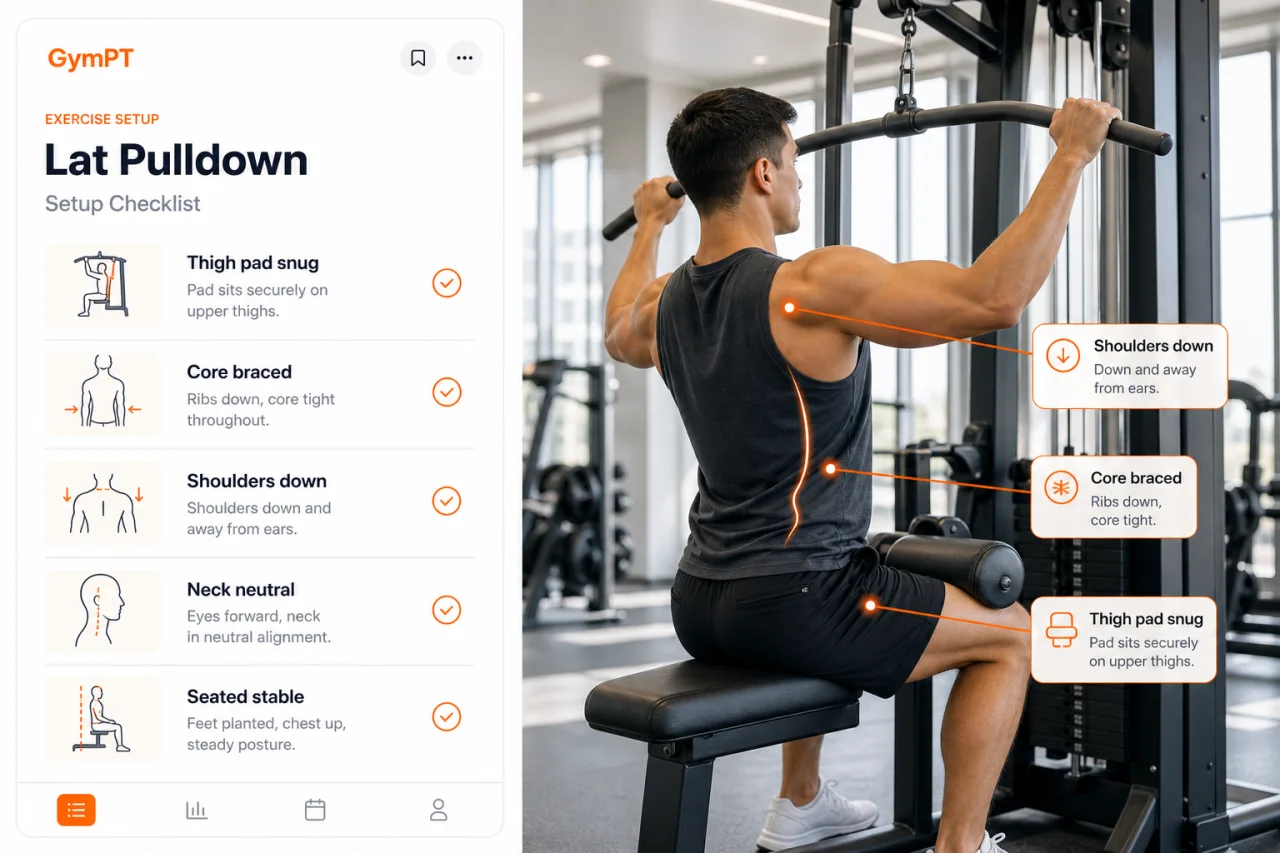
What the rep should feel like
The best cue is simple: drive the elbows down. Think about pulling your elbows toward your sides rather than yanking the bar with your hands. The bar should travel toward the upper chest or mid-chest area, depending on your build and machine path, and the torso should stay mostly still. A small amount of lean is fine; turning the rep into a big body swing is not.
Good lat pulldown form cues
- Chest tall, ribs controlled.
- Shoulders down, not shrugged.
- Elbows move down and slightly in.
- Bar touches the target area without forcing extra range.
- Return slowly and keep tension on the cable.
Common lat pulldown mistakes
Most bad reps come from trying to move more weight than you can control. Fix these first.
- Leaning back too far and turning the pulldown into a row.
- Pulling behind the neck when the machine and shoulder mobility do not support it.
- Using momentum by swinging the torso or jerking the bar down.
- Letting the shoulders shrug at the top of the rep.
- Cutting the eccentric short and letting the stack slam.
These mistakes usually reduce back tension and shift stress to the shoulders, arms, or lower back. If your form breaks, lower the load and rebuild the rep.
How to choose the right weight and reps
For most lifters, the right load is the one that lets you keep the same torso angle, shoulder position, and bar path for every rep. If the last few reps become a full-body heave, the weight is too heavy. General strength guidance supports working major muscle groups regularly, and a practical set range for many people is 8 to 12 controlled reps for 2 to 3 sets.
A simple rule: stop the set when you can no longer pull with clean control. That is usually better than chasing a sloppy extra rep.
Lat pulldown alternatives if the machine is busy
If the lat pulldown station is taken, you can still train the same pattern with other options. The best alternative depends on your equipment and experience.
- Assisted pull-up for a more vertical pulling pattern.
- Cable row if you want a horizontal pull with similar back emphasis.
- Resistance band pulldown for home or warm-up work.
- Dumbbell pullover for a different but useful lat-focused accessory.
- Machine row if you need a stable back exercise with less setup.
GymPT users can also build a back day around the equipment they actually have, which is often the easiest way to stay consistent.

How to make the exercise fit your training plan
The lat pulldown works best when it has a clear role. Use it as a main back movement on a pull day, or pair it with rows for a more complete upper-back session. If your goal is general strength and muscle development, training the back alongside other major muscle groups on at least two days per week is a practical target.
For example, you might use:
- 2 to 4 sets of lat pulldowns
- 8 to 12 reps per set
- 1 to 2 reps in reserve on most sets
- Slow lowering to keep tension on the lats
If you want more structure, GymPT can turn that into a personalized back workout and track whether your reps, load, and control are improving over time.
Quick checklist before every set
- Thighs locked in.
- Core braced.
- Shoulders down.
- Elbows drive toward your sides.
- No swinging, no shrugging, no rushing the return.
When those five things are in place, the lat pulldown becomes a much better back builder and a lot less of a guessing game.
Final takeaway
The best lat pulldown form is not flashy. It is stable, controlled, and repeatable. Keep the torso quiet, pull with the elbows, and use a load you can own. That is how the lat pulldown turns from a machine exercise into real back training.