hypertrophy workout plan
Hypertrophy Workout Plan: Build Muscle With the Right Volume, Effort, and Consistency
A practical hypertrophy workout plan is not about random high reps. It is about enough weekly volume, hard sets, good exercise selection, and consistency you can repeat.
Hypertrophy workout plan: what actually drives muscle growth
A good hypertrophy workout plan is built around a simple idea: give each muscle enough hard work, recover well, and repeat that process consistently. Muscle growth does not come from a magic rep range or a single “best” exercise. It comes from training volume, effort, exercise selection, and progression that you can sustain week after week.
If your goal is size, the plan should feel challenging but organized. You want enough sets to stimulate growth, enough recovery to keep performance moving up, and enough structure to avoid guessing every time you walk into the gym.
The 4 rules that matter most for hypertrophy
1) Use enough weekly volume
For most people, muscle growth improves as weekly hard sets increase, up to the point where recovery starts to break down. A practical starting point is about 10 sets per muscle group per week, then adjust based on progress, soreness, and performance. Some muscles may grow well with a little less, while others may need more.
2) Train hard, but not recklessly
Hypertrophy work should usually end with only a few reps left in reserve. You do not need to fail every set, but you do need sets that are close enough to failure to create a strong growth stimulus. If every set feels easy, the plan is probably too light.
3) Choose exercises you can progress
The best exercise is the one that loads the target muscle well and lets you add reps, load, or control over time. Compounds like squats, presses, rows, and hinges are efficient. Isolation work helps you add targeted volume without exhausting your whole body.
4) Stay consistent long enough to adapt
Hypertrophy is slow. The biggest mistake is changing the plan before it has time to work. Keep the structure stable for several weeks, track your lifts, and make small progressions instead of constantly restarting.
A simple hypertrophy workout plan you can actually follow
This sample muscle gain workout plan uses four training days per week. It gives each major muscle group enough weekly work without making recovery impossible.
Day 1: Upper body A
- Bench press or machine chest press — 3 sets of 6-10 reps
- Chest-supported row — 3 sets of 8-12 reps
- Incline dumbbell press — 2-3 sets of 8-12 reps
- Lat pulldown or assisted pull-up — 2-3 sets of 8-12 reps
- Lateral raise — 2-3 sets of 12-20 reps
- Triceps pressdown — 2 sets of 10-15 reps
Day 2: Lower body A
- Back squat or leg press — 3 sets of 6-10 reps
- Romanian deadlift — 3 sets of 6-10 reps
- Leg curl — 2-3 sets of 10-15 reps
- Leg extension — 2-3 sets of 10-15 reps
- Standing calf raise — 2-4 sets of 8-15 reps
Day 3: Rest or light activity
Use this day for walking, mobility, or easy cardio if it helps recovery. The goal is to feel better for the next session, not to add fatigue.
Day 4: Upper body B
- Overhead press or machine shoulder press — 3 sets of 6-10 reps
- One-arm dumbbell row or cable row — 3 sets of 8-12 reps
- Dumbbell bench press — 2-3 sets of 8-12 reps
- Pull-up variation or pulldown — 2-3 sets of 8-12 reps
- Rear delt fly — 2-3 sets of 12-20 reps
- Biceps curl — 2-3 sets of 10-15 reps
Day 5: Lower body B
- Front squat, hack squat, or leg press — 3 sets of 8-12 reps
- Hip hinge variation or glute bridge — 3 sets of 8-12 reps
- Split squat or lunge — 2-3 sets of 8-12 reps per leg
- Leg curl — 2-3 sets of 10-15 reps
- Seated calf raise — 2-4 sets of 10-20 reps
This structure is flexible. If you train in a busy gym, you can swap in machines and cables. If you prefer free weights, keep the same movement patterns and progression rules.
How to progress without stalling
Progression is what turns a workout split into a real hypertrophy training plan. Use one of these methods:
- Add reps first. Stay in a rep range, and once you hit the top end on all sets, increase the load.
- Add load gradually. Small jumps are enough. You do not need to chase huge increases every week.
- Add sets only when needed. If a muscle is recovering well and progress is flat, add a set or two per week.
- Improve execution. Better range of motion, control, and stable technique can make the same weight more productive.
Track your sessions so you know whether you are actually improving. If your reps, loads, or total sets are not moving over time, the plan needs adjustment.
How close to failure should you train?
For most hypertrophy work, aim to finish compound sets with about 1-3 reps in reserve and isolation sets even closer when form stays clean. That gives you enough effort to stimulate growth without turning every workout into a recovery problem.
Training to failure can be useful sometimes, especially on safer isolation movements, but it is not required for every set. In many cases, consistent near-failure training is easier to recover from and easier to repeat.
What rep ranges work best?
There is no single perfect rep range for muscle growth. Moderate reps are efficient, but hypertrophy can happen across a wide range when sets are hard enough. A practical approach is:
- Compound lifts: 6-10 reps or 8-12 reps
- Machine and cable work: 8-15 reps
- Isolation work: 12-20 reps
Use heavier loads for movements that are stable and technical, and higher reps for exercises that are easier on the joints and better suited to local fatigue.
Recovery is part of the plan
Muscle growth happens between sessions, not only during them. If recovery is poor, your hypertrophy workout plan becomes a fatigue plan instead.
- Sleep: prioritize enough sleep to support performance and recovery
- Nutrition: eat enough total calories and protein to support muscle gain
- Rest days: place them where performance starts to dip
- Exercise order: put your highest-priority lifts early in the session
If your lifts are dropping, soreness is lingering, and motivation is collapsing, the issue may be too much volume, not too little effort.
How GymPT can help you run the plan better
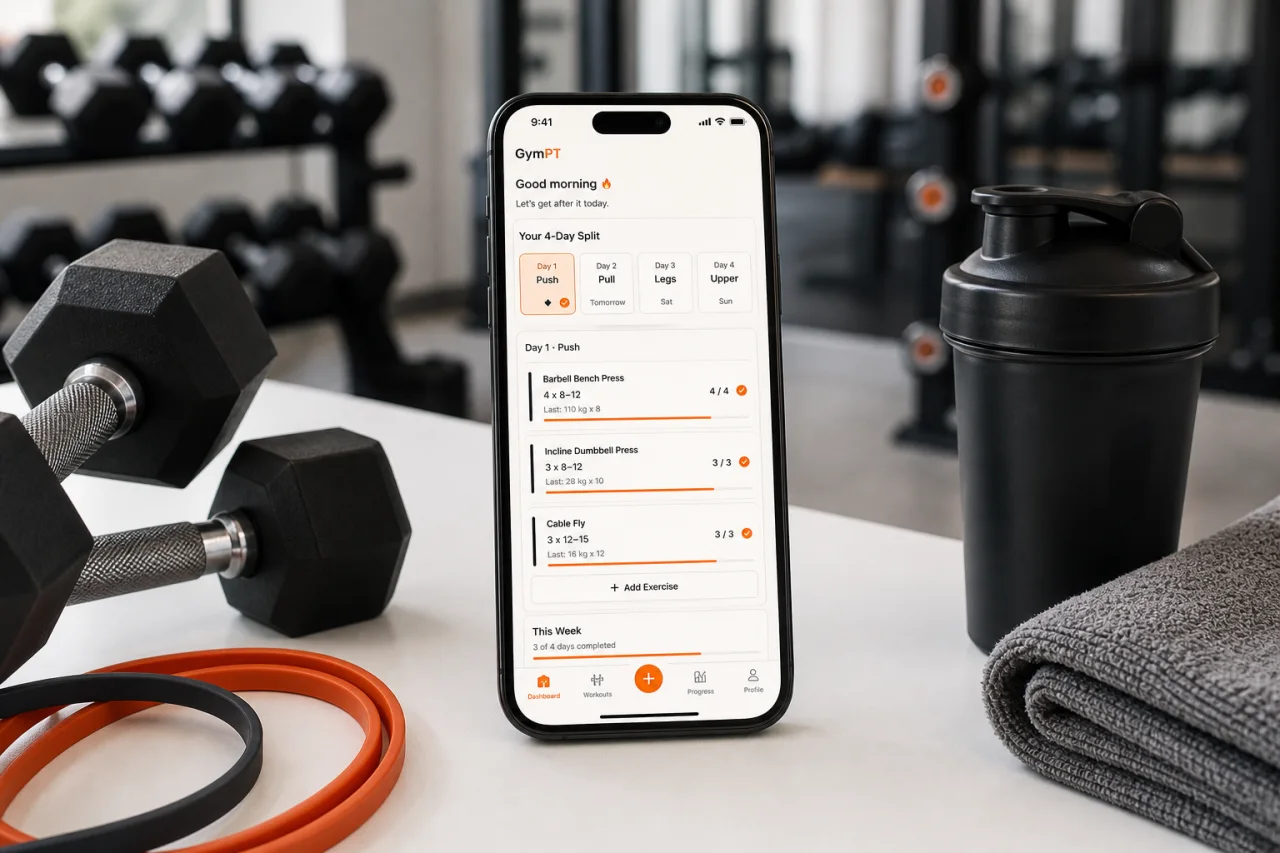
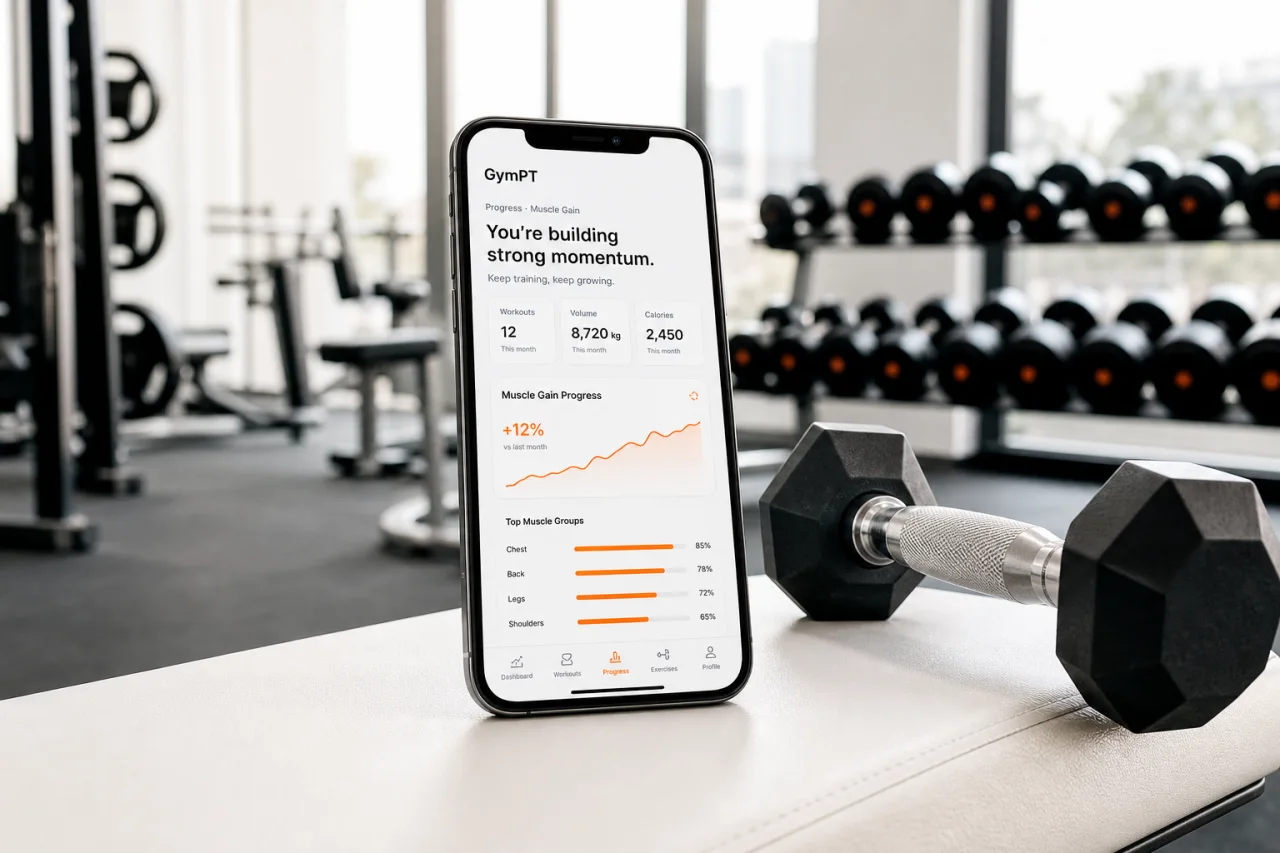
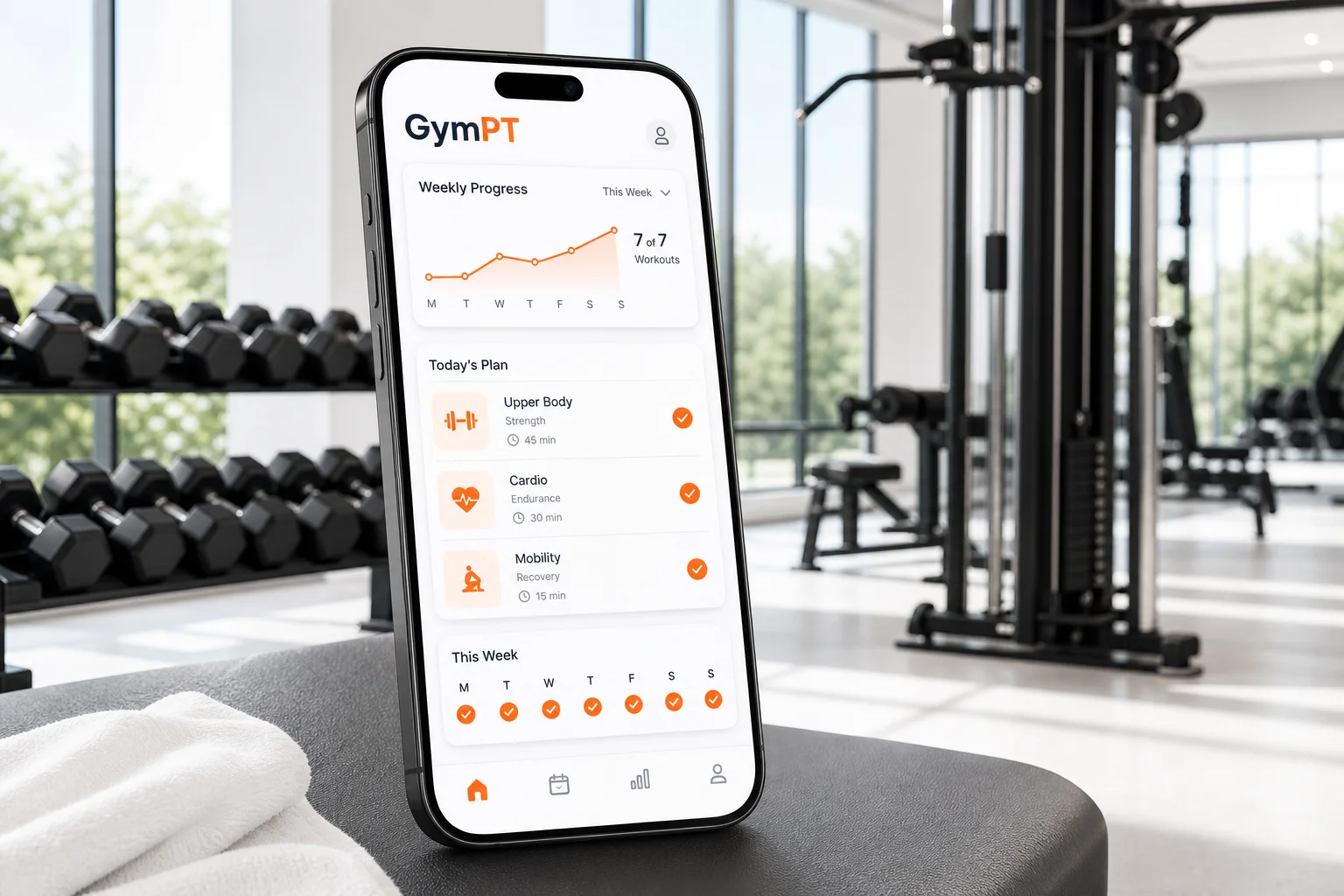
GymPT makes a hypertrophy workout plan easier to follow because it can adapt the plan to your equipment, training history, and progress. You can use AI coach chat to adjust volume, choose substitutions, and keep your weekly structure realistic. Workout tracking and progress insights help you see whether your sets are actually moving forward, while body analysis can give you another useful signal when you are trying to build muscle over time.
If you train at a full gym, a home setup, or somewhere in between, the best plan is the one you can repeat and progress. GymPT helps you keep that plan specific instead of generic.
Common mistakes that slow hypertrophy
- Doing too few hard sets per muscle group
- Changing exercises every week
- Training far from failure on every set
- Ignoring progression and only “working out”
- Adding too much volume before recovery is ready
- Copying a plan that does not match your equipment or schedule
Bottom line
The best hypertrophy workout plan is not the most complicated one. It is the one that gives you enough weekly volume, enough effort, and enough consistency to keep improving. Start with a manageable split, track your lifts, and adjust volume only when your recovery and progress tell you to.
If you want a smarter way to build muscle, use a plan that adapts to your equipment, logs your progress, and helps you make better training decisions every week.