home workout plan
Home Workout Plan: How to Build a Routine That Works in Small Spaces
A good home workout plan does not need a full gym. Learn how to build a simple, effective routine for small spaces, limited equipment, and real-life consistency.
Why a home workout plan works best when it is simple
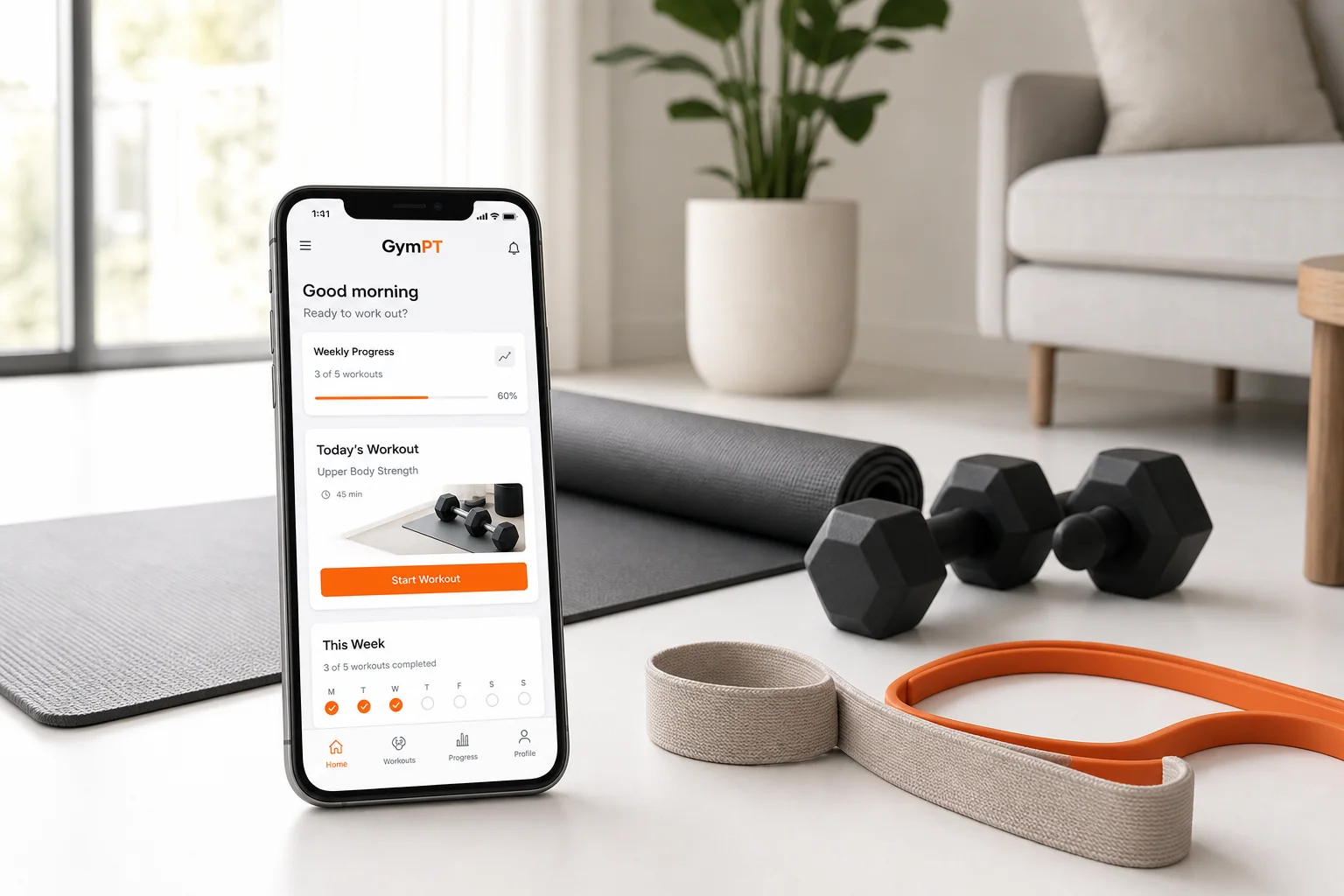
A home workout plan should make training easier to start, not harder. If your space is limited, your equipment is basic, or your schedule changes often, the best plan is the one you can repeat consistently. Public health guidance recommends regular aerobic activity plus muscle-strengthening work on at least 2 days each week, which means a home routine can absolutely cover the essentials if it is built well.
The goal is not to copy a gym session at home. The goal is to create a plan that fits your room, your time, and your energy level while still training the major movement patterns: squat, hinge, push, pull, carry, and core. That is enough to build a solid base for strength, fitness, and consistency.
Start with the right weekly structure
If you want your home workout plan to last, choose a structure that is easy to remember. Most people do best with 3 to 4 training days per week, because it leaves room for recovery and real life. You can still make progress with fewer days if each session is focused.
- 3-day plan: best for beginners, busy schedules, or anyone rebuilding consistency.
- 4-day plan: useful if you want shorter sessions and more total weekly volume.
- 2-day plan: a realistic minimum for maintenance when life is hectic.
A simple weekly rhythm could look like this:
- Day 1: Full-body strength
- Day 2: Light cardio or mobility
- Day 3: Full-body strength
- Day 4: Optional conditioning or accessory work
This approach keeps the plan practical while still covering the main training needs. It also makes it easier to stay consistent when your week changes.
Choose exercises that fit limited space and limited equipment
You do not need a large setup to train effectively at home. A pair of dumbbells, a resistance band, or even just bodyweight can go a long way if the exercise selection is smart. The key is to pick movements that are stable, repeatable, and easy to progress.
Best home workout staples
- Lower body: squats, split squats, reverse lunges, glute bridges, Romanian deadlifts with dumbbells or a backpack
- Upper body push: push-ups, incline push-ups, dumbbell floor press, overhead press
- Upper body pull: band rows, one-arm dumbbell rows, towel rows, band pull-aparts
- Core: dead bugs, planks, side planks, bird dogs
- Conditioning: brisk walking, stair intervals, marching in place, low-impact circuits
If you only have one piece of equipment, make it versatile. Adjustable dumbbells, resistance bands, or a single kettlebell can support a lot of different training options without taking up much room.
How to build each workout without overthinking it
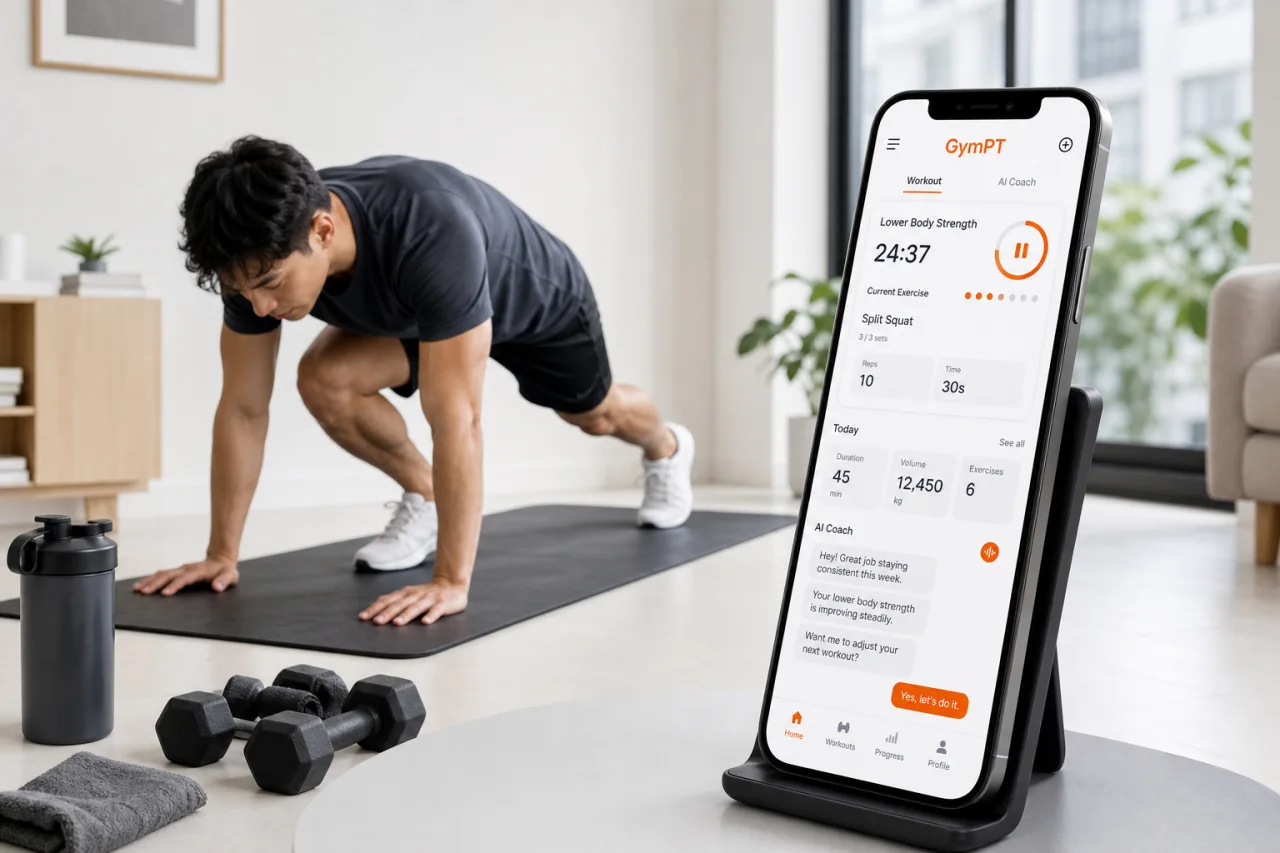
A strong home workout plan does not need a complicated template. Each session should include a warm-up, a few main exercises, and a short finish if you have time. That is enough to create structure without making the workout feel overwhelming.
Use this simple session format
- Warm-up: 5 to 8 minutes of easy movement, joint circles, and bodyweight reps
- Main work: 4 to 6 exercises, usually 2 to 4 sets each
- Finish: optional core, mobility, or short conditioning block
For most people, 30 to 45 minutes is enough. If you are short on time, even 20 minutes can be productive when the workout is focused and repeatable.
Example full-body home workout
- Goblet squat or bodyweight squat — 3 sets of 8 to 12
- Push-up or dumbbell floor press — 3 sets of 6 to 12
- One-arm row or band row — 3 sets of 8 to 12 per side
- Romanian deadlift or glute bridge — 3 sets of 8 to 12
- Plank — 2 to 3 sets of 20 to 45 seconds
That one session already covers the major movement patterns. If you repeat it twice per week and add a third lighter session, you have a very workable home training routine.
Progress comes from small, trackable changes
The biggest mistake in home training is doing random workouts with no progression. If you want results, your plan needs a way to get slightly harder over time. That can mean more reps, more sets, slower tempo, shorter rest, or a harder variation of the same movement.
Here are simple ways to progress your home workout plan:
- Add 1 to 2 reps before increasing load.
- Use a backpack, dumbbells, or bands when bodyweight becomes too easy.
- Increase range of motion when the movement is controlled.
- Reduce rest time for conditioning-focused sessions.
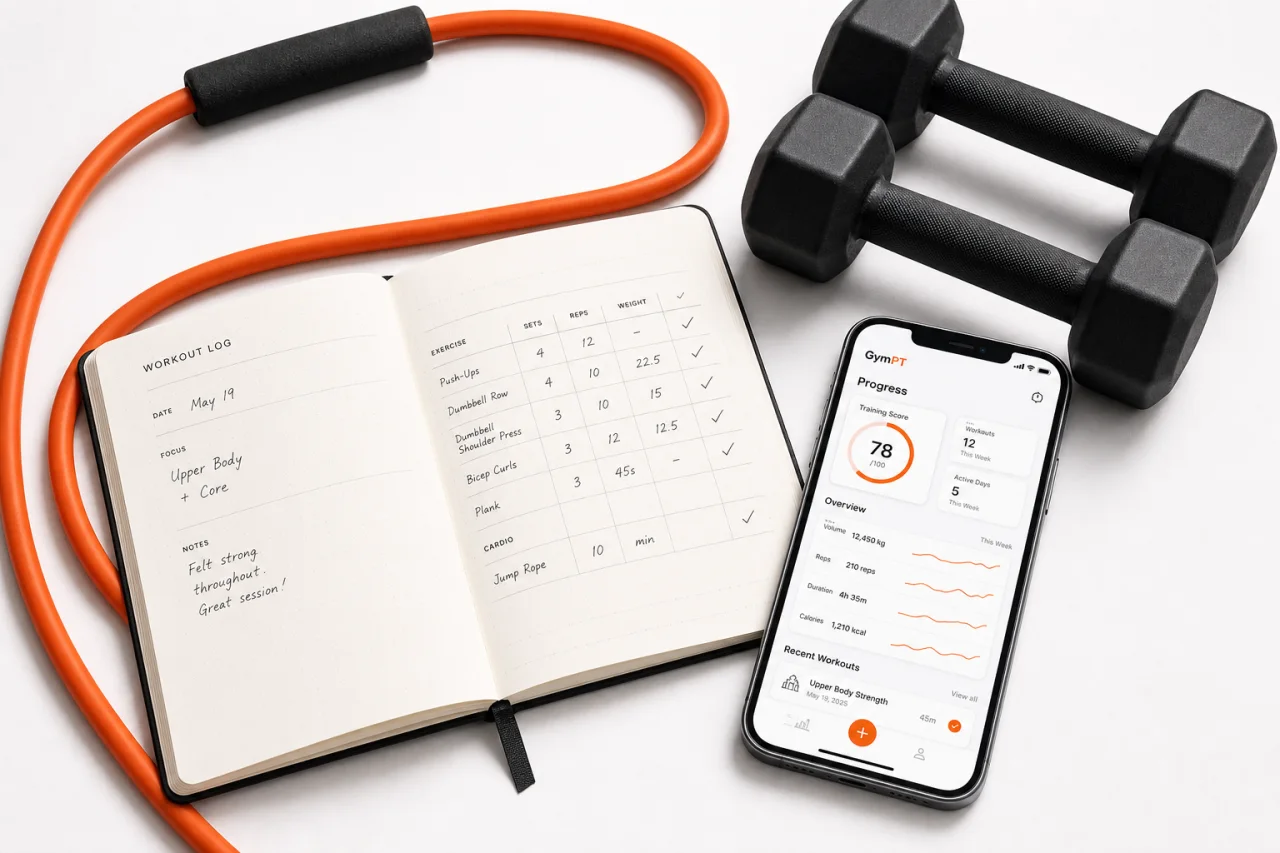
- Track your workouts so you know what improved.
Progress tracking matters because it turns guesswork into a plan. If last week’s split squats were 10 reps per leg and this week you can do 12 with the same form, that is real progress.
How to stay consistent when motivation drops
Consistency is usually the real challenge with home training. The solution is to make the plan easier to start and harder to skip. That means fewer decisions, clearer workout days, and a routine that works even on low-energy days.
Make your plan easier to follow
- Keep the same workout days: for example, Monday, Wednesday, Friday.
- Use a default workout: have one session ready when you do not want to think.
- Set a minimum version: 15 to 20 minutes counts on busy days.
- Prepare your space: keep bands, dumbbells, or a mat visible and ready.
- Use a simple log: write down exercises, sets, reps, and load.
If you miss a session, do not restart the whole week. Just continue with the next planned workout. A good home workout plan is flexible enough to survive imperfect weeks.
Sample 3-day home workout plan
If you want a practical starting point, use this simple weekly layout. It is designed for limited space, limited equipment, and steady progress.
Day 1: Full-body strength
- Squat variation — 3 sets of 8 to 12
- Push-up or press — 3 sets of 6 to 12
- Row variation — 3 sets of 8 to 12
- Glute bridge or hinge — 3 sets of 10 to 15
- Plank — 2 sets
Day 2: Conditioning and mobility
- 20 to 30 minutes brisk walking, stairs, or low-impact intervals
- 5 to 10 minutes mobility for hips, shoulders, and spine
Day 3: Full-body strength
- Split squat or lunge — 3 sets of 8 to 10 per leg
- Overhead press or pike push-up — 3 sets of 6 to 10
- Row variation — 3 sets of 8 to 12
- Romanian deadlift or hip hinge — 3 sets of 8 to 12
- Dead bug or side plank — 2 to 3 sets
If you want more volume, add a fourth day for arms, core, or a short conditioning circuit. If you need less, keep only the two strength days and one walk.
How GymPT can help you stay on track at home
GymPT can turn a generic home workout plan into something more personal. You can build a routine around your available equipment, ask the AI coach for exercise swaps, track your sessions, and review progress over time. That makes it easier to adapt when your schedule, energy, or space changes.
If your plan needs to work in a small apartment, a hotel room, or a corner of your living room, the best strategy is the same: keep it simple, repeatable, and measurable. That is how a home workout plan becomes a habit instead of a temporary burst of motivation.
Bottom line: start with a few reliable exercises, train the major movement patterns, and make progression easy to see. A good home routine does not need to be fancy. It just needs to fit your life.
Related reading: Full Body Workout Plan, Weekly Workout Planner, Workout Progress Tracking, Equipment Based Workout