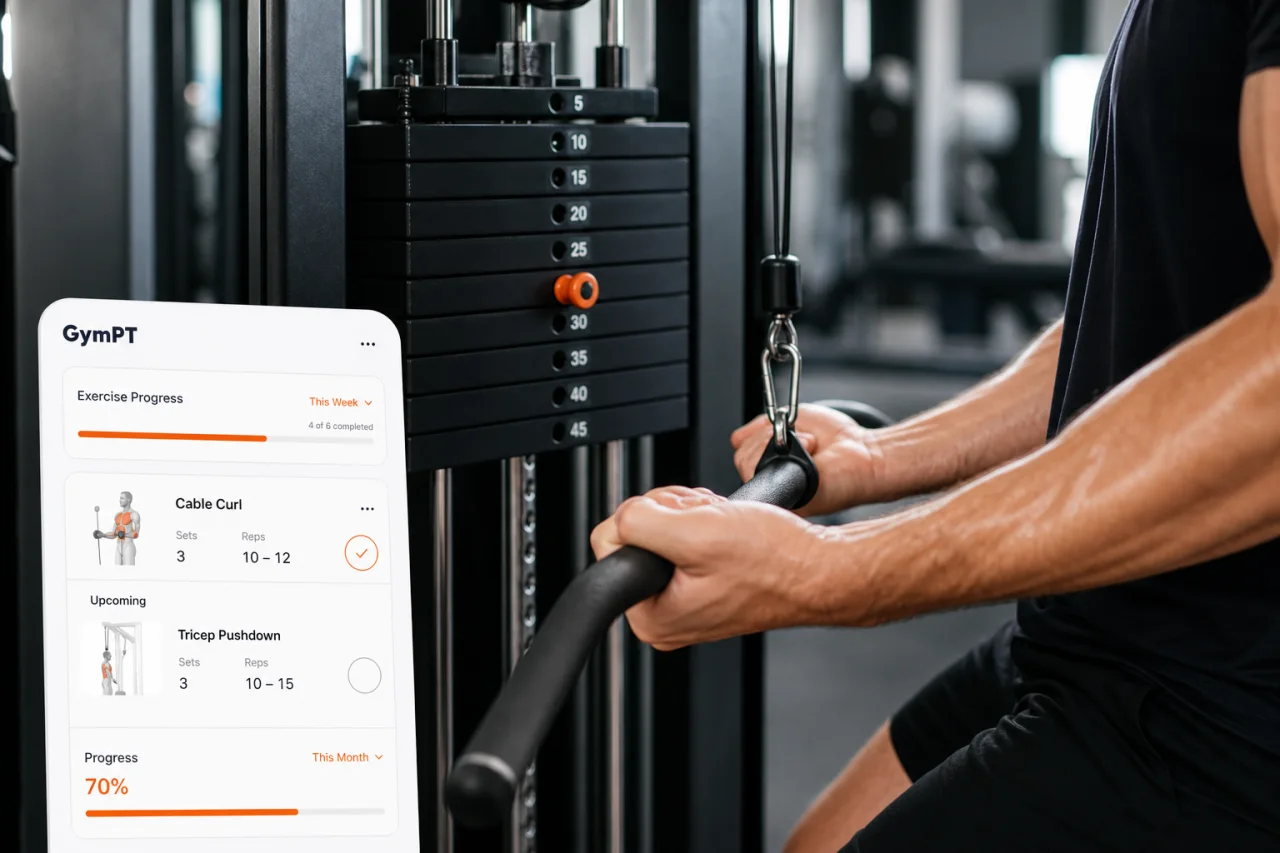
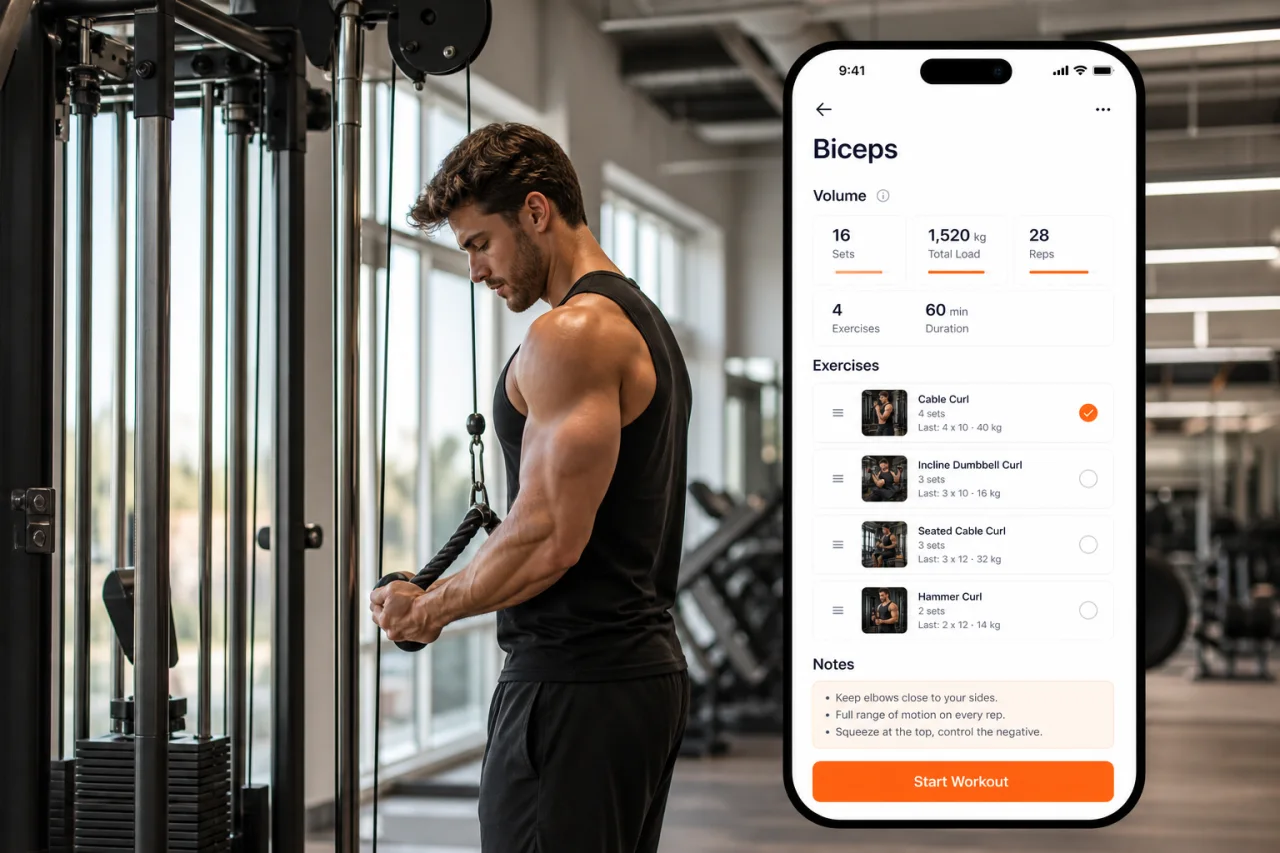
cable biceps exercises
Cable Biceps Exercises: A Coach’s Guide to Better Curls and Better Tension
Cable biceps exercises keep tension on the biceps through a smooth range of motion. Learn the best variations, form cues, volume tips, and beginner-friendly options.
Cable Biceps Exercises: Why They Work So Well
If you want a biceps movement that feels smooth, controlled, and easy to progress, cable biceps exercises are a smart place to start. The cable keeps tension on the muscle through much of the rep, which makes it useful for both beginners learning curl mechanics and experienced lifters who want cleaner repetition quality.
Compared with free weights, cables can make it easier to keep resistance consistent and to focus on elbow flexion and forearm supination without swinging the torso. That does not make them magical. It just makes them practical, especially when your goal is to train the biceps with less guesswork and more control.
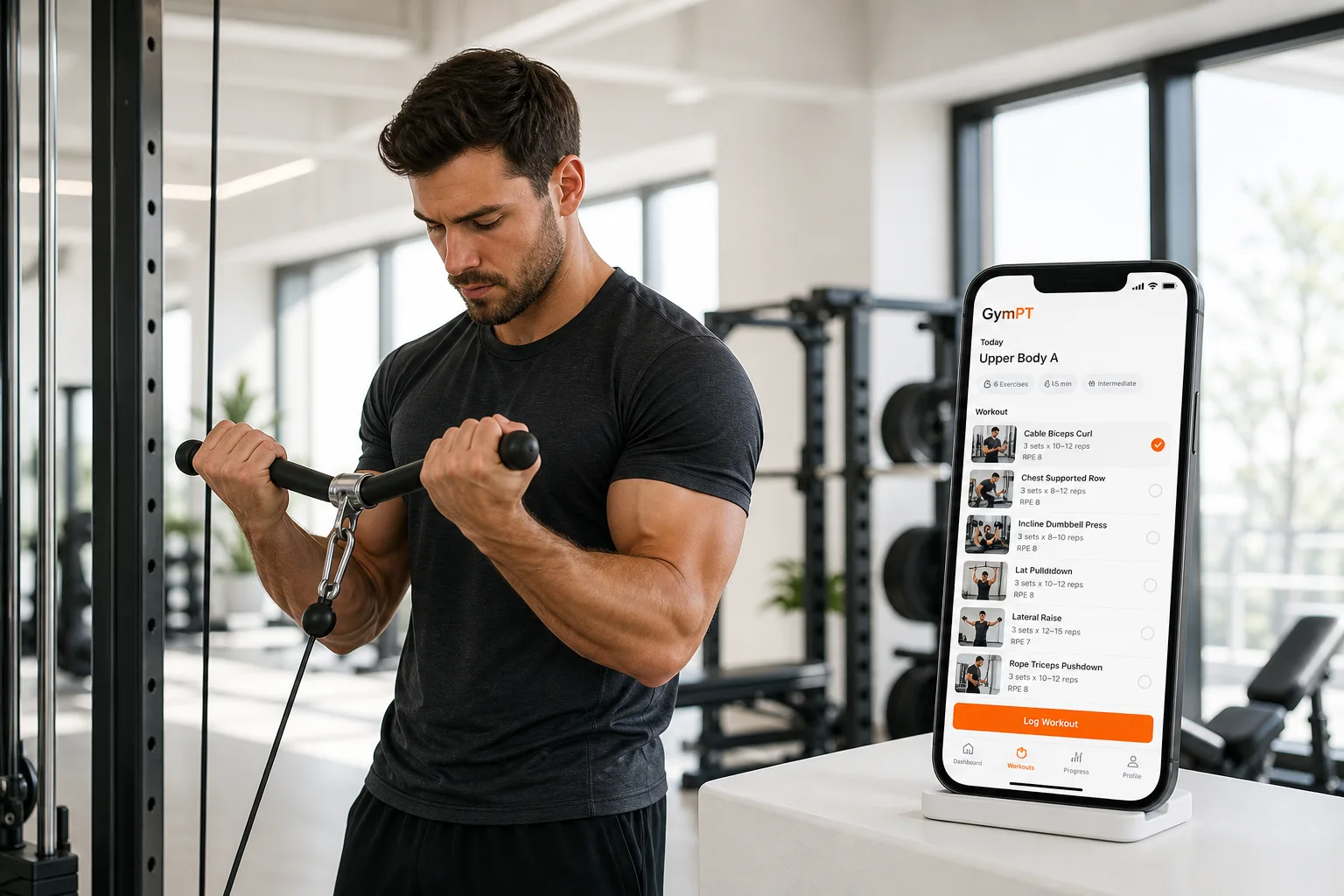
For GymPT users, cable work is also easy to fit into a personalized plan because the app can match exercises to your available equipment, training level, and weekly volume target.
The Best Cable Biceps Exercises to Use
Not every cable curl feels the same. Small changes in body position, grip, and elbow path shift the emphasis and the challenge.
1. Standing cable curl
This is the simplest option and a great default choice. Stand tall, keep your elbows close to your sides, and curl without leaning back. Think of the forearms moving while the upper arms stay quiet.
2. Rope cable hammer curl
A neutral grip shifts some work toward the brachialis and brachioradialis while still training the biceps. It is a useful variation if straight-bar curls bother your wrists or if you want a more complete arm session.
3. Single-arm cable curl
This version helps you clean up side-to-side differences. It also makes it easier to feel the working arm and avoid turning the movement into a full-body heave.
4. Bayesian cable curl
With the arm slightly behind the body, the biceps start from a longer position. Many lifters like this variation because it creates a strong stretch and a very direct curl pattern.
5. High cable curl
Setting the cable high changes the line of pull and can be a useful finisher. Keep the shoulders down and avoid turning it into a front-delt exercise.
How to Do a Cable Curl With Better Form
Good cable curls are not about moving the stack as fast as possible. They are about keeping the rep honest.
- Set your ribs down. Avoid flaring the chest or arching the lower back to fake extra range.
- Pin the elbows near your sides. A little natural movement is fine, but the upper arms should not drift forward early.
- Keep the wrists neutral. Do not let them collapse backward at the top.
- Control the lowering phase. A slow return helps you keep tension and improves rep quality.
- Stop before the stack slams. Keep the cable under control so each rep stays smooth.
A simple cue that works well is: curl the handle, not your whole body.
How Much Volume Do You Need?
For muscle growth, training volume matters. Research-based coaching guidance generally supports using enough weekly work to stimulate adaptation while still recovering well. For most lifters, that means starting with a moderate amount of direct biceps work and adjusting based on performance, soreness, and progress.
A practical starting point is 6 to 10 hard sets per week of direct biceps work, split across 2 sessions. If you already do a lot of pulling work such as rows and pulldowns, you may need less direct arm volume than you think. If your biceps are a priority, you can gradually build toward the higher end as long as recovery stays solid.
Use a rep range that lets you keep form clean. Cable curls work well in the 8 to 15 rep range, but higher reps can also be useful if you keep tension and avoid momentum.
Beginner-Friendly Cable Biceps Exercise Options
If you are new to arm training, start with the version that is easiest to control.
- Use a single handle first. One arm at a time makes it easier to learn the path.
- Choose a lighter load than you think. The goal is clean reps, not a heavy stack on day one.
- Keep your stance stable. Split stance or staggered stance can reduce swaying.
- Use a slower tempo. Two seconds up and two to three seconds down is a simple rule.
If a standing cable curl still feels awkward, try a seated or supported variation so your torso can stay quiet while your arms do the work.
Common Cable Curl Mistakes That Limit Results
Most cable curl problems come from trying to make the set harder in the wrong way.
- Using too much body English. If your hips and lower back are doing the work, the biceps are getting less of the stimulus.
- Letting the elbows drift forward too early. This shortens the biceps’ job and turns the rep into a shoulder-dominant movement.
- Cutting the lowering phase short. You lose useful tension when you rush the eccentric.
- Choosing a load that breaks form. If the stack is too heavy, the exercise stops looking like a curl.
- Training only one angle forever. Rotating between standard, rope, single-arm, and Bayesian variations can improve exercise quality and keep training fresh.
A Simple Cable Biceps Workout You Can Use
Here is a straightforward arm-focused finisher you can add after back training or use on an arm day:
- Standing cable curl: 3 sets of 8 to 12 reps
- Rope hammer curl: 2 to 3 sets of 10 to 15 reps
- Single-arm cable curl: 2 sets of 12 to 15 reps per side
Rest about 60 to 90 seconds between sets. If your form starts to drift, reduce the load before you add more reps.
How GymPT Can Help You Progress
GymPT can turn cable biceps exercises into a plan that fits your equipment, schedule, and training level. You can use the AI coach chat to ask which curl variation fits your goal, track your sets and reps, and monitor whether your arm volume is actually moving forward.
That matters because better biceps training is not just about picking one exercise. It is about matching the right movement, the right volume, and the right progression to your body and your week.
Bottom Line
Cable biceps exercises are effective because they are easy to control, easy to progress, and easy to adapt to different goals. Start with a stable curl pattern, keep your elbows honest, use enough weekly volume, and rotate variations only when they support better training—not when they distract from it.
If you want a smarter arm plan, GymPT can help you build one around the equipment you actually have.