cable shoulder exercises
Cable Shoulder Exercises: A Coach’s Guide to Better Delts, Better Control
Cable shoulder exercises are one of the best ways to train your delts with constant tension and cleaner form. This guide shows you how to choose the right moves, set your volume, and scale them for beginners.
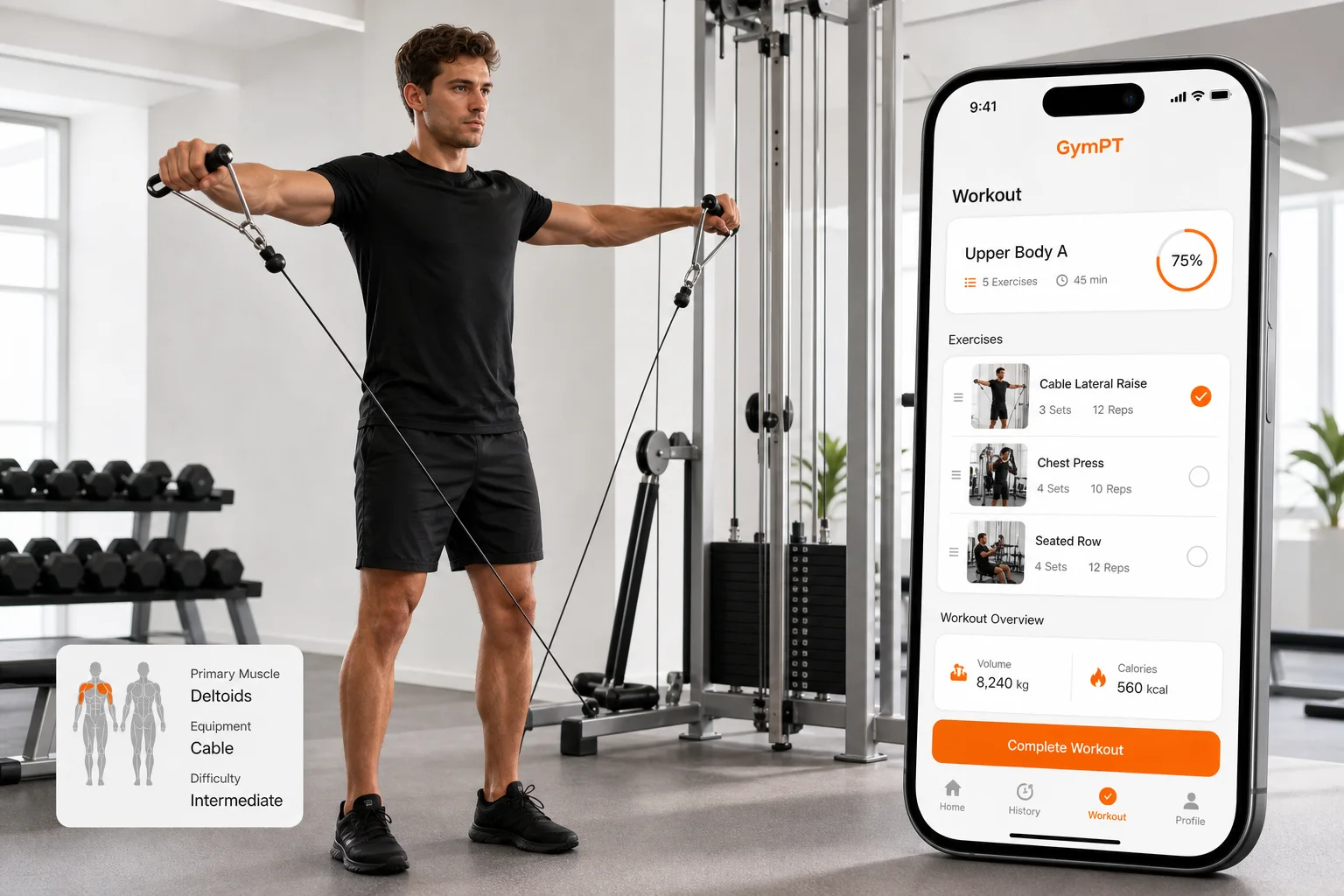
Cable Shoulder Exercises That Build Delts Without Guesswork
If you want shoulder work that feels smooth, controlled, and easy to progress, cable shoulder exercises are a smart place to start. Cables keep tension on the muscle through much of the rep, which makes them especially useful for lateral raises, front raises, and rear-delt work. They also let you fine-tune the line of pull so you can train the delts with less momentum and better control.
This guide focuses on practical exercise choices, form cues, weekly volume, and beginner-friendly swaps. The goal is simple: help you train your shoulders in a way that is effective, repeatable, and easier to track inside GymPT.
Why cables are so useful for shoulder training
Shoulders are not one muscle. Your delts have front, side, and rear heads, and each one contributes differently to pressing, lifting, and shoulder shape. Cable work is helpful because it lets you target each head more precisely, especially when you want to keep tension high without relying on heavy loads or body English.
- Constant tension: the cable keeps resistance on the muscle through more of the range of motion.
- Cleaner reps: the setup makes it easier to slow down and control the movement.
- Easy progression: small weight jumps help you add load gradually.
- Joint-friendly options: cables often feel smoother than swinging free weights when you are learning technique.
For many lifters, that makes cables a strong choice for accessory shoulder work after pressing or pulling.
The best cable shoulder exercises to include
Not every cable shoulder move does the same job. A balanced shoulder session usually includes one side-delt exercise, one rear-delt exercise, and optionally one front-delt movement if your program needs it.
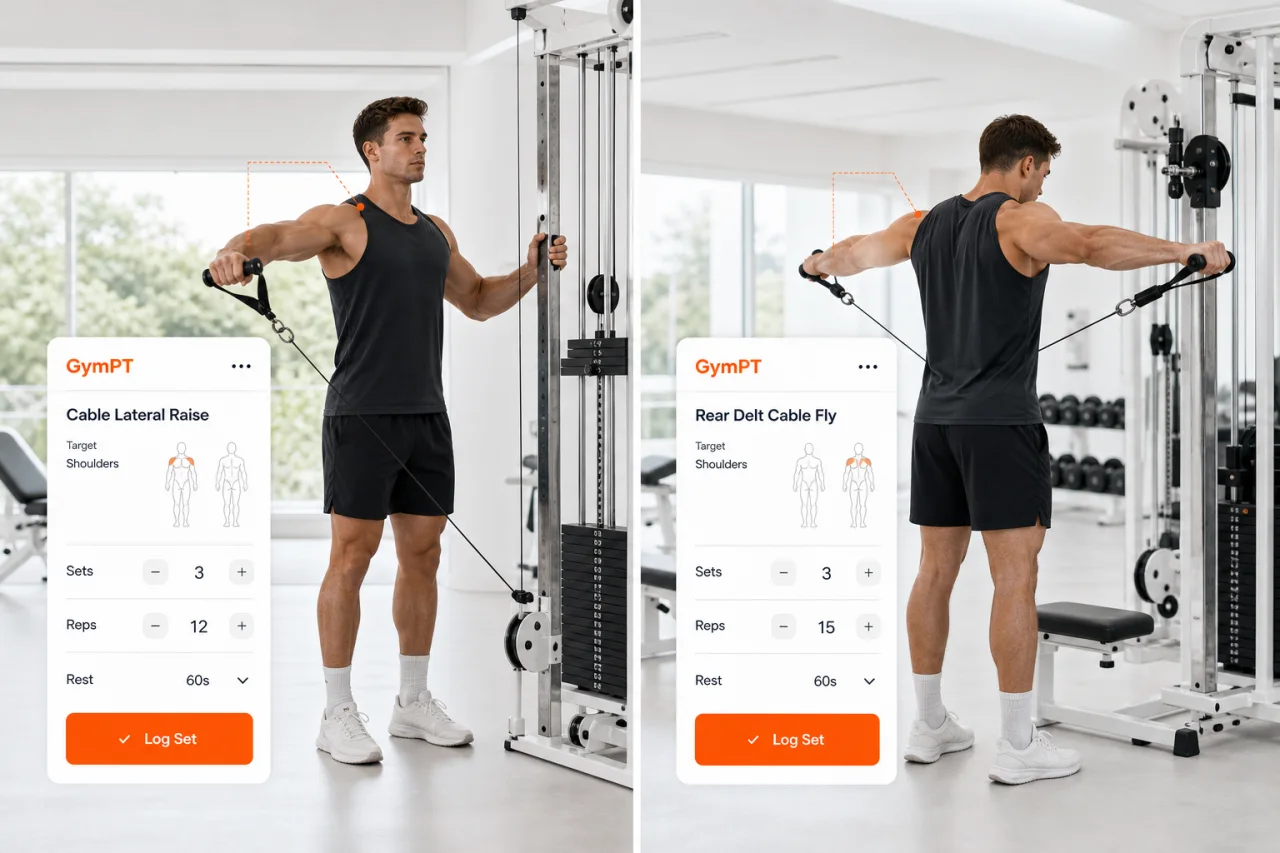
1. Cable lateral raise
This is the most useful cable shoulder exercise for many people because it directly trains the side delts, which contribute a lot to shoulder width.
- Stand tall with the cable set low.
- Start with the hand slightly in front of the body.
- Raise the arm out and slightly forward, not straight behind you.
- Stop around shoulder height or just below if your form stays cleaner there.
Coach cue: lead with the elbow, not the hand. If your wrist is doing all the work, the rep usually turns into a shrug.
2. Single-arm cable front raise
This variation trains the front delt, but it is often less necessary than lateral and rear-delt work because pressing already hits the front of the shoulder for many lifters.
- Use a light load and a smooth tempo.
- Keep ribs down so you do not lean back and turn it into a lower-back exercise.
- Lift only as high as you can without losing control.
Coach cue: if you already do a lot of bench pressing or overhead pressing, keep front raises as an optional accessory rather than the main event.
3. Rear delt cable fly
Rear delts are often undertrained, especially in programs that focus heavily on pressing. A cable fly helps you train them with less cheating than many dumbbell variations.
- Set the cable at about chest height.
- Keep a soft bend in the elbows.
- Open the arm out and back without turning it into a row.
- Pause briefly when the rear delt is fully shortened.
Coach cue: think “reach wide,” not “pull hard.” If your traps take over, reduce the load and slow the rep.
4. Cable diagonal raise
This is a useful hybrid movement that can challenge the shoulder in a slightly different line of pull. It is a good option when you want variety without abandoning the basic shoulder pattern.
- Start low and raise the arm on a diagonal path.
- Keep the shoulder down and avoid shrugging.
- Use a controlled lowering phase.
Coach cue: keep the movement smooth enough that you could repeat the same path on every rep.
How to program cable shoulder exercises
The best shoulder plan is not the one with the most exercises. It is the one you can recover from and repeat consistently. For most beginners and intermediate lifters, 2 to 4 shoulder exercises per session is enough when the rest of the upper-body program already includes pressing and pulling.
Simple weekly volume targets
- Beginners: 6 to 10 hard sets per week for shoulders total.
- Intermediate lifters: 10 to 16 hard sets per week, depending on recovery and pressing volume.
- Advanced lifters: more volume can work, but only if technique stays clean and recovery is solid.
For cable isolation work, a good starting point is 2 to 4 sets per exercise, usually in the 10 to 20 rep range. Higher reps often work well because they let you keep tension on the delts without needing very heavy loads.
Where cable work fits in your workout
If you train shoulders on a push day, place cable raises after your main press. If you train shoulders on a dedicated upper-body day, start with the movement that matches your priority:
- Side delts first if you want more width.
- Rear delts first if your posture or upper-back balance needs attention.
- Front delts first only if pressing volume is low and front-delt development is a clear goal.
That order helps you spend your best energy on the muscle you want to improve most.
Form cues that make cable shoulder exercises work better
Small technique changes can make a big difference. If your shoulders feel more like traps or upper arms than delts, check these cues.
- Keep the neck long: do not shrug up toward your ears.
- Use a slight lean only if needed: avoid turning the rep into a body swing.
- Control the lowering phase: 2 to 3 seconds down is a good default.
- Stop before form breaks: range of motion is useful only if you can own it.
- Match the cable angle to the target: the line of pull should feel like it is loading the delt, not just the hand.
If you are not sure whether your setup is right, GymPT can help you compare exercise choices, log your sets, and spot patterns in your progress over time.
Beginner-friendly alternatives if cables feel awkward
Cables are excellent, but they are not mandatory. If the setup feels confusing or your gym is crowded, use a simpler version and build from there.
- For cable lateral raises: try dumbbell lateral raises or a machine lateral raise.
- For rear delt cable flyes: try reverse pec deck or bent-over dumbbell rear delt raises.
- For front raises: try a light dumbbell front raise or skip them if pressing already covers the front delts.
Beginner training should reward consistency, not complexity. If a simpler variation helps you train harder with better form, that is the better choice.
Common mistakes to avoid
Most cable shoulder mistakes are not dramatic. They are small habits that quietly shift tension away from the delts.
- Using too much weight: the torso starts helping and the shoulder stops doing the work.
- Raising too high: the upper traps take over and the rep gets sloppy.
- Moving too fast: momentum replaces muscle tension.
- Ignoring rear delts: this can leave your shoulder work unbalanced.
- Training through pain: discomfort that feels sharp, worsening, or unusual should not be pushed through.
If shoulder pain is persistent, severe, or linked to an injury, stop training that movement and get it checked by a qualified professional.
A simple cable shoulder workout you can use today
Here is a straightforward shoulder session built around cables:
- Cable lateral raise — 3 sets of 12 to 15 reps
- Rear delt cable fly — 3 sets of 12 to 20 reps
- Single-arm cable front raise — 2 sets of 10 to 15 reps
- Optional cable diagonal raise — 2 sets of 12 to 15 reps
Rest 45 to 90 seconds between sets, keep the reps controlled, and stop 1 to 3 reps before failure on most sets. That gives you enough effort to grow without turning every workout into a recovery problem.
How GymPT can help you progress
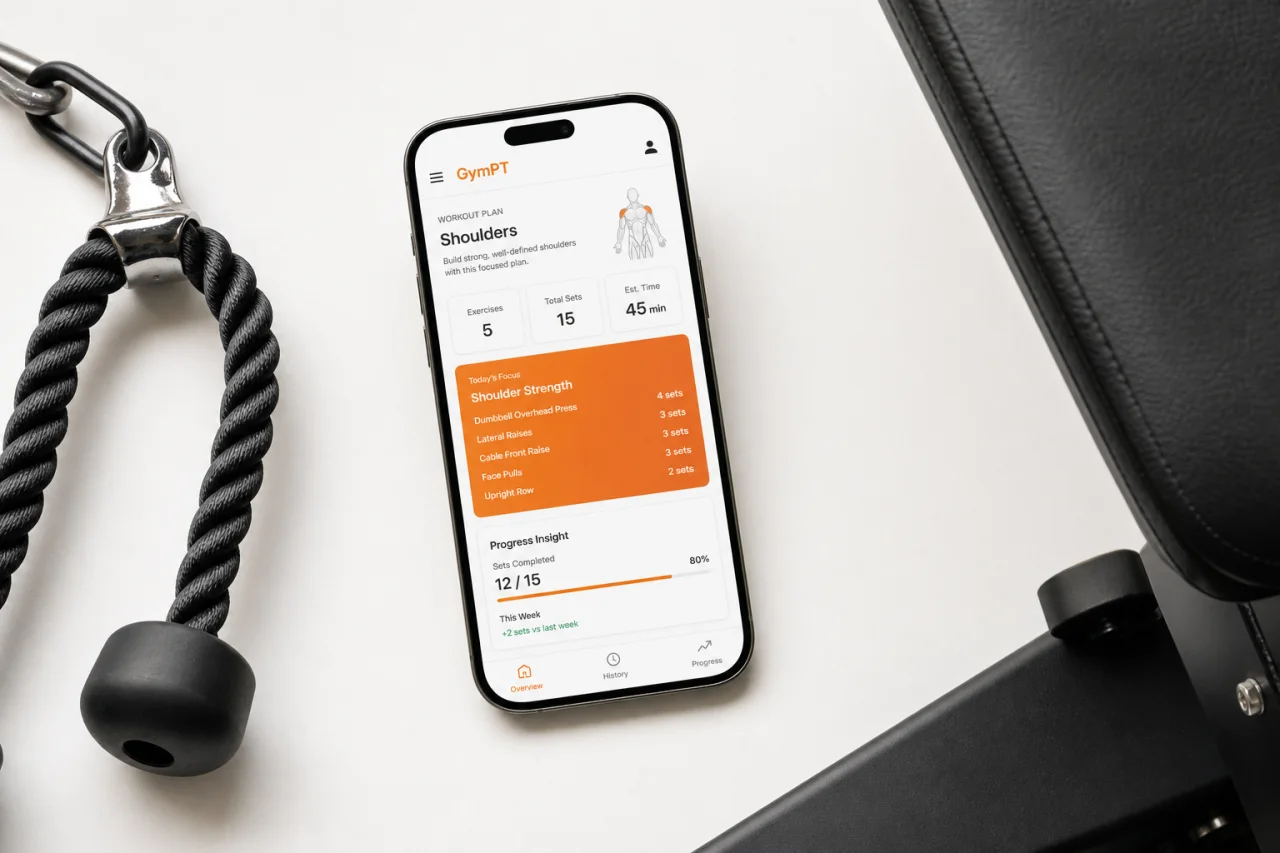
Shoulder training works best when you can repeat good sessions and adjust them based on real data. GymPT helps you build a personalized plan around your equipment, track your sets and reps, and see whether your shoulder volume is actually moving forward.
If you want a smarter way to train delts, start with a plan that matches your equipment, your experience level, and your recovery. Then let the app help you keep the details consistent.
Bottom line: cable shoulder exercises are effective because they make it easier to train the delts with control, tension, and repeatable technique. Pick a few high-quality movements, keep the volume realistic, and progress them patiently.
Frequently asked questions
Are cable shoulder exercises better than dumbbells?
Neither is universally better. Cables are often easier for keeping tension and controlling the path of motion, while dumbbells are simple and convenient. Many good programs use both.
How many cable shoulder exercises should I do?
Most people only need 2 to 4 shoulder exercises in a session, especially if they already press on the same day. More exercises are not automatically better.
Should beginners train front delts directly?
Usually not much. Pressing already trains the front delts for many lifters, so beginners often get more value from lateral and rear-delt work.
What rep range is best for cable shoulder exercises?
A practical range is 10 to 20 reps for most cable isolation work. That keeps the movement controlled and makes it easier to feel the target muscle.