Arms Workout With Dumbbells: A Smarter Plan for Biceps, Triceps, and Better Form
A practical arms workout with dumbbells should train both biceps and triceps, use clean form, and progress with enough weekly volume. Here’s how to do it well.
5 min read
Arms Workout With Dumbbells: What Actually Makes It Work
If you want an arms workout with dumbbells that builds size and strength, the goal is not to do endless curls. It is to train biceps and triceps with enough weekly volume, solid technique, and a plan you can repeat and progress. Public health guidance also supports regular muscle-strengthening work on at least 2 days per week, and resistance-training research shows that multiple sets are generally more effective than a single set for muscle growth.
For most people, dumbbells are a smart choice because they are simple, versatile, and easy to scale. They also let you train each arm independently, which can help you notice side-to-side differences and keep your reps honest. That makes dumbbells especially useful for beginners and for home training.
How to structure arm training for better results
A good arm session usually includes:
1–2 biceps exercises
1–2 triceps exercises
2–4 working sets per exercise
Reps that are challenging but controlled
Enough rest to keep form clean
Research on resistance training volume suggests that hypertrophy tends to improve as weekly sets rise, with diminishing returns at very high volumes. A practical takeaway is to aim for enough work to stimulate the muscles, but not so much that your elbows, shoulders, or grip become the limiting factor.
For beginners, a simple target is 6–10 hard sets per week for biceps and 6–10 hard sets per week for triceps, split across 2 sessions if possible. More advanced lifters may need more total work, but only if recovery stays strong and technique stays sharp. That is an evidence-based inference from the volume research, not a fixed rule for every person.
The best dumbbell exercises for arms
Here is a balanced, beginner-friendly arm menu.
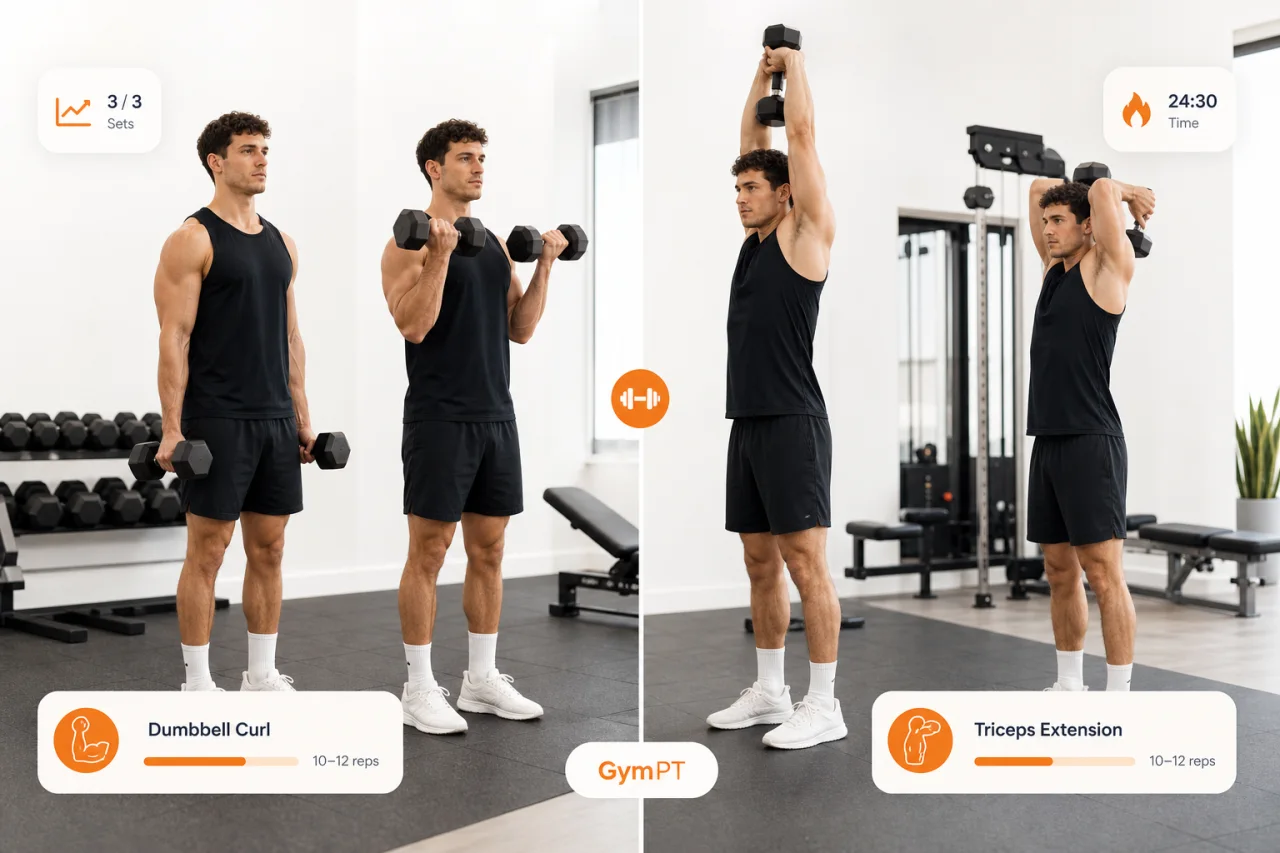
1. Alternating dumbbell curl
Targets: biceps
How to do it: Stand tall, keep your ribs down, and curl one dumbbell at a time without swinging your torso. Lower slowly until your arm is fully extended, then repeat.
Form cue: Keep your elbow close to your side and let the forearm do the work.
2. Hammer curl
Targets: biceps, brachialis, forearms
How to do it: Hold the dumbbells with palms facing each other. Curl up smoothly and avoid turning it into a shoulder raise.
Form cue: Think “up and down,” not “forward and up.”
3. Overhead dumbbell triceps extension
Targets: triceps
How to do it: Hold one dumbbell with both hands overhead, bend the elbows, and lower the weight behind your head. Extend the elbows to finish.
Form cue: Keep your upper arms mostly still.
4. Dumbbell triceps kickback
Targets: triceps
How to do it: Hinge at the hips, brace your torso, and straighten the elbow until the arm is fully extended behind you.
Form cue: Use a lighter weight and keep the upper arm parallel to the floor.
5. Close-grip dumbbell floor press
Targets: triceps, chest, front delts
How to do it: Lie on the floor, hold the dumbbells close to your torso, and press with elbows tucked at a comfortable angle.
Form cue: This is a great option if overhead work bothers your shoulders.
Sample arms workout with dumbbells
Use this as a simple starting point. Rest 60–90 seconds between sets, or longer if your form starts to slip.
Alternating dumbbell curl — 3 sets of 8–12 reps
Hammer curl — 2–3 sets of 10–12 reps
Overhead dumbbell triceps extension — 3 sets of 8–12 reps
Close-grip dumbbell floor press — 2–3 sets of 8–12 reps
Dumbbell triceps kickback — 2 sets of 12–15 reps
If you only have 15 to 20 minutes, do one biceps move and one triceps move, then repeat them for 3 rounds. That is often better than trying to cram in too many exercises with poor execution.
How to choose the right weight
Pick a load that lets you finish your set with good form while still feeling like the last few reps are hard. For most beginners, that means stopping with about 1–3 reps left in the tank. If you are swinging, arching, or shortening the range of motion, the weight is probably too heavy.
A useful rule: if you can do more than the top of your rep range with clean form, increase the dumbbell slightly next time. If you cannot reach the bottom of the range, reduce the load or shorten the set.
Common mistakes that slow arm progress
Using momentum instead of controlled reps
Training only biceps and ignoring triceps
Going too heavy too soon
Cutting the range of motion short
Doing too many sets in one session and not recovering
Remember that your triceps make up a large share of upper-arm size, so a true arm plan should not be curl-only. Balanced training usually gives better-looking and better-functioning arms than chasing one muscle in isolation.
Beginner-friendly alternatives if the full workout feels too hard
If you are new to lifting, start with these easier options:
Seated curls instead of standing curls to reduce cheating
Two-hand overhead extensions instead of single-arm triceps work
Floor press instead of bench press variations
Light hammer curls if wrist comfort is an issue
Beginners usually benefit from simpler exercise choices and repeatable technique. Expert consensus on novice exercise selection supports choosing movements that are easy to learn and stable to perform.
How often should you train arms?
For most people, training arms 2 times per week works well. That fits the broader muscle-strengthening guidance for adults and makes it easier to spread weekly volume across sessions instead of cramming everything into one long workout.
If your arms are already getting a lot of work from rows, pull-downs, presses, and push-ups, you may need less direct arm volume than you think. If they are lagging, add a few more hard sets gradually and track how your elbows and recovery respond.
How GymPT can help you progress
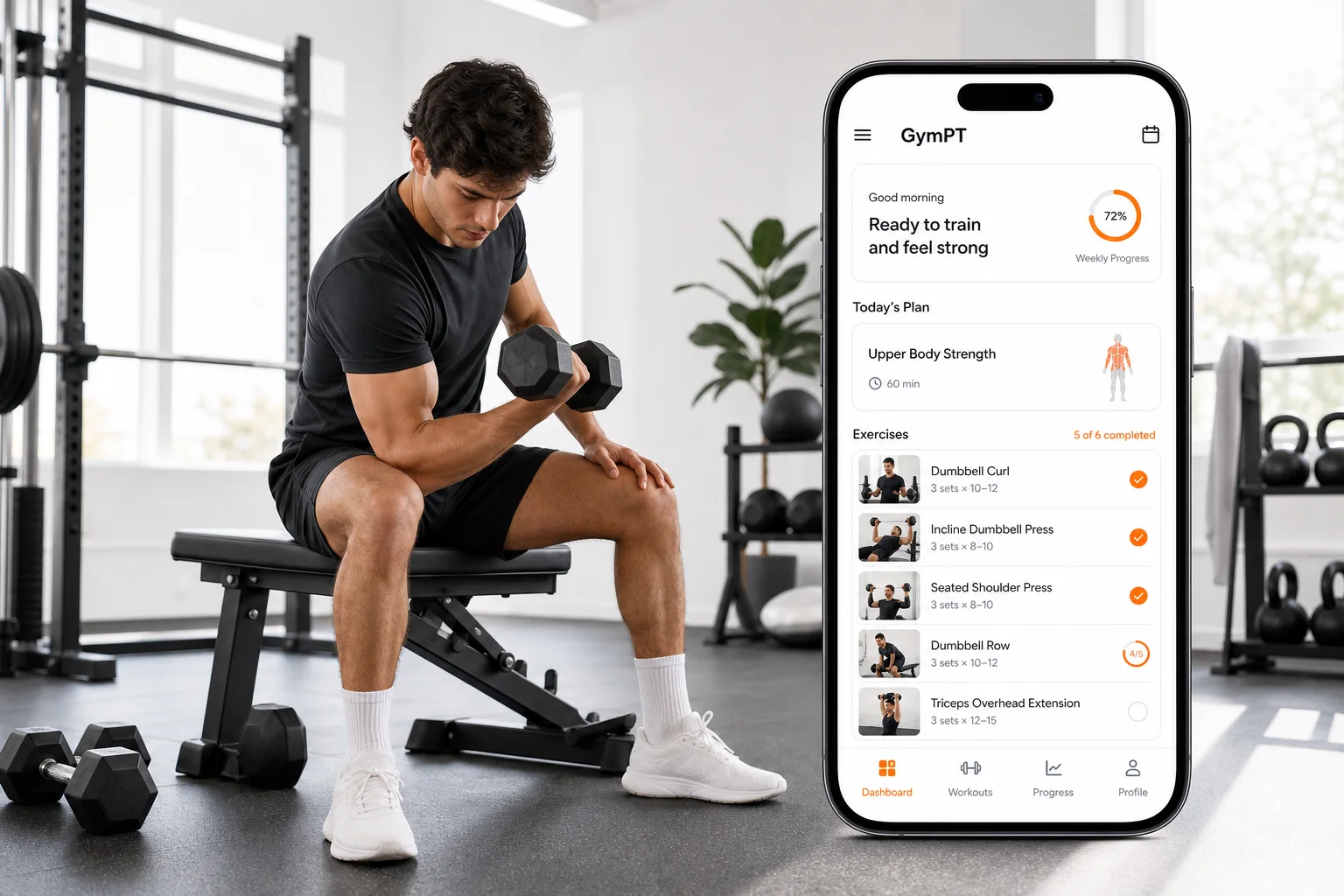
GymPT can turn a basic dumbbell arm workout into a plan that fits your equipment, schedule, and recovery. You can use it to:
build a personalized arm split
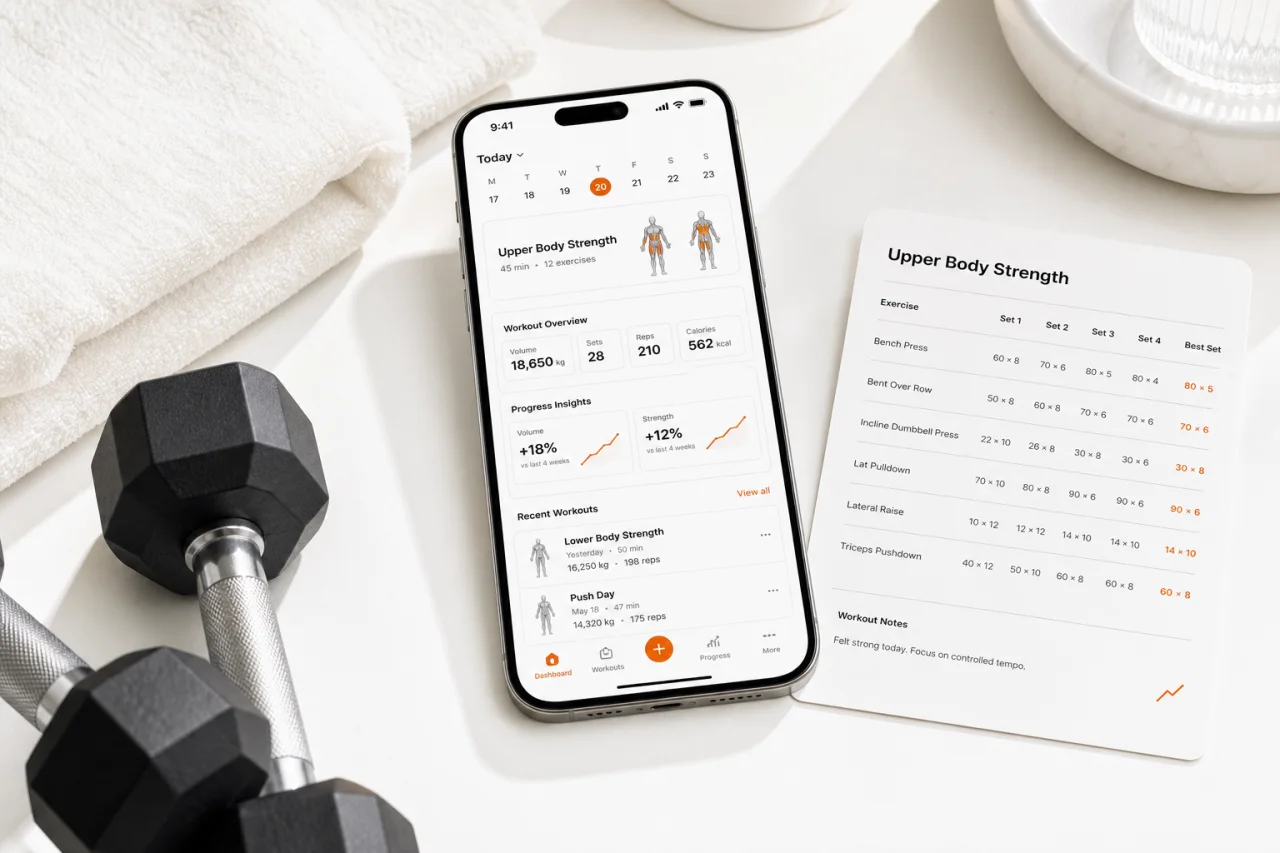
log sets, reps, and weights
adjust volume when progress stalls
get form-aware coaching cues in chat
see progress insights over time
If you want stronger arms, the smartest move is not more random exercises. It is a repeatable plan, clean reps, and steady progression.
Quick recap
Train biceps and triceps, not just curls.
Use 2–4 sets per exercise and progress gradually.
Keep form strict and choose weights you can control.
Train arms about 2 times per week for an easy, sustainable rhythm.
Track your work so you can add reps or load over time.