shoulder workout with dumbbells
Shoulder Workout With Dumbbells: A Smarter Plan for Stronger Delts
A practical shoulder workout with dumbbells for beginners and intermediates: learn the best exercises, form cues, weekly volume, and safer alternatives.
Shoulder Workout With Dumbbells: what to train and why
A good shoulder workout with dumbbells does more than make the delts look bigger. It should train the front, side, and rear parts of the shoulder with enough control to build strength without turning every rep into a shrug, swing, or lower-back cheat. Dumbbells are useful because they let you press, raise, and row with a natural path that is easy to scale for beginners and still challenging for experienced lifters.
The smartest shoulder sessions are usually built around one press, one lateral raise, and one rear-delt movement. That gives you a balanced plan instead of overloading the front delts while neglecting the side and back of the shoulder. General strength-training guidance also supports training major muscle groups at least twice per week, with proper form and balanced work across the body.
The best dumbbell shoulder exercises
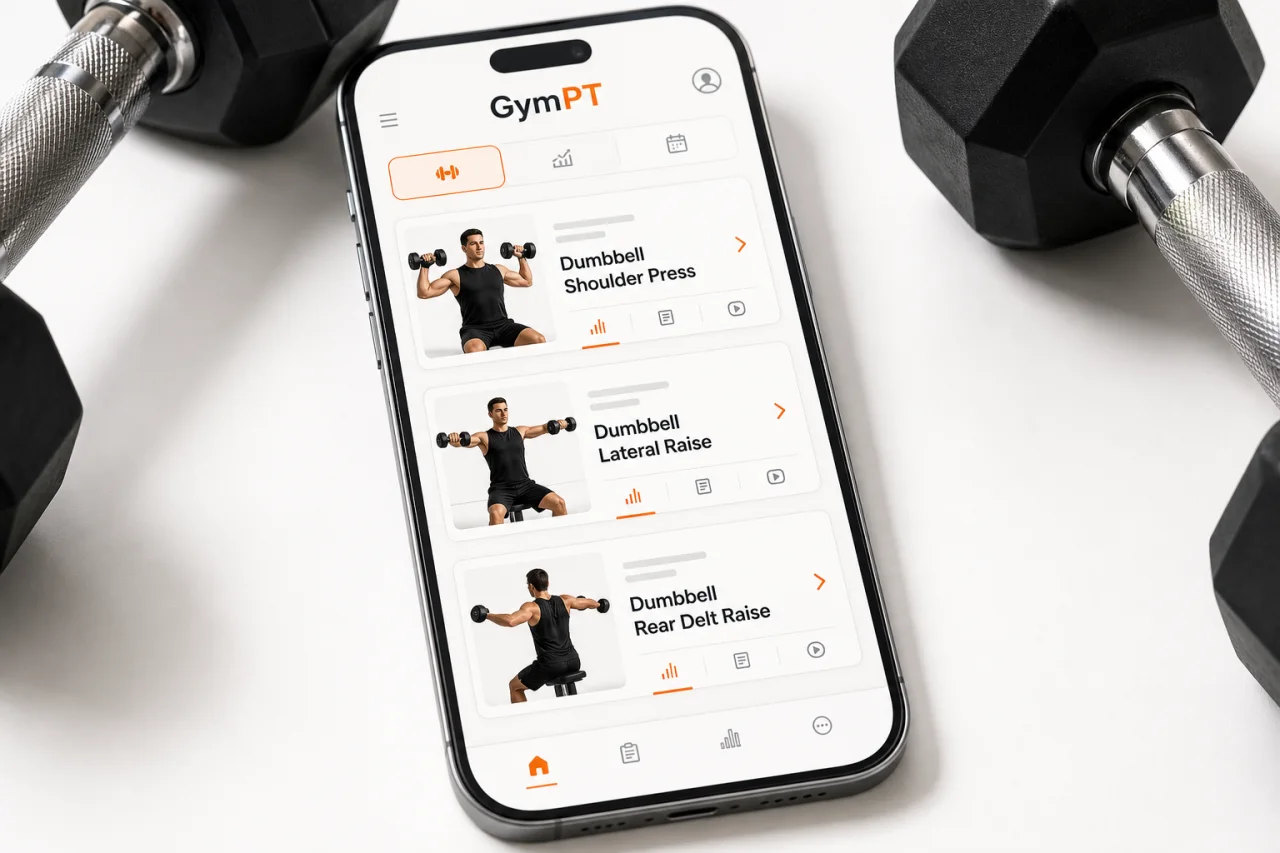
These are the core movements to build around. If you only have a pair of dumbbells, you can still create a complete shoulder session.
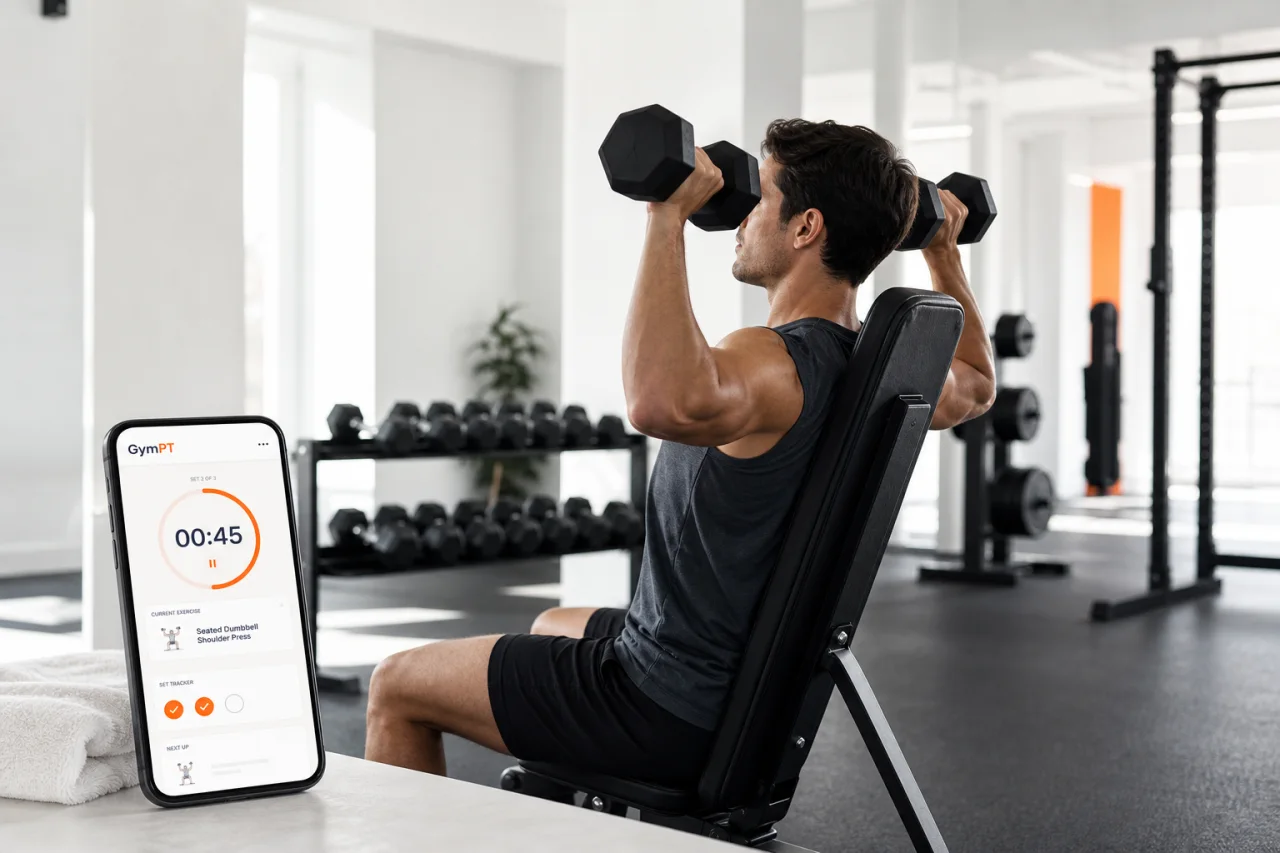
1. Dumbbell shoulder press
This is your main strength move. It trains the front delts strongly and also challenges the triceps and upper chest. Sit down if you want more stability, or stand if you want more core involvement.
- Start with the dumbbells near shoulder height.
- Brace your core and keep your ribs from flaring.
- Press up in a smooth line without banging the weights together.
- Lower under control until your elbows are just below shoulder level if comfortable.
Form cue: keep your neck long and avoid turning the press into a standing backbend.
2. Dumbbell lateral raise
This is the key movement for wider-looking shoulders because it targets the side delts. It is also the exercise most people rush, which is why lighter weights usually work better than ego lifting.
- Hold the dumbbells by your sides with a slight bend in the elbows.
- Raise out to the sides until your upper arms are near shoulder height.
- Keep your torso still and your wrists neutral.
- Lower slowly instead of dropping the weights.
Form cue: think “lift with the elbows,” not “swing with the hands.”
3. Bent-over rear delt raise
This move helps balance all the pressing and side-raise work by training the back of the shoulder. It can improve shoulder balance and make your upper body look more complete from every angle.
- Hinge at the hips with a flat back.
- Let the dumbbells hang under your shoulders.
- Raise the weights out and slightly back with control.
- Pause briefly at the top if you can keep your neck relaxed.
Form cue: keep the movement small and precise. Rear delts respond well to control, not momentum.
4. Dumbbell front raise, optional
Front raises are optional because the front delts already get a lot of work from pressing. Use them only if you want extra anterior shoulder volume and your recovery is good.
- Lift one or both dumbbells to shoulder height.
- Keep the motion smooth and avoid leaning back.
- Use a lighter load than you think you need.
Form cue: if your shoulders already feel overworked from pressing, skip this one.
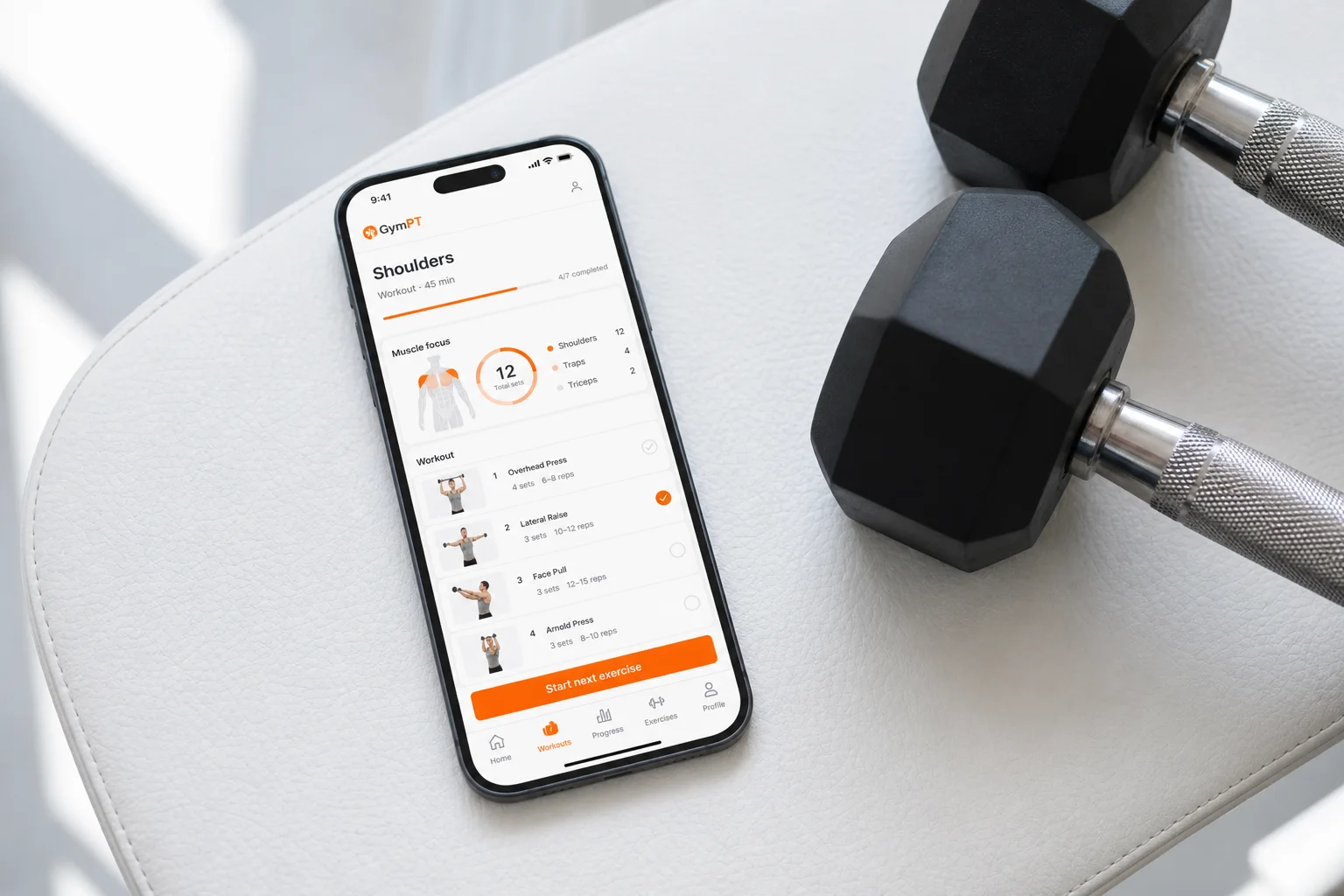
A simple shoulder workout with dumbbells
Here is a beginner-friendly session you can use as a starting point. It is simple, balanced, and easy to progress.
- Dumbbell shoulder press — 3 sets of 6 to 10 reps
- Dumbbell lateral raise — 3 sets of 12 to 20 reps
- Bent-over rear delt raise — 3 sets of 12 to 20 reps
- Optional front raise — 2 sets of 10 to 15 reps
Rest about 60 to 90 seconds between sets for raises, and a little longer for presses if you need it. For muscle growth, total weekly volume matters, and research-based guidance generally supports using enough hard sets to create a training stimulus while still recovering well. A practical target for many lifters is about 8 to 16 challenging sets per week for the shoulders, split across two sessions if possible.
How to choose the right weight
The right dumbbell is the one that lets you finish the set with good form and still feel like you had 1 to 3 reps left in the tank. If your shoulders rise toward your ears, your lower back arches hard, or you have to swing the weights, the load is too heavy.
- For presses: choose a weight that feels challenging in the 6 to 10 rep range.
- For lateral raises: go lighter and aim for clean reps in the 12 to 20 range.
- For rear delt raises: use a load you can control without twisting your torso.
If you are unsure, start lighter than you think. Dumbbell shoulder training rewards precision more than brute force.
Beginner-friendly alternatives if overhead pressing feels awkward
Not everyone should start with a heavy standing press. If overhead work feels unstable or uncomfortable, use a simpler version and build up gradually.
- Seated dumbbell shoulder press: more stable and easier to learn.
- Neutral-grip press: palms facing each other can feel friendlier for some lifters.
- Partial range lateral raises: useful when full raises feel too difficult at first.
- Chest-supported rear delt raises: reduce cheating and make the movement easier to control.
If a movement causes sharp pain, stop and choose a different exercise. Training should feel challenging, not reckless.
Common shoulder workout mistakes to avoid
- Using too much weight on raises. This usually turns the set into a swing.
- Letting the shoulders shrug up. Keep the neck relaxed and the shoulder blades controlled.
- Skipping rear delts. A balanced shoulder plan needs back-of-shoulder work too.
- Training only once in a while. Shoulders respond better to consistent weekly work.
- Ignoring recovery. If you train shoulders hard, give them time before repeating the same stress.
How to progress week to week
Progress does not have to mean adding weight every session. You can also improve by adding reps, improving control, or adding one extra set over time. That is especially useful for lateral raises and rear delt raises, where cleaner reps often matter more than heavier dumbbells.
A simple progression model looks like this:
- Pick a rep range.
- Use the same weight until you can hit the top of the range with good form.
- Increase the dumbbell weight slightly.
- Repeat the process.
This keeps your shoulder training measurable and avoids random workouts that never build momentum.
When to train shoulders in your week
Shoulders often work well after chest or on an upper-body day, but they also fit nicely into a push/pull split or a full-body plan. Many lifters do best with two shoulder-focused exposures per week rather than one huge session. That gives you enough practice to improve technique without making every workout a grind.
If you already do a lot of bench pressing or incline pressing, you may need less front-delt work and more lateral and rear-delt work. That is one reason a smart shoulder plan should be adjusted to the rest of your training, not copied from a generic template.
Build your shoulder plan with GymPT
If you want a shoulder workout with dumbbells that matches your equipment, experience level, and recovery, GymPT can build it for you. The app can personalize your plan, track your workouts, and help you adjust volume as you get stronger. That means less guessing and more progress you can actually measure.
Bottom line: keep your shoulder sessions simple, balanced, and repeatable. Press with control, raise with lighter weights, train the rear delts, and progress gradually. That is how dumbbells turn into real shoulder development.