chest workout with dumbbells
Chest Workout With Dumbbells: A Smarter Plan for Better Form and Real Progress
Learn how to build an effective chest workout with dumbbells using simple exercise selection, clean form cues, and weekly volume that supports real progress.
Chest Workout With Dumbbells: What Actually Makes It Effective
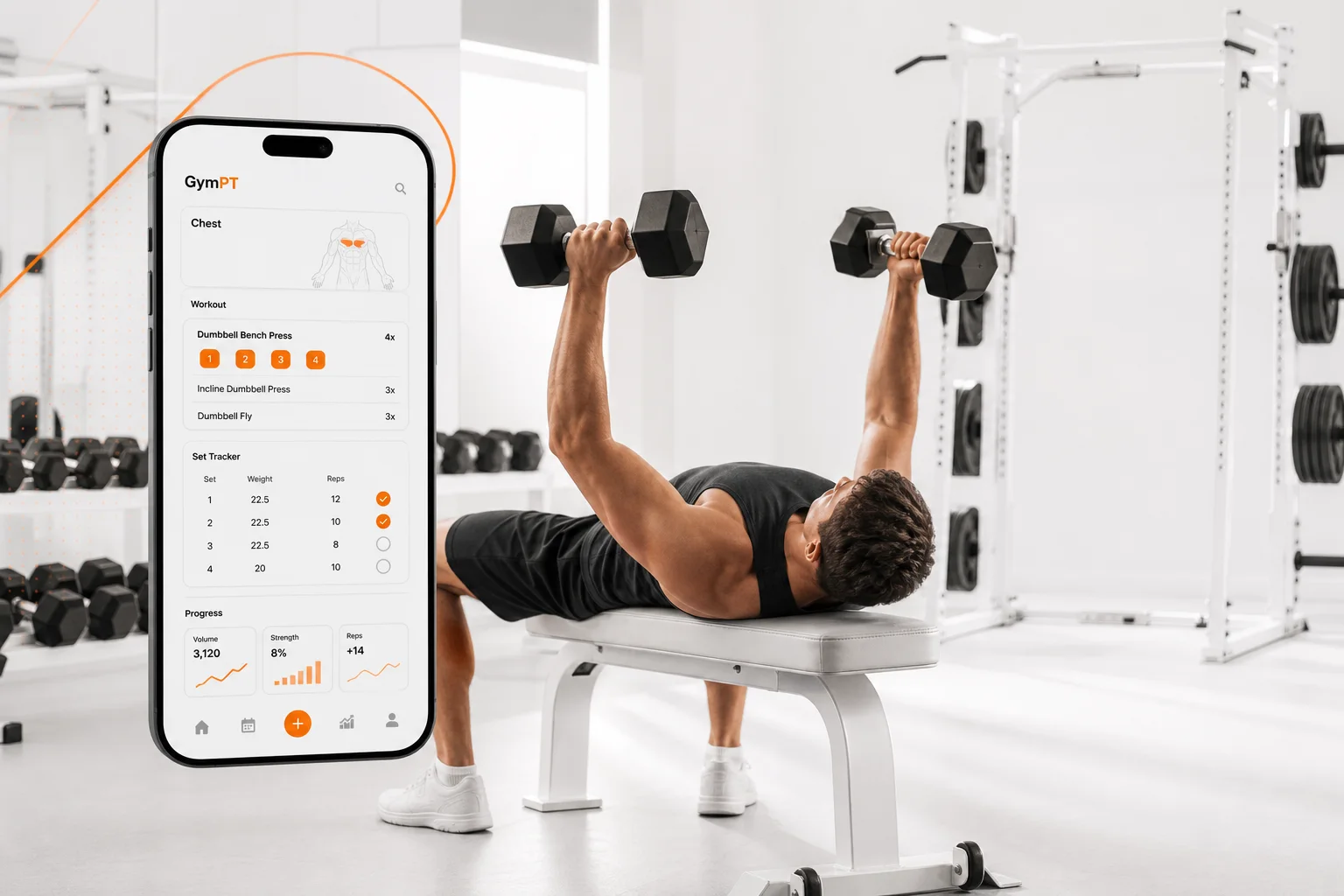
A good chest workout with dumbbells is not just a list of pressing moves. It is a plan that gives your chest enough quality work, enough recovery, and enough progression to improve over time. Dumbbells are especially useful because they let each side work independently, which can make it easier to notice strength differences and train with a natural range of motion.
If you want a chest session that is simple, effective, and beginner-friendly, focus on three things: exercise selection, clean technique, and weekly volume. That is the same logic GymPT uses when it builds personalized plans around your equipment, schedule, and training level.
How to Structure a Dumbbell Chest Session
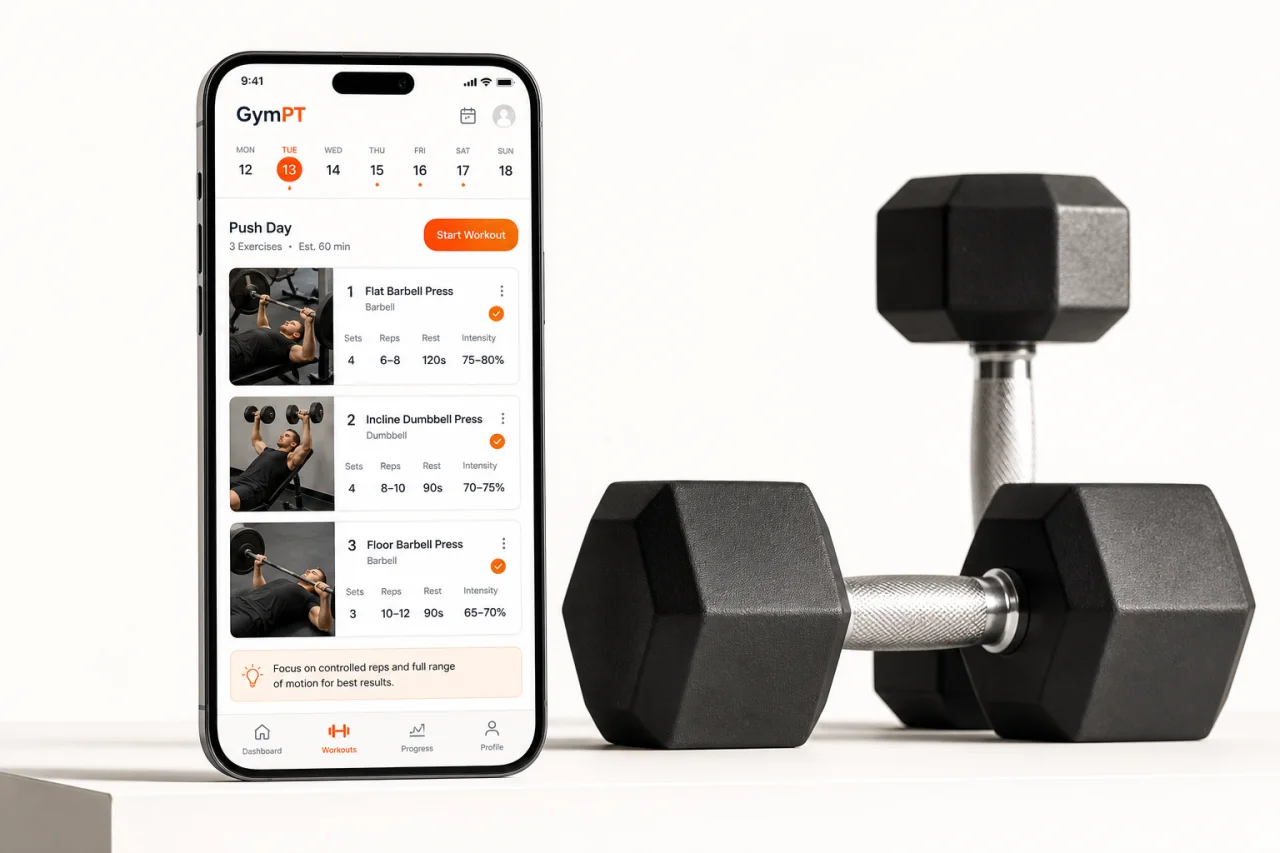
For most people, a chest workout works best when it includes one main press, one incline press or fly variation, and one accessory movement that adds volume without wrecking your shoulders. You do not need six chest exercises to make progress. You need enough hard sets performed with good form.
A practical starting point is 2 to 4 exercises for the chest in one session, with most sets stopping about 1 to 3 reps before failure. That keeps the work challenging without turning every set into a form breakdown.
Sample Dumbbell Chest Workout
- Dumbbell flat bench press — 3 sets of 6 to 10 reps
- Incline dumbbell press — 3 sets of 8 to 12 reps
- Dumbbell fly or floor fly — 2 sets of 10 to 15 reps
- Push-up finisher — 1 to 2 sets near technical failure
If you train at home and do not have a bench, you can still build a strong chest workout with dumbbells using the floor press, incline push-up variations, and controlled fly patterns.
Best Dumbbell Chest Exercises for Most Lifters
Not every chest exercise does the same job. Some are better for heavy pressing strength, while others are better for adding volume with less joint stress. The best plan usually combines both.
- Flat dumbbell press: Best all-around builder for chest strength and size.
- Incline dumbbell press: Shifts more work toward the upper chest and front delts.
- Dumbbell floor press: Great for beginners, home training, and limiting shoulder range.
- Dumbbell fly: Useful for chest lengthened-position work when done with control.
- Neutral-grip press: A shoulder-friendlier option for many lifters.
If you are choosing between these, start with presses first. Pressing gives you the most load and the easiest way to track progress. Add flys later as a secondary movement, not as your main lift.
Form Cues That Make Dumbbell Presses Work Better
Good form is what turns a chest workout into productive training instead of random fatigue. Use these cues on your pressing sets:
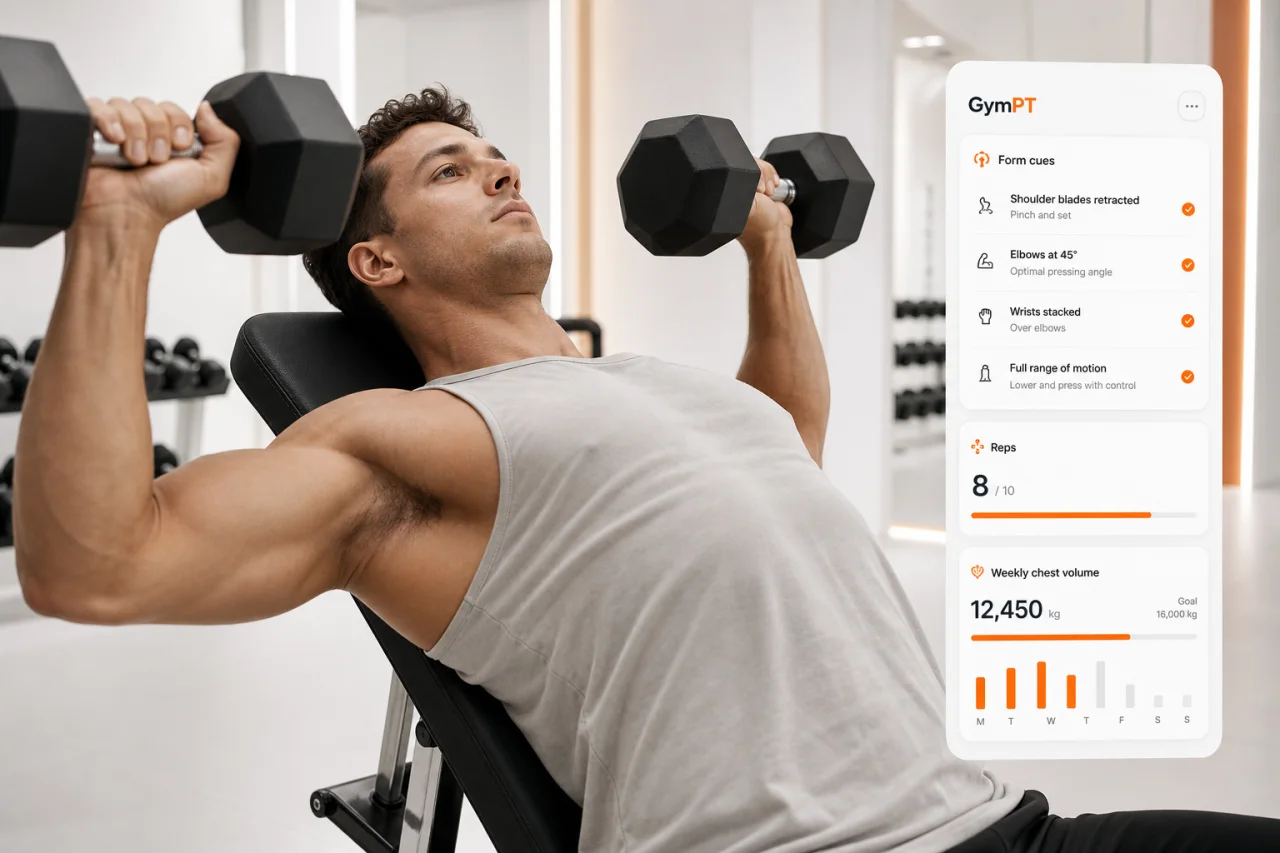
- Set your shoulder blades: Pull them gently back and down before each rep.
- Keep your wrists stacked: The dumbbell should sit over the forearm, not drift backward.
- Lower with control: Do not bounce the weights off your chest or shoulders.
- Press in a smooth arc: Think about bringing the dumbbells slightly inward as you drive up.
- Keep your feet planted: Stable legs help you stay tight through the torso.
For flys, use a smaller range than you think you need. The goal is to feel the chest working, not to force a huge stretch that your shoulders cannot control.
Common mistake: turning every dumbbell press into a shoulder exercise by flaring the elbows too much and losing upper-back tension. A moderate elbow angle is usually easier to control and more comfortable for most lifters.
How Much Chest Volume Do You Need?
For muscle growth, a useful target is roughly 10 or more hard sets per muscle group per week, adjusted for experience, recovery, and total training load. That does not mean every set must be chest-only. Pressing also involves the shoulders and triceps, so your total push volume matters too.
If you are a beginner, start lower. A simple range of 6 to 8 weekly chest sets is often enough to make progress without overwhelming recovery. More advanced lifters may need more volume, but only if they can still recover and keep performance high.
A smart approach is to split chest work across 2 sessions per week instead of trying to do everything in one day. That usually improves exercise quality and makes progression easier to track.
Beginner-Friendly Alternatives If Pressing Feels Hard
If a standard dumbbell bench press feels awkward, painful, or too unstable, scale the movement instead of quitting the workout. Better options include:
- Dumbbell floor press for a shorter range of motion
- Neutral-grip dumbbell press for a more shoulder-friendly setup
- Incline push-ups for easier bodyweight chest work
- Single-arm dumbbell press for extra control and core demand
These options let you keep training the chest while building confidence and technique. That is especially useful if you are new to resistance training or returning after a long break.
How to Progress Your Dumbbell Chest Training
Progress does not have to mean adding weight every week. You can also improve by adding reps, improving control, or increasing total quality sets. A simple progression model looks like this:
- Pick a rep range, such as 6 to 10.
- Use the same weight until you can hit the top end of the range on all sets with good form.
- Increase the load slightly and repeat.
This keeps your chest workout with dumbbells structured and measurable. If your reps are going up and your form is staying clean, you are moving in the right direction.
Where GymPT Fits In
GymPT helps you turn a general chest workout into a plan that fits your equipment, training level, and recovery. You can use it to build a dumbbell-only chest day, balance push and pull work, track workout volume, and adjust your plan as you get stronger.
If you want a smarter routine, GymPT can help you choose the right exercises, set weekly targets, and keep your progress visible instead of guessing from one workout to the next.
Quick Chest Workout With Dumbbells Checklist
- Start with a press variation
- Use 2 to 4 chest exercises total
- Keep most sets 1 to 3 reps shy of failure
- Train chest about 2 times per week if recovery allows
- Track reps, load, and set quality over time
A well-built chest workout with dumbbells is simple, repeatable, and progressive. Keep the form strict, the volume realistic, and the plan easy to follow. That is how you build a chest routine that actually lasts.
Frequently Asked Questions
Can dumbbells build a bigger chest?
Yes. Dumbbells can build chest size effectively when you use enough weekly volume, good technique, and progressive overload.
How many dumbbell chest exercises should I do?
Most people only need 2 to 4 chest exercises in one session. More is not automatically better if form and recovery start to drop.
Is the dumbbell floor press good for beginners?
Yes. It is often a strong beginner option because it reduces range of motion and can feel more stable than a full bench press.
Should I train chest to failure?
Not every set. Leaving a little room in the tank usually helps you keep better form and recover better across the week.