back workout with dumbbells
Back Workout With Dumbbells: A Smarter Plan for Stronger Pulling Muscles
A practical back workout with dumbbells for beginners and intermediates: learn the best exercises, form cues, weekly sets, and easy progressions for real back strength.
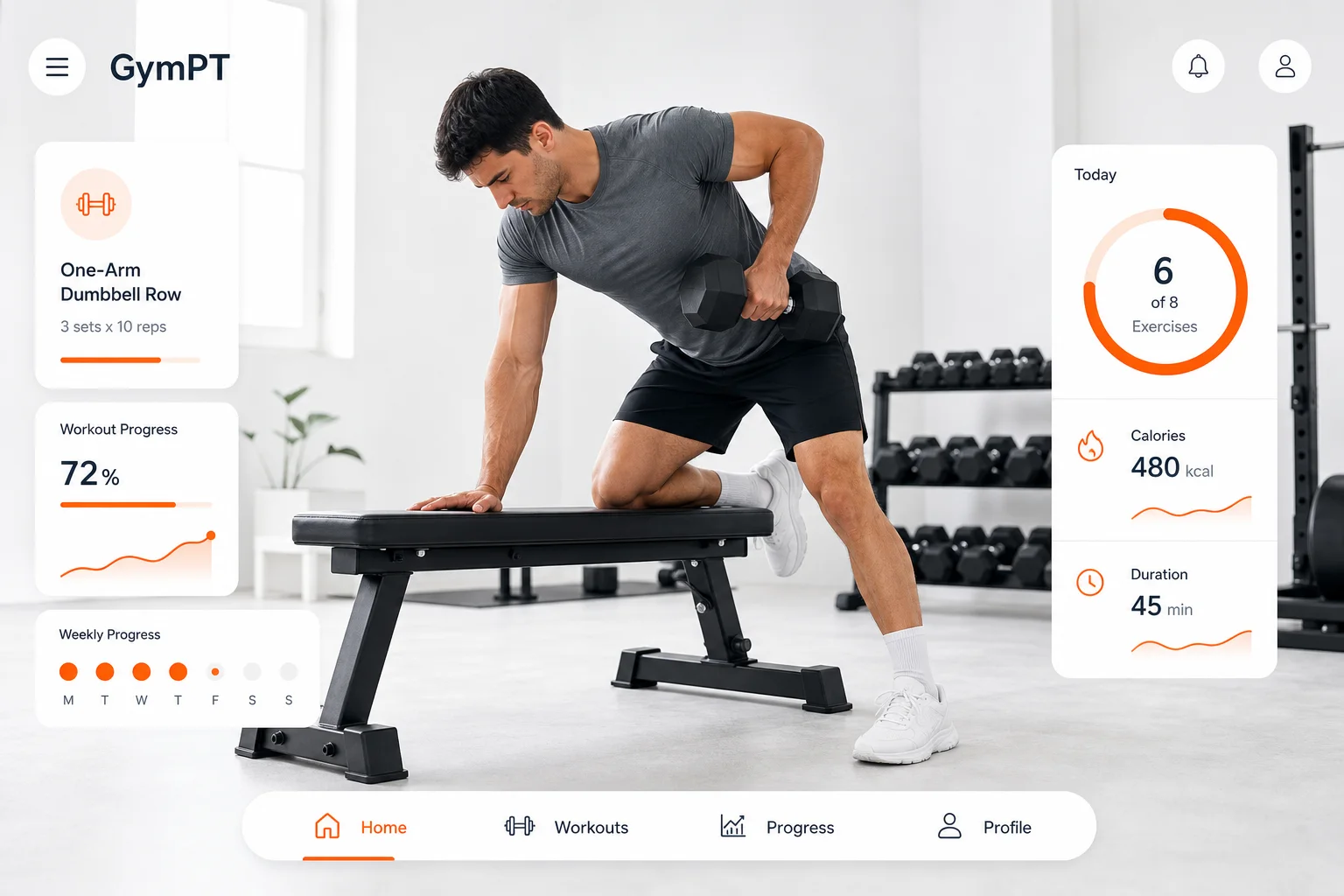
Back Workout With Dumbbells: A Smarter Way to Build Strength
If you want a back workout with dumbbells that actually helps you get stronger, the goal is simple: train the back through a mix of rowing, hinging, and upper-back isolation, then progress the load or reps over time. Dumbbells are especially useful because they let you train one side at a time, work around equipment limits, and keep your technique honest.
This guide keeps things practical. You’ll get the best dumbbell back exercises, form cues that matter, beginner-friendly alternatives, and a simple volume target you can use right away.
What a good dumbbell back workout should cover
Your back is not one muscle. A useful session should hit:
- Lats for pulling power and width
- Mid-back muscles for rowing strength and posture
- Rear delts and upper back for shoulder balance
- Spinal erectors for hinge stability and lower-back endurance
That is why a smart dumbbell plan usually includes at least one row, one hinge-based movement, and one upper-back accessory.
The best back workout with dumbbells
Use this as a straightforward training day. If you are a beginner, start with the lower end of the sets. If you are more experienced, add a set or two to the first two exercises.
- One-arm dumbbell row — 3 sets of 8-12 reps per side
- Chest-supported dumbbell row — 3 sets of 10-12 reps
- Dumbbell Romanian deadlift — 3 sets of 8-10 reps
- Bent-over dumbbell reverse fly — 2-3 sets of 12-15 reps
- Dumbbell pullover — 2 sets of 10-12 reps
Rest about 60-120 seconds between sets. For heavier rows and Romanian deadlifts, use the longer end of that range so your next set stays crisp.
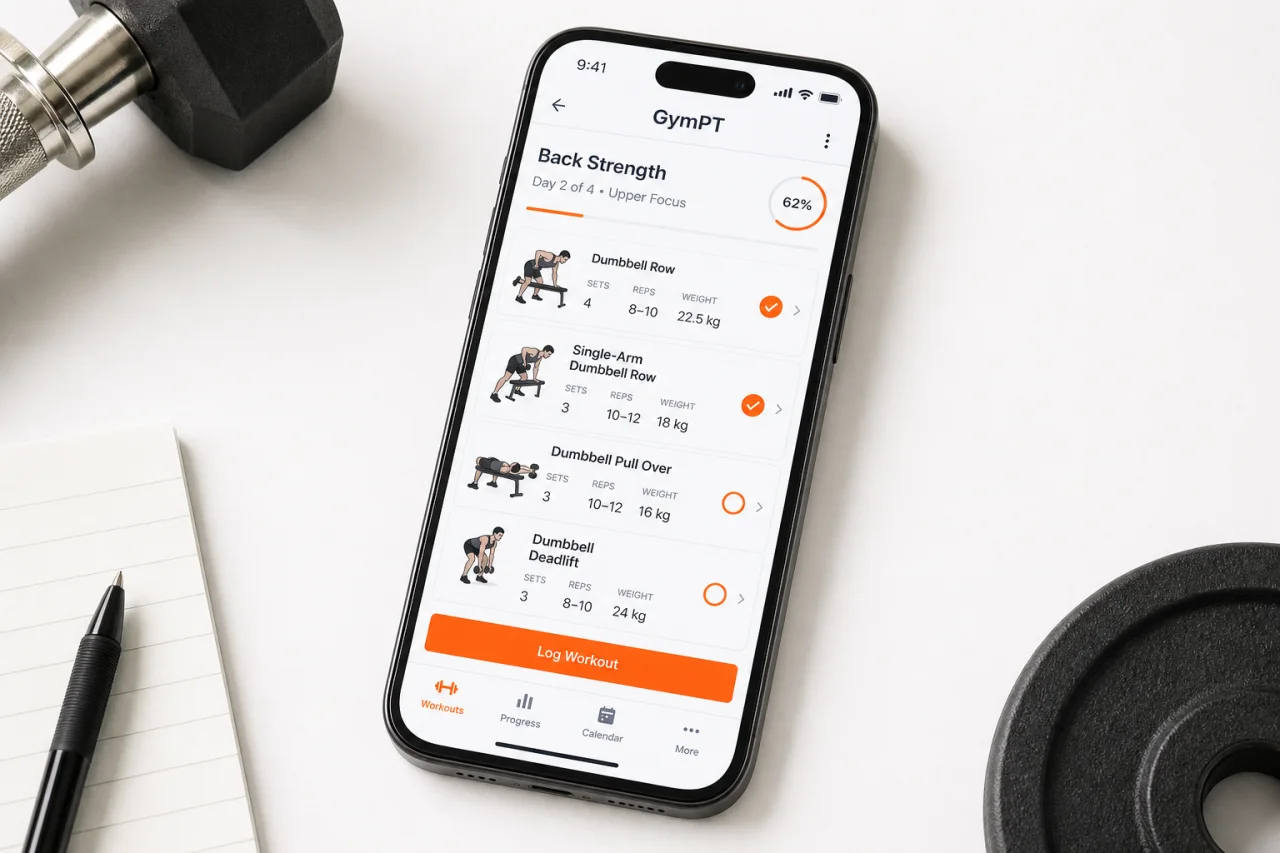
How to do each exercise with better form
1) One-arm dumbbell row
This is the anchor of most dumbbell back workouts. Set one hand and knee on a bench, keep your torso stable, and row the dumbbell toward your hip rather than straight up toward your shoulder.
- Keep your neck long and your ribs down
- Pull with the elbow, not the hand
- Pause briefly at the top without twisting your torso
- Lower the weight under control
Common mistake: turning the row into a shrug or rotating your body to cheat the rep.
2) Chest-supported dumbbell row
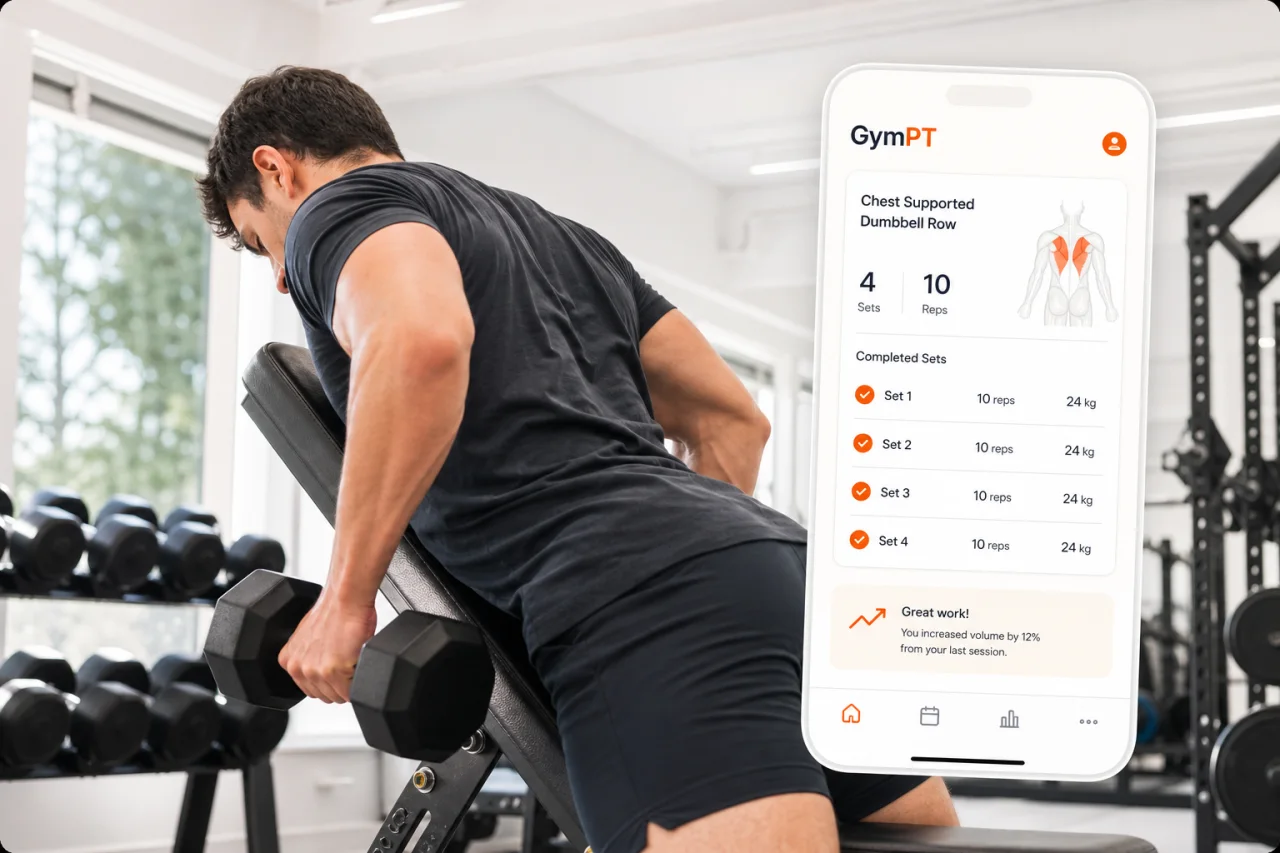
This is one of the best beginner-friendly dumbbell back exercises because the bench removes a lot of lower-back fatigue. Lie face down on an incline bench and row both dumbbells with control.
- Keep your chest in contact with the bench
- Drive elbows back and slightly out
- Stop the rep before your shoulders roll forward
Why it helps: it lets you focus on the back muscles instead of fighting to hold your torso still.
3) Dumbbell Romanian deadlift
This movement trains the posterior chain and teaches a strong hip hinge. Hold the dumbbells in front of your thighs, soften the knees, and push your hips back while keeping your spine neutral.
- Think “hips back,” not “bend down”
- Keep the dumbbells close to your legs
- Stop when you feel a strong hamstring stretch
- Stand by driving the hips forward, not by leaning back
Common mistake: rounding the lower back or turning the movement into a squat.
4) Bent-over dumbbell reverse fly
This is a simple way to train the upper back and rear delts. Hinge at the hips, keep a soft bend in the elbows, and raise the dumbbells out to the sides with control.
- Use lighter weight than you think
- Move slowly and avoid swinging
- Keep the shoulders away from the ears
Common mistake: using momentum and turning the exercise into a trap shrug.
5) Dumbbell pullover
The pullover can be a useful accessory for the lats and ribcage control. Lie on a bench, hold one dumbbell with both hands, and lower it behind your head only as far as your shoulders can stay comfortable and stable.
- Keep your core braced
- Do not force extra range
- Use a smooth arc, not a fast drop
Common mistake: arching the lower back to fake more range of motion.
How much volume do you need?
For most people, a good starting point is 8-12 hard sets per week for the back, split across 1-2 sessions. If your goal is muscle growth, you can gradually move toward the higher end of that range as recovery improves. If you are new to training, start lower and build up slowly.
A simple rule: when you can complete the top of the rep range with clean form, increase the dumbbell weight slightly or add one rep per set next time.
Beginner-friendly alternatives if the full workout feels too hard
- Use chest-supported rows instead of bent-over rows if your lower back gets tired first
- Start with two exercises if five movements feels like too much
- Use a lighter hinge or reduce range of motion on Romanian deadlifts
- Train one side at a time if you struggle to feel the back working evenly
If you are brand new, a simple starter session can be just one-arm rows, chest-supported rows, and reverse flys. That is enough to build skill and momentum.
How to progress without losing form
Progression should be boring in the best way possible. Keep the same exercises for a few weeks and improve one variable at a time:
- Add 1 rep per set until you reach the top of the range
- Then increase the weight by the smallest available jump
- Keep the same tempo and range of motion
- Track your sessions so you know what actually improved
If your reps get sloppy, the weight is too heavy for the goal of that set.
Where GymPT fits in
GymPT can help you turn this back workout with dumbbells into a plan that matches your equipment, training level, and weekly schedule. Use it to build a personalized routine, log your sets, and see whether your back training volume is moving in the right direction.
That matters because good back training is not just about picking exercises. It is about repeating quality reps, recovering well, and making small progress over time.
Quick back workout checklist
- Pick 1-2 row variations
- Add 1 hinge movement
- Include 1 upper-back isolation exercise
- Train with controlled reps and full range you can own
- Progress slowly and track your work
If you want a simple rule to remember, use this: pull with control, hinge with stability, and add load only when your form earns it.