AI gym workout generator
AI Gym Workout Generator: How to Use AI Coaching for Smarter, Safer Training
An AI gym workout generator can save time, but the best results come from realistic planning, good exercise selection, and steady progression. Here’s how to use AI coaching well.
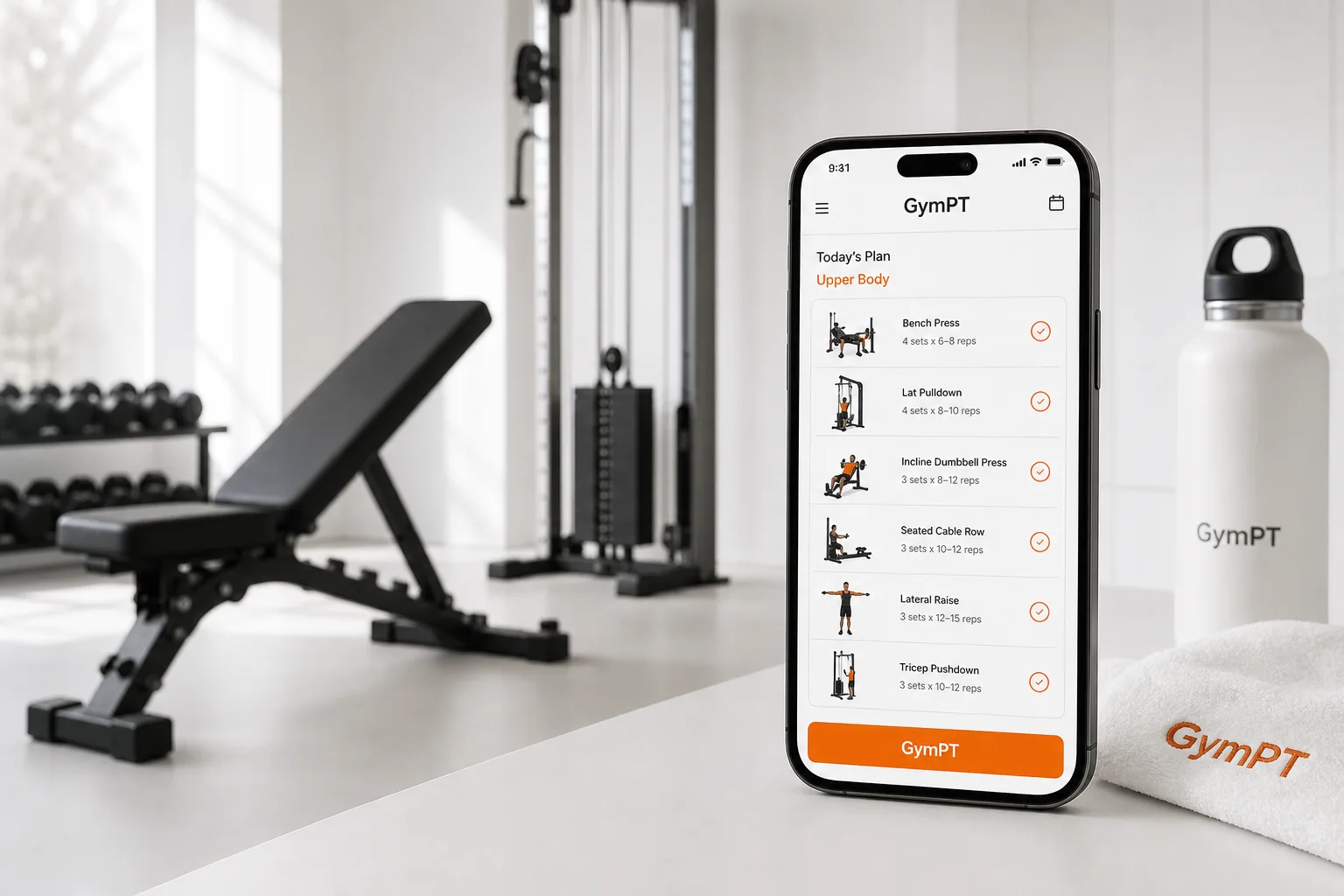
AI gym workout generator: what it can do well, and where you still need judgment
An AI gym workout generator can be a useful shortcut when you want a plan that fits your schedule, equipment, and training level. The best versions do more than shuffle exercises into a random split. They help you organize training around a few basics that still matter in real life: enough weekly work, sensible exercise selection, gradual progression, and recovery you can actually sustain.
That matters because public health guidance still points to a simple foundation: adults should do regular physical activity, including muscle-strengthening work on at least 2 days per week, and build up gradually over time. Strength training is not just about looking more athletic; it supports strength, function, balance, and long-term consistency.
GymPT is designed to support that process. It can generate personalized workout plans, adapt to the equipment you have, and help you track what you actually completed so your next session is based on reality, not guesswork.
What a good AI workout generator should help you decide
A useful generator should not simply ask, “What muscles do you want to train?” It should help answer the questions that make a plan workable:
- How many days can you train?
- What equipment do you have?
- What is your current training level?
- Which movements can you perform with good control?
- How much recovery do you need between sessions?
Those decisions matter because strength training works best when it is repeated consistently and progressed gradually. Guidance from the NHS recommends working all major muscle groups at least 2 days a week, using sets and repetitions that are challenging but controlled, and increasing volume over time rather than rushing it.
In practice, that means a good AI coach should help you choose the right starting point, not the most impressive-looking workout.
How AI coaching can make training safer and more realistic
AI coaching is most helpful when it reduces common planning mistakes. For example, many people start with too much volume, too many exercises, or a split that looks advanced but is hard to recover from. A better system keeps the plan simple enough to follow and specific enough to progress.
1. It matches the plan to your equipment
If you train at home with dumbbells, cables, or a single machine, your program should reflect that. Equipment-based planning can improve adherence because the workout is built around what you can actually do today, not what a generic template assumes.
2. It keeps progression gradual
Progress does not need to be dramatic to be effective. Small increases in reps, load, or control are often enough. That is especially important for beginners and returning lifters, who benefit from building tolerance before chasing intensity.
3. It helps you avoid “all-or-nothing” programming
Many people miss workouts because the plan is too rigid. AI can help by adjusting session length, exercise order, or training frequency when your week changes. That flexibility makes consistency more likely.
4. It gives you a place to log what happened
Tracking is where a plan becomes useful. If you know what you lifted, how many reps you completed, and how hard the session felt, your next workout can be adjusted intelligently. GymPT’s workout tracking and progress insights are built for exactly that kind of feedback loop.
How to use an AI gym workout generator without outsourcing your judgment
AI can help you plan, but it should not replace basic training common sense. Use it like a coach’s assistant, not like a magic button.
- Start with your real schedule. If you can only train 3 days a week, build around 3 days.
- Choose movements you can perform well. Good form and control matter more than novelty.
- Keep the first version simple. A plan with fewer exercises is often easier to follow and recover from.
- Review the plan after 2 to 4 weeks. Look at adherence, soreness, performance, and energy.
- Adjust one variable at a time. Change volume, load, or frequency gradually instead of rewriting everything.
This approach fits the broader exercise guidance from WHO and NHS: do enough work to create a training stimulus, but build up in a way you can maintain.
Where GymPT fits into the process
GymPT is useful because it combines planning and feedback in one place. Instead of generating a plan and hoping it works, you can:
- create a personalized workout plan based on your goals and equipment,
- use AI coach chat to ask practical questions about exercise selection or structure,
- check body analysis to understand your starting point more clearly,
- log sessions with workout tracking, and
- review progress insights so the next plan is based on your actual training history.
That combination is important because the best plan is not the one that looks smartest on day one. It is the one you can repeat, recover from, and improve over time.
What to look for in a better AI training plan
If you are comparing tools, look for these signs of quality:
- Specificity: the plan reflects your equipment, schedule, and experience level.
- Progression: it tells you how to advance, not just what to do today.
- Balance: it covers major movement patterns and does not overload one area.
- Adaptability: it can change when your week, energy, or equipment changes.
- Tracking: it helps you learn from completed workouts instead of starting over every week.
If a generator cannot explain why it chose certain exercises or how it expects you to progress, it is probably too generic to be useful for long.
Bottom line
An AI gym workout generator is most valuable when it helps you train with more structure and less guesswork. The goal is not to automate effort. The goal is to make good training easier to repeat.
If you want a practical, equipment-aware way to plan workouts, GymPT can help you build a routine, adjust it as you go, and keep your progress visible without overcomplicating the process.
Related reading: AI Fitness Plan Generator: How to Use AI Coaching Without Guessing Your Way Through Training, How to Choose the Best AI Workout Plan App: 7 Features That Actually Matter, Body Posture Analysis App: How to Turn a Snapshot Into Smarter Training, Muscle Load Tracking: How to Measure Progress Without Guessing