leg press form guide
Leg Press Form Guide: How to Press Smarter, Safer, and Stronger
A practical leg press form guide with setup cues, range-of-motion tips, common mistakes, and alternatives to help you train legs with better control.
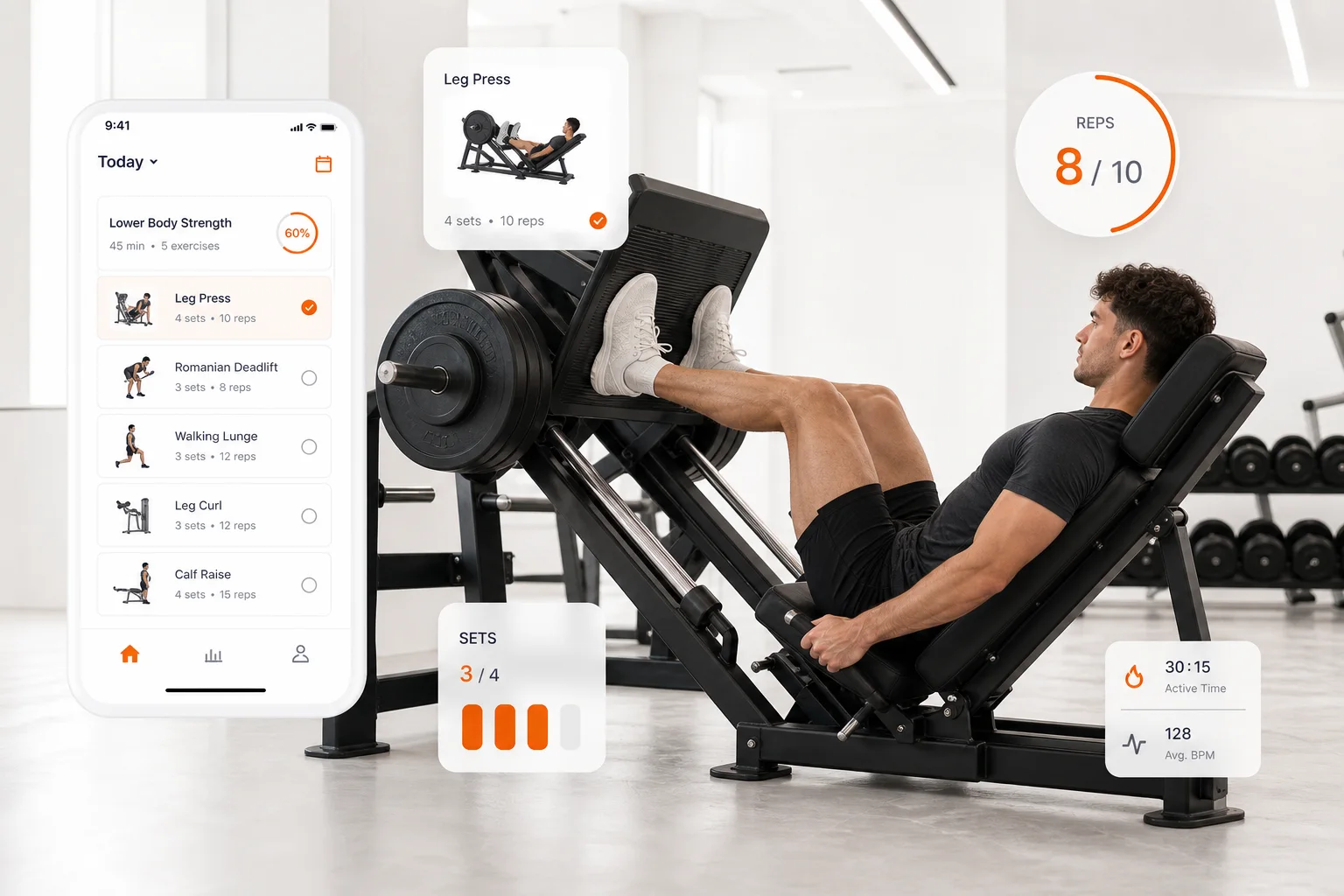
Leg Press Form Guide: the setup that makes every rep better
If you want a leg press form guide that actually helps in the gym, start here: the leg press is not about moving the most weight possible. It is about creating a stable setup, controlling the descent, and pressing through a range of motion you can own. Good machine setup and proper technique matter because strength training works best when form is consistent and the load matches your current ability.
The leg press is useful because it lets you train the quads, glutes, and hamstrings with less balance demand than free-weight squats. That can make it a practical option for beginners, lifters returning from a layoff, or anyone who wants a lower-skill way to add leg volume. But the machine only helps if you use it well.
How to set up the leg press
- Adjust the seat first. Sit all the way back so your lower back and hips stay supported through the rep.
- Place your feet shoulder-width apart. Start with feet centered on the platform and toes slightly turned out.
- Unlock the sled with control. Keep your torso braced and your hands on the handles if the machine has them.
- Lower the sled slowly. Bend your knees under control until you reach a depth you can maintain without your pelvis rounding.
- Press through the whole foot. Drive the platform away without locking out aggressively at the top.
A simple rule: if your hips lift, your knees cave in, or your lower back rounds, the load or depth is too much for your current setup. Proper machine adjustment and controlled range of motion are key parts of safe strength training.
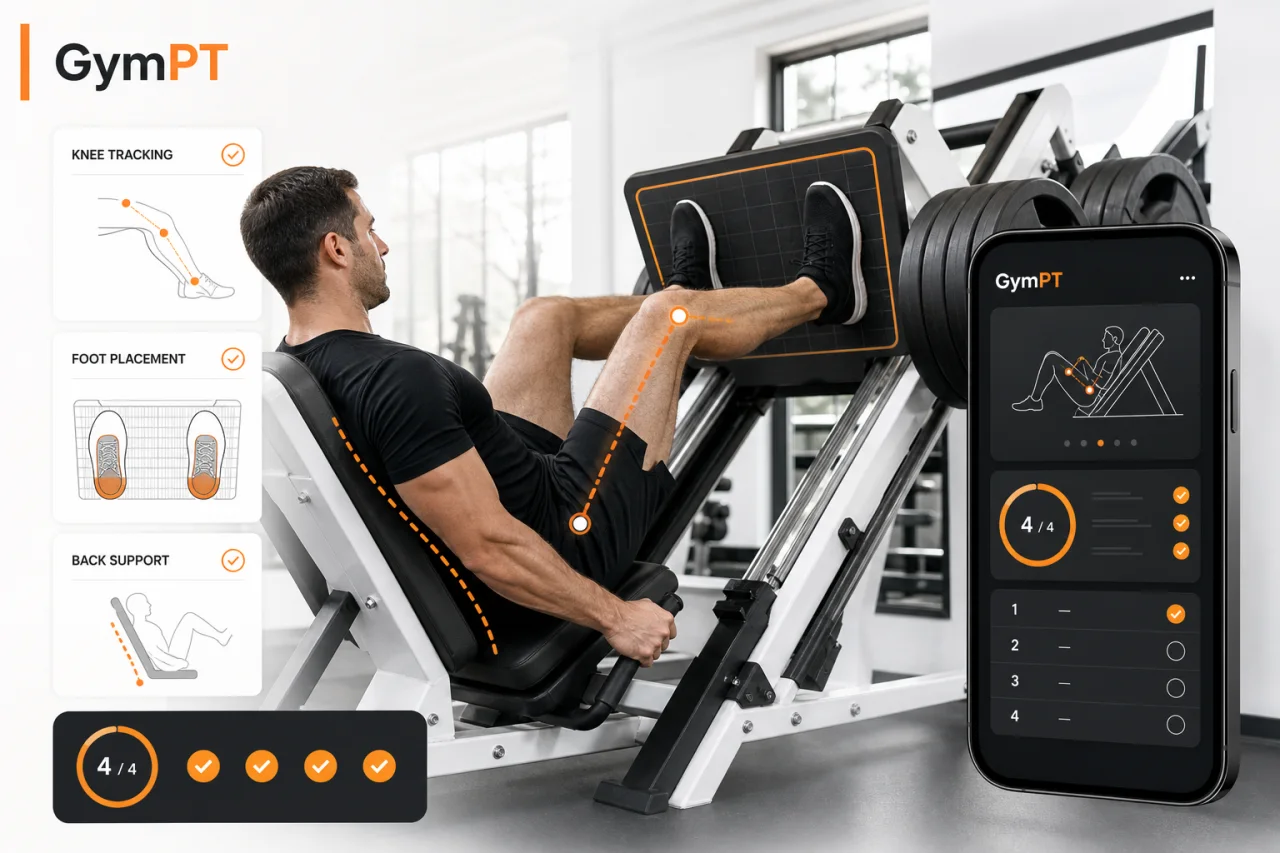
What good leg press form should feel like
Think stable, smooth, and repeatable. Each rep should look the same. Your knees should track in line with your toes, your feet should stay planted, and your torso should stay quiet while the legs do the work. In strength training, that kind of consistency is what makes progress easier to measure and safer to repeat.
Useful form cues
- “Ribs down, back supported.”
- “Lower under control.”
- “Knees follow toes.”
- “Push the platform away, don’t bounce it.”
- “Stop before your pelvis tucks.”
Leg press foot placement: what changes when you move your feet
Foot placement changes the feel of the exercise, but it does not replace good mechanics. A slightly lower foot position usually shifts more work toward the quads, while a slightly higher position often feels more glute- and hamstring-friendly. The best starting point is the position that lets you keep your knees tracking well and your lower back stable. That is more important than chasing a “perfect” foot angle.
If you are unsure, begin with a middle stance, then make small changes one at a time. Large changes in stance often create more confusion than benefit.
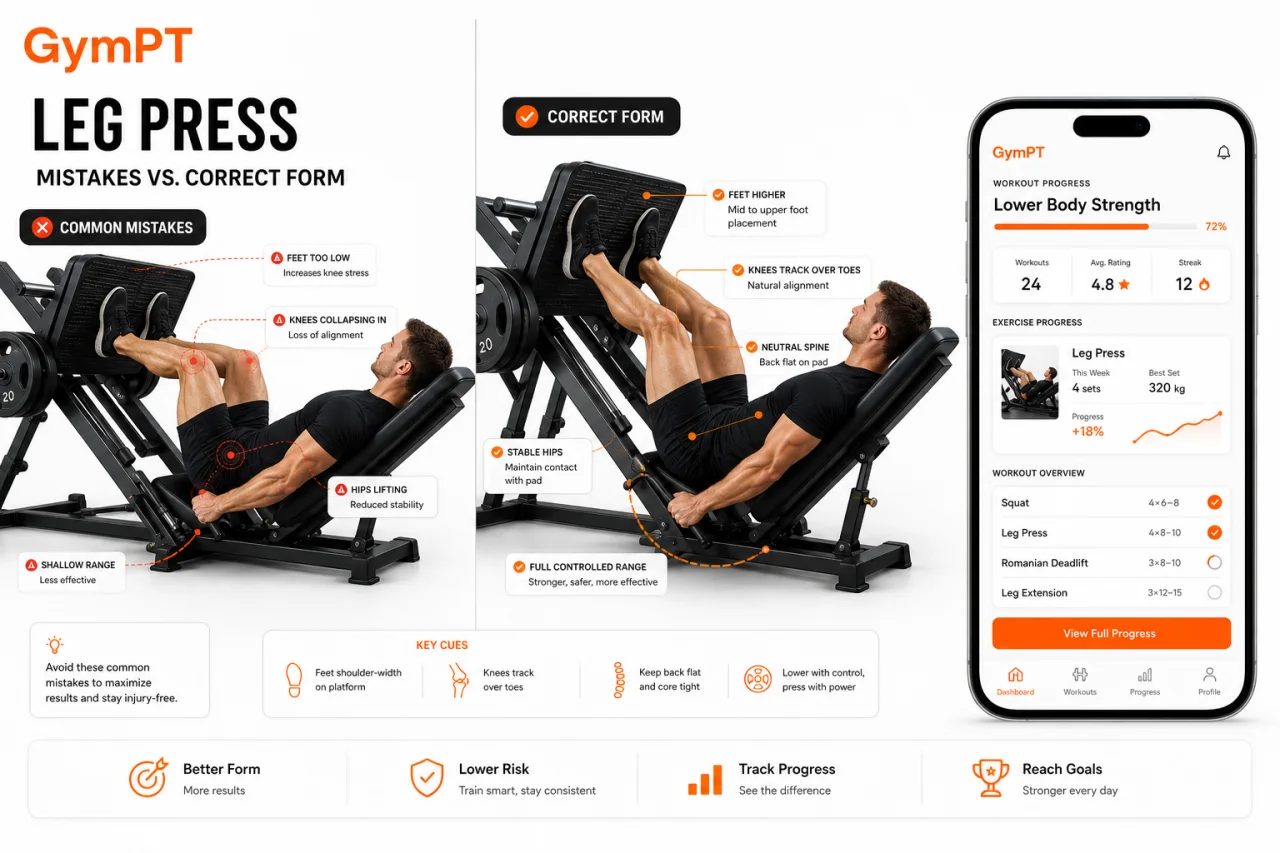
Common leg press mistakes to avoid
- Going too deep too soon. Depth is useful only if you can keep your pelvis and spine controlled.
- Letting the knees collapse inward. This usually means the load is too heavy or the stance is not stable enough.
- Bouncing out of the bottom. That turns the rep into momentum instead of muscle tension.
- Locking the knees hard at the top. Keep tension in the legs instead of snapping into extension.
- Using a weight that changes your setup. If the sled forces your hips to lift or your back to round, reduce the load.
These mistakes matter because bad form and poor machine adjustment are common reasons people lose the training benefit of an exercise and increase injury risk.
How many reps and sets should you do?
For most lifters, the leg press works well as a moderate-to-high-rep machine lift. A practical starting point is 2 to 4 sets of 8 to 15 reps, using a load that leaves you with a few clean reps in reserve. Mayo Clinic notes that a single set of 12 to 15 repetitions can be effective for many people, and strength training should be progressed gradually.
If your goal is general leg strength and muscle growth, keep the reps controlled and the range consistent. If your goal is to build confidence on the machine, start lighter and earn depth before adding load.
Who should use the leg press?
The leg press is a smart option if you want to train legs without the balance demands of squats or lunges. It can also be useful when you want extra quad volume after free-weight work. But it should not be your only leg exercise forever. A balanced lower-body plan usually includes both knee-dominant and hip-dominant work.
If you already do squats, lunges, or deadlift variations, the leg press can be your accessory lift. If you mostly train on machines, it can still be part of a complete plan as long as you also include hip hinge work and unilateral training.
Best leg press alternatives if the machine is busy
If the leg press is taken, or if it does not feel right for your body, use a similar movement pattern instead. Good alternatives include:
- Goblet squat for a simple squat pattern with easy setup
- Split squat for unilateral leg strength and balance
- Step-up for controlled knee and hip drive
- Hack squat machine for a machine-based quad focus
- Leg extension for extra quad isolation after compound work
These options help you keep training even when equipment, comfort, or technique limits the leg press on a given day. Variety also helps prevent plateaus and overuse from repeating the exact same pattern forever.
How GymPT can help you improve leg press form
GymPT can turn this leg press form guide into a plan you can actually follow. Use the AI coach chat to ask about foot placement, set targets, or how to progress week to week. Track your sets and reps, compare performance over time, and use progress insights to see whether your leg training is getting stronger and more consistent.
If you train on different machines, GymPT can also help you adapt the exercise to the equipment you have, so your leg day stays effective even when the gym is busy.
Quick leg press checklist
- Seat adjusted so your back stays supported
- Feet planted and knees tracking with toes
- Controlled lowering phase
- No bouncing at the bottom
- No hard knee lockout at the top
- Load that lets you repeat clean reps
Bottom line: the best leg press form is the one you can repeat with control. Set up well, use a range of motion you own, and progress gradually. That is how the machine becomes a tool for real leg development instead of just a place to move weight.