full body workout with resistance band
Full Body Workout With Resistance Band: A Smarter Plan for Any Space
A resistance band can train your whole body if you choose the right movement patterns. Learn how to build a balanced full body workout with resistance band, progress it safely, and adapt it to the equipment you actually have.
Full body workout with resistance band: how to build a plan that actually works
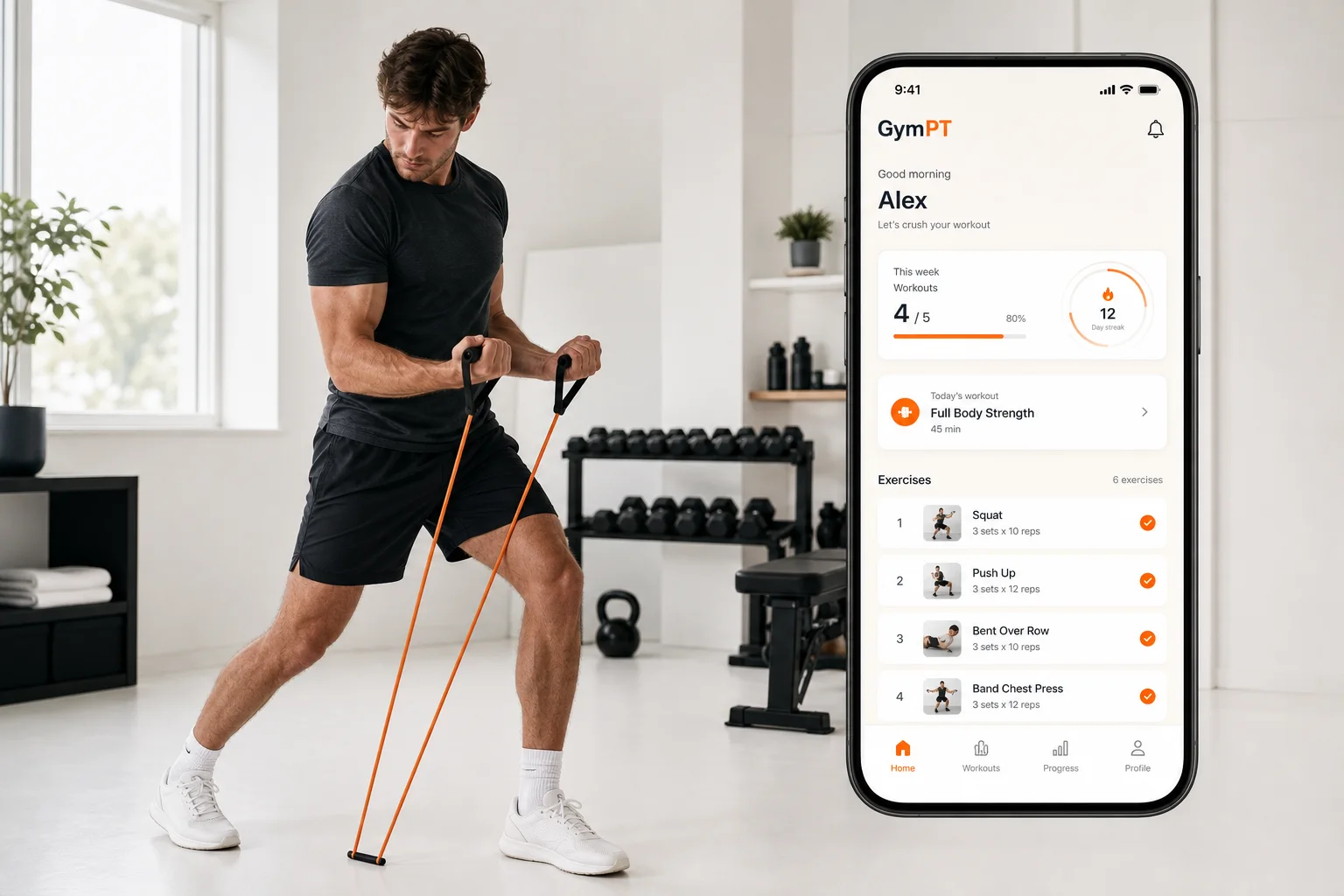
A full body workout with resistance band is one of the simplest ways to train when you want flexibility, low cost, and a plan that still covers every major muscle group. The key is not just picking random band exercises. The key is building a balanced session around movement patterns: squat, hinge, push, pull, carry or brace, and core control.
That approach matters because adults are recommended to do muscle-strengthening activity at least two days per week, and those sessions should work all major muscle groups. A resistance band can do that well if you use it with intention. 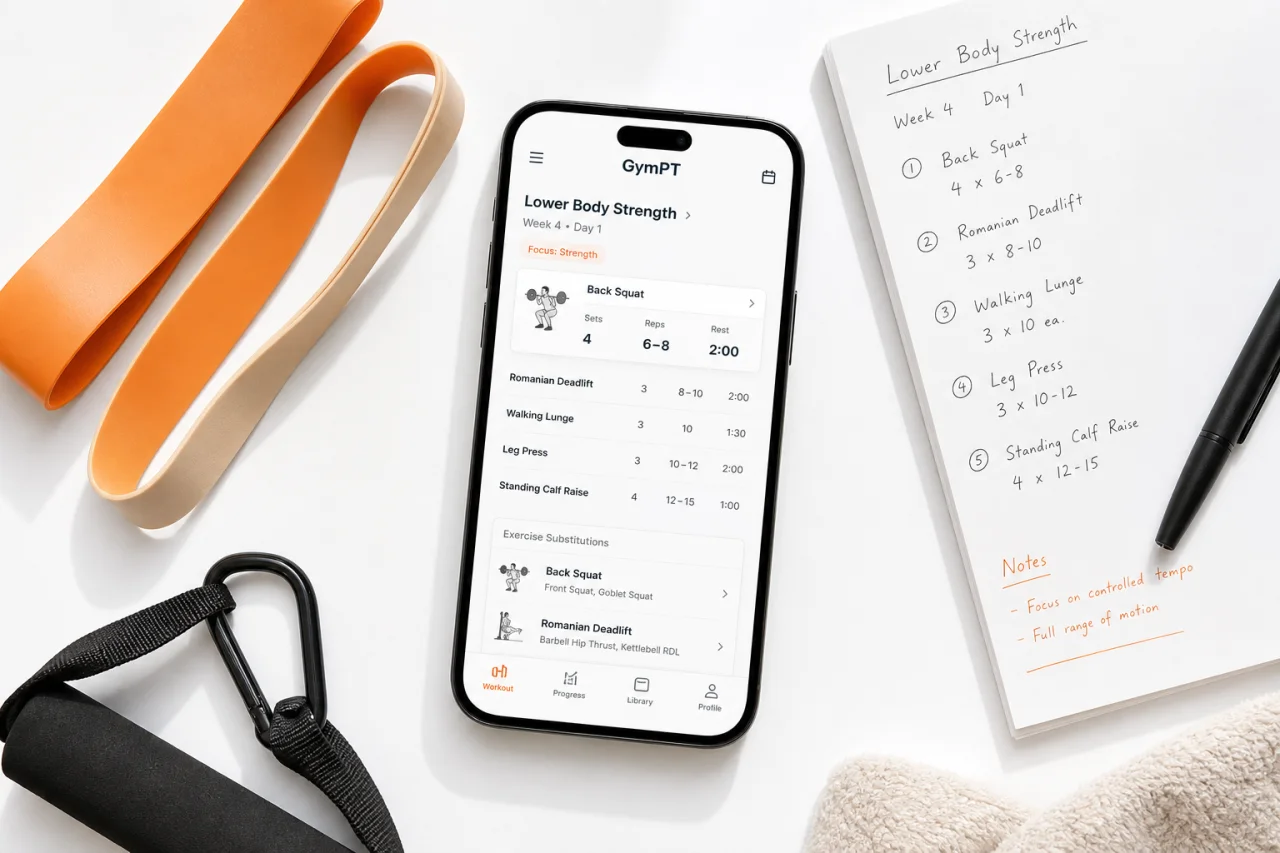
Why resistance bands are effective for full-body training
Resistance bands create tension through the range of motion, which makes them useful for home workouts, travel workouts, and gym sessions when equipment is limited. They also make it easier to scale exercises up or down by changing band thickness, stance, grip, or anchor position.
For most people, the biggest advantage is consistency. If your workout is easy to repeat, easy to store, and easy to adapt, you are more likely to keep training. That is where GymPT helps: it can build a plan around the exact bands and space you have, then adjust the workout as your strength improves.
How to structure a balanced band workout
Instead of trying to hit every muscle with isolated moves, organize the session by patterns. A good full-body band workout usually includes 5 to 7 exercises:
- 1 squat pattern for quads and glutes
- 1 hinge pattern for hamstrings and glutes
- 1 push pattern for chest, shoulders, or triceps
- 1 pull pattern for back and rear delts
- 1 core exercise for bracing and trunk control
- Optional accessory work for arms, glutes, or shoulders
This structure keeps the workout efficient and helps you avoid overloading one area while neglecting another.
Example full body workout with resistance band
- Band squat — 3 sets of 8 to 15 reps
- Band Romanian deadlift — 3 sets of 8 to 15 reps
- Band chest press — 3 sets of 10 to 15 reps
- Band row — 3 sets of 10 to 15 reps
- Band overhead press — 2 to 3 sets of 8 to 12 reps
- Pallof press or dead bug with band — 2 to 3 sets of 8 to 12 reps per side
Rest long enough to keep your form clean. For most people, 45 to 90 seconds works well, depending on how hard the set feels.
How to choose the right exercises around the equipment you have
The best workout is the one that matches your setup. If you only have a loop band, choose exercises that use your body position to create tension. If you have a long band with handles or an anchor, you can add more push and pull options.
- Loop band only: squats, glute bridges, lateral walks, good mornings, standing abductions
- Long band without anchor: rows, curls, overhead press, front raise, pull-aparts
- Long band with a door anchor or stable post: chest press, lat pulldown, face pull, triceps pressdown, Pallof press
If you are not sure what your band can safely handle, start with controlled reps and a lighter resistance. You should feel challenged near the end of the set, but still keep your posture and range of motion under control. 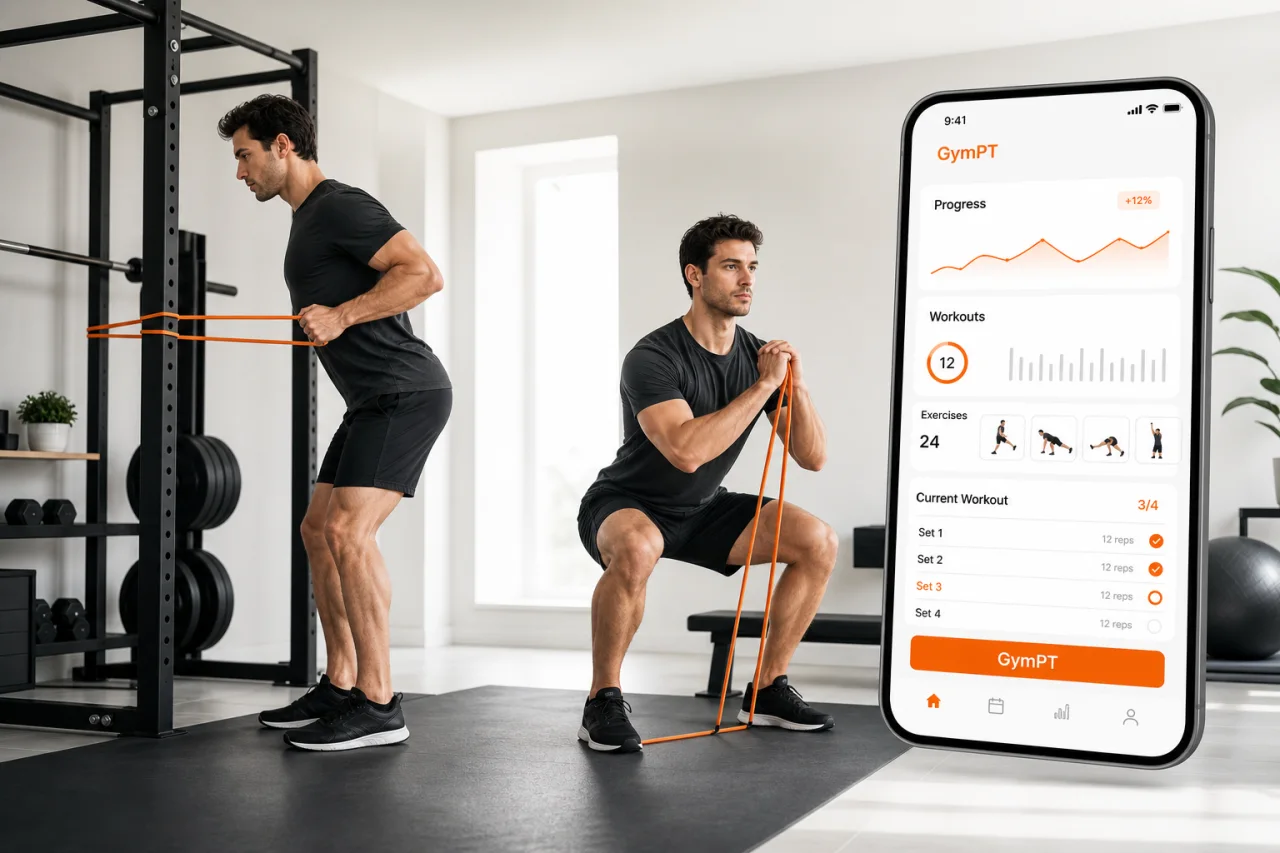
How hard should a band workout feel?
A useful rule: finish most sets with about 1 to 3 good reps left in the tank. That gives you enough effort to stimulate progress without turning every session into a grind. If you can easily do 20 reps, the band is probably too light for that exercise. If you cannot reach the target reps with clean form, the band is too heavy or the setup is too difficult.
GymPT can help here by tracking your reps, sets, and exercise difficulty over time. That makes progression much easier than guessing from memory.
How to progress your resistance band workout
Progression does not have to mean buying a heavier band every week. You can make a band workout harder in several ways:
- Add 1 to 2 reps per set
- Add one extra set to a main lift
- Slow down the lowering phase
- Use a longer range of motion
- Step farther from the anchor point
- Switch to a thicker band
- Reduce rest slightly while keeping form solid
The best option is usually the one that keeps the movement pattern stable while increasing the challenge a little at a time. That is how you build strength without losing technique.
Sample 3-day weekly plan
If you want a simple schedule, train three non-consecutive days per week. Repeat the same structure and make small improvements each week.
- Day 1: squat, row, chest press, core
- Day 2: hinge, overhead press, pull-apart, glute accessory
- Day 3: squat variation, row variation, push variation, core
This setup gives you enough frequency to practice the movements while still leaving room for recovery.
Common mistakes to avoid
- Using only upper-body moves. A true full-body plan should train legs, hips, back, chest, shoulders, and core.
- Choosing random exercises. Pattern-based planning is more reliable than copying a list of “best” moves.
- Letting the band snap back. Control the return phase to keep tension on the muscle and reduce sloppy reps.
- Progressing too fast. Add small changes, not huge jumps.
- Ignoring tracking. If you do not log reps and resistance, it is hard to know whether you are improving.
How GymPT makes band training easier
GymPT can turn a simple resistance band into a real training system. Tell it what equipment you have, how many days you can train, and what your goal is. Then it can build a personalized plan, suggest substitutions, and adjust your workout when your band setup changes.
That is especially useful if you train at home, travel often, or want a plan that evolves with your progress. Instead of restarting from scratch, you can keep the same structure and let the app update the details.
Bottom line
A full body workout with resistance band works best when it is built around movement patterns, not random exercises. Choose a squat, hinge, push, pull, and core exercise, then progress gradually by adding reps, sets, or tension. If you want a plan that adapts to your equipment and tracks your progress for you, GymPT can do the heavy lifting.