core workout for beginners
Core Workout for Beginners: Build a Stronger Midsection Without Overcomplicating It
A beginner-friendly core workout should teach control before intensity. This guide shows you how to train your core with simple exercises, clear form cues, and smart progressions.
Core Workout for Beginners: Start With Control, Not Crunches
If you are looking for a core workout for beginners, the goal is not to do the most reps possible. The goal is to build control, stability, and enough strength to support everyday movement. A strong core helps with posture, balance, bending, twisting, and lifting tasks, and beginner-friendly core work can be added to a routine just a few minutes at a time.
The best starting point is simple: choose exercises you can do with clean form, keep the effort moderate, and progress only when the current version feels solid. That approach matches practical guidance from health organizations and exercise education sources, which emphasize starting slowly, training consistently, and prioritizing form over volume.
What your core actually does
Your core is more than your abs. It includes the muscles around your trunk that help you resist unwanted movement and transfer force between your upper and lower body. In practice, that means your core should help you stay steady during squats, carries, presses, hinges, and even walking.
For beginners, this matters because core training is not just about visible ab work. It is about learning to brace, breathe, and hold position without overusing the neck, lower back, or hip flexors.
The best beginner core exercises
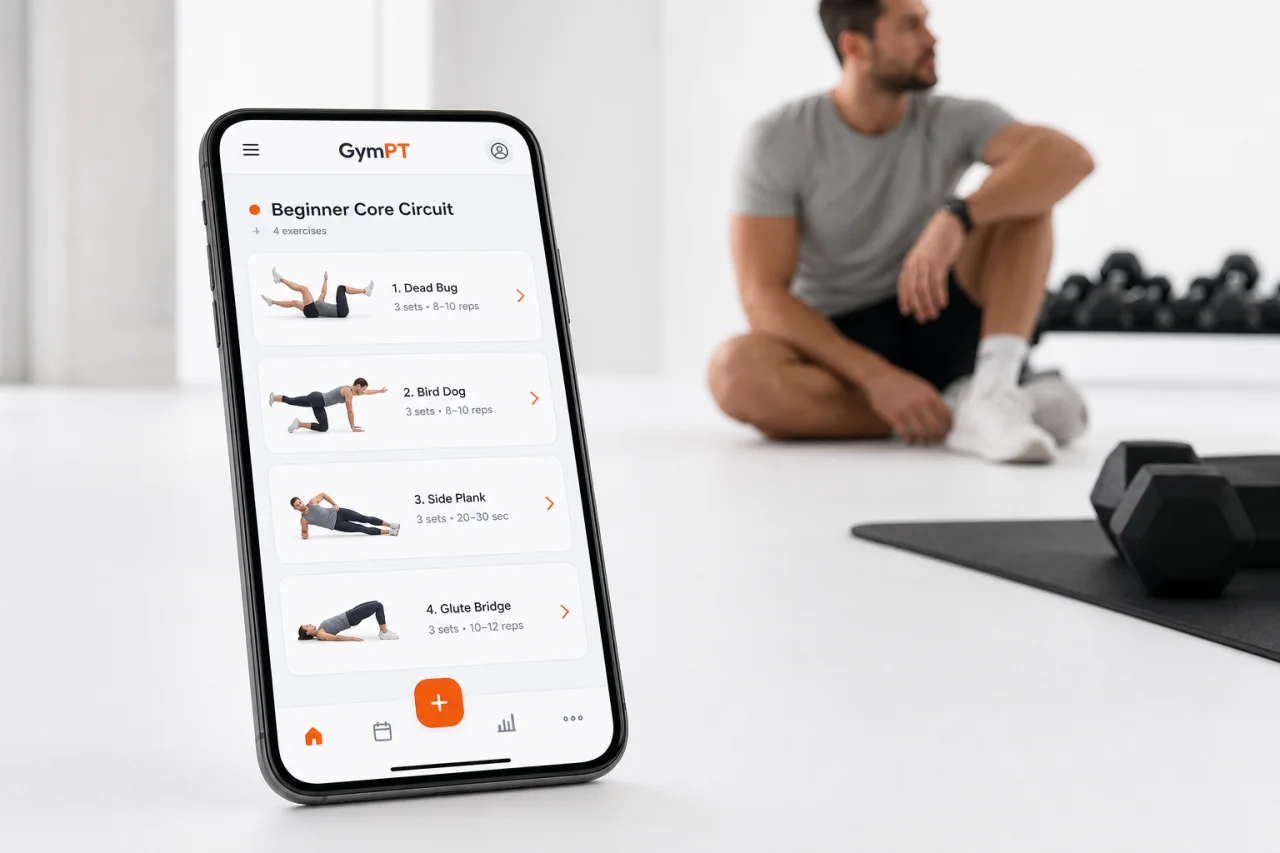
Use this as a simple starter circuit. Rest as needed between exercises. If you are new to training, do 1 to 2 rounds. If you already exercise regularly, 2 to 3 rounds is usually enough for a short core session.
1. Dead bug
Why it works: Teaches you to keep your ribs and pelvis controlled while moving your arms and legs.
- Lie on your back with knees bent and arms pointing up.
- Press your lower back gently into the floor.
- Lower one arm and the opposite leg slowly.
- Return to the start and switch sides.
Form cue: Keep your lower back from arching. Move slowly enough that you can stay in control.
Beginner alternative: Only move your legs, or only move your arms.
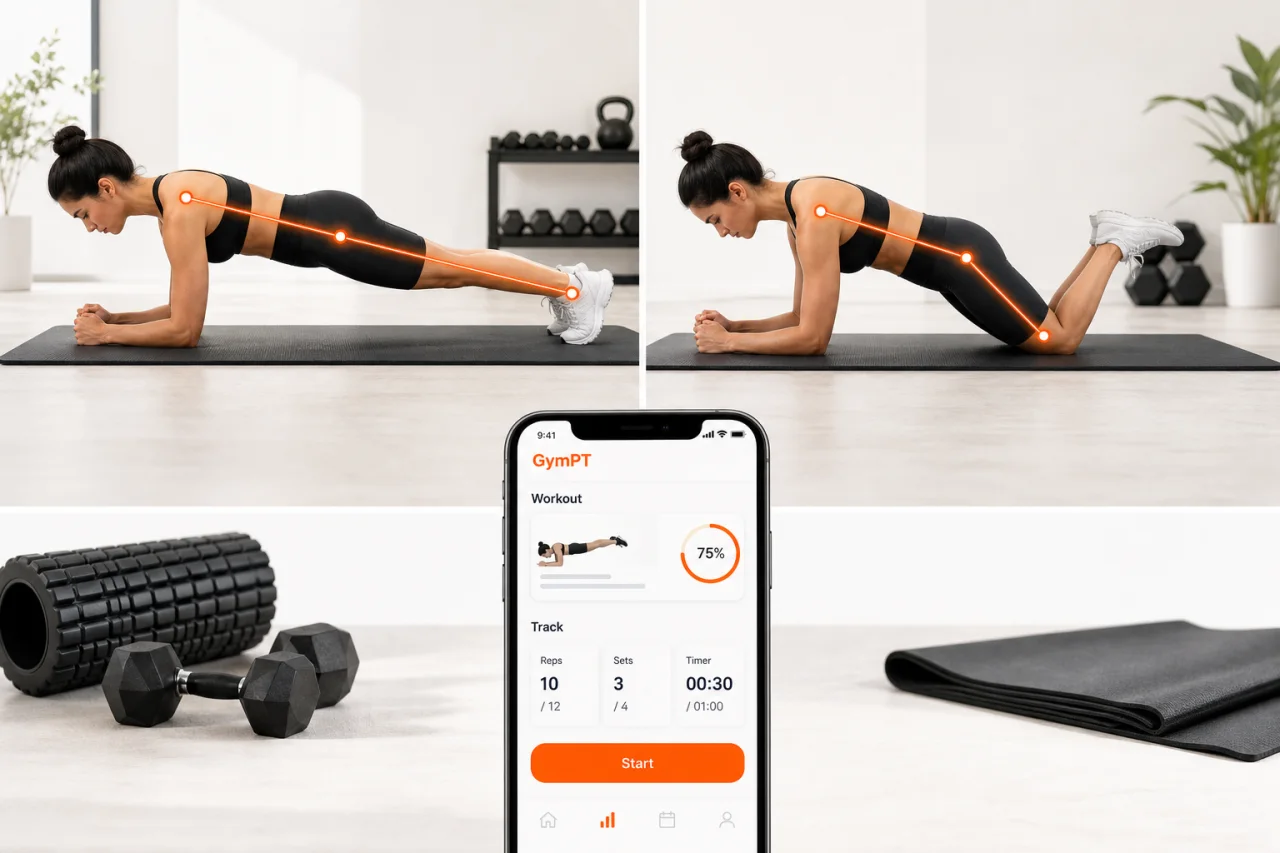
2. Forearm plank
Why it works: Builds anti-extension strength, which helps you resist sagging through the lower back.
- Set your elbows under your shoulders.
- Step your feet back and create a straight line from head to heels.
- Brace your midsection and squeeze your glutes lightly.
- Breathe steadily while holding position.
Form cue: Stop the set when your hips start dropping or your shoulders shrug forward.
Beginner alternative: Do the plank from your knees or with your hands on a bench.
3. Bird dog
Why it works: Trains balance, spinal control, and coordination.
- Start on hands and knees.
- Reach one arm forward and the opposite leg back.
- Keep your hips level and your torso still.
- Pause briefly, then return and switch sides.
Form cue: Imagine balancing a glass of water on your lower back.
Beginner alternative: Extend only the arm or only the leg.
4. Side plank
Why it works: Strengthens the side of the trunk and helps with lateral stability.
- Lie on one side and prop yourself up on your forearm.
- Stack your shoulders, hips, and ankles.
- Lift your hips and hold a straight line.
Form cue: Keep your neck long and avoid rotating your chest toward the floor.
Beginner alternative: Bend your knees and hold a shorter lever.
5. Glute bridge
Why it works: Supports core training by teaching pelvic control and helping the trunk and hips work together.
- Lie on your back with knees bent and feet flat.
- Brace your core, then drive through your heels.
- Lift your hips until your body forms a straight line from shoulders to knees.
- Lower with control.
Form cue: Do not over-arch your lower back at the top.
Beginner alternative: Hold the top position for 5 to 10 seconds instead of doing reps.
A simple core workout for beginners
Try this 10- to 15-minute routine two to three times per week. That frequency is enough for most beginners to build skill and consistency without turning core work into a recovery problem.
- Dead bug — 6 to 8 reps per side
- Forearm plank — 15 to 30 seconds
- Bird dog — 6 to 8 reps per side
- Side plank — 10 to 20 seconds per side
- Glute bridge — 8 to 12 reps
Rest 30 to 60 seconds between exercises. If your form breaks down, shorten the set. More time under tension is not better if your position is collapsing.
How to progress without rushing
Progress should be earned, not forced. A good rule is to move up only when you can complete the current version with steady breathing, clean alignment, and full control.
- Add reps first if the movement is dynamic.
- Add seconds if the movement is a hold.
- Add a second set before jumping to a harder variation.
- Then upgrade the exercise only when the easier version feels stable.
For example, if you can hold a plank for 30 seconds without sagging, try 35 to 40 seconds next time. If you can do bird dogs without shifting your hips, slow the tempo or pause longer at the top.
Common beginner mistakes to avoid
- Holding your breath: Core work should be braced, not rigid. Keep breathing.
- Chasing fatigue too early: Stop before your form falls apart.
- Doing only crunches: A balanced core routine should include anti-extension, anti-rotation, and lateral stability work.
- Letting the lower back take over: If you feel the movement mostly in your back, scale the exercise down.
- Training core every day at high effort: Beginners usually do better with a few focused sessions per week.
How to fit core training into a full program
Core work works best when it supports the rest of your training. You can add this routine after a strength session, on a light cardio day, or as a short standalone workout.
If you already train full body, add two core exercises at the end of the session. If you are just starting out, keep the core session short and repeatable. Consistency matters more than complexity.
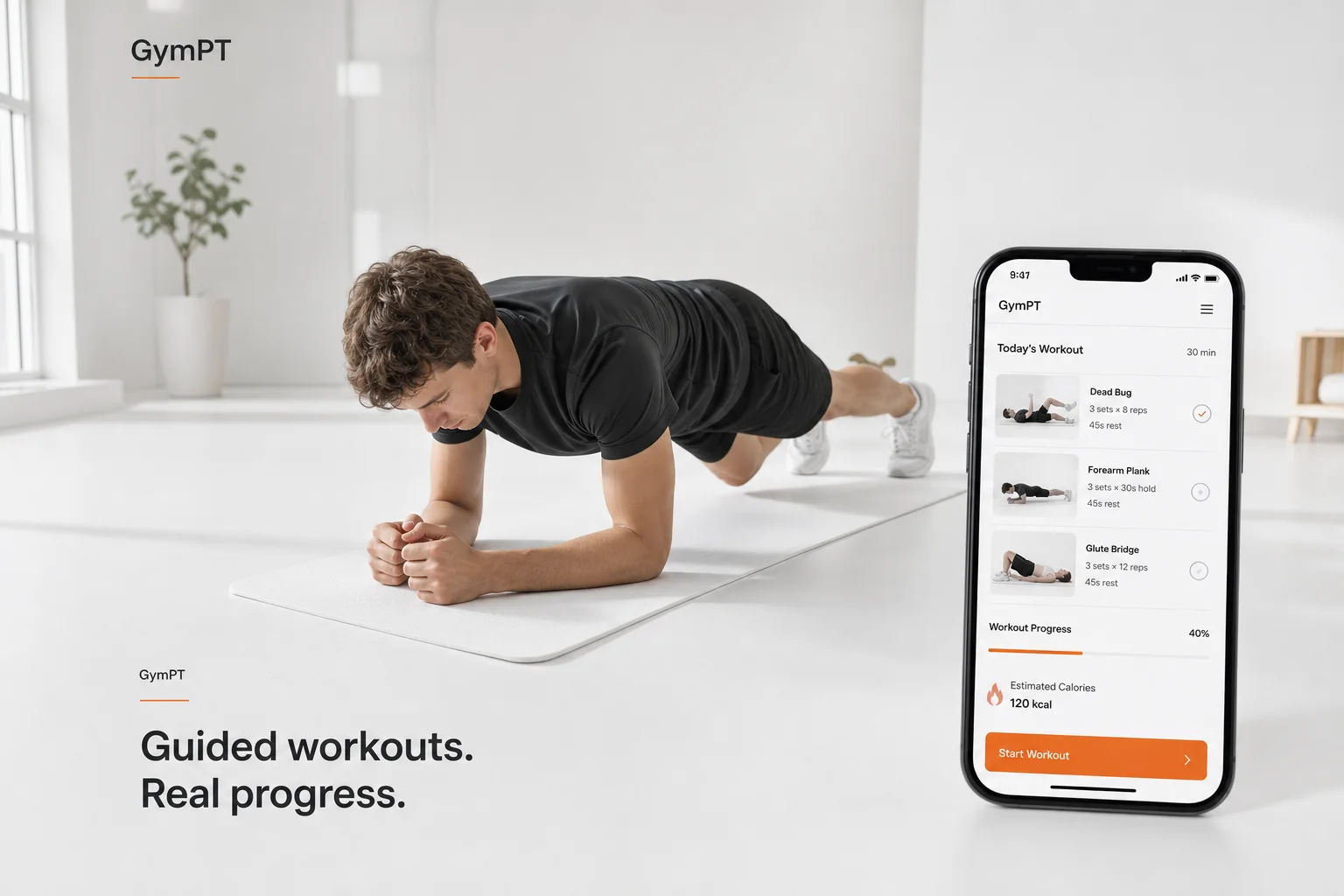
GymPT can help here by building a personalized plan around your equipment, tracking your sets and holds, and adjusting your progress as your core gets stronger. That makes it easier to stay consistent without guessing what to do next.
When a beginner core workout is working
You do not need dramatic soreness to know the routine is effective. Better signs include:
- you can hold positions with less shaking
- your breathing stays calmer during sets
- your posture feels more controlled
- you can progress reps or seconds without losing form
- your trunk feels more stable during other lifts
If you want a simple benchmark, repeat the same workout for two weeks. If the exercises feel easier while your form stays clean, you are progressing.
Sample weekly plan for beginners
Here is an easy structure you can follow:
- Monday: Core workout for beginners, 10 to 15 minutes
- Wednesday: Full-body strength or lower-body training
- Friday: Core workout for beginners, 10 to 15 minutes
- Weekend: Light walking, mobility, or recovery
This keeps core work frequent enough to improve skill, but not so frequent that recovery becomes a problem.
Final takeaway
The best core workout for beginners is simple, controlled, and repeatable. Start with dead bugs, planks, bird dogs, side planks, and glute bridges. Keep the sets short, the form strict, and the progress gradual. That is how you build real core strength that carries over into the rest of your training.
If you want help turning this into a plan that matches your schedule and equipment, GymPT can do the programming for you and keep your progress organized.