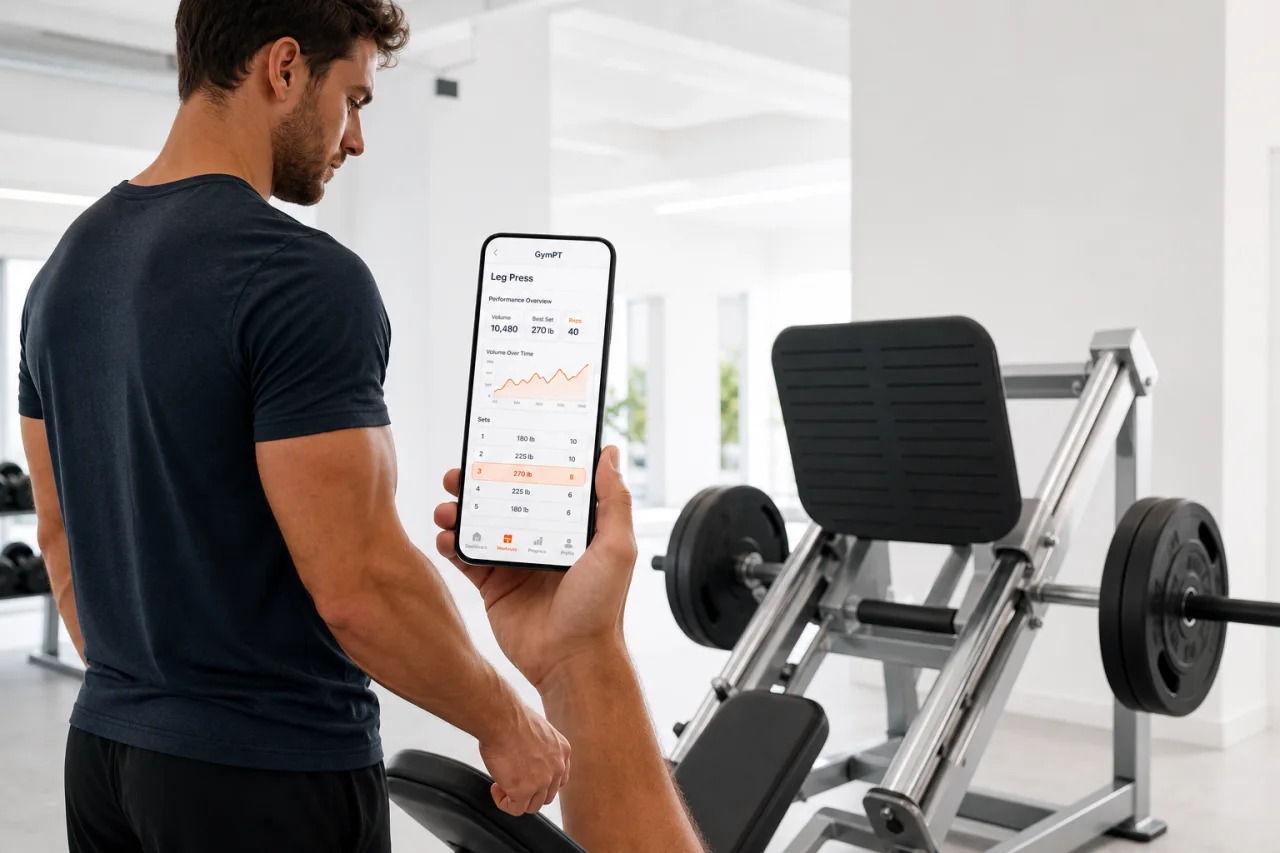
leg press mistakes
Leg Press Mistakes: 10 Form Errors That Reduce Leg Drive and Control
The leg press looks simple, but small setup errors can change the stress on your knees, hips, and lower back. Learn the most common leg press mistakes, how to fix them, and when to swap in a better alternative.
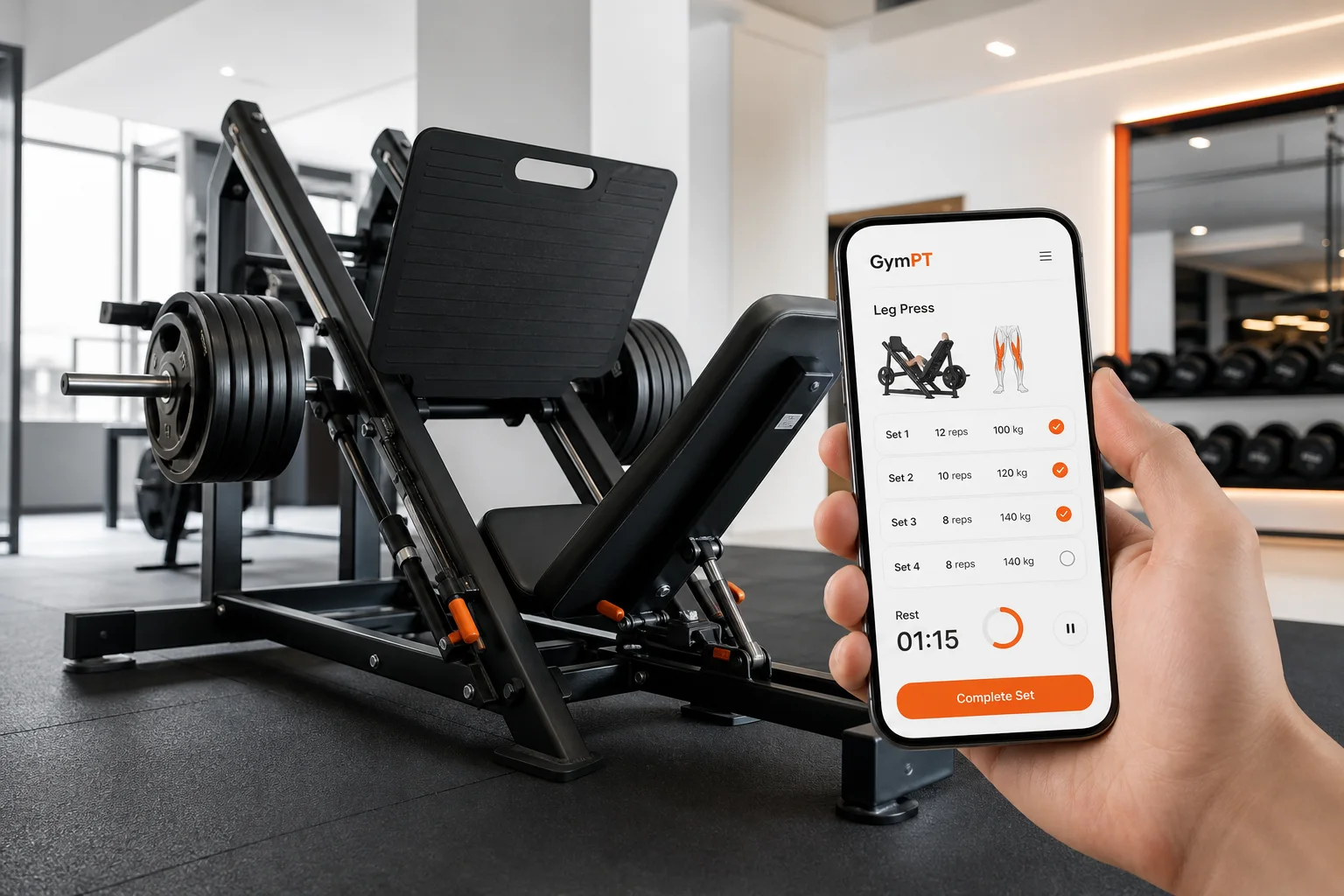
Leg press mistakes that make the exercise harder than it should be
The leg press is one of the most useful lower-body machines in the gym. It can help you train quads, glutes, and hamstrings with less balance demand than free-weight squats. But the machine only works well when your setup is right. Most leg press mistakes come from rushing the setup, using too much load, or turning a controlled strength exercise into a short-range push.
If your reps feel awkward, your knees cave in, or your lower back lifts off the pad, the issue is usually not the machine itself. It is the way you are using it. Below, you will find the most common errors, the cue to fix each one, and a few smart alternatives when the leg press is not the best choice for your goal.
1. Setting the seat too close or too far away
Machine setup comes first. If the seat is too close, your knees may collapse too deeply toward your chest before the set even starts. If it is too far away, you may lose range of motion and end up locking out early or reaching with your hips.
Fix it: Start with your feet flat on the platform and your knees bent to a comfortable depth before you unrack. You should be able to lower the sled without your pelvis curling off the pad.
2. Letting your lower back round off the pad
When the hips tuck under at the bottom, the pelvis rolls and the lower back loses support. That usually happens when the load is too heavy, the depth is too deep, or the seat is set poorly.
Fix it: Stop the descent before your lower back lifts. Think “ribs down, hips heavy, back stays glued.” A controlled range of motion is better than forcing extra depth.
3. Using too much weight too soon
Heavy weight is one of the fastest ways to turn the leg press into a partial-rep ego lift. The sled may move, but the target muscles do less work and your form usually breaks down.
Fix it: Choose a load that lets you control the lowering phase and pause briefly at the bottom without bouncing. If you cannot keep the same body position for every rep, the stack is too heavy.
4. Bouncing out of the bottom
Bouncing shortens the time your muscles are under tension and can make the movement feel jerky. It also removes the control you need to keep your knees and hips tracking well.
Fix it: Lower the sled with purpose, then drive it up smoothly. Use a one-second pause if you need to clean up your leg press form.
5. Locking the knees hard at the top
Full extension is not the same as snapping the knees back. Hard lockout shifts tension away from the muscles and can make the top of the rep feel unstable.
Fix it: Finish each rep with strong legs and straight knees, but keep a soft, controlled finish. You want tension, not a joint slam.
6. Letting the knees cave inward
Knees drifting inward is a common control problem, especially when fatigue sets in. It often shows up when the feet are too narrow, the load is too heavy, or the lifter is rushing reps.
Fix it: Press your knees in line with your toes. Imagine spreading the platform apart with your feet as you drive up. This simple cue often improves control immediately.
7. Placing the feet in the wrong spot for the goal
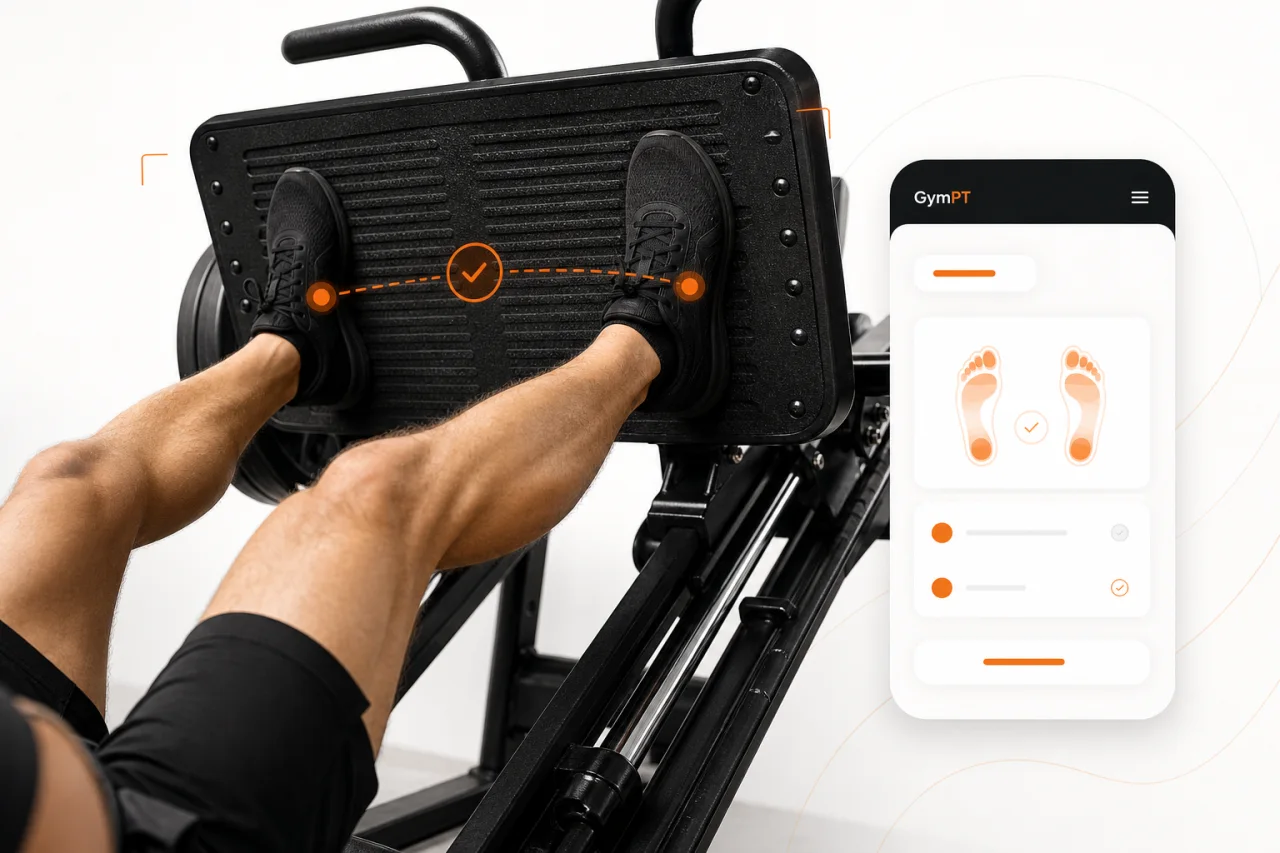
Foot placement changes the feel of the exercise. Very low foot placement can push the knees forward more aggressively. Very high placement can shift more work toward the hips and reduce knee travel. Neither is automatically wrong, but random foot placement is.
Fix it: For general leg development, start with feet about shoulder-width apart and centered on the platform. Then adjust slightly based on your goal and comfort. Small changes are better than extreme positions.
8. Lifting the heels or losing full-foot pressure
If your heels come off the platform, force leaks out of the movement and your balance gets worse. This often happens when ankle mobility is limited or the feet are placed too low.
Fix it: Keep the whole foot planted, especially the heel and midfoot. If you cannot do that, move your feet slightly higher and reduce the load.
9. Cutting the range of motion too short
Half reps can be useful in some advanced methods, but most gym-goers use them by accident. Short reps often happen when the weight is too heavy or the lifter is trying to move fast.
Fix it: Lower until you reach a deep but stable position, then press through the full range you can control. Good leg press form is about repeatable depth, not just moving the sled.
10. Forgetting that the leg press is still a training tool, not a shortcut
The leg press is excellent for building volume, especially when you want to train legs without the balance demands of squats. But it still needs progression, recovery, and variety. ACE notes that poor form, bad machine setup, and unwise progression are common gym mistakes, and NSCA programming guidance also emphasizes movement quality and appropriate exercise selection. That applies here too: the machine is only as good as the way you use it.
A simple leg press setup checklist
Use this quick checklist before your first working set:
- Seat adjusted so your hips stay down on the pad.
- Feet flat, with pressure through heel, big toe, and little toe.
- Knees track in line with toes.
- Lower back stays supported through the full rep.
- Load is light enough to control the descent.
- Top of the rep finishes strong without a hard knee lockout.
When to use a different exercise instead
Sometimes the best fix is not a cue. It is a better exercise choice. If the leg press keeps irritating your setup, try one of these alternatives:
- Goblet squat: good for learning depth, bracing, and upright torso control.
- Split squat: useful for single-leg strength and balance.
- Step-up: helpful if you want more hip and knee control with less machine dependence.
- Smith machine squat: a stable option when you want a guided lower-body pattern.
If you want to compare machine-based and free-weight leg training, read Leg Press vs Squat. If your lower-body work is part of a bigger plan, Muscle Load Tracking can help you progress without guessing. You may also find Deadlift Mistakes, Push Up Mistakes, and Pull Up Mistakes useful if you are cleaning up form across your main lifts.
How GymPT helps you fix leg press mistakes faster
Good coaching is not just about knowing the cues. It is about applying them consistently. GymPT can build a personalized lower-body plan, track your workouts, and help you adjust training based on your equipment, goals, and progress. If you are unsure whether your leg press setup is helping or holding you back, use the app to log your sets, review your progress, and keep your leg day structured.
Better reps start with better setup. Once your position is stable, the leg press becomes what it should be: a simple, effective way to train hard without unnecessary noise.