machine legs workout
Machine Legs Workout: A Smarter Way to Build Stronger Legs With Better Control
A machine legs workout can be one of the easiest ways to train your lower body with control, consistency, and clear progress. This guide shows you how to build a smart machine-based leg session, choose the right exercises, avoid common form mistakes, and scale the plan for beginners.
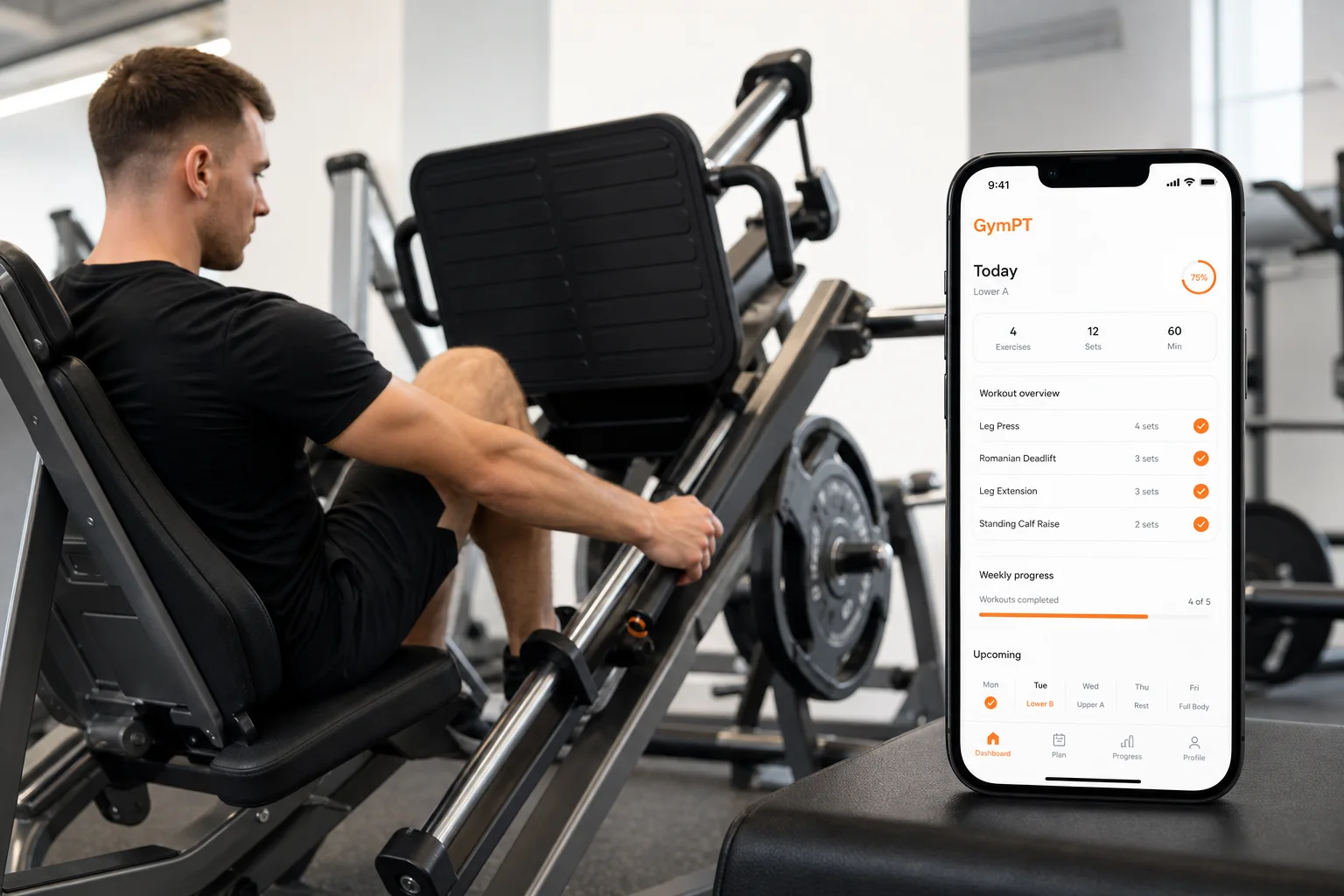
Machine Legs Workout: A Smarter Way to Train Your Lower Body
A machine legs workout is a practical way to build stronger quads, hamstrings, glutes, and calves without having to balance a barbell or guess your setup. For many lifters, machines make leg training easier to learn, easier to repeat, and easier to progress. That matters because consistency, good technique, and enough weekly volume are what drive results.
Health organizations recommend strength training at least two days per week, with work for the major muscle groups, and they commonly suggest sets in the 8 to 12 rep range for general strength and muscle development. Machines fit that goal well because they help you keep the movement stable while you focus on effort and form.
If you want a lower-body session that feels structured instead of chaotic, machine training is a strong place to start.
Why machine leg training works so well
Machine exercises reduce the skill barrier. You still need good technique, but you do not need to manage the same balance demands as free weights. That can make it easier to train close to fatigue with cleaner reps, which is useful when your goal is muscle growth or a reliable beginner routine. Mayo Clinic notes that proper form and choosing a load that tires the muscles after about 12 to 15 reps are key for effective strength training.
- More stability: less wobble, more focus on the target muscles.
- Easy progression: add a small amount of weight or reps over time.
- Beginner-friendly: simpler setup and clearer movement paths.
- Great for fatigue management: useful when you want hard leg work without a very technical lift.
That does not mean machines are “easier” in a bad way. It means they can help you train hard with less setup friction.
The best machine leg workout exercises
A balanced machine leg day should hit knee-dominant work, hip-dominant work, and some calf work. A simple structure is:
- Leg press for quads, glutes, and overall leg volume.
- Leg extension for direct quad work.
- Seated or lying leg curl for hamstrings.
- Hack squat or Smith machine squat for a more squat-like pattern.
- Hip thrust machine or glute-focused machine for glutes.
- Calf raise machine for lower-leg work.
If your gym does not have every machine, that is fine. You only need a few reliable patterns to build an effective lower-body session.
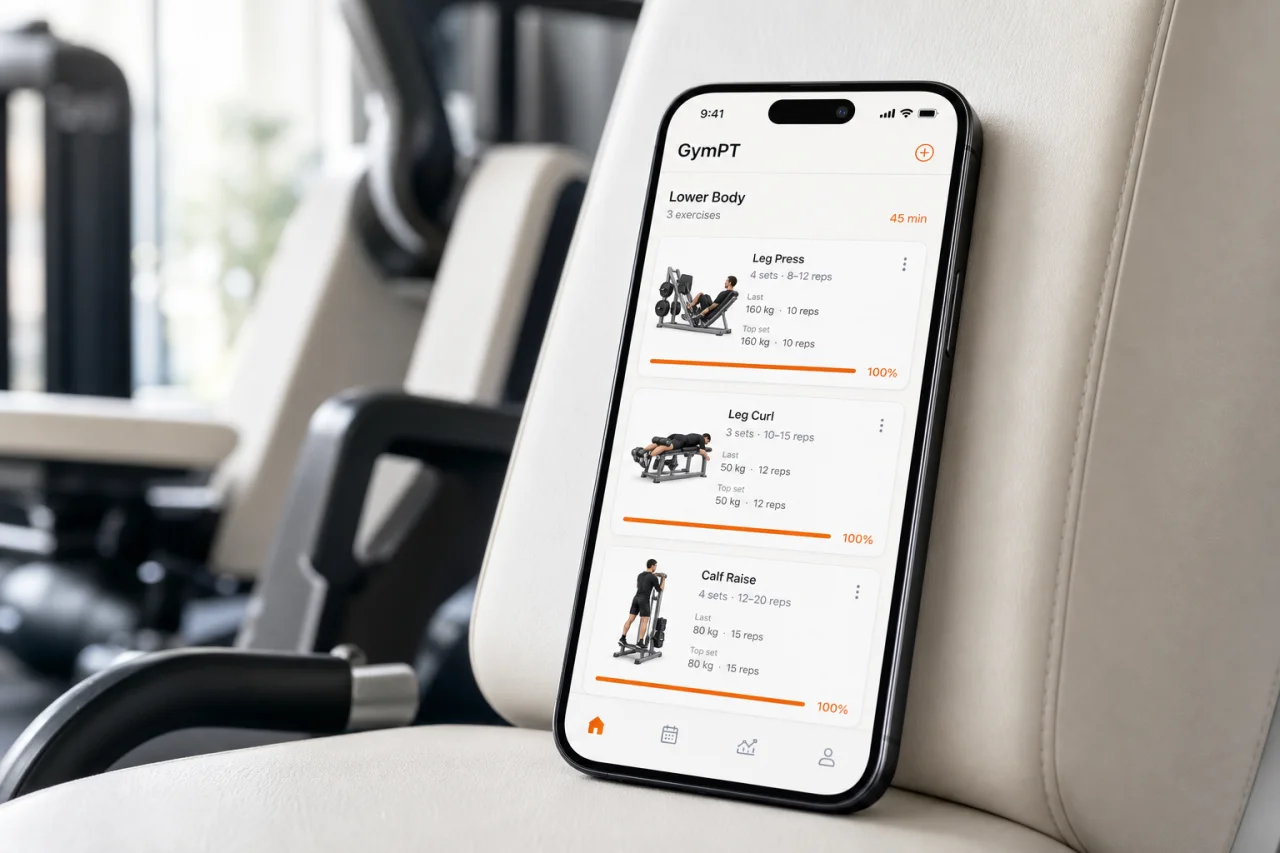
How to structure a machine legs workout
For most people, a good starting point is 4 to 6 exercises, 2 to 4 working sets each, and 8 to 15 reps per set depending on the movement. A single set can work, but multiple sets usually make it easier to accumulate enough quality volume for growth. Rest long enough to keep your form clean, especially on leg press and hack squat variations.
Sample beginner machine leg workout
- Leg press: 3 sets of 8 to 12 reps
- Seated leg curl: 3 sets of 10 to 15 reps
- Leg extension: 2 sets of 10 to 15 reps
- Hip thrust machine: 3 sets of 8 to 12 reps
- Standing or seated calf raise: 3 sets of 12 to 20 reps
That is enough to create a solid leg day without overwhelming a beginner. If you are newer to training, start with the lower end of the set range and add volume only when recovery and technique stay strong.
More advanced machine leg workout
- Hack squat: 4 sets of 6 to 10 reps
- Leg press: 3 sets of 10 to 15 reps
- Seated leg curl: 4 sets of 8 to 12 reps
- Leg extension: 3 sets of 12 to 15 reps
- Hip thrust machine: 3 sets of 8 to 12 reps
- Calf raise machine: 4 sets of 10 to 20 reps
This version gives you more total work and more chances to push close to fatigue while keeping the movement patterns organized.
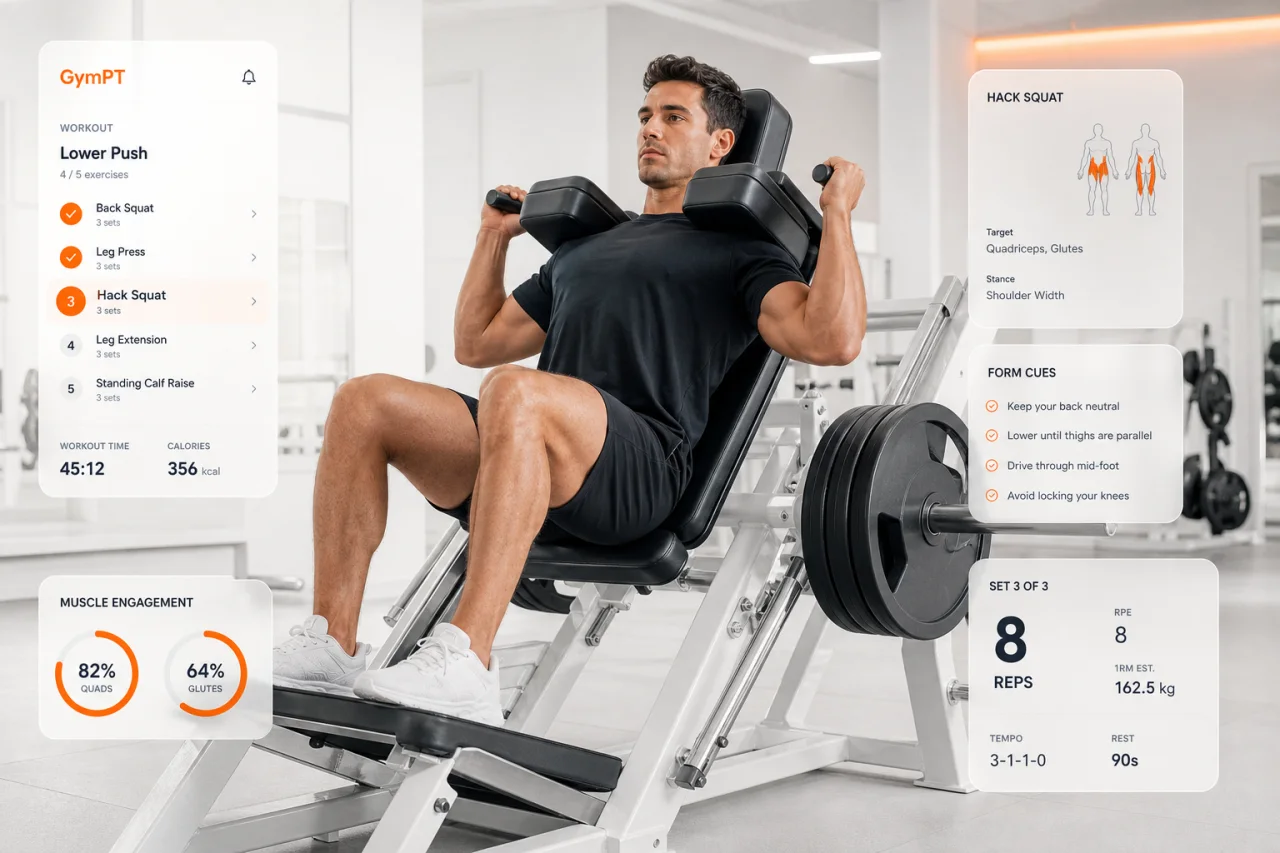
Form cues that make machine leg day better
Machines are stable, but they still reward precision. Use these cues to get more from each rep:
- Set the seat and back pad first. If the setup feels awkward, the exercise will usually feel awkward too.
- Control the lowering phase. Do not let the weight drop just because the machine guides the path.
- Use a range of motion you can own. Go as deep as you can without losing pelvic control or joint comfort.
- Keep your feet planted. On leg press and hack squat, pressure through the whole foot usually helps you stay stable.
- Stop one rep before form breaks. Hard reps are useful; sloppy reps are expensive.
For leg press specifically, avoid bouncing out of the bottom. For leg curls, keep the hips down and move through the knee joint instead of swinging the weight. For leg extensions, lift smoothly and avoid kicking the pad with momentum.
Common machine leg workout mistakes
Most bad machine leg sessions are not caused by the machine. They are caused by poor setup, rushed reps, or too much load too soon.
- Using too much weight: if you cannot control the eccentric, the set is too heavy.
- Shortening the range of motion: partial reps are fine when planned, but not as a default.
- Skipping hamstrings: a quad-only leg day is incomplete.
- Training every set to failure: that can make recovery harder than it needs to be.
- Changing the setup every session: consistency makes progress easier to track.
If you want a simple rule, keep your first working set at a weight that leaves about 1 to 3 reps in reserve, then adjust from there.
How often should you do machine leg day?
For most lifters, training legs 1 to 2 times per week works well. If you only train legs once weekly, your session may need a little more total volume. If you train legs twice weekly, you can split the work into a quad-focused day and a posterior-chain-focused day. That approach often improves recovery and makes each workout feel more focused. General strength guidance from NHS and Mayo Clinic supports training major muscle groups at least twice per week.
A simple weekly split could look like this:
- Day 1: leg press, leg extension, calf raise
- Day 2: seated leg curl, hip thrust machine, hack squat
That gives you enough variety without turning leg day into a marathon.
Beginner-friendly alternatives if machines feel intimidating
If you are new to the gym, start with machines that have a clear setup and a predictable path. The goal is not to use every machine in the room. The goal is to build confidence and repeatable technique.
- Leg press instead of barbell squat if balance is the main issue.
- Seated leg curl instead of Romanian deadlift if you want a simpler hamstring option.
- Leg extension instead of split squats if you want a more stable quad exercise.
- Calf raise machine instead of single-leg calf raises if you want easier loading.
As you get stronger, you can always add more demanding free-weight work later. Machines are not a shortcut; they are a tool.
A simple progression plan for better results
Progress does not need to be complicated. Pick a rep range, keep the same exercise setup, and try to improve one variable at a time.
- Choose a rep target: for example, 8 to 12 reps.
- Use a load that challenges you: the last reps should be hard but controlled.
- When you hit the top of the range on all sets, increase weight slightly.
- Track your sessions: note the machine, seat position, weight, reps, and how the set felt.
This is where an app like GymPT helps. You can log your machine leg workout, see your progress over time, and adjust your plan based on what you actually did instead of what you meant to do.
Sample machine leg workout you can use today
Here is a straightforward version you can try on your next leg day:
- Leg press: 3 x 10
- Seated leg curl: 3 x 12
- Leg extension: 2 x 12
- Hip thrust machine: 3 x 10
- Calf raise machine: 3 x 15
Rest 60 to 120 seconds between sets, use controlled reps, and stop each set with good technique. If you are very new, start with two sets per exercise. If you recover well, add a set next time.
Train smarter with GymPT
A machine legs workout works best when it matches your equipment, your experience level, and your recovery. GymPT can help you build that plan, adjust it when your gym setup changes, and keep your leg training organized week after week.
If you want stronger legs without guesswork, start with a simple machine plan, track your numbers, and let the data guide your next session.
Bottom line: machines can make leg training more approachable, more repeatable, and easier to progress. Use clean form, enough volume, and steady overload, and your lower-body work will add up.