full body workout with barbell
Full Body Workout With Barbell: How to Build a Smarter Plan Around One Tool
A barbell can cover your whole body if you program it well. Learn how to build a balanced full body workout with barbell, choose the right lifts, and adjust the plan with GymPT.
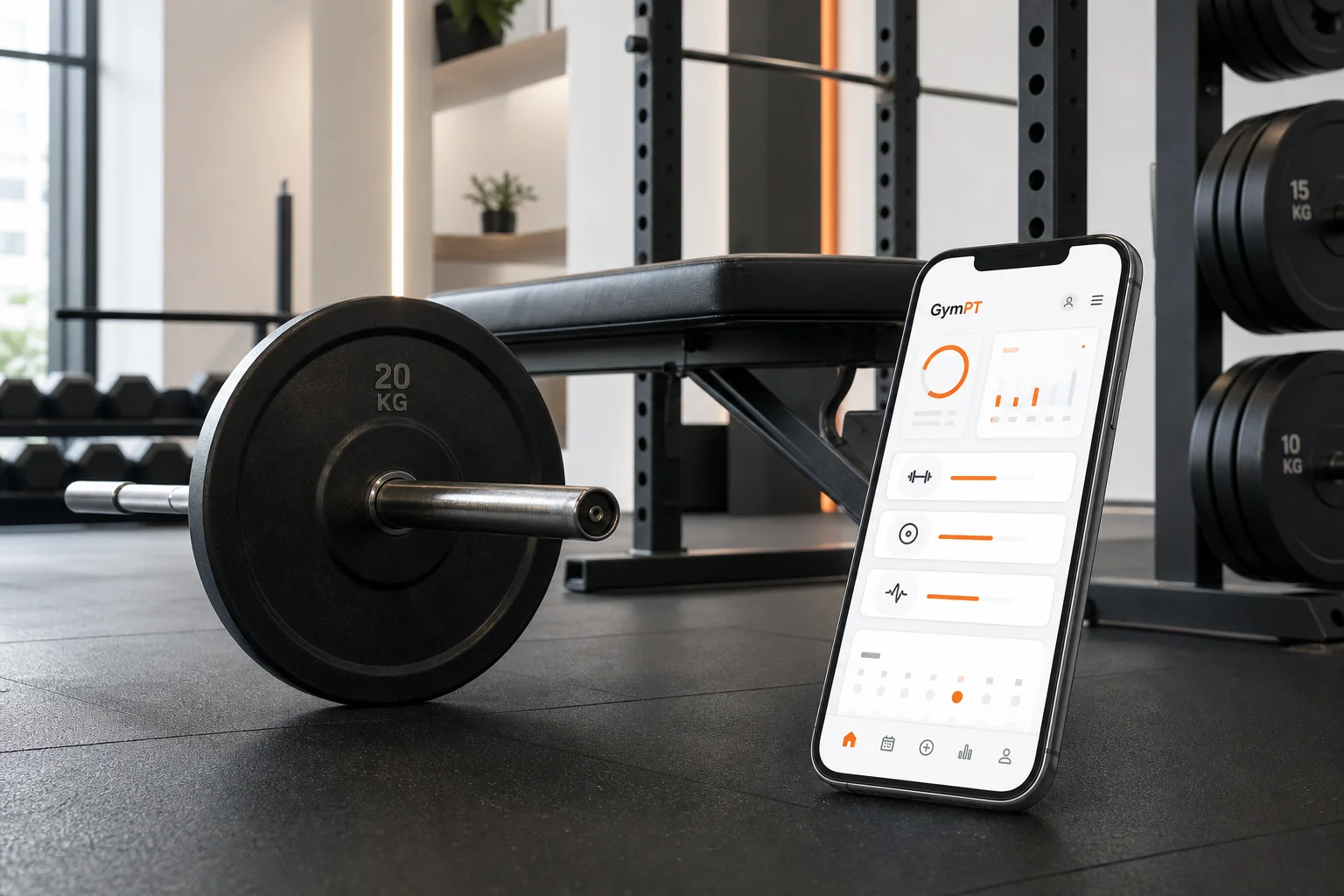
Full body workout with barbell: the simplest way to train more with less
A full body workout with barbell is one of the most efficient ways to train when you want strength, muscle, and a clear plan without juggling too many exercises. The barbell gives you a lot of training value in a small number of movements, which makes it ideal for busy lifters, home gyms, and anyone who wants a repeatable routine.
The key is not to cram every barbell lift into one session. It is to choose a few big patterns, place them in the right order, and progress them consistently. That is where GymPT helps: it can build the plan around your available equipment, training level, and recovery so the workout stays realistic instead of random.
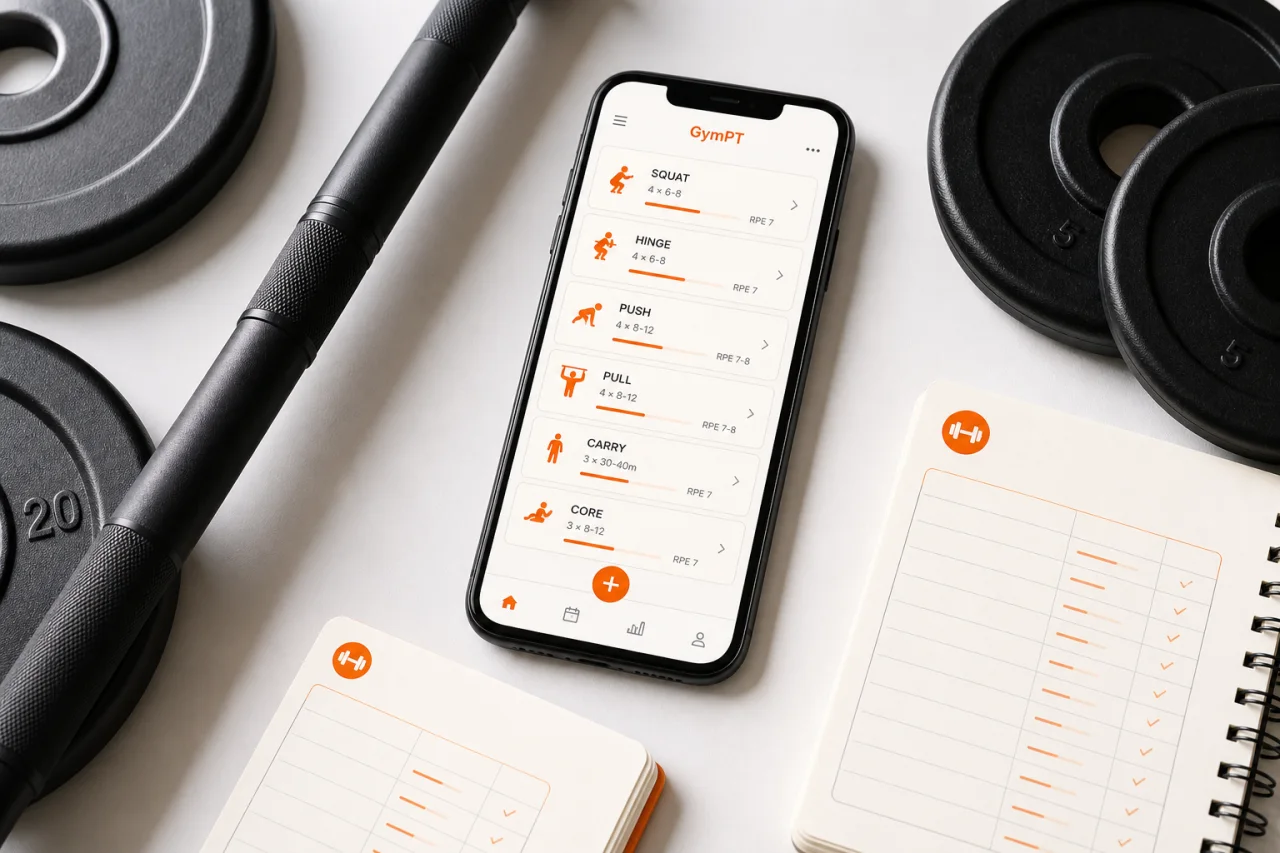
Why barbell training works so well for full body sessions
Barbell training is effective because it lets you load major movement patterns with precision. In a full body session, that usually means one squat pattern, one hinge pattern, one push, one pull, and one accessory movement if time and recovery allow. This structure matches common resistance-training guidance that emphasizes regular muscle-strengthening work and sensible weekly volume.
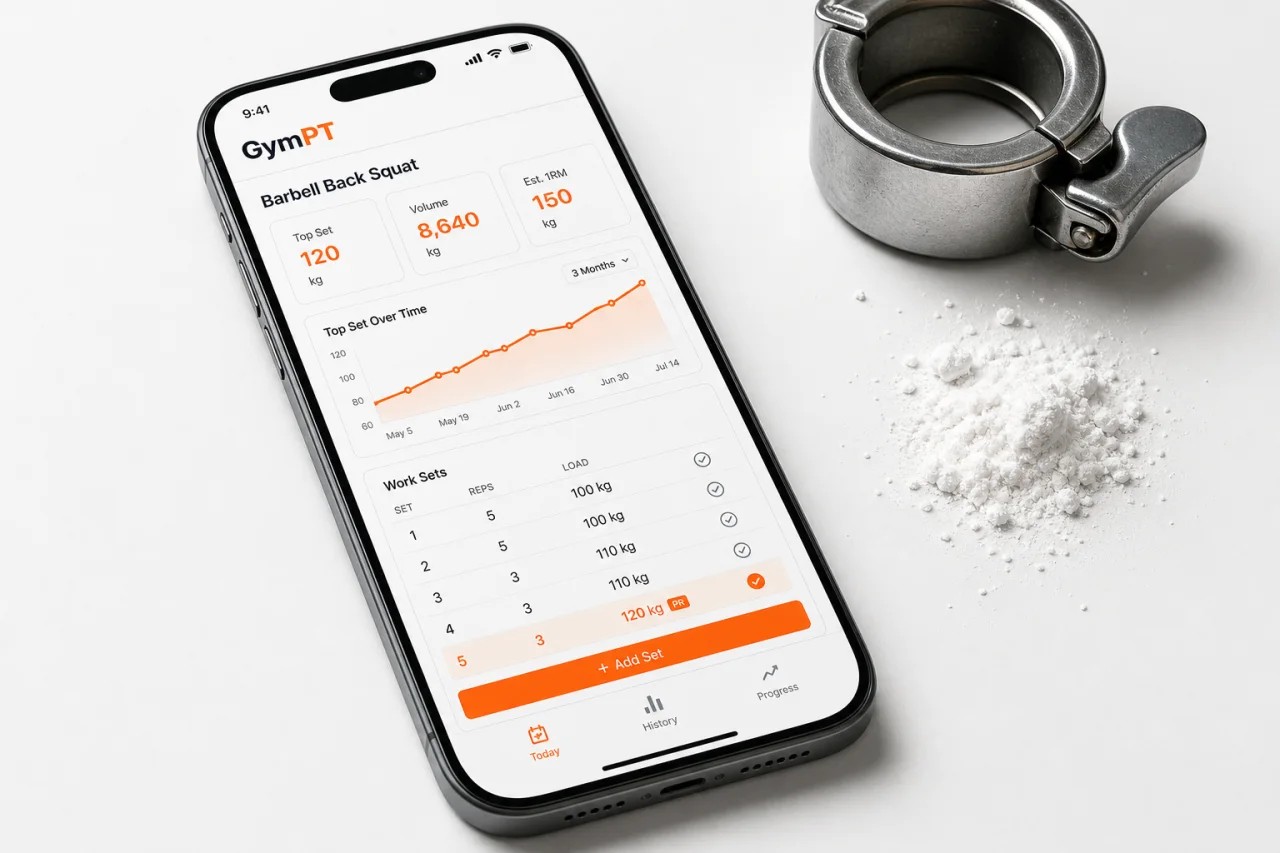
Another advantage is exercise order. Research suggests that starting with multi-joint lifts is a smart choice when strength and performance matter, because the most demanding movements usually benefit from fresh energy and better technique.
How to build a balanced barbell full body workout
Think in movement patterns, not body parts. A good barbell session usually covers these five patterns:
- Knee-dominant lower body: squat, front squat, or split squat variation
- Hip hinge: deadlift, Romanian deadlift, or good morning
- Horizontal push: bench press or floor press
- Horizontal pull: barbell row or Pendlay row
- Optional accessory: overhead press, curl, triceps work, or core
This gives you a full-body stimulus without making the workout too long. For most people, that is more sustainable than trying to do a high number of exercises in one session.
A simple exercise order that makes sense
- Main lower-body lift first
- Main upper-body press second
- Main pull third
- Secondary lower-body or upper-body lift fourth
- Accessory work last
That order keeps the most technical and demanding lifts at the front of the workout, when focus is highest.
A practical full body workout with barbell template
Use this as a starting point if you have a rack, bench, and barbell. Adjust the load so you finish each set with good form and about 1 to 3 reps left in reserve.
Workout A
- Back squat — 3 sets of 5 to 8 reps
- Bench press — 3 sets of 5 to 8 reps
- Barbell row — 3 sets of 6 to 10 reps
- Romanian deadlift — 2 sets of 8 to 10 reps
- Plank or dead bug — 2 sets
Workout B
- Deadlift — 3 sets of 3 to 5 reps
- Overhead press — 3 sets of 5 to 8 reps
- Front squat — 3 sets of 5 to 8 reps
- Barbell row or chest-supported row — 2 to 3 sets of 6 to 10 reps
- Side plank — 2 sets per side
If you train three days per week, alternate Workout A and Workout B. If you train two days per week, do A and B once each. If you train four days per week, repeat A and B with slightly lower volume per session.
How many sets and reps should you use?
For general strength and muscle-building, many lifters do well with 2 to 3 sets per exercise and moderate rep ranges, especially on compound lifts. ACSM guidance also supports resistance training with multiple sets and regular weekly frequency, while the CDC recommends muscle-strengthening activity at least two days per week for adults.
A simple rule:
- Heavy compound lifts: 3 to 5 reps
- Moderate compound lifts: 5 to 8 reps
- Accessory lifts: 8 to 12 reps
If your goal is strength, stay closer to the lower end of the rep range. If your goal is muscle gain or general fitness, spend more time in the middle range.
How to adapt the workout to the equipment you actually have
Not every barbell setup is the same. Some people have a full rack and bench. Others only have a barbell, plates, and floor space. The best plan is the one that fits your equipment and still covers the main movement patterns.
- No bench? Use floor press instead of bench press.
- No rack? Use deadlift, Romanian deadlift, front-loaded variations, or clean pulls instead of back squat.
- Limited plates? Use slower tempo, pauses, or unilateral accessories to keep the workout challenging.
- Busy schedule? Keep the session to four main lifts and one core movement.
This is exactly the kind of adjustment GymPT can make for you. You tell it what equipment you have, and it can reshape the workout so the plan stays balanced instead of forcing exercises you cannot do.
How to progress without overcomplicating it
Progression should be simple enough to repeat. A good approach is to keep the same main lifts for several weeks and add a small amount of weight or reps when the sets feel controlled. That gives you a clear signal that the plan is working.
Use this progression model:
- Hit the top of your rep range with solid form
- Add a small amount of weight next session
- If form breaks down, keep the load and improve execution first
That approach is easier to sustain than changing exercises every week. It also makes progress tracking more meaningful, because you can compare the same lifts over time.
Common mistakes to avoid
- Doing too many barbell exercises and turning the workout into a marathon
- Starting with small accessory lifts and fatiguing yourself before the main work
- Using the same rep scheme forever without any progression
- Ignoring recovery and training hard before you are ready
- Choosing exercises you cannot set up safely with your current equipment
A full body workout should feel focused, not chaotic. If your session is so long that your technique drops, the plan is probably too crowded.
How GymPT helps you turn a barbell into a real plan
GymPT is useful because it does the part many lifters skip: it turns equipment into structure. Instead of asking, “What barbell exercises should I do today?” you can ask GymPT to build a full body plan based on your goal, schedule, and available setup.
That means you can:
- Get a personalized barbell workout plan
- Adjust exercises based on rack, bench, or floor-only training
- Track your lifts and see progress over time
- Use AI coach chat to refine form, volume, and progression
- Keep the plan realistic when recovery or time changes
If you want a barbell routine that is simple, balanced, and easy to stick with, start with the movement patterns above and let GymPT handle the personalization.
Conclusion
A full body workout with barbell works best when it is built around a few strong lifts, a clear order, and steady progression. You do not need a huge exercise list to train well. You need a plan that matches your equipment, your schedule, and your recovery.
Use the template in this article as a starting point, then refine it with GymPT so the workout fits your real life.
Related reading: if you want to compare equipment-based plans, check out Dumbbell Only Workout Plan, Machines Only Workout Plan, Full Body Workout With Leg Press Machine, and Bodyweight Exercises for Beginners.