full body workout with lat pulldown machine
Full Body Workout With Lat Pulldown Machine: Build a Smarter Plan Around One Station
A lat pulldown machine can do more than train your back. Learn how to build a balanced full body workout around one station, then adapt it with GymPT.
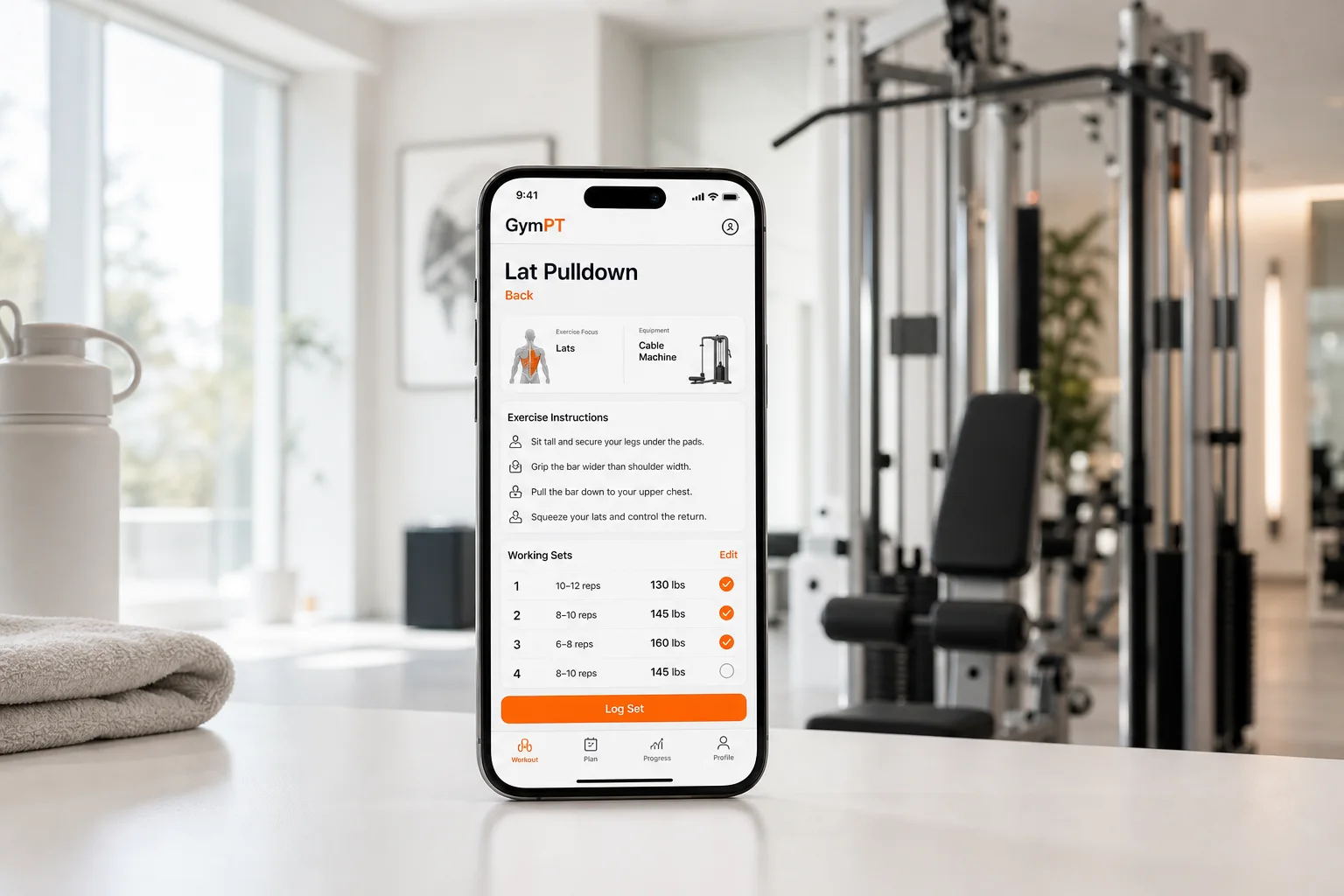
Why a full body workout with lat pulldown machine works
A full body workout with lat pulldown machine is useful when you want a simple gym session that still covers the major movement patterns. The pulldown station gives you a reliable anchor for upper-body pulling, and you can build the rest of the session around nearby equipment such as a bench, cable attachments, dumbbells, or just bodyweight moves.
The goal is not to force every exercise onto one machine. The goal is to use the machine you have, then choose complementary exercises that train your legs, chest, shoulders, core, and back in a balanced way. That approach fits the general recommendation to work all major muscle groups at least two days per week.
If you train in a busy gym, this style is also efficient: one station can cover your main pull movement, while the rest of the workout stays flexible based on what is open, available, and comfortable for you.
How to build the workout around the lat pulldown
Think in movement patterns, not just exercises. A smart full-body session usually includes:
- One pull for the back and biceps
- One squat or leg pattern for quads and glutes
- One push for chest, shoulders, or triceps
- One hinge or posterior-chain move for glutes and hamstrings
- One core exercise for trunk stability
The lat pulldown fits the pull slot perfectly. From there, you can add lower-body work and a push movement to make the session feel complete without needing a long list of machines.
Best exercise order
- Start with the lat pulldown while you are fresh.
- Move to a lower-body compound exercise such as goblet squats, split squats, or leg press if available.
- Add a push exercise like push-ups, dumbbell bench press, or cable chest press.
- Finish with a hinge and core such as Romanian deadlifts, cable pull-throughs, dead bugs, or planks.
This order helps you use the machine for a strong first lift, then spread fatigue across the rest of the body.
A practical full body workout with lat pulldown machine
Use this as a template, then adjust load and exercise selection to match your equipment and experience level.
Workout A: balanced machine-friendly session
- Lat pulldown — 3 sets of 8-12 reps
- Goblet squat or leg press — 3 sets of 8-12 reps
- Dumbbell bench press or push-ups — 3 sets of 8-12 reps
- Cable or dumbbell Romanian deadlift — 2-3 sets of 8-12 reps
- Plank or dead bug — 2-3 sets of 20-40 seconds
Workout B: lighter, faster version
- Lat pulldown — 2-3 sets of 10-15 reps
- Walking lunges or split squats — 2-3 sets of 8-10 reps per leg
- Incline push-ups or cable chest press — 2-3 sets of 8-12 reps
- Hip hinge variation — 2-3 sets of 10-12 reps
- Pallof press or side plank — 2-3 sets of 10-15 reps per side
Both versions work because they cover the big patterns. The exact exercise names matter less than the structure.
How to choose the right exercises around available equipment
If the lat pulldown machine is the only station you know you want to use, build the rest of the workout from what is nearby.
- If you have dumbbells, use them for squats, presses, hinges, and carries.
- If you have a cable stack, use it for chest press, rows, pull-throughs, face pulls, and core work.
- If you only have bodyweight space, use push-ups, split squats, glute bridges, and planks.
- If the gym is crowded, pick one exercise per movement pattern and keep rest periods short.
This is where GymPT helps. Instead of guessing what to do next, you can tell the app what equipment is available and get a plan that matches the session you can actually complete.
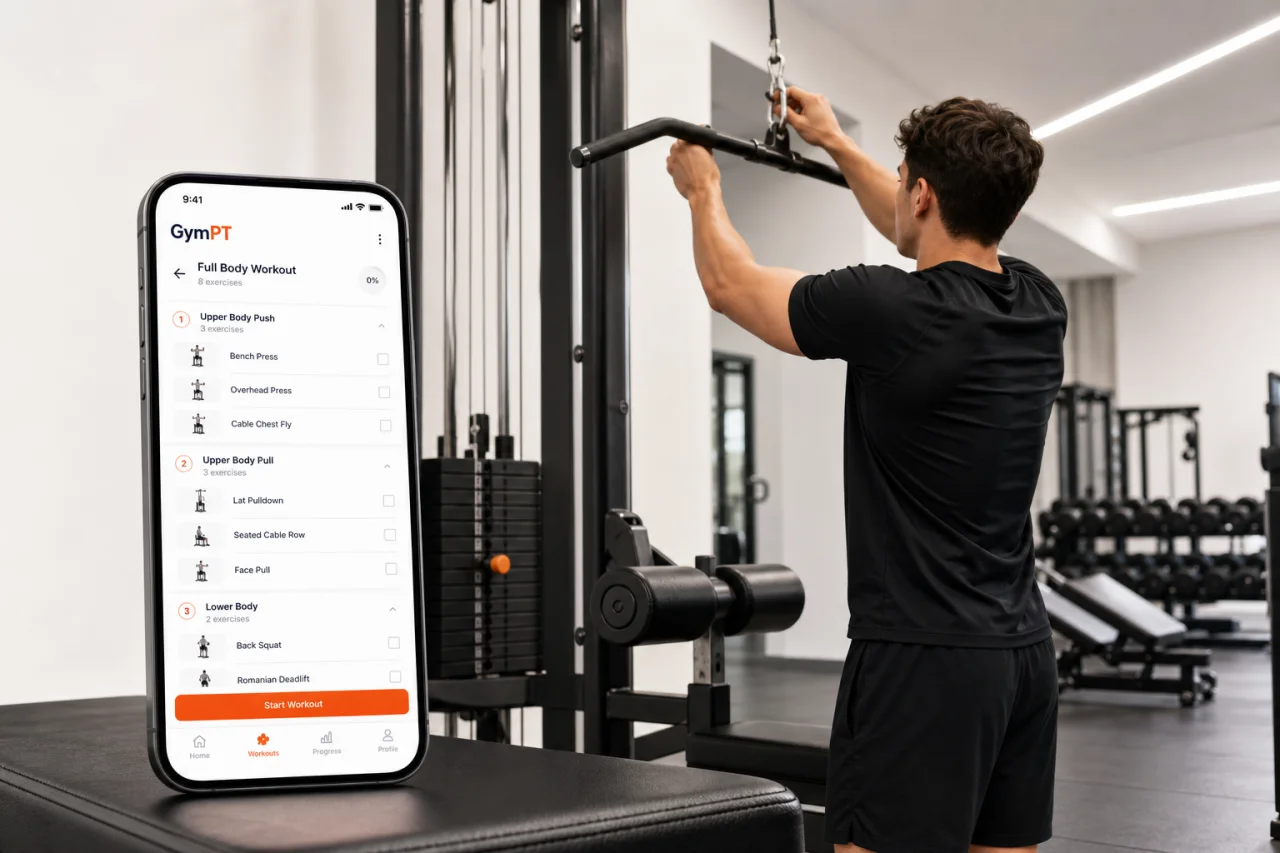
How hard should the sets feel?
For most people, muscle-strengthening work should feel challenging by the end of the set. The CDC notes that muscle-strengthening activity should be done to the point where it is hard to do another repetition without help.
A simple way to apply that idea is to stop each set with about 1-3 reps left in reserve on most exercises. That keeps the workout productive without turning every set into a max-effort test.
If you are new to training, start with fewer sets and lighter loads. If you are more experienced, add a set to your main lifts or increase the resistance gradually when the top of your rep range feels controlled.
How to progress without overcomplicating it
Progress should be easy to track. Pick one of these methods at a time:
- Add reps until you reach the top of your range, then increase weight.
- Add a set to one or two exercises if recovery is good.
- Slow the lowering phase to make lighter loads more challenging.
- Improve range of motion while keeping form stable.
For example, if your lat pulldown is 3 sets of 8-12 reps, try to move from 8, 8, 8 to 10, 9, 8 over time. Once you can hit the top end with clean form, raise the stack slightly and repeat.
Common mistakes to avoid
- Only training the pulldown and skipping legs or pushing movements.
- Using too much momentum on the pulldown instead of controlling the weight.
- Making the workout too long by adding random exercises that do not fit the plan.
- Ignoring balance between upper-body pull, upper-body push, and lower-body work.
- Changing exercises every session so progress is hard to measure.
A better approach is to keep the structure stable for a few weeks and only adjust one variable at a time.
How GymPT adapts this workout for you
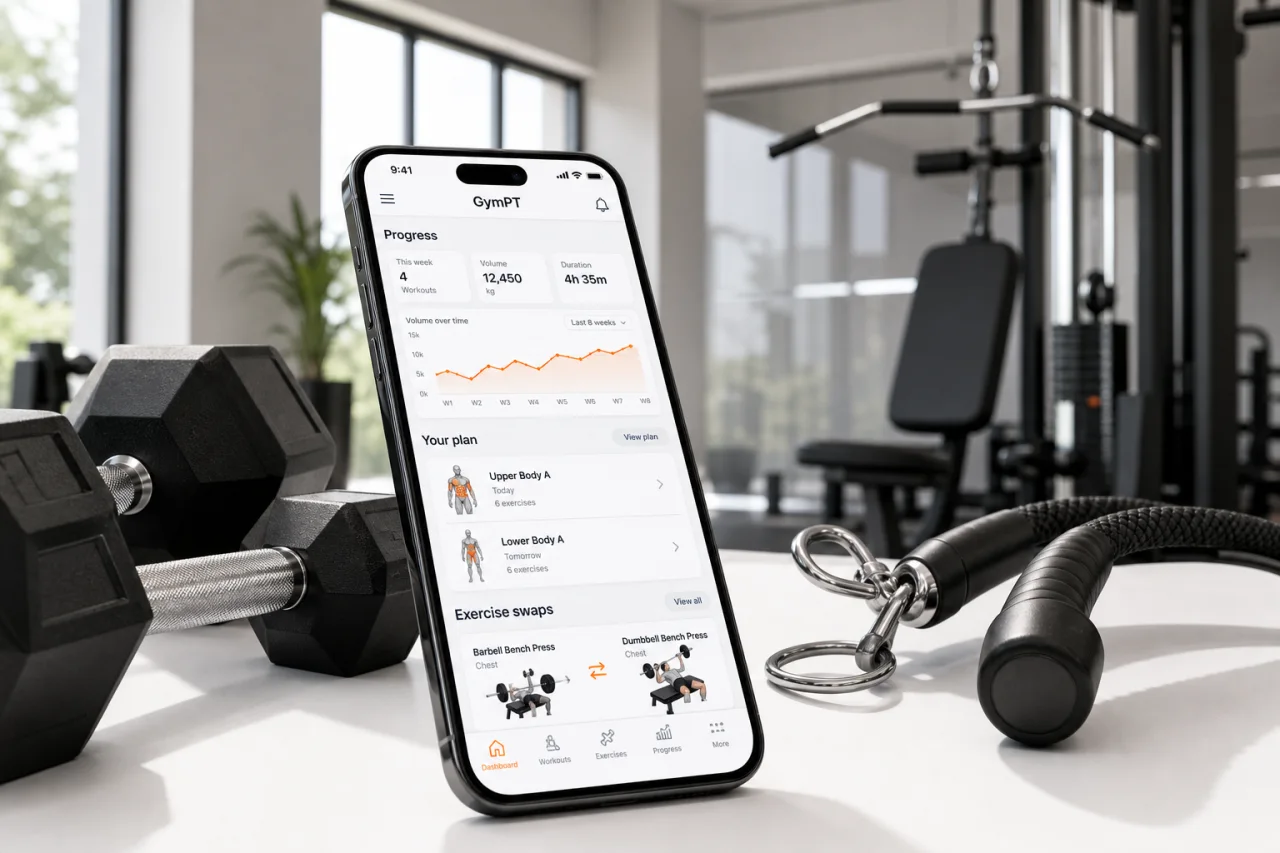
GymPT is built for exactly this kind of situation: you know the equipment, but you want the plan to make sense. With GymPT, you can:
- Build a workout around the lat pulldown machine and the rest of your available gear
- Swap exercises automatically when equipment is busy or missing
- Track sets, reps, and progress so you can see what is improving
- Use AI coach chat to ask what to do next in the session
- Adjust training based on your body analysis and goals
That means less guessing and more consistent training. You still make the effort; GymPT helps make the plan smarter.
Sample weekly structure
If you want to use this workout more than once per week, keep the exercise pattern similar and change the emphasis slightly.
- Day 1: heavier lat pulldown, squat, press, hinge, core
- Day 2: lighter lat pulldown, split squat, incline push-up, glute bridge, anti-rotation core
This gives you enough variety to stay fresh while still practicing the same core movements often enough to improve.
Final takeaway
A full body workout with lat pulldown machine works best when you treat the machine as the anchor, not the whole plan. Pair it with one lower-body move, one push, one hinge, and one core exercise, then progress gradually. That gives you a simple, balanced session that fits real gym conditions and supports steady strength gains.
If you want a plan that adapts to your equipment automatically, GymPT can build it for you.