equipment based fitness program
Equipment Based Fitness Program: How to Build a Smarter Plan Around the Gear You Have
The best training plan is not the one with the fanciest equipment. It is the one that matches what you actually have, what you can do well, and what you can repeat week after week. Here is how to build an equipment based fitness program that stays effective in a home gym, commercial gym, or anywhere in between.
Equipment Based Fitness Program: Start With the Tools, Not the Template
An effective equipment based fitness program starts with a simple question: what can you train consistently with the equipment you actually have? That matters because the best plan is the one you can repeat. If your setup is a full gym, a small home corner, or just a pair of dumbbells, the goal is the same: cover all major movement patterns, train hard enough to progress, and keep the plan realistic enough to follow every week.
Public health guidance recommends that adults do muscle-strengthening work at least two days per week and include all major muscle groups. That gives you a strong baseline for building a plan around available equipment instead of forcing a generic routine that does not fit your space or tools.
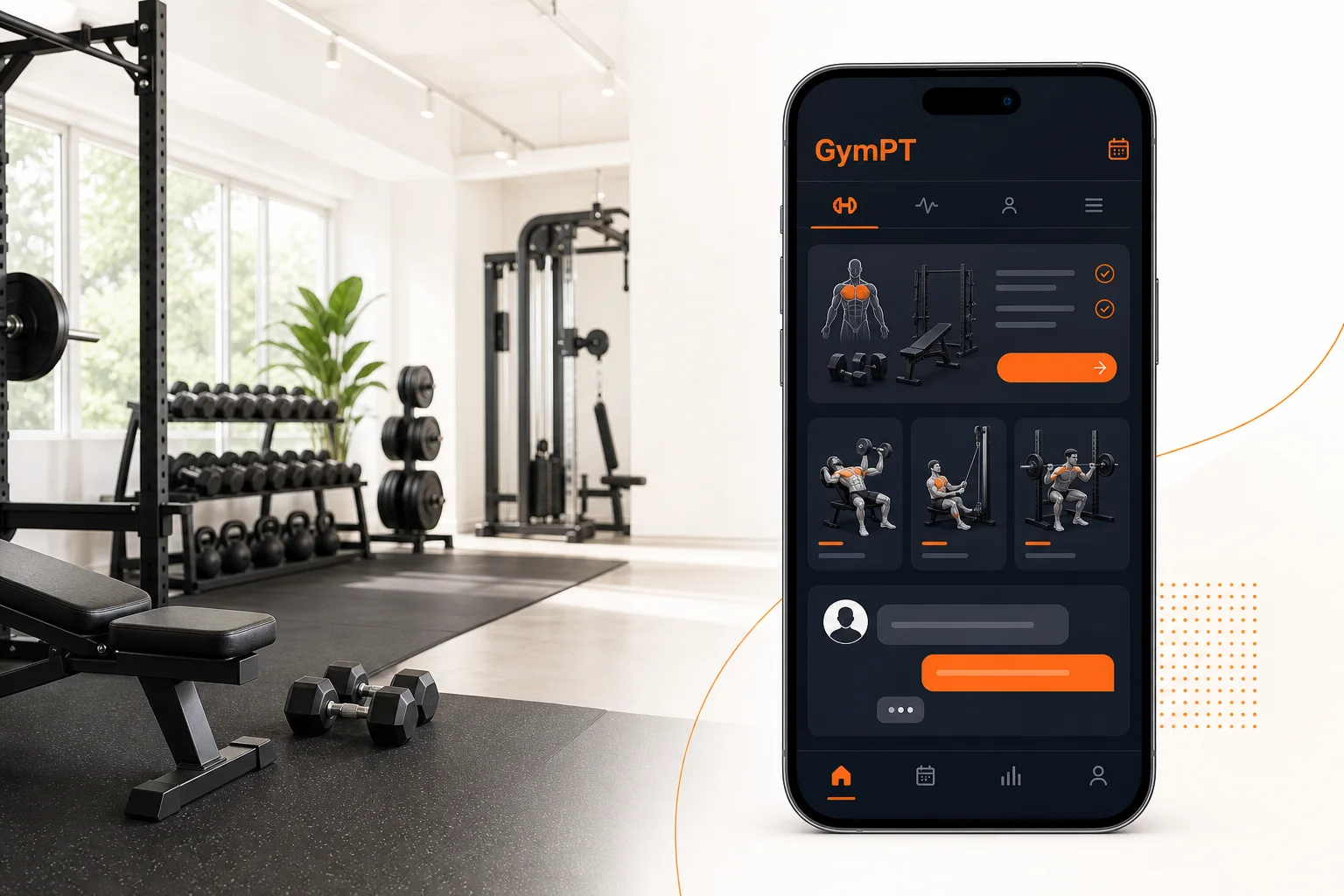
GymPT helps with that by turning your equipment list into a plan you can actually use. Instead of guessing which exercises “should” work, you can build around what is available, track your sessions, and adjust as your strength improves.
What Makes an Equipment Based Fitness Program Work
A good program is not defined by the machine, dumbbell, or band. It is defined by whether it covers the main movement patterns your body needs:
- Squat pattern for quads and glutes
- Hinge pattern for hamstrings, glutes, and lower back
- Push pattern for chest, shoulders, and triceps
- Pull pattern for back and biceps
- Core work for trunk stability and control
If your equipment can support those patterns, you can build a complete plan. If it cannot, you can usually substitute another tool or movement that trains the same pattern. That is the real advantage of equipment-based training: it is adaptable without becoming random.
Choose Exercises by Function, Not by Popularity
Many people start with the exercise they saw online, then try to force it into their setup. A better approach is to ask what the exercise does. For example, if you need a horizontal push and you only have dumbbells, a dumbbell bench press or floor press may fit better than a barbell bench press. If you need a pull and only have bands, a band row or band lat pulldown can still train the back effectively.
This is where a gym workout plan becomes more useful when it is built around equipment. The plan stops being a list of random exercises and becomes a system for solving movement needs with the tools you have.
How to Build Your Plan Around the Equipment You Have
Use this simple process to create a practical home gym workout or gym-based routine.
- List your equipment. Write down everything you can use: dumbbells, barbell, cable machine, resistance bands, bench, pull-up bar, leg press, or just bodyweight.
- Match each movement pattern. Pick at least one exercise for squat, hinge, push, pull, and core.
- Choose the easiest progression path. If you can add weight, great. If not, use more reps, slower tempo, longer pauses, or harder variations.
- Set a weekly structure. Most people do well with 2 to 4 strength sessions per week, depending on recovery and schedule.
- Track what changes. Record reps, load, sets, and how hard the work felt so you can progress on purpose.
That last step is important. Without tracking, it is easy to repeat the same workout forever. With tracking, you can see whether your equipment based fitness program is actually getting stronger.
Best Equipment Choices for Different Training Setups
Different tools create different strengths. The right choice depends on your space, your experience, and how much variety you want.
If You Have Dumbbells
Dumbbells are one of the most flexible options for a gym workout plan. They work well for presses, rows, squats, lunges, Romanian deadlifts, and shoulder work. They are especially useful if you want a simple full-body plan with minimal setup.
Best use: balanced training, home gyms, and beginners who want easy exercise swaps.
If You Have a Barbell
A barbell is ideal when you want to load major lifts efficiently. It is especially useful for squats, deadlifts, presses, and rows. If your goal is to build a more structured strength plan, a barbell can make progression very clear.
Best use: lower-body strength, progressive overload, and compound lifts.
If You Have Machines
Machines are helpful when you want stable movement, easy setup, and consistent resistance. They can be especially useful for beginners or for training close to failure with less balance demand. A machine-based plan can still be highly effective if it covers all major patterns and progresses over time.
Best use: controlled training, safer-feeling sessions, and efficient workouts.
If You Have Resistance Bands
Bands are light, portable, and surprisingly versatile. They are useful for rows, presses, squats, glute work, and warm-ups. They are also a strong option when you need a home gym workout that fits in a small space.
Best use: travel, small spaces, warm-ups, and accessory work.
If You Only Have Bodyweight
Bodyweight training can still be structured and challenging. Push-ups, split squats, glute bridges, planks, and inverted rows can create a solid base. The key is to progress intelligently by changing leverage, tempo, range of motion, or rep targets.
Best use: beginner training, travel, and low-equipment consistency.
How to Progress When Equipment Is Limited
One common mistake in an equipment based fitness program is assuming progress only means adding more weight. That is useful, but it is not the only lever you can pull.
- Add reps while keeping form solid
- Add sets if recovery is still good
- Slow the tempo to increase time under tension
- Use pauses at the hardest point of the lift
- Increase range of motion when safe and controlled
- Choose harder variations when the current version becomes too easy
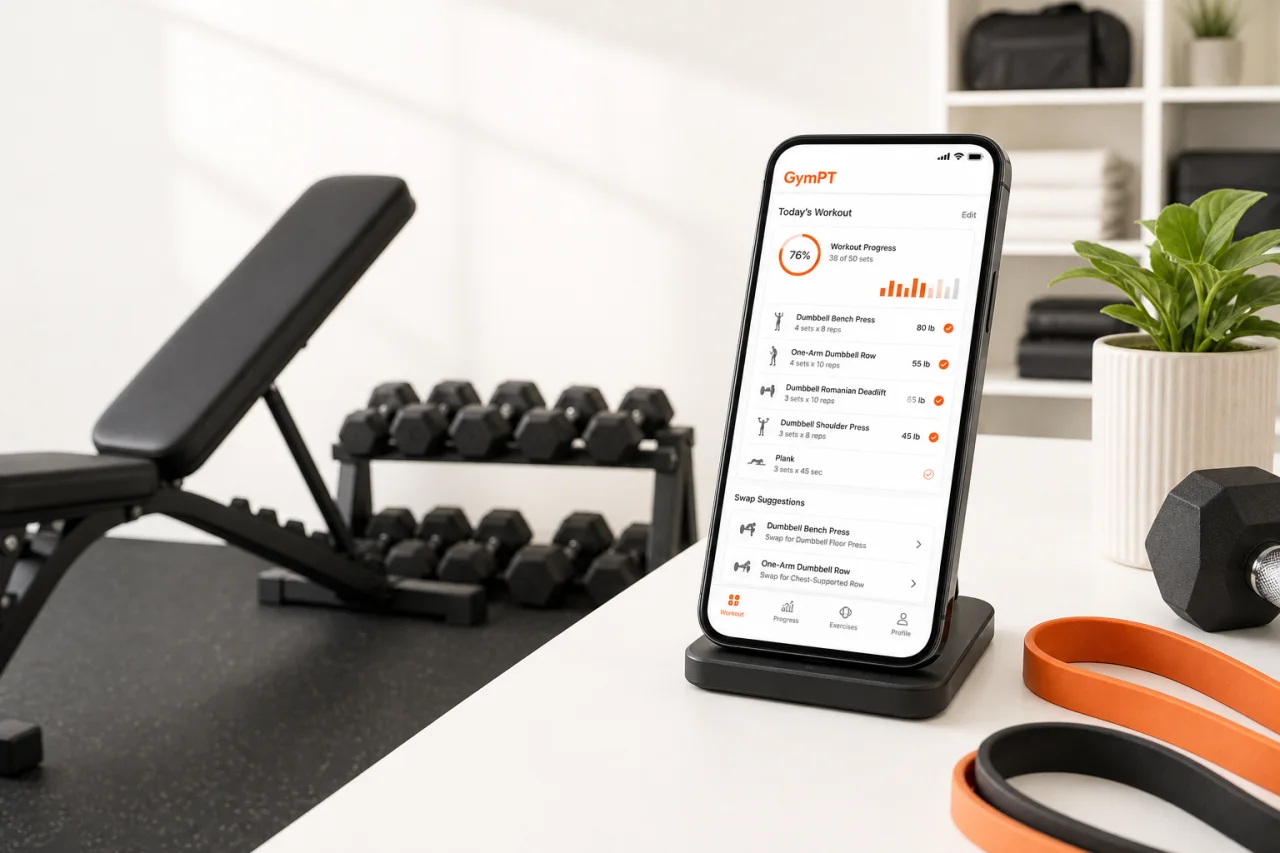
For example, if you only have light dumbbells, a split squat may challenge you more than a regular squat. If you only have bands, a single-arm row may give you a better training stimulus than a two-arm row. GymPT can help you adjust these choices automatically based on your equipment and your logged performance.
Sample Weekly Structure You Can Adapt
Here is a simple framework you can use for most setups:
- Day 1: Lower body + push + core
- Day 2: Pull + hinge + core
- Day 3: Full body with lighter accessories
- Day 4: Optional conditioning, mobility, or weak-point work
This structure works because it keeps the plan flexible. You can swap a barbell squat for a goblet squat, a cable row for a band row, or a machine chest press for dumbbell pressing without changing the overall logic of the program.
That flexibility is also why equipment-based training is easier to sustain than a rigid plan. If your schedule changes or your gym is crowded, you still have options.
How GymPT Makes Equipment Based Training Easier
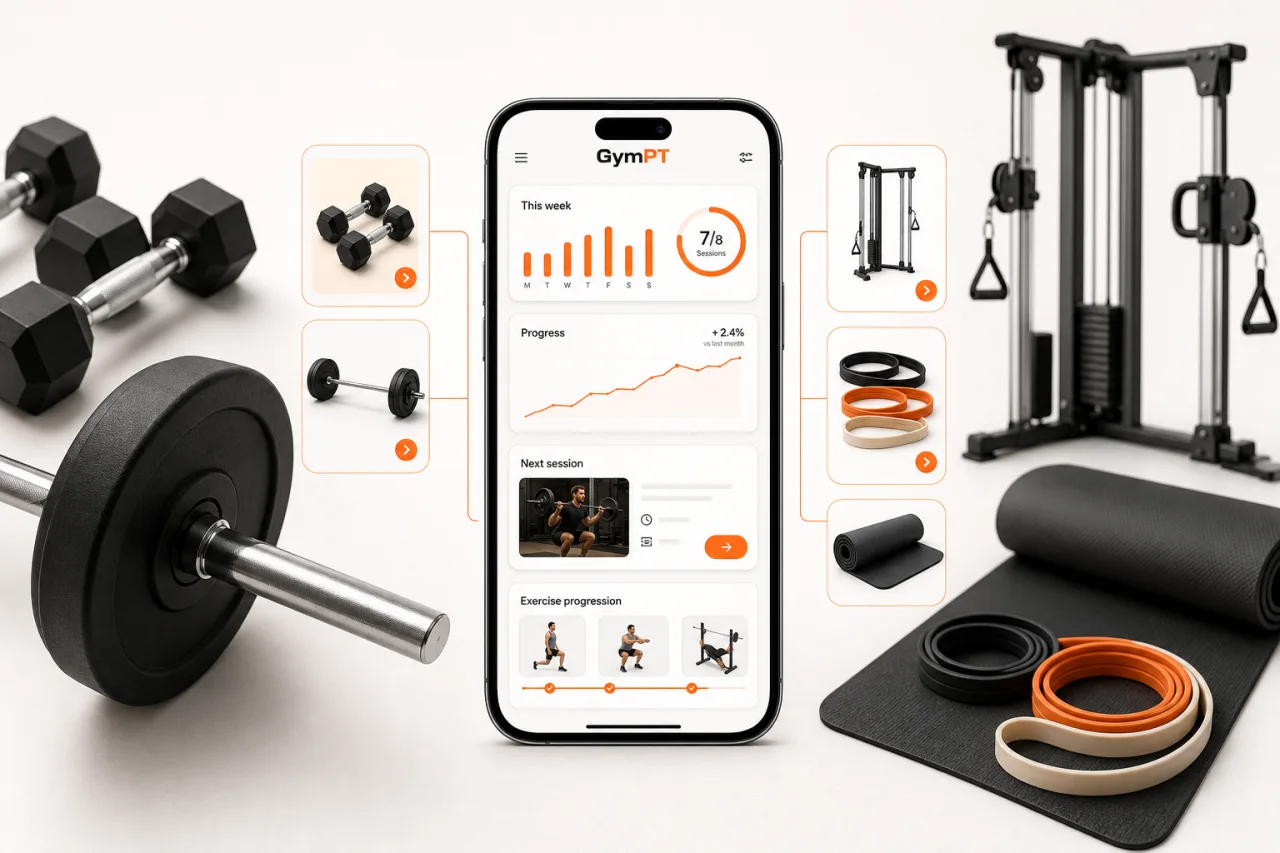
GymPT is built for people who want a plan that matches reality. You can enter the equipment you have, get a personalized workout plan, and then refine it as your training changes. That means you are not stuck with a generic routine that ignores your setup.
With GymPT, you can:
- build a plan around your available equipment
- ask the AI coach chat for exercise swaps and form help
- track workouts and see what you actually completed
- review progress insights to spot trends over time
- adjust training when your equipment, schedule, or goals change
That combination is useful because consistency usually beats complexity. A plan you can follow for months is better than a perfect plan you abandon in two weeks.
Common Mistakes to Avoid
Even a good equipment based fitness program can fail if the setup is wrong. Watch out for these mistakes:
- Using too many exercises and making each workout too long
- Ignoring progression and repeating the same weights forever
- Choosing exercises you cannot perform well with your current equipment
- Skipping pull and hinge work while overemphasizing pressing
- Changing the plan too often before you have enough data to judge it
Remember: the goal is not to use every piece of equipment. The goal is to use the right equipment in a repeatable way.
Final Takeaway
The best equipment based fitness program is the one that fits your real life. Start with the tools you have, cover the major movement patterns, track your work, and progress in small steps. Whether you train in a full gym or a small home setup, the right plan is the one you can keep doing.
If you want help turning your equipment list into a practical routine, GymPT can build the plan, adapt the exercises, and keep your training moving forward.