bodyweight exercises for beginners
Bodyweight Exercises for Beginners: How to Build a Smart Plan With the Equipment You Have
A beginner-friendly guide to bodyweight exercises that shows you how to choose movements, scale difficulty, and build a balanced plan around the equipment you actually have.
Bodyweight exercises for beginners: start with the right movements
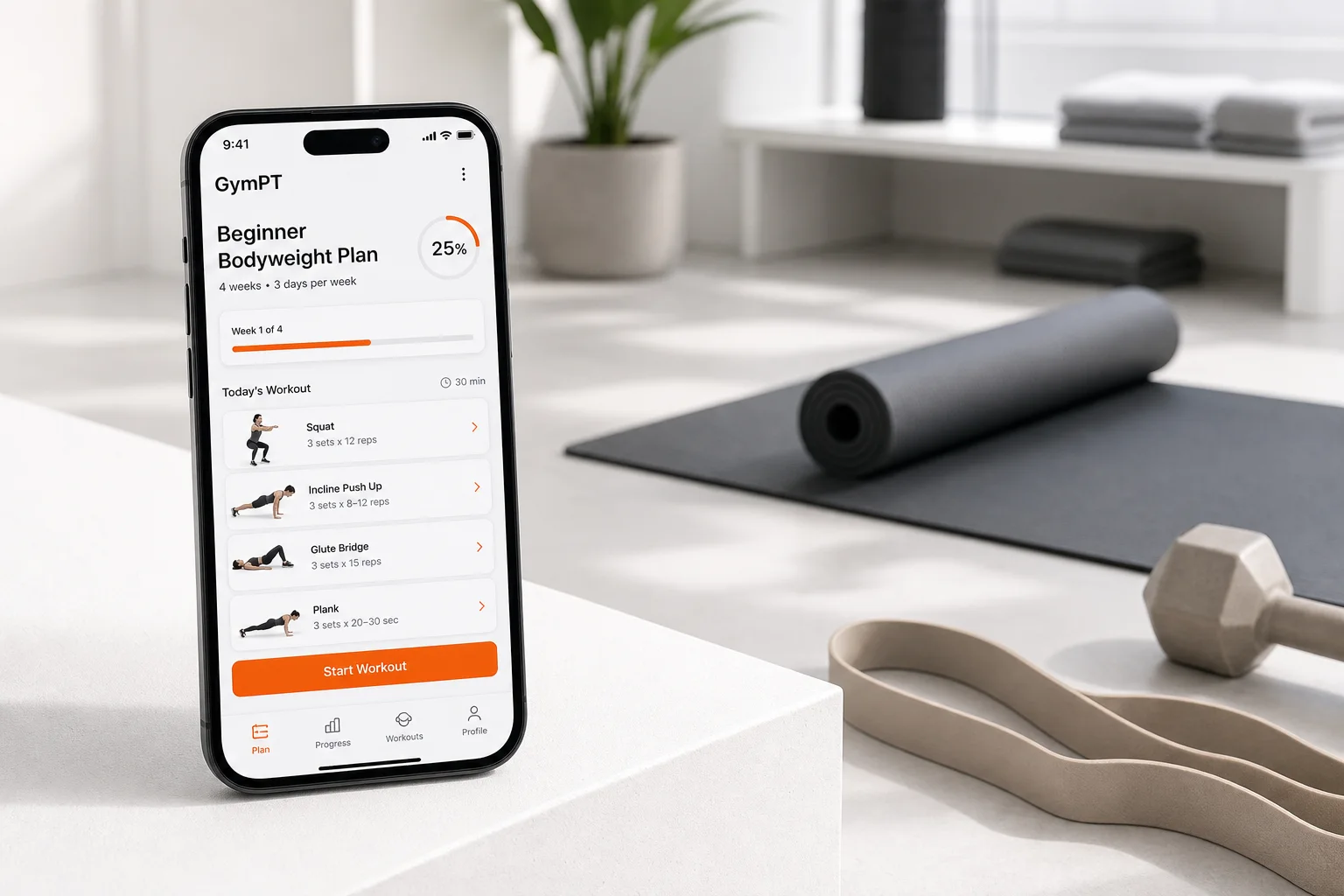
If you are looking for bodyweight exercises for beginners, the goal is not to do the hardest moves first. The goal is to build a simple routine you can repeat, recover from, and progress over time. Bodyweight training works well because it can be adapted to your space, your schedule, and the equipment you already have.
That flexibility matters. Public health guidance recommends regular muscle-strengthening activity for adults, and current fitness guidance also supports bodyweight training as a valid way to build strength at home or in the gym. The best beginner plan is the one that matches your current level and is easy to keep doing.
How to choose the right bodyweight exercises
Start with movement patterns, not random exercises. A balanced beginner plan should cover:
- Squat pattern: sit-to-stand, air squat, box squat
- Hinge pattern: glute bridge, hip hinge drill, single-leg hinge support
- Push pattern: wall push-up, incline push-up, knee push-up
- Pull pattern: row variation if you have a bar, rings, or band; if not, use isometric back work and scapular control drills
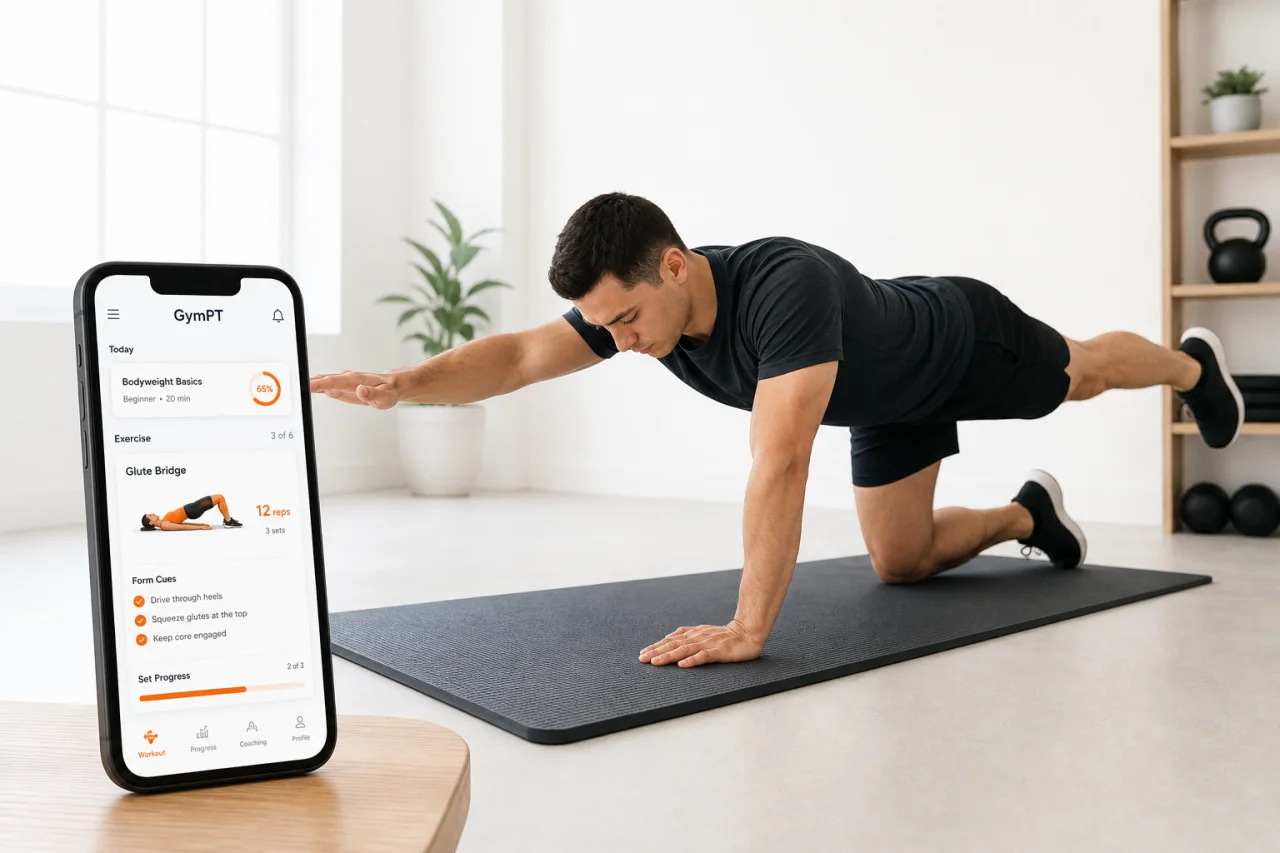
- Core pattern: dead bug, plank, side plank, bird dog
This approach keeps your training balanced instead of overloading only chest, legs, or abs. It also makes it easier to swap exercises based on what equipment is available.
Use the equipment you have, not the equipment you wish you had
One of the smartest ways to train is to build around what is actually in front of you. If you have nothing but floor space, you can still train your legs, push muscles, and core effectively. If you have a bench, a pull-up bar, or resistance bands, you can add more pulling options and make progress faster.
GymPT is useful here because it can adjust your plan around your available equipment instead of forcing a generic routine. That means your beginner plan can stay realistic whether you train at home, in a hotel room, or in a full gym.
A simple beginner bodyweight workout structure
A good starting point is 2 to 3 full-body sessions per week. Keep the workout short, repeatable, and focused on clean reps. A beginner session might look like this:
- Squat: 2 to 3 sets of 8 to 12 reps
- Push: 2 to 3 sets of 6 to 10 reps
- Hinge or glute bridge: 2 to 3 sets of 10 to 15 reps
- Core: 2 to 3 sets of 20 to 40 seconds or 6 to 10 controlled reps
- Optional pull movement: 2 to 3 sets if you have a safe setup
Rest long enough to keep your form solid. For most beginners, that means about 60 to 90 seconds between sets. If your breathing is still too high to control the next rep, rest a little longer.
Good beginner exercise choices by level
- Very new: wall push-ups, chair squats, glute bridges, dead bugs
- Getting comfortable: incline push-ups, air squats, reverse lunges, planks
- Ready to progress: full push-ups, split squats, single-leg glute bridges, side planks
The right exercise is the one you can perform with control and repeat for several quality sets. If your form breaks down early, the variation is probably too hard.
How to make bodyweight training harder without guessing
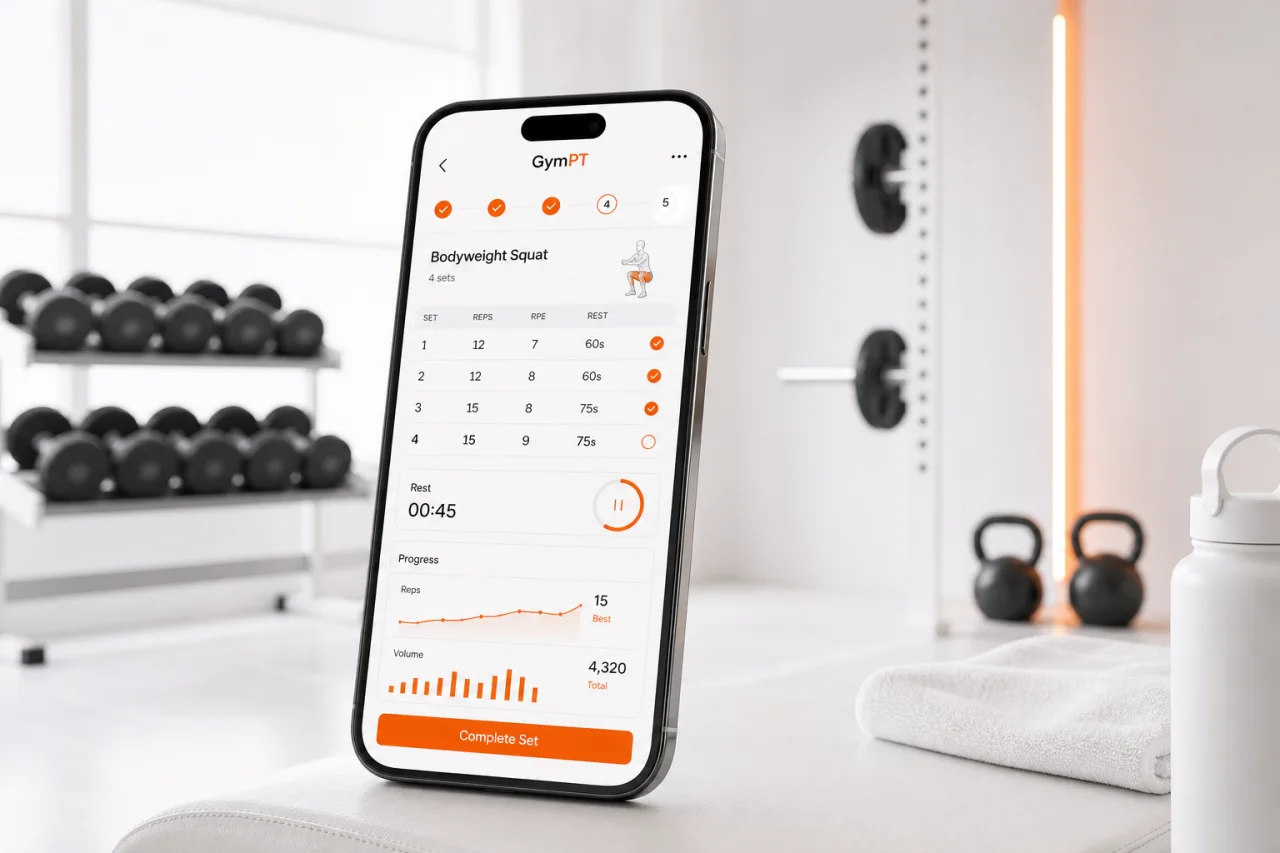
Progress does not have to mean adding weight. With bodyweight exercises, you can make training harder in several ways:
- Add reps while keeping the same form
- Add sets when the current volume feels manageable
- Slow the tempo to increase control and time under tension
- Increase range of motion when your mobility and control allow it
- Choose a harder variation such as moving from incline push-ups to floor push-ups
- Reduce rest time slightly once your technique is stable
For beginners, the safest progression is usually small and boring. That is a good thing. Consistent progress beats dramatic workouts that leave you too sore to train again.
Common beginner mistakes to avoid
- Doing too much too soon: starting with high volume often leads to soreness and inconsistency
- Skipping the pull pattern: if possible, include some kind of rowing or back-focused work
- Training only abs and glutes: a full-body plan is usually more effective
- Chasing fatigue instead of form: quality reps matter more than exhaustion
- Never progressing: if every workout feels identical, your body has little reason to adapt
Beginners often think they need a more complicated plan. In reality, they usually need a clearer one.
How GymPT helps you adapt the plan
GymPT can turn a basic bodyweight routine into a personalized plan that fits your life. You can tell it what equipment you have, how many days you can train, and what feels too hard or too easy. Then it can adjust exercise selection, set targets, and progression based on your actual training data.
That matters because beginner training is not just about choosing exercises. It is about choosing the right dose, tracking what you did, and improving it at the right pace. With workout tracking and progress insights, you can see whether your reps, sets, and consistency are moving in the right direction.
If you are unsure what to do next, the AI coach chat can help you decide whether to make an exercise easier, harder, or simply more consistent for another week.
A practical weekly starter plan
If you want a simple structure, use this:
- Day 1: full-body bodyweight workout
- Day 2: rest or light walking
- Day 3: full-body bodyweight workout
- Day 4: rest or mobility work
- Day 5: full-body bodyweight workout or a shorter repeat of Day 1
Keep the same core exercises for 2 to 4 weeks before changing too much. That gives you a fair chance to learn the movements and measure progress.
Final takeaway
The best bodyweight exercises for beginners are the ones you can perform well, repeat consistently, and progress gradually. Start with a balanced mix of squat, push, hinge, pull, and core work. Then use the equipment you have, track your sessions, and make small improvements over time. That is how beginner training becomes real training.
GymPT makes that process easier by adapting your plan to your equipment, your schedule, and your progress so you can train with less guesswork.