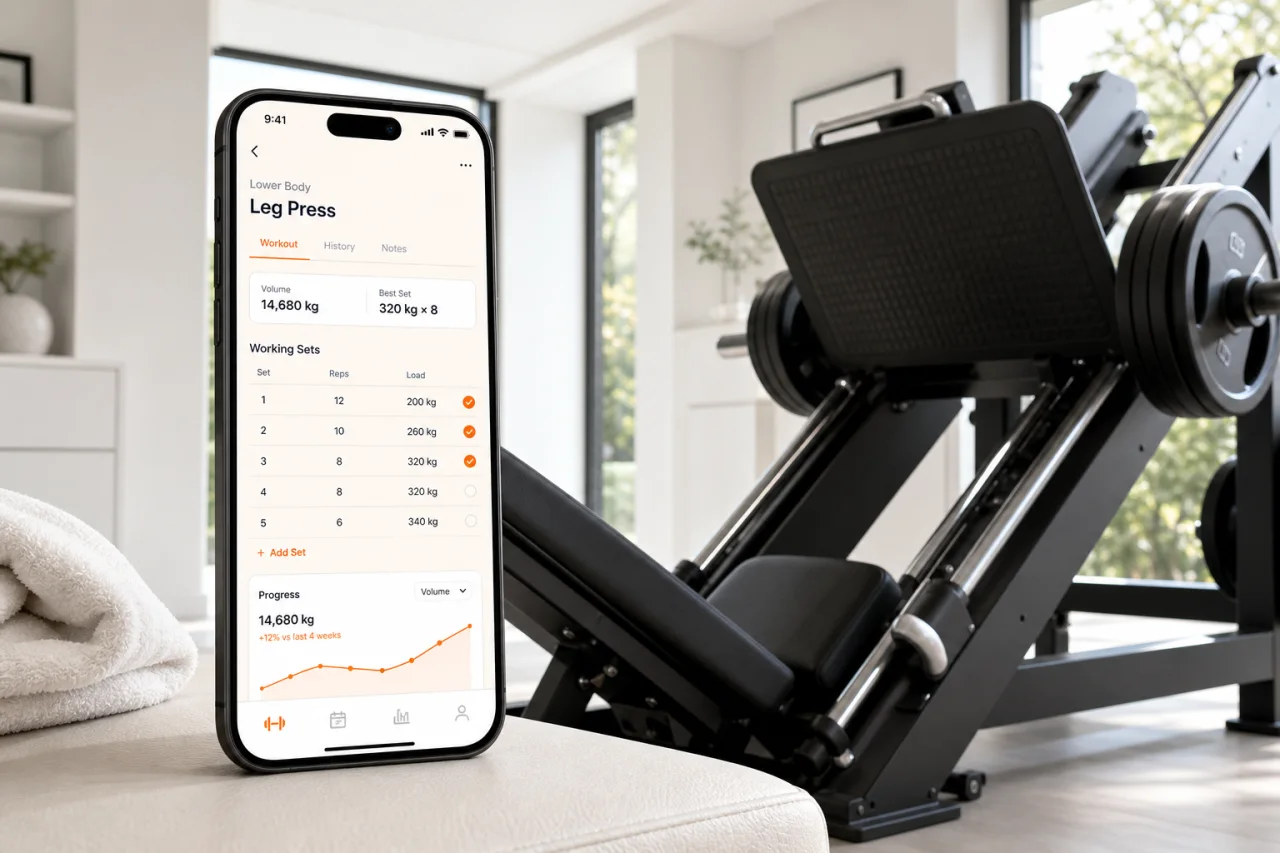
home workout with leg press machine
Home Workout With Leg Press Machine: Build a Smarter Lower-Body Plan Around One Tool
A leg press machine can anchor a highly effective home lower-body routine. Learn how to build a balanced plan around it, avoid common mistakes, and adapt your workouts with GymPT.
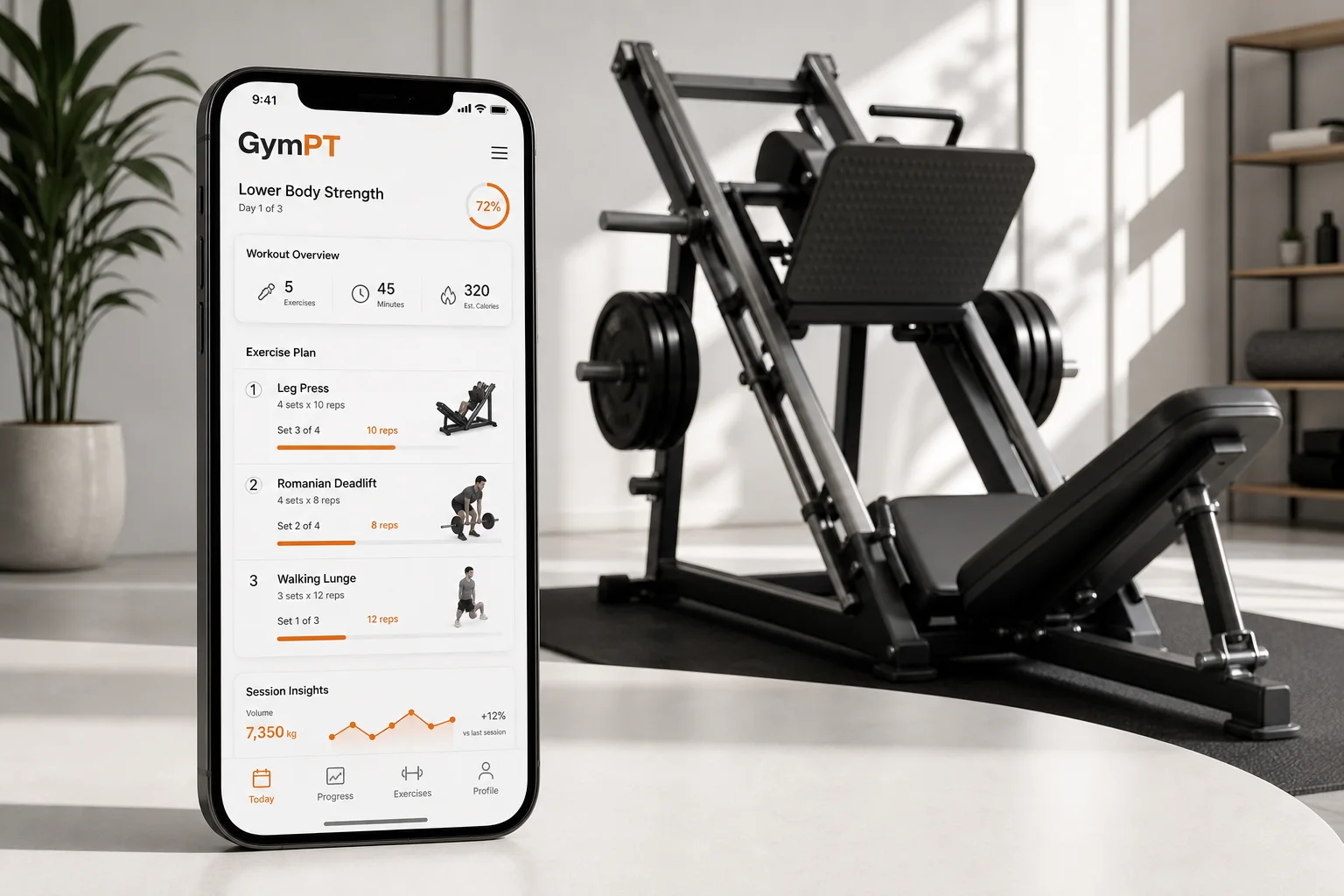
Home Workout With Leg Press Machine: A Smarter Way to Build Leg Day
If you have a home workout with leg press machine setup, you already own one of the most useful tools for lower-body training. A leg press can help you train quads, glutes, and hamstrings with stable support, which makes it easier to focus on effort, range of motion, and progression. The key is not to treat the machine as the whole plan. The best results come from building a balanced routine around it.
That matters because adults should do muscle-strengthening activity at least two days per week, and a good plan should work all major muscle groups over time. For a home setup, that means using the leg press as your main lower-body lift, then adding a few smart accessories to cover what the machine does not fully train. GymPT can help you turn that equipment into a complete weekly plan instead of a one-exercise routine.
Why the leg press works so well at home
The leg press is useful for home training because it is simple to load, easy to repeat, and friendly to progression. Compared with free-weight squats, it removes some balance demands, so you can direct more attention to leg effort and controlled reps. That makes it especially practical if you are training alone, want a lower-skill main lift, or need a machine-based option for consistent leg work.
It is also flexible. Foot placement can shift emphasis slightly toward quads, glutes, or a more balanced lower-body feel. That does not replace good programming, but it gives you enough variety to keep a home leg day productive without needing a full gym.
What a complete home leg day should include
A strong lower-body session usually needs four pieces:
- A main compound movement for heavy, repeatable work, such as the leg press.
- A hip-dominant pattern to balance the front-of-leg emphasis, such as a Romanian deadlift variation, hip hinge, or glute bridge.
- A single-leg exercise to improve side-to-side balance and control, such as split squats or step-ups.
- A calf or accessory movement for complete lower-leg coverage and extra volume.
If your home setup only includes the leg press machine plus a few small tools, that is still enough. You do not need a crowded room to train well. You need a plan that uses the equipment you have with enough weekly volume and progression to keep improving.
How to structure a leg press-focused workout
Use the leg press as your first or second exercise, when you are fresh. That lets you push quality reps and track progress more clearly. A simple structure looks like this:
- Warm-up: 5 to 8 minutes of light movement, then 2 to 4 ramp-up sets on the leg press.
- Main lift: Leg press for 3 to 5 working sets.
- Secondary lower-body move: A hinge, bridge, or split squat for 2 to 4 sets.
- Accessory work: Calves, core, or glute isolation for 2 to 4 sets.
For most home lifters, a practical rep range is 6 to 12 reps on the leg press, with controlled tempo and a full range you can own. If your goal is muscle growth, you can also use moderate-to-higher reps on accessory work. The important part is that the last few reps feel challenging while form stays clean.
Sample home workout with leg press machine
Here is a simple lower-body session you can run at home:
- Leg press: 4 sets of 8 to 10 reps
- Romanian deadlift with dumbbells or kettlebell: 3 sets of 8 to 12 reps
- Bulgarian split squat or reverse lunge: 3 sets of 8 to 10 reps per leg
- Standing or seated calf raise: 3 sets of 12 to 15 reps
- Plank or dead bug: 2 to 3 sets
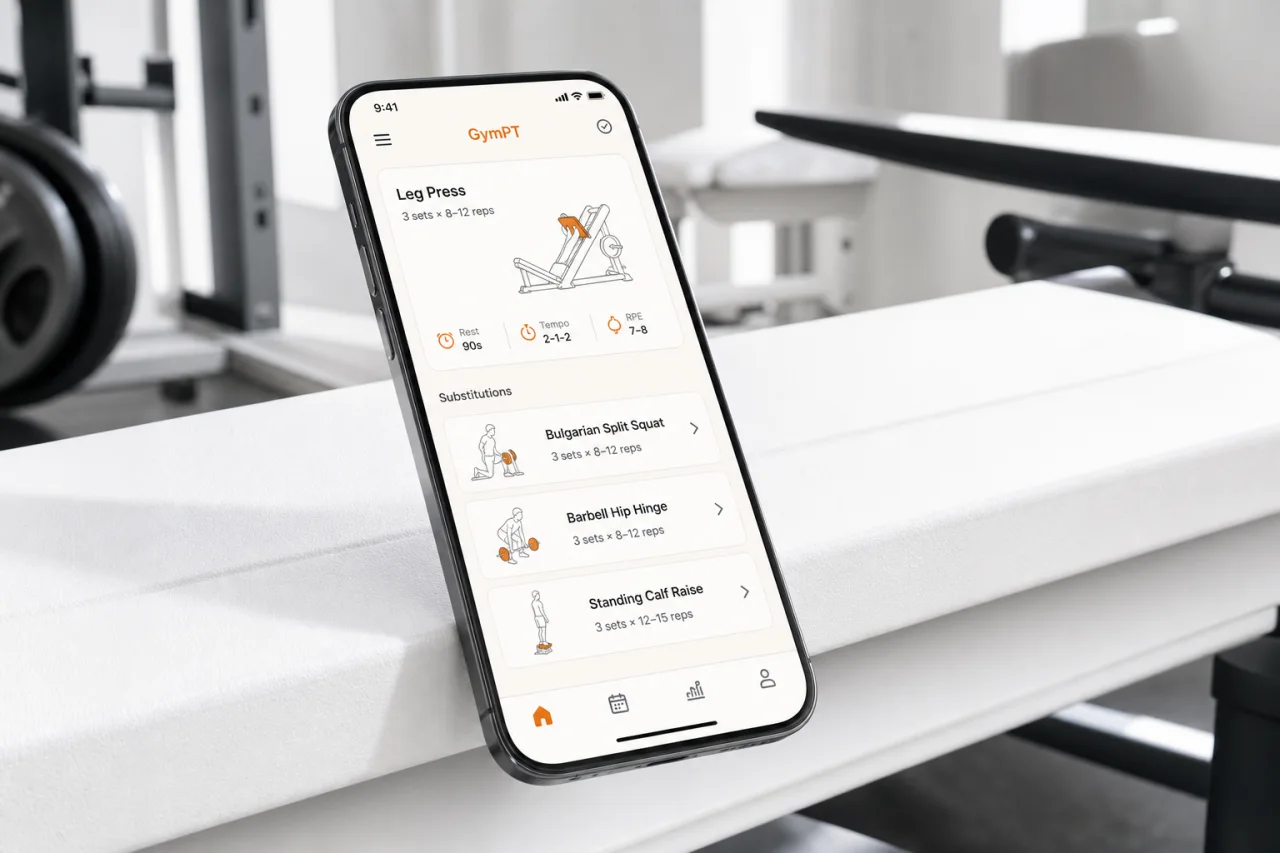
If you do not have dumbbells or a kettlebell, swap the hinge for a glute bridge, hip thrust, or single-leg bridge. If your knees prefer a shorter session, keep the leg press and one unilateral move, then finish with calves or core. GymPT can adjust the exercise list automatically based on your available equipment and training goal.
Leg press form cues that matter most
Good leg press form is less about chasing a perfect look and more about controlling the machine through a stable, repeatable range. Focus on these cues:
- Keep your feet planted and press through the whole foot, not just the toes.
- Lower with control instead of bouncing at the bottom.
- Let your knees track naturally in line with your feet.
- Use a depth you can control without your pelvis tucking hard off the pad.
- Stop one rep before form breaks if the load is too heavy.
Small setup changes can shift the feel of the exercise. A slightly higher foot position often feels more glute- and hamstring-friendly, while a lower position can feel more quad-focused. Use the position that lets you train hard without losing control.
How to progress without overcomplicating the plan
Progressive overload does not have to mean adding weight every session. In a home setup, you can progress in several ways:
- Add 1 to 2 reps before increasing load.
- Increase weight in small jumps when all sets feel solid.
- Add one extra set to the leg press or a secondary lift.
- Slow the lowering phase for more control and tension.
- Improve range of motion while keeping technique stable.
A simple rule works well: if you can complete the top end of your rep range with good form for all sets, increase the challenge next time. That keeps progress steady without turning every workout into a max-effort test.
How often should you train legs at home?
For most people, training legs one to two times per week is a strong starting point. If your weekly schedule is limited, one focused session can still work well as long as the workout is consistent and the effort is high enough. If you want faster progress, two shorter lower-body sessions often beat one very long one because they spread the work out and make recovery easier.
A useful split is:
- Day 1: Heavier leg press focus
- Day 2: Moderate leg press plus unilateral and glute work
That approach gives you enough volume to grow while keeping each session manageable at home.
Common mistakes to avoid
Home leg press training goes wrong when the machine becomes a shortcut instead of a tool. Watch out for these mistakes:
- Only doing leg press: You still need hip hinge, unilateral work, and calves.
- Chasing load too fast: Heavy weight with sloppy depth is not better training.
- Skipping warm-up sets: Your knees and hips usually perform better when you ramp up gradually.
- Using the same rep scheme forever: Small changes in reps, sets, or tempo keep progress moving.
- Ignoring recovery: Hard leg training needs sleep, food, and spacing between sessions.
If your knees, hips, or lower back feel irritated, reduce load, shorten range slightly, and reassess your setup. GymPT can help you modify the session instead of guessing which exercise to remove.
How GymPT helps you turn one machine into a real plan
The biggest advantage of GymPT is that it does not stop at exercise selection. It can build a personalized plan around your leg press machine, then adapt the rest of the workout to your goal, schedule, and available equipment. That means you can:
- Generate a lower-body split based on your home setup.
- Balance quad, glute, hamstring, and calf work automatically.
- Track sets, reps, and progression over time.
- Use AI coach chat to adjust the workout when your equipment changes.
- Review progress insights so you know when to increase volume or intensity.
If you want a home workout with leg press machine that actually feels structured, GymPT makes the plan easier to follow and easier to improve.
Bottom line
A leg press machine can anchor an excellent home lower-body routine, but it works best when you build around it intelligently. Start with the leg press, add a hinge, include a unilateral movement, and progress gradually over time. That is how a simple home setup becomes a real training system.
Want a plan that fits your exact equipment? Let GymPT build your next leg day around the tools you already have.