home workout with dumbbell
Home Workout With Dumbbell: A Smarter Plan for Small Spaces
A dumbbell is enough to build a strong home routine if you train the right movement patterns, progress gradually, and stay consistent.
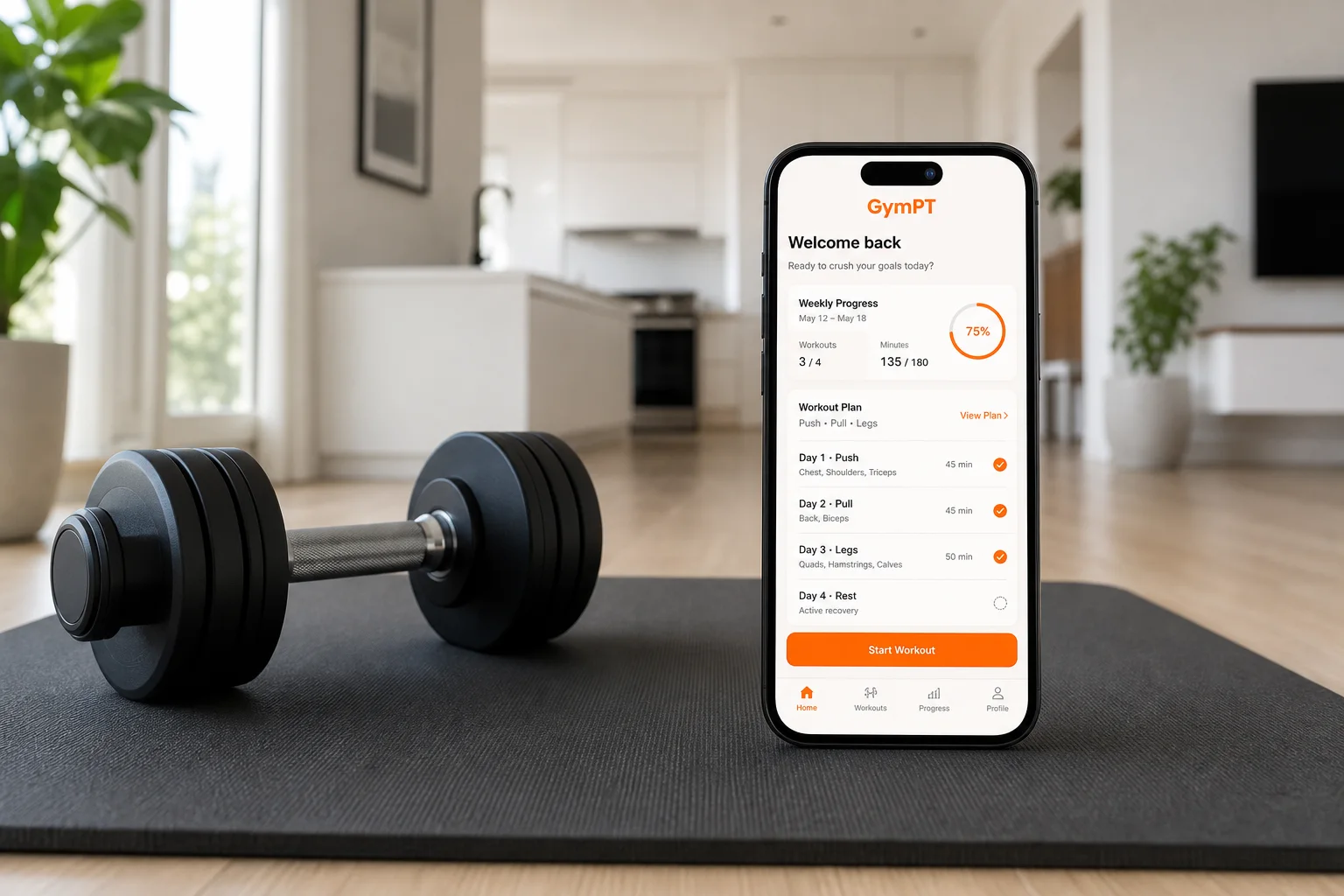
Home workout with dumbbell: what actually works in a small space
A home workout with dumbbell can be highly effective when you stop thinking in terms of random exercises and start thinking in terms of movement patterns. One dumbbell is enough to train your legs, push muscles, pull muscles, core, and carries if you organize the session well. The goal is not to do everything. The goal is to do the right things consistently and make them a little harder over time.
That approach matches current public health guidance: adults should do muscle-strengthening activity at least 2 days per week, and the major muscle groups should be trained regularly. You do not need a large gym to meet that standard. You need a repeatable plan, enough effort, and a way to progress.
What to train with one dumbbell
If space is limited, build your week around these five patterns:
- Squat or lunge for quads and glutes
- Hip hinge for hamstrings and glutes
- Push for chest, shoulders, and triceps
- Pull for back and biceps
- Core for trunk stability and control
That structure gives you a balanced full body dumbbell workout without needing a rack, bench, or machines. It also makes it easier to track progress because each session has a clear purpose.
Choose exercises that are easy to repeat
For a dumbbell home workout, the best exercises are the ones you can set up quickly and perform with good form. Good options include goblet squats, split squats, Romanian deadlifts, one-arm rows, floor presses, overhead presses, suitcase carries, and dead bugs. These movements are simple, scalable, and useful for beginners and experienced lifters alike.
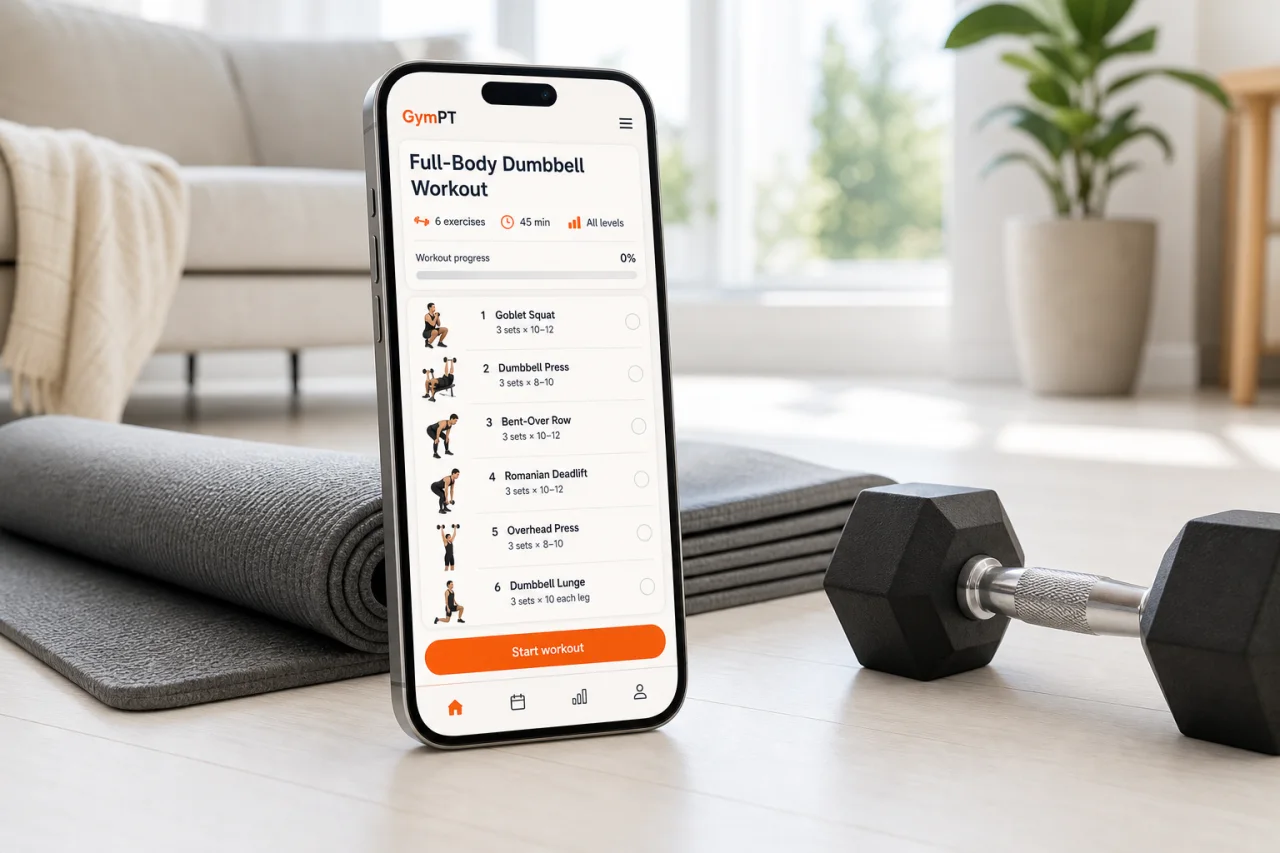
A simple home workout with dumbbell you can repeat twice a week
Use this as a starting point. If you have only one dumbbell, do the same movement on each side before moving on. If you have two, you can load both sides at once where appropriate.
- Goblet squat — 3 sets of 8 to 12 reps
- One-arm dumbbell row — 3 sets of 8 to 12 reps per side
- Dumbbell floor press — 3 sets of 8 to 12 reps
- Romanian deadlift — 3 sets of 8 to 12 reps
- Standing overhead press — 2 to 3 sets of 6 to 10 reps
- Suitcase carry — 3 rounds of 20 to 40 seconds per side
Rest 60 to 90 seconds between sets. If you are short on time, pair exercises into supersets such as squat plus row, or press plus hinge. That keeps the workout efficient without turning it into cardio.
How hard should it feel?
Most sets should end with about 1 to 3 reps left in the tank. That is hard enough to stimulate progress, but not so hard that your form falls apart. If you can easily do more than 12 reps, increase the challenge by slowing the lowering phase, adding a pause, or using a heavier dumbbell.
How to progress when you only have one weight
Progression is the part most home routines miss. If the dumbbell is not getting heavier, the workout still needs to get harder. Here are the simplest ways to do that:
- Add reps until you reach the top of your target range
- Add a set when the current volume feels manageable
- Slow the eccentric by lowering for 3 seconds
- Pause for 1 to 2 seconds at the hardest point
- Use unilateral work like split squats and one-arm rows
- Shorten rest slightly while keeping form clean
This is the easiest way to keep a home strength training plan moving forward without buying more equipment right away. It also helps you avoid the common trap of repeating the same comfortable session for months.
Weekly structure for better results
If you want a practical schedule, train 2 to 4 days per week. Two full-body sessions are enough to build consistency. Three sessions are better if you want more practice and more weekly volume. A simple weekly structure could look like this:
- Day 1: Full-body dumbbell session
- Day 2: Walk, mobility, or light cardio
- Day 3: Full-body dumbbell session
- Day 4: Optional accessory work or recovery
That setup fits public health guidance well because it combines muscle-strengthening work with regular movement across the week. Adults are encouraged to pair strengthening with aerobic activity, and even short sessions can count when they are done consistently.
Common mistakes in dumbbell workouts at home
Most people do not fail because they lack motivation. They fail because the plan is too vague. Watch out for these mistakes:
- Only training arms and shoulders while ignoring legs and back
- Using too many exercises and not repeating the important ones
- Stopping every set too early so the workout never becomes challenging
- Skipping tracking and forgetting what weight, reps, or sets you used
- Changing the routine every week before progress can show up
If your goal is strength, shape, or general fitness, repetition is a feature, not a flaw. The best home plan is the one you can run again next week with a small improvement.
How GymPT helps you stay consistent
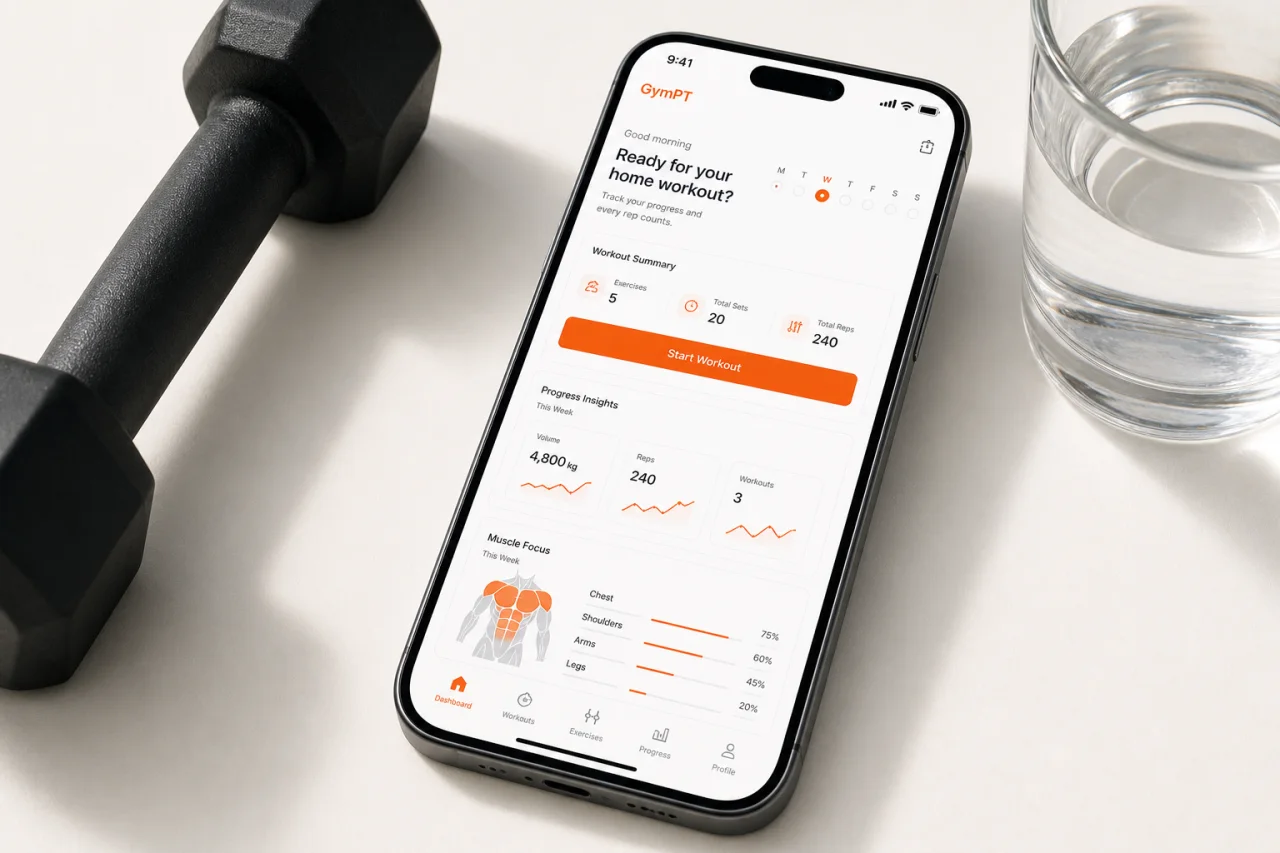
GymPT makes a dumbbell home workout easier to stick with because it can build a plan around your available equipment, track your sessions, and adjust your training as you improve. If you only have one dumbbell, GymPT can help you choose the right unilateral exercises, set a realistic weekly split, and keep your progress visible.
That matters because progress is easier to maintain when the plan is specific. A good coach does not just tell you to work harder. A good coach tells you what to do next, how many sets to complete, and when to make the workout harder.
Quick start checklist
- Pick 5 to 6 movements that cover the whole body
- Train 2 to 4 times per week
- Work mostly in the 6 to 12 rep range
- Leave 1 to 3 reps in reserve on most sets
- Track reps, sets, and load every session
- Progress by reps, tempo, pauses, or unilateral work
If you keep the plan simple and repeatable, a home setup can deliver real results. You do not need a perfect gym. You need a smart structure and steady progression.
Ready to build yours? Use GymPT to create a personalized home plan around the dumbbell you already have.