workout generator for beginners
Workout Generator for Beginners: Build Your First 4-Week Plan
A beginner workout plan should be simple enough to follow and flexible enough to fit real life. Learn how to choose your training level, schedule sessions, recover well, and progress with confidence.
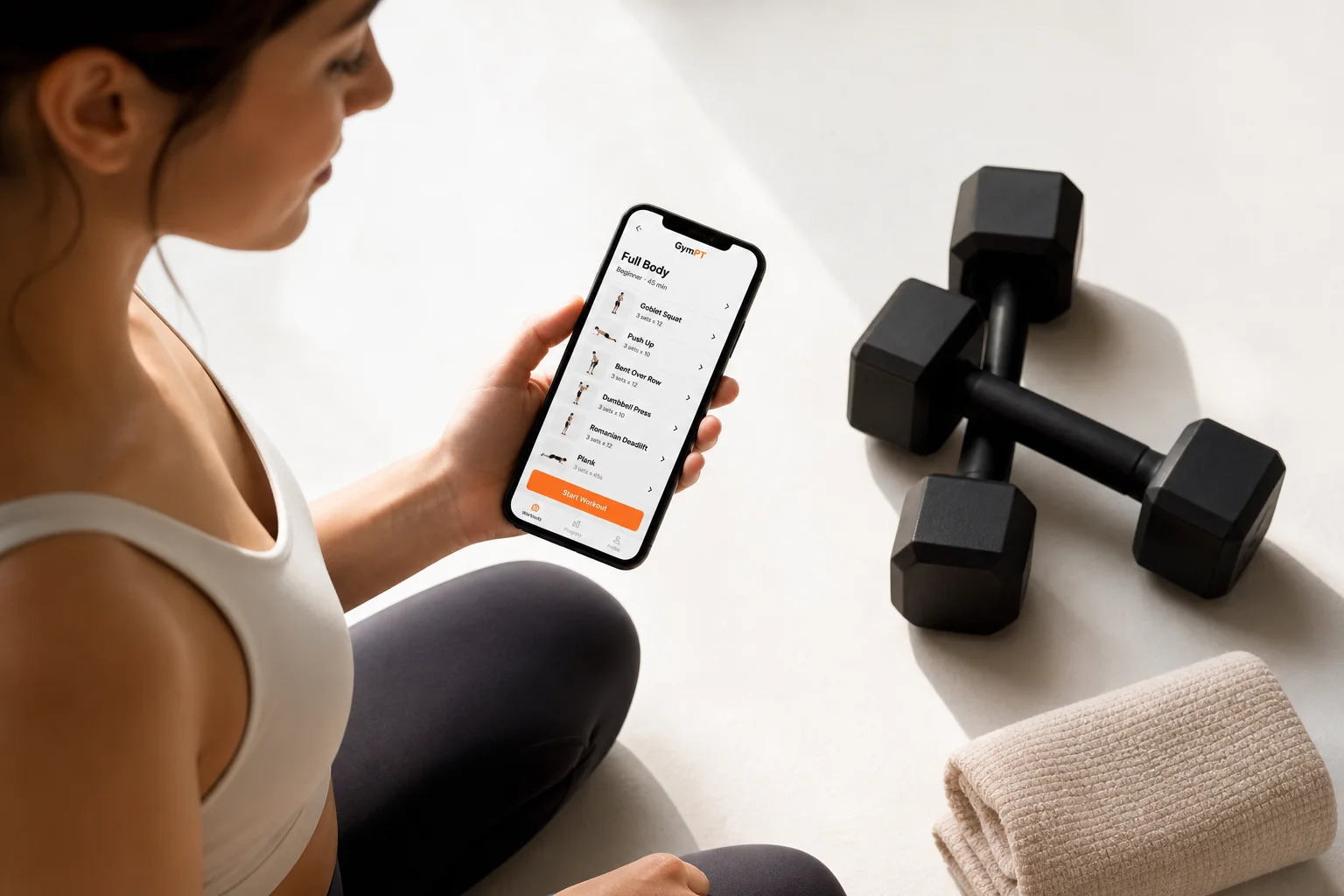
Starting a workout routine is often harder than completing the first session. Beginners have to choose exercises, decide how often to train, understand how much effort is enough, and know when to increase the challenge. A workout generator for beginners can make that process easier by turning your goal, schedule, experience, and available equipment into a practical starting plan.
The best beginner plan is not the most complicated one. It is a routine you can repeat consistently, recover from, and gradually improve. This guide explains how to build a sensible four-week plan, whether you train at home, in a gym, or with a small set of dumbbells.
What should a workout generator for beginners include?
A useful beginner workout generator should do more than list random exercises. It should account for the details that determine whether a plan is realistic:
- Training experience: A person who has never lifted weights needs different exercise choices and volume than someone returning after a long break.
- Goal: Strength, general fitness, muscle gain, improved conditioning, and fat loss can use similar movements, but the weekly structure and progression may differ.
- Frequency: The right number of weekly sessions depends on your schedule, recovery, and how much activity you already do.
- Equipment: A plan should match what you can actually use, whether that means machines, dumbbells, resistance bands, or bodyweight exercises.
- Recovery: Rest days and manageable session length are part of the plan, not signs that you are doing less.
- Progression: The routine should tell you how to make an exercise gradually harder without rushing to heavy loads.
Personalization matters because a plan that fits your life is more useful than an ideal plan you cannot follow. GymPT can adjust workouts around your goal, available equipment, training history, and preferred schedule while giving you a place to track each session.
Choose your beginner training level
Before selecting exercises, identify the level that best describes you. This prevents doing too much too soon.
Complete beginner
You are a complete beginner if you have little or no recent resistance-training experience. Start with two or three full-body sessions per week. Use simple movement patterns, controlled repetitions, and light-to-moderate effort. Your first goal is learning how to train consistently and perform each exercise with good control.
Returning beginner
You may be a returning beginner if you trained in the past but have taken several months away. Your coordination may come back quickly, but your current work capacity still needs time to rebuild. Begin with the same basic structure as a complete beginner, then add volume only when sessions feel repeatable and recovery is good.
Confident beginner
You may be ready for a more challenging beginner plan if you have trained consistently for several weeks, understand the main movement patterns, and can complete sessions without excessive soreness or technique breakdown. You can usually train three or four days per week, but more days are not automatically better.
How many days per week should a beginner work out?
For most beginners, two or three strength-training sessions per week are enough to make meaningful progress. This frequency gives you repeated practice without making recovery unnecessarily difficult. It also leaves room for walking, recreational activities, or short cardio sessions.
A simple weekly schedule could look like this:
- Two days: Full-body training on Monday and Thursday.
- Three days: Full-body training on Monday, Wednesday, and Friday.
- Four days: Two upper-body and two lower-body sessions, used only after you are comfortable with regular training.
Adults are generally encouraged to include muscle-strengthening activity on at least two days per week, alongside regular aerobic activity. However, that recommendation is a broad health target, not a requirement to begin with long or intense workouts. If two sessions are realistic, start there. Consistency is more valuable than an ambitious schedule that lasts one week.
Frequency also depends on how much work each session contains. A three-day plan with short full-body workouts may be easier to recover from than two very long sessions that leave you exhausted.
A practical 4-week beginner workout plan
The following structure is a starting framework rather than a fixed prescription. Choose one exercise from each movement category and complete two working sets per exercise during the first two weeks. Aim for roughly 45 to 60 minutes, including your warm-up.
Full-body session template
- Squat or leg press: 2 sets of 8 to 12 repetitions.
- Horizontal push: Incline push-up, chest press, or dumbbell bench press for 2 sets of 8 to 12 repetitions.
- Row: Seated cable row, machine row, or one-arm dumbbell row for 2 sets of 8 to 12 repetitions.
- Hip hinge: Romanian deadlift with dumbbells, hip hinge drill, or machine-based posterior-chain exercise for 2 sets of 8 to 12 repetitions.
- Core exercise: Dead bug, plank, or cable anti-rotation press for 2 controlled sets.
On a three-day schedule, use the same movement categories but vary the exercise when helpful. For example, you could use a goblet squat on Monday, a leg press on Wednesday, and a supported split squat on Friday. This keeps training interesting while still practicing familiar patterns.
Week-by-week approach
- Week 1: Learn the exercises. Use light resistance and stop each set with several controlled repetitions still available.
- Week 2: Repeat the same structure. Improve technique, range of motion, and consistency before adding load.
- Week 3: If recovery is good, add one set to one or two exercises, or increase resistance slightly while staying within the target repetition range.
- Week 4: Review your performance. Keep progressing if you feel strong, or repeat the previous week if fatigue, soreness, or schedule stress has increased.
This gradual approach is more sustainable than changing exercises every session or testing your maximum strength as a beginner.
How hard should beginner workouts feel?
Beginners do not need to take every set to complete muscular failure. A practical approach is to finish most sets feeling that you could perform approximately two or three more good repetitions. This leaves enough effort for progress while making it easier to maintain technique and recover for the next workout.
Use these signals to judge effort:
- The final repetitions feel challenging but remain controlled.
- Your posture and movement path do not change dramatically.
- You are not holding your breath throughout the entire set.
- You can repeat the exercise during the next week without a major drop in performance.
Muscle burn and soreness are not reliable measures of workout quality. A productive beginner session should build skill and capacity, not leave you unable to move normally for several days.
Beginner recovery: what to do between sessions
Recovery determines how well you can repeat training. Leave at least one day between demanding full-body workouts at first. On rest days, walking, gentle mobility work, or normal daily activity can help you stay active without adding another hard training stimulus.
Focus on the basics:
- Sleep: Keep a consistent sleep schedule whenever possible.
- Food: Eat regular meals that provide enough energy and include protein-rich foods.
- Hydration: Drink regularly throughout the day, especially in warm conditions or during longer sessions.
- Stress: Reduce training volume temporarily when work, travel, or poor sleep makes recovery harder.
- Technique: Treat controlled movement as part of recovery because it reduces unnecessary fatigue.
If you experience sharp pain, unusual symptoms, or an issue that does not improve with rest, stop the exercise and seek appropriate professional advice. Fitness guidance is not a substitute for medical care.
How to progress without rushing
Progression means gradually increasing the challenge your body can handle. It does not always mean adding weight. You can progress by performing more repetitions with the same load, using better control, completing a larger range of motion, or adding a small amount of resistance.
Try this simple double-progression method:
- Choose a repetition range, such as 8 to 12.
- Keep the same weight until you can complete 12 controlled repetitions for every set.
- Increase the resistance by the smallest practical amount.
- Return to the lower end of the range and build up again.
For example, if you perform dumbbell rows for 2 sets of 8 repetitions in week one, aim for 9 or 10 repetitions in later sessions. Once you can complete 12 repetitions with stable technique, use slightly heavier dumbbells and begin again at 8 repetitions.
Keep a record of the exercise, resistance, repetitions, and how the set felt. A workout tracking feature can make this easier and help you spot patterns. If performance improves over several weeks, your plan is working even if changes are not dramatic from session to session.
For a deeper explanation of safe progression and strength tracking, read Strength Training Program: How to Progress Safely and Track Real Strength Gains.
How equipment should change your plan
Your equipment does not need to determine whether you can train effectively, but it should influence exercise selection. Machines may provide a stable learning environment. Dumbbells can support home training and unilateral exercises. Cables offer adjustable resistance and useful pulling or pressing variations. Bodyweight movements can build control and coordination when matched to your current ability.
Instead of forcing a specific exercise, match the movement pattern. A chest press machine, elevated push-up, and dumbbell press can all train a horizontal pushing pattern. A cable row, resistance-band row, and supported dumbbell row can all train pulling muscles.
If you train mostly with machines, Machine-Based Workout Plan: Build a Gym Routine Around Your Equipment can help you organize a simple routine. If your gym has a cable station, see Cable Machine Workout Plan: A Simple 3-Day Routine for the Gym.
When a personalized workout generator is useful
A template is a helpful starting point, but personalization becomes more valuable as your circumstances change. You may need different exercises because of equipment availability, shorter sessions, a changing schedule, or a new goal. You may also need to reduce volume during a busy week and build it back gradually afterward.
GymPT is designed to support those decisions with personalized workout plans, AI coach chat, equipment-based training, body analysis, workout tracking, and progress insights. The goal is not to remove your judgment. It is to make the next sensible training decision easier to understand and follow.
When comparing tools, look for an app that explains why exercises are included, lets you adjust your available equipment, records what you actually complete, and adapts as your training history grows. Our guide to an Automatic Workout Plan App: How to Choose One That Actually Fits You covers the main features to consider. You can also explore How to Choose an AI Gym Routine App That Actually Fits Your Training.
Beginner workout generator checklist
Before starting a new plan, make sure it answers these questions:
- What is my main goal for the next four weeks?
- How many sessions can I complete consistently?
- Which exercises match my experience and available equipment?
- How will I warm up and prepare for each session?
- How hard should the sets feel?
- What will I do if I miss a workout?
- How will I record repetitions, resistance, and recovery?
- What small change will count as progression?
A beginner-friendly workout generator should give you clear answers without overwhelming you. Start with two or three repeatable sessions, prioritize controlled technique, leave room for recovery, and progress in small steps. With that foundation, your plan can become more personalized as your confidence and capacity improve.