workout volume tracking
How to Track Workout Volume for Real Progress
Workout volume tracking helps you see whether your training is actually progressing. Learn what to log, how often to review it, and how to use the data to adjust your plan.
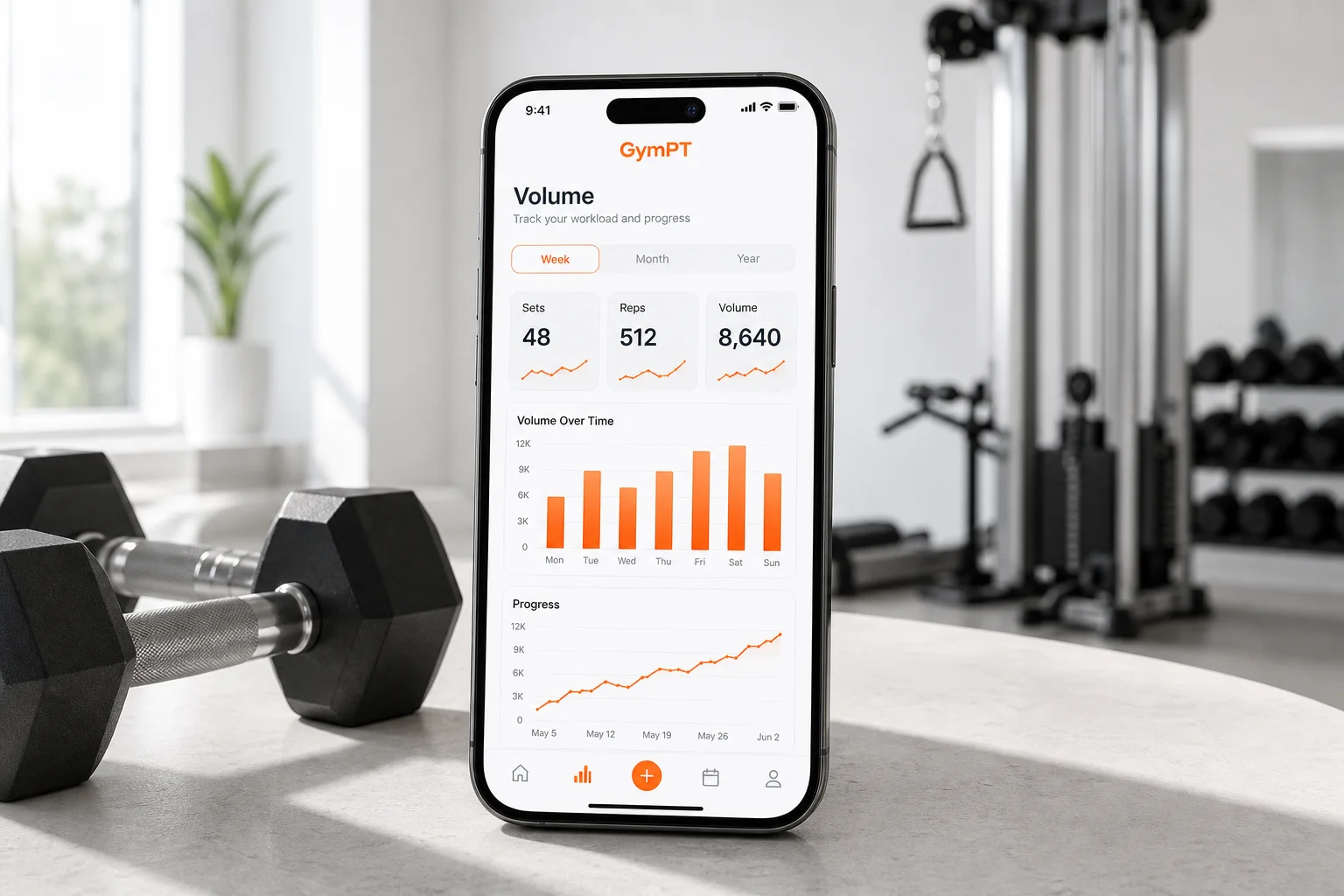
Workout volume tracking: the simplest way to see if your training is working
If you want better results from the gym, workout volume tracking is one of the most useful habits you can build. It turns training from a guess into a process you can review, adjust, and improve. Instead of asking, “Did I work hard enough?” you can ask, “Did I do more quality work than last week?”
That matters because resistance training progress is driven by repeated, measurable overload over time. Current strength and conditioning guidance emphasizes progression through variables like load, repetitions, sets, and total volume, with weekly volume often used as a practical marker for hypertrophy-focused training.
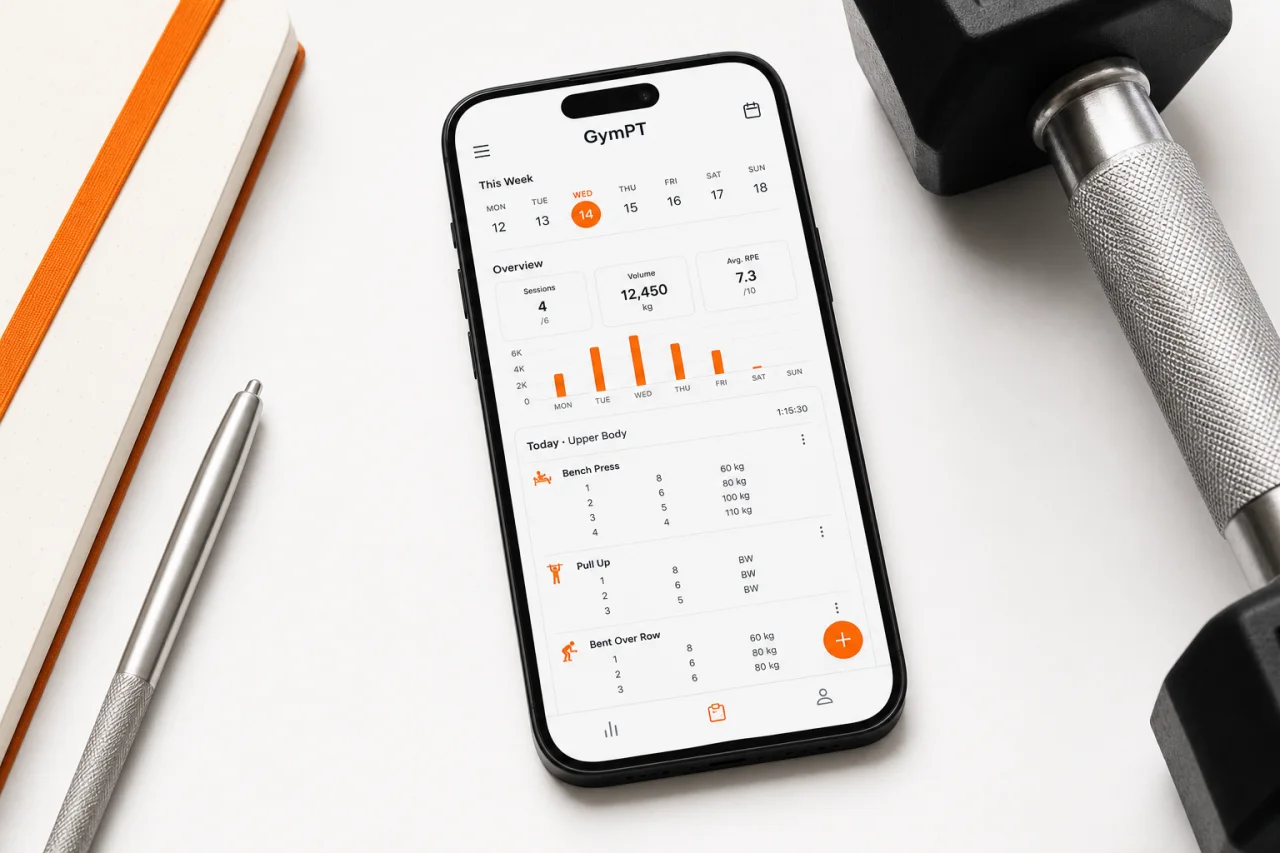
For GymPT users, the goal is not to track everything forever. The goal is to track the right numbers consistently enough to make better decisions.
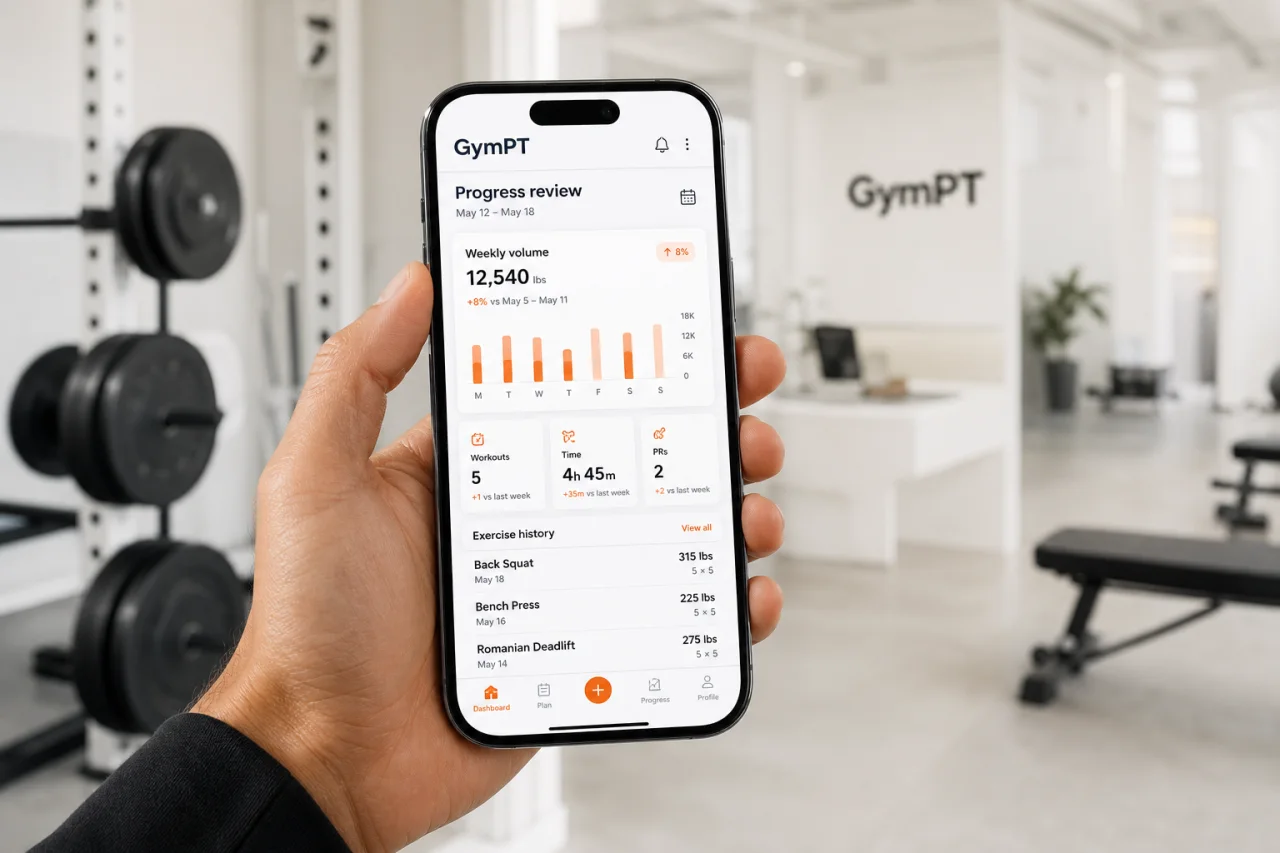
What “volume” actually means
In strength training, volume can mean a few different things. The most useful version for most lifters is the total amount of hard work you complete in a session or week. That can be tracked in several ways:
- Sets per exercise — how many work sets you completed.
- Reps per set — how many repetitions you performed.
- Load — the weight used for each set.
- Volume load — sets × reps × weight, often used to estimate total work.
- Weekly sets per muscle group — a simple way to compare training weeks.
For most people, weekly sets per muscle group is the easiest metric to understand and use. It is especially helpful if your goal is muscle growth, because recent ACSM guidance highlights weekly volume as a key programming variable and suggests roughly 10 sets per muscle group as a useful target for hypertrophy-oriented training.
What to track in your training log
A good training log does not need to be complicated. It just needs to answer three questions: what did I do, how hard was it, and how did it compare with last time?
Track these core fields
- Exercise name — for example, dumbbell bench press or lat pulldown.
- Sets and reps — the basic structure of the work.
- Load used — the weight or resistance.
- Effort level — such as reps in reserve, RPE, or a simple hard/medium/easy note.
- Rest time — useful when performance changes unexpectedly.
- Notes — form cues, pain, fatigue, or equipment differences.
If you want a cleaner system, track only the first four items. That is enough to spot trends without turning your workout into paperwork.
How to track workout volume without overcomplicating it
The best tracking system is the one you can keep using. Here is a simple method that works for beginners and experienced lifters alike.
1. Count hard sets
Start by counting only sets that are challenging enough to matter. Warm-up sets do not usually count. Working sets do.
Example: if you do 3 sets of 8 on the chest press and 2 of those sets are close to failure, you may count all 3 as working sets if they were part of the planned effort.
2. Add weekly sets by muscle group
At the end of the week, total the sets for each major muscle group. Chest, back, quads, hamstrings, glutes, shoulders, and arms are common categories.
This gives you a fast view of whether one area is undertrained, overtrained, or simply progressing faster than another.
3. Watch for performance trends
Volume only matters if it is producing better performance. Look for one or more of these signs:
- More reps at the same weight
- More weight for the same reps
- More total sets completed with good form
- Better control, range of motion, or tempo at the same load
That is why NSCA guidance treats progression as a gradual increase in load or volume, not a random jump from one workout to the next.
How often should you review your numbers?
Reviewing too often can make normal day-to-day fluctuations look like failure. Reviewing too rarely can hide a stalled program.
A practical rhythm is:
- After every workout — log the session while it is fresh.
- Once per week — check total sets, key lifts, and any missed sessions.
- Every 4 to 6 weeks — make bigger decisions about progression, exercise swaps, or recovery.
That 4- to 6-week review window is usually long enough to see a real trend without reacting to one bad day. It also fits the way resistance training frequency and progression are commonly organized in evidence-based programming.
What good progress looks like
Progress is not always a straight line. A smart log helps you see the difference between normal variation and a real plateau.
You are probably progressing if:
- Your main lifts are slowly increasing in reps or load.
- Your weekly sets are stable or rising in a planned way.
- Your form stays consistent as the work gets harder.
- You recover well enough to repeat quality sessions.
You may need to adjust if:
- Your loads are rising, but reps are dropping sharply.
- Your weekly volume keeps increasing, but performance is flat.
- You feel unusually fatigued for multiple sessions in a row.
- Your technique breaks down before the target reps are done.
In other words, more volume is not automatically better. The useful question is whether the added work is still productive.
How to increase volume the smart way
When you want more progress, increase one variable at a time. That might mean adding one set to a lift, adding a few reps across the week, or slightly increasing the load while keeping form clean.
For most people, the safest and most sustainable approach is small changes, then a short review period. That matches the broader strength and conditioning principle of progressive overload: gradual, not dramatic.
A simple progression example
- Week 1: 3 sets of 8 at a manageable load.
- Week 2: 3 sets of 9 at the same load.
- Week 3: 3 sets of 10 at the same load.
- Week 4: increase the load slightly and return to 3 sets of 8.
This kind of progression is easy to track and easy to recover from. It also gives you a clear record of whether the new load is actually earned.
Common mistakes in workout volume tracking
- Tracking everything, learning nothing — too many metrics can hide the useful ones.
- Counting junk volume — sets that are too easy to drive adaptation.
- Changing the plan every session — this makes trends impossible to read.
- Ignoring recovery — volume only works if you can adapt to it.
- Comparing different exercises as if they were identical — a set of squats is not the same as a set of leg extensions.
The fix is simple: track a few core numbers, keep the exercise selection stable long enough to compare weeks, and review the data on a schedule.
How GymPT makes workout volume tracking easier
GymPT helps you turn training data into decisions. You can log workouts, follow an AI-generated plan, train with the equipment you actually have, and review progress insights without building a spreadsheet from scratch.
That is especially useful if you want to:
- See weekly volume at a glance
- Compare sessions across time
- Adjust training based on real performance
- Keep your plan aligned with your goal and equipment
When your training log and your plan work together, progress becomes easier to spot and easier to repeat.
A simple weekly checklist
- Did I complete my planned sessions?
- Did I log sets, reps, and load for the main lifts?
- Did any muscle group get much less work than planned?
- Did I add reps, load, or sets somewhere this week?
- Do I need to keep the plan the same for another week before changing it?
If you can answer those five questions, you are already ahead of most casual lifters.
Final takeaway
Workout volume tracking is not about becoming obsessive. It is about making progress visible. Track the work you actually do, review it at realistic intervals, and make small changes based on evidence instead of guesswork. That is how a training plan becomes a training system.